
We will reply to your message within an hour.
More

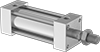
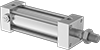
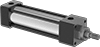
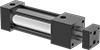
Create linear motion with the most popular of our air cylinders.
More basic and cost effective than double-acting cylinders, these single-acting cylinders exert force in one direction and have a spring to return the rod to its original position.

The magnetic piston inside these cylinders can activate relays and controllers when used with a sensor.
These cylinders thread directly into your equipment, taking minimal space.
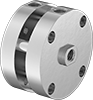
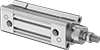
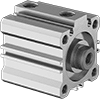
Also known as pancake cylinders, these deliver as much force as other cylinders, but with a shorter stroke to function in small spaces.
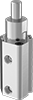
At less than two inches in length, these cylinders actuate small devices in spots where other cylinders don’t fit.
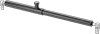
Designed to keep the piston from slamming against the cylinder body, these cylinders have adjustable air cushions at each end to minimize wear and noise.
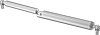
Unlike other air cylinders that push and pull one object, these double-ended cylinders push one object while pulling another.
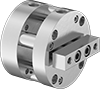
Also known as air clamps, these cylinders are used to apply force in holding applications.
Able to resist corrosive solutions and chemical environments, these cylinders withstand washdown conditions.
Often used for opening, closing, and positioning applications in areas where splash-back or fumes from aggressive chemicals are a concern, these durable PVC cylinders withstand acids and alkalies.
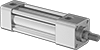
Rods along the barrel of these cylinders secure the end caps and shield the barrel from impact.
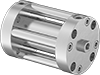
Get the power and stroke of other tie rod cylinders in less than half the space.
Made to fit the most common mounting footprint, these cylinders have an NFPA (National Fluid Power Association) industry-standard footprint, ensuring easy interchangeability.
These cylinders have self-adjusting cushions that automatically compensate for changes in load and speed.
An extruded-aluminum body means these cylinders have no open spaces for debris to collect.
Cylinders have two parallel piston rods that prevent twisting as they extend and retract.
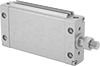
Threaded through-holes in each corner allow you to mount these cylinders directly to equipment or mount with attachments.
Control the movement of loads on your conveyor—the rod on these air cylinders extends to stop loads and retracts to let them pass.
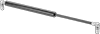
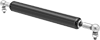
These general purpose gas springs assist in opening lids, covers, windows, conveyors, and seats—similar to a hatchback opening on a car.
Stainless steel construction provides corrosion resistance for use in damp environments.
Mechanical operation means these springs have no seals to fail or gas to leak.
With no gas to leak out and a corrosion-resistant 316 stainless steel construction, these mechanical springs are built for long-term, maintenance-free use in wet environments.
A temperature-resistant seal allows these gas springs to withstand heat up to 392°F.
Often used to open lids, covers, windows, conveyors, and seats, these gas springs function similar to a hatchback opening on a car. They have an eyelet end fitting on each end.
Made from stainless steel for excellent corrosion resistance in damp environments.
These gas springs have threaded ends so you can use them with any combination of end fittings, studs, and mounting brackets.
Ensure you have the correct force for your application. These gas springs have a bleed valve so you can release gas to permanently reduce the force to meet your requirements.
Made from stainless steel for excellent corrosion resistance in damp environments. These gas springs have a bleed valve so you can release gas to permanently reduce the force to meet your requirements.
Protect material and equipment underneath heavy loads—these gas springs lock automatically when fully extended, ensuring they can't be closed until it's safe to do so.
Automatically locking when fully extended and made of 316 stainless steel to resist corrosion, these gas springs protect material and equipment underneath heavy loads in damp environments.
Release gas from these springs until they supply the exact force you need—made of corrosion-resistant 316 stainless steel, they’re commonly used in wet environments.
Often used to replace coil springs in metal stamping and die-spring applications, these gas springs match the diameter and stroke length of coil die springs but offer much more force.
Color coded by force to help you choose the correct replacement, these gas springs generate high force.
Pair one of these gas springs with a release control to stop and release the gas spring anywhere along the stroke with the push of a button or lever.
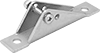
These brackets secure eyelet end fittings from both sides to provide a strong hold on gas springs that get bumped or jostled. Mount on any panel, lid, or door.
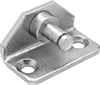
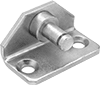
Attach eyelet end fittings to these brackets to mount gas springs.
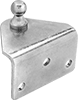
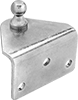
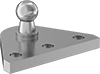
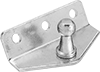
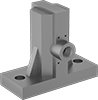
Pair these 90° angle brackets with ball socket end fittings to mount your gas spring in almost any position.
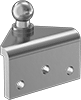
About twice as thick as standard 90° angle ball stud mounting brackets, these brackets are suitable for high-force applications.
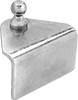
Made of easy-to-machine aluminum, these brackets come without mounting holes, so you can drill holes where you need them.
Stainless steel that’s twice as thick as standard 90° angle ball stud mounting brackets makes these brackets good for high-force applications exposed to damp conditions.
Pair with ball socket end fittings to mount your gas spring in almost any position.
Made with thicker stainless steel than standard ball stud mounting brackets, these brackets work well in high-force applications exposed to damp conditions.
Drill mounting holes where you need them—these brackets are made from aluminum, so they’re easy to machine.
Since they’re at least twice as thick as standard ball stud mounting brackets, these brackets are best for high-force applications.
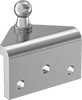
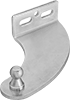
Pair these 90° angle offset-arm brackets with ball socket end fittings to mount your gas spring in almost any position.
Made from stainless steel, these brackets resist corrosion in damp environments.
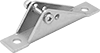
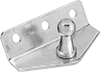
Pair these 30° angle brackets with ball socket end fittings to mount your gas spring in almost any position.
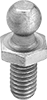
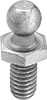
Attach ball socket end fittings to these studs to mount gas springs.
Install these ball studs into thin material—they’re riveted, so you only need access to one side.
Also known as tension and traction gas springs, these work in the opposite direction of other gas springs. Similar to a screen door closing, they're used to assist in closing covers, hoods, and doors.
Also known as piston vibrators, these pound the sides of your bin to dislodge wet, sticky, and caked-on materials.
These vibrators come with everything you need to get started.
To dislodge extremely thick, sticky materials from the sides of your bin, these vibrators have a sturdy base for secure mounting and even force distribution.
Weld a bracket to each of your containers and move these vibrators from job to job.
These vibrators attach more quickly than other vibrators by generating a vacuum instead of bolting or welding, so you can place them at the source of the blockage and quickly move them between bins.
Move this vibrator to the source of your flow problem.
Commonly called piston pumps, these are often used in high-pressure applications, such as hydrostatic testing of pipelines, tanks, and valves.