We will reply to your message within two hours.
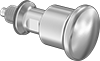
Retract the nose by pulling the knob.
Lock the nose into the retracted position by pulling the knob and rotating it 90°.
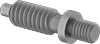
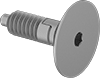
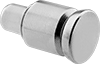
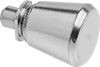
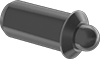
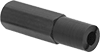
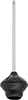
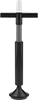
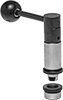
Quickly align, join, or hold machine components in place in food, pharmaceutical, and other sanitary environments. Pulling the plunger knob and twisting it 90° will lock the nose into its retracted position.
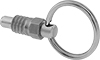
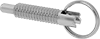
The ring allows you to attach these spring plungers to a lanyard.
Lock the nose into the retracted position by pulling the ring and rotating it 90°.
Use the lanyard as a tether to secure the spring plunger to machinery and prevent accidental drops.
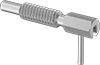
Lock the nose into the retracted position by pulling the handle and rotating it 90°.
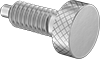
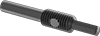
Thread onto machinery or attach a knob or handle to the threaded spindle.
Install by hand or with a hex key in low-clearance applications.
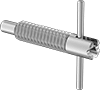
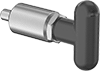
A T-handle makes these spring plungers easy to grip.
A quarter turn of the handle locks these plungers in the retracted position. The T-handle is easy to grip.
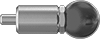
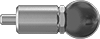
A smooth ball handle is easy to grip and won't catch on other parts.
A quarter turn of the handle locks these plungers in the retracted position. The smooth ball handle is easy to grip and won't catch on other parts.
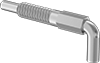
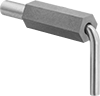
An L-handle takes up less space than a T-handle.
Add a knob or handle to the threaded shank.
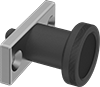
Two holes in the plate allow these plungers to be mounted to a flat surface.
Use an arbor press or similar pressure tool to install these spring plungers into a panel.
Lock the nose in the retracted position by pulling the knob and rotating it 90°.
Insert the nose into a panel; then thread on the nut and tighten using an installation wrench.
Install these spring plungers with a screwdriver—they're slotted on one or both ends.
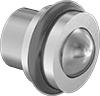
Designed with a flange to keep the plunger from being pushed through a hole when the ball is depressed.
The flangeless design allows these spring plungers to mount flush with a surface.
An O-ring in the flange creates a tight seal.
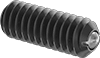
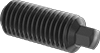
Install with a hex key for more torque than slotted ball-nose spring plungers.
Install with a driver.
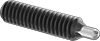
Install with a hex key for more torque than slotted long-nose spring plungers.
A flange keeps the plunger from being pushed through a hole when the ball is depressed.
Noses are up to four times longer than standard long-nose press-fit spring plungers.
Slotted on both ends for installation with a screwdriver.
These spring plungers have a nose that is about three-times longer than standard long hex-nose spring plungers.
Fasten from the nose end with a wrench for more torque than slotted long-nose spring plungers.
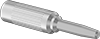
Install spring plungers from the nose end without depressing the nose.
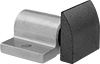
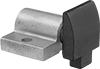
Press these catches into a hole.
Weld these catches in place for a strong permanent hold.
Mount ball-nose and long-nose spring plungers to fixture surfaces.
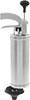
Power through clogs with these drain cleaners that use cartridges of CO2 gas.
Pressurize the cylinder with the handle or an air compressor and blast away blockages up to 200 ft. away.
As the face of these plungers is pushed in, the internal spring applies outward pressure to hold a workpiece in position against stops and rails.
Set the tang in a slot below the work surface to prevent thin material from sliding underneath the face.
As the workpiece pushes against the pin head in one direction, the internal spring pushes back to hold it in place for clamping.
Sealed at the top to prevent debris from getting inside and making them seize up, these guide pins are a good choice for machining fixtures.
Use these tools for easier guide pin installation.
Threading makes these guide pins easier to remove and replace than press fit, so they're useful for high-wear applications.
Thread in a screw, handle, or other part to create the right size and shape guide pin for your application.
To align two parts with more precision than standard spring plungers, these index plungers have a mating bushing that improves alignment and repeatability.
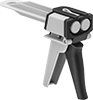
Use these plungers with a 3M dispensing gun for adhesives in dual cartridges.
Use these plungers with a dispensing gun for adhesives in dual cartridges.
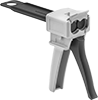
Use these guns to dispense two-part adhesives. Do not use them with 3M dual cartridges.
Only for use with 3M dual cartridges, these guns dispense two-part adhesives.
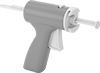
Use these dispensing guns with Loctite® single-component syringes.
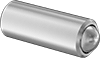
Also known as spring plungers, these fittings are spring-loaded to accommodate items with variable heights.
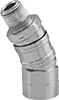
Able to rotate 360° and flex to 45°, these fittings help vacuum cups grip items that are positioned at an angle.
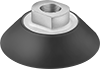
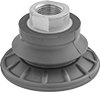
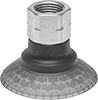
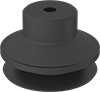
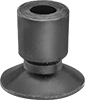
Use these cups with a vacuum system to grip, lift, and move flat materials, such as sheet metal and plastic.
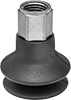
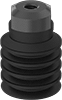
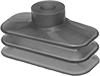
The bellows on these cups handle items with varied heights and angles better than flat cups.
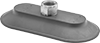
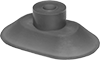
The oval shape of this cup provides a greater surface area than other cups, so it is good for lifting long, thin objects without bending them.
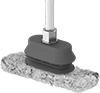
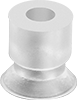
Pick up long, narrow items in your sanitary facility with these cups—they connect to threaded fittings on your vacuum system.
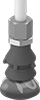
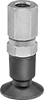
Thread these cups onto your vacuum system to lift and move sanitary items with curves, corners, and uneven surfaces.
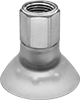
These cups are made of FDA listed silicone rubber to withstand the extreme temperatures in food processing applications.
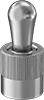
Connect these cups to your vacuum system to pick up bread, pastries, and other soft material.
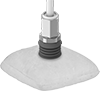
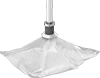
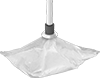
Attach these cups to threaded connections on your vacuum system to gently lift bags, plastic film, and other sanitary wrappings.
Protect static sensitive materials, such as electronics, with these cups that diffuse static buildup.
These cups maintain their grip even as contents shift and the bag changes shape during lifting.
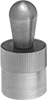
Lift smooth items, such as glass, plastic, and sheet metal without leaving marks.
Prevent oily material from slipping free of the suction with these cups.
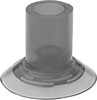
These cups have an unthreaded mounting hole to attach to a barbed fitting.
Press these cups onto unthreaded fittings on your vacuum system to pick up sanitary items with curves, corners, and uneven surfaces.
Press these cups onto unthreaded fittings on your vacuum system to pick up bread, pastries, and other soft material.
Slide these cups onto unthreaded fittings on your vacuum system to gently pick up bags, plastic film, and other sanitary wrappings.
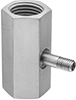
Connect these fittings to a vacuum cup and compressed air source to create a vacuum generating system.