Filter by
Material
System of Measurement
Cell Type
Maximum Temperature
Density
Flexibility
Hardness Rating
Cellular Skin Surface
Foam Cell Type
Minimum Temperature
DFARS Specialty Metals
Export Control Classification Number (ECCN)
Pressure to Compress 25%
REACH
RoHS
Texture
Oil-Resistance Rating
Tensile Strength Rating
For Use Outdoors
About Foam
More
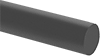
Super-Cushioning Polyurethane Foam Cords and Circles
Use these flexible polyurethane foam cords and circles to cushion narrow spaces, such as channels and gaps. Foam has open-cell construction, which allows water, air, and gases to be absorbed.
Cords

- Color: Gray
- Temperature Range: -20° to 180° F
- Cell Type: Open
- For Use Outdoors: No
- Density: 1 lbs./cu. ft.
- Pressure to Compress 25%: 0.3 psi (Ultra Soft)
- Tensile Strength Rating: Fair
- Oil-Resistance Rating: Not Rated
Circles

- Color: Gray
- Temperature Range: -20° to 180° F
- Cell Type: Open
- For Use Outdoors: No
- Density: 1 lbs./cu. ft.
- Pressure to Compress 25%: 0.3 psi (Ultra Soft)
- Tensile Strength Rating: Fair
- Oil-Resistance Rating: Not Rated
1/2" Lg. | 1" Lg. | 1 1/2" Lg. | 2" Lg. | |||||||
|---|---|---|---|---|---|---|---|---|---|---|
| Dia. | Dia. Tolerance | Pkg. Qty. | Pkg. | Pkg. | Pkg. | Pkg. | ||||
| 3" | -0.125" to 0.125" | 10 | 0000000 | 00000 | 0000000 | 00000 | 0000000 | 000000 | 0000000 | 000000 |
| 4" | -0.125" to 0.125" | 5 | 0000000 | 0000 | 0000000 | 0000 | 0000000 | 0000 | 0000000 | 00000 |
| 5" | -0.125" to 0.125" | 5 | 0000000 | 0000 | 0000000 | 0000 | 0000000 | 0000 | 0000000 | 00000 |
| 6" | -0.125" to 0.125" | 5 | 0000000 | 0000 | 0000000 | 0000 | 0000000 | 00000 | 0000000 | 00000 |
| 8" | -0.125" to 0.125" | 5 | 0000000 | 0000 | 0000000 | 00000 | 0000000 | 00000 | 0000000 | 00000 |
Backer Rods
![]() | ![]() |
![]() |
Provide support for sealants in gaps—insert these backer rods into gaps and fill in with sealant.
Open-cell backer rods are the most compressible and maintain their shape better than bicellular ones. They allow moisture to be absorbed. Although they withstand environments up to 500° F, they shouldn’t be used with hot-pour sealants, which can seep through the large cell size and damage the underlying surface.