We will reply to your message within an hour.
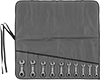
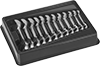
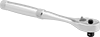
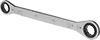
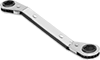
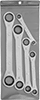
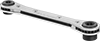
Flip these wrenches over to ratchet in the opposite direction.
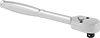
A lever reverses the ratchet direction.
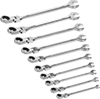
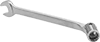
Pivot the box end for access to fasteners in tight spots.
A spline-shaped box end turns spline, hex, and 12-point fasteners. This shape also gets a better grip on rounded fasteners that can be difficult to turn with a traditional wrench.
Suitable for occasional maintenance work, these sets are imported.
Made in the U.S.A., these tools handle the toughest industrial applications, provide the best grip on fasteners, and have a superior finish.
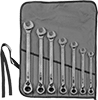
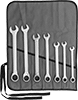
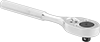
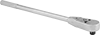
A ratchet mechanism allows you to turn fasteners without removing and repositioning the wrench.
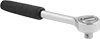
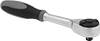
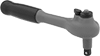
The handle is covered in rubber for a comfortable grip.
No need to pull the socket off the tool—push a button to release.
A gasket seals in permanent lubrication and keeps out dirt, dust, and moisture.
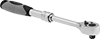
The shaft on these wrenches extends and locks.
Twist the grip to rapidly turn a socket before final tightening or to remove a fastener once loosened. The handle also swings like a traditional ratchet wrench.
When the ratchet head becomes worn or damaged, change it out for a new one.
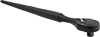
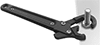
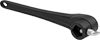
Also known as a construction or spud handle, wrenches use the pointed end to align bolt holes.
Made of aluminum-bronze, these wrenches satisfy OSHA requirements that specify nonsparking tools for locations where flammable vapors and combustible residues are present.
Insulated to protect against accidental contact with live electrical circuits, these wrenches are tested to 1,000 volts to meet IEC 60900.
Pivot the head to access fasteners in tight spots.
The 20° offset head provides clearance when reaching over obstructions.
Rather than teeth, these wrenches use a series of rollers to engage the ratchet, enabling work in the tightest of spaces. Also known as silent ratchets, they don't make the traditional click sound when turned.
Turn sockets in the most confined spaces.
Extend the shaft for additional length.
Pivot the head for access to fasteners in tight spots.
A rubber coating provides a comfortable grip.
Position the head anywhere along the handle.
The L shape provides clearance when reaching over obstructions.
The ratcheting mechanism turns sockets quickly.
Bend around obstructions to turn hard-to-reach fasteners.
Turn sockets from above when there's not room to swing a standard wrench handle.
Fasten quickly with these crank-style handles.
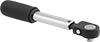
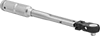
Set the desired torque and the wrench indicates when it's reached with an audible click and an impulse in the grip.
Unlike most torque wrenches, you don’t have to return the torque setting to the lowest value after use. These tools are also known as split-beam torque wrenches.
Made of beryllium copper, these wrenches satisfy OSHA requirements that specify nonsparking tools for locations where flammable vapors and combustible residues are present.
These wrenches have an accuracy of ±2.0%.
Measure with an accuracy of ±2%.
The most advanced torque wrenches we offer, these tools store and recall up to 1,500 torque and angle measurements.
These wrenches slip to disengage and stop turning the fastener when the set torque is reached, preventing overtightening.
When the set torque is reached, these wrenches signal with an audible click and an impulse in the grip.
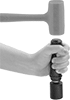
Also known as impact drivers, use these tools with impact sockets to break frozen bolts and screws free. Strike with a hammer to tighten and loosen fasteners.
Use these tools for general shop applications.
Built for durability, these wrenches handle the demands of high-volume production and tough maintenance applications.
Built for durability, these high-performance tools handle the demands of high-volume production and tough maintenance applications.
These tools are suitable for general shop, maintenance, and automotive work.
Use these wrenches for medium-volume production, general maintenance, and construction applications.
Insulated to protect against accidental contact with live electrical circuits, these sockets are tested to 1,000 volts to meet ASTM F1505 and IEC 60900.
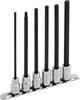
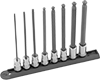
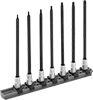
Extra-long bits allow access to hard-to-reach fasteners.
The short bit on these sockets fits in spaces where height clearance is limited.
The ball end allows angled entry when you don't have exact alignment between the socket bit and fastener.
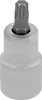
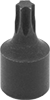
These sockets are also known as pin-in-Torx bits.
These sockets are also known as pin-in-hex or pin-in-socket bits.
These sockets are also known as Robertson bits.
Made of aluminum-bronze, these sockets satisfy OSHA requirements that specify nonsparking tools for locations where flammable vapors and combustible residues are present.
These short sockets fit spaces where height clearance is limited.
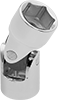
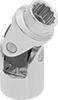
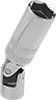
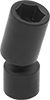
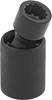
Pivot the head to access fasteners from an angle.
With a plastic insert, these sockets firmly grip hex nuts and bolts without rounding them or scratching highly polished finishes.
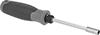
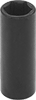
Extra length allows access to fasteners on long bolts.
Insulated to protect against accidental contact with live electrical circuits, these sockets are tested to 1,000 volts to meet IEC 60900.
Quickly position these sockets on square and external 8-point fasteners.
Grip the indentations around the outside of tri-groove fasteners.
For easy tightening and loosening, these sockets have pins that grip the slotted sides on bearing nuts.
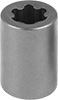
Designed to fit on external Torx-Plus fasteners, often found on pickup trucks, these sockets have squared lobes that resist slipping at high torque.
Turn many sizes of square, hex, and 8-point fasteners with one socket. Place over the fastener and 54 pins move to grip it securely.
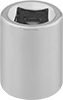
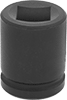
Also known as pipe plug sockets, these sockets have a square shape that provides the best possible grip on square fasteners and prevents rounding.
These sockets fit the nuts found on water and gas valves.
Often used with an extension, these sockets turn fasteners and fittings in obstructed areas that a regular socket can't reach. They are also known as crowfoot wrenches.
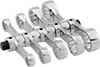
The opening shape makes more contact with fasteners for a better grip than standard open-end sockets. Also known as flare-nut or line wrench sockets, they're often used with flared tube fittings and fuel and hydraulic lines.
Make maximum contact with all sides of a fastener to reduce slipping. These sockets are also known as torque adapters.
A rubber insert grips the plug to prevent damage.
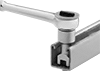
Designed to fit inside strut channel, these sockets make it easier to mount the channel than using an extension or additional tools.
The opening is designed to grip threaded rod for quick installation and removal without damaging the threads.
Achieve the best possible grip on hex fasteners and prevent rounding.
A magnet holds the fastener securely enough to drive self-tapping screws.
With a smaller OD than standard sockets, these fit between tightly spaced fasteners.
Tighten or loosen nuts and bolts without damaging the finish.
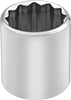
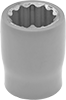
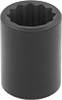
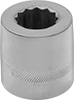
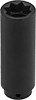
The 12-point shape quickly positions on hex fasteners.
Quickly position these sockets on square fasteners.
The square shape provides the best possible grip on square fasteners and prevents rounding.
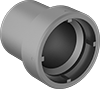
Designed to remove and install dual wheels on trucks and trailers, these sockets have a hex recess for accessing lug nuts and a square recess to turn the threaded shafts found on inner wheels.
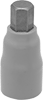
The hex shape grips hex fasteners and prevents rounding.
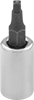
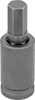
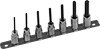
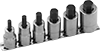
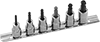
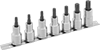
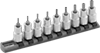
Use bit sockets as an alternative to a screwdriver or L-key.
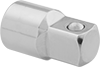
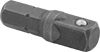
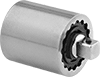
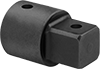
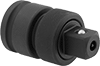
Convert from one square drive size to another.
Push the square drive through the adapter to change size.
These adapters are insulated to protect against accidental contact with live electrical circuits. They are tested to 1,000 volts to meet IEC 60900.
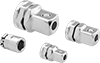
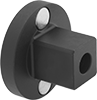
Attach one of these adapters to a socket to turn it with an open-end or box wrench.
Turn sockets with a bit screwdriver.
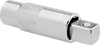
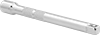
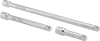
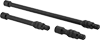
Extend your socket's reach.
Made of aluminum-bronze, these extensions satisfy OSHA requirements that specify nonsparking tools for locations where flammable vapors and combustible residues are present.
Insulated to protect against accidental contact with live electrical circuits, these extensions are tested to 1,000 volts to meet IEC 60900.
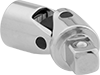
The square drive has a rounded shape that allows the extension to pivot inside the socket opening and turn it from an angle.
Bend these extensions around obstructions to turn hard-to-reach fasteners.
Lock your socket into the extension to prevent accidental disengagement.
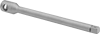
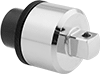
Change a standard wrench handle into a ratcheting wrench.
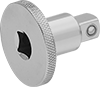
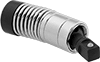
Fit these adapters between your wrench and socket to enable finger tightening.
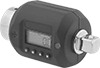
Set a desired torque within the range.
A digital display shows how torque measurements change as you turn the wrench. Set the desired torque and angle—lights and an audible alarm indicate when target has been reached or exceeded.
Adapters are set to a specific torque and cannot be adjusted.
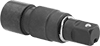
Lock the adapter on your tool and the socket to the adapter to prevent accidental disengagement.
A magnet holds the socket, making changes quicker.
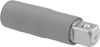
Attach to your socket for a longer reach.
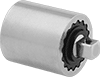
Prevent overtightening that can damage fasteners. These adapters spring back slightly when the set torque is reached.
Pull the collar to quickly attach and remove sockets.
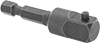
Use sockets with tools that accept hex shanks, such as impact drivers and power drills.
Bend these extensions around obstructions to access hard-to-reach fasteners.
For high quality at a lower price, choose these U.S.A.-made sets.
With squared lobes that won’t slip at high torque, all of the sockets in these sets are designed to fit on external Torx-Plus fasteners, often found on pickup trucks.
Shaped and sized for compatibility with wheel bearing locknuts on trucks and trailers, the sockets in these sets make it easy to install and remove locknuts.
Keep a convenient mix of hex, Torx, Phillips, and slotted bit sockets on hand.
Make maximum contact on all sides of a fastener to reduce slipping. These sockets are also known as torque adapters.
Turn nuts on bolts and threaded rod, which pass through these sockets.
Lock your socket into the extension to prevent accidental disengagement..
Use these sockets as an alternative to a screwdriver or L-key. They are made to withstand the high torque and force of impact tools.
The hex shape grips hex fasteners and prevents rounding. These sockets are made to withstand the high torque and force of impact tools.
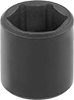
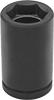
These sockets are made to withstand the high torque and force of impact tools.
Remove and install dual wheels on trucks and trailers with the sockets in these sets.
Ratchet mechanisms allow you to turn fasteners in tight spaces without removing and repositioning the tool.
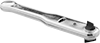
A ratchet mechanism allows you to turn fasteners in tight spaces without removing and repositioning the wrench.
An insulated handle protects against accidental contact with live electrical circuits. These wrenches are tested to 1,000 volts to meet IEC 60900.
The 25° offset heads give you additional clearance to turn hard-to-reach fasteners.
The offset head gives you additional clearance to turn hard-to-reach fasteners.
An extra-long handle provides access to hard-to-reach fasteners and increases leverage.
Open the jaws to fit around a fastener like an open-end wrench; close the jaws and the wrench acts like a ratcheting box wrench.
The heads are offset to provide clearance for reaching over obstructions.
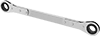
A ratchet mechanism in the heads lets you turn fasteners in tight spaces without removing and repositioning the wrench.
A ratchet mechanism in the head allows you to turn fasteners in tight spaces without removing and repositioning the wrench.
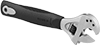
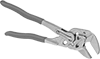
Turn fasteners with the firm grip of a wrench and the adjustability of pliers.
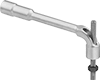
Pivot the socket end to access hard-to-reach fasteners.
Turn nuts on bolts and threaded rod, which can pass through the short end of the wrench. For additional leverage, slip a bar through the short end to create a T-handle.
Turn lug bolts on car and truck wheels. These wrenches have a different socket size at each end.
These wrenches have one pivoting socket end and one open end.
Change heads to use these tools as an open-end, box, square drive, or hex-key wrench.
The 5-point opening fastens the nuts and caps on fire hydrants. These wrenches have a ratcheting mechanism that allows you to turn fasteners without removing and repositioning the wrench.
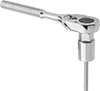
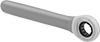
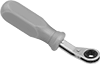
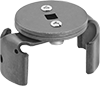
Use your ratchet wrench as a handle to reach filters and other round objects in tight spots.
A ratchet mechanism allows you to drive fasteners when there's little space to move the handle.
A ratchet mechanism turns fasteners more quickly than a standard bit driver. Insert a bit into the shaft and a magnet holds it in place.
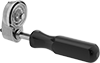
Drive screws four times faster than ratcheting alone. Grip the speed housing at the base of the shaft with one hand while turning the handle with the other. A magnet at the end of the shaft holds bits in place.
These tools deliver powerful rotational blows to maximize torque and drive screws quickly, even through thick or dense material.
Break stuck screws free using screwdriver bits. Strike the end of the handle with a hammer to turn the bit and tighten or loosen fasteners.
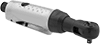
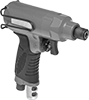
Connect these powerful tools to your shop air. They hammer as they rotate to drive screws quickly, even through thick or dense material.
A ratchet mechanism turns fasteners more quickly than a standard driver. These screwdrivers have 90° offset tips to provide additional clearance when reaching over obstructions to turn fasteners.
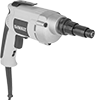
Set torque and the clutch slips to prevent you from exceeding it.
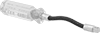
Attach a socket to the 1/4" square drive tip. These tools have a dial that shows how torque measurements change as you turn the driver. Use to fasten to a specific torque, determine fastener torque specifications, and identify the torque required to loosen tightened fasteners.
Lock your bit into the adapter to prevent accidental disengagement. These adapters attach to square-drive tools.
Attach these adapters to square-drive tools.
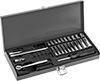
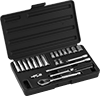
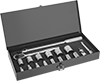
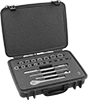
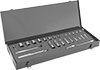
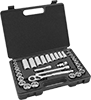
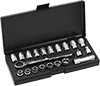
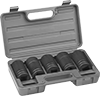
These sets include an assortment of sockets and wrenches for occasional maintenance work.
What you need for most maintenance jobs, these sets include an assortment of drivers, cutters, pliers, and wrenches.
Ratcheting action allows for quick adjustment to machinery and valves in tight spaces. All of these handles have a straight, open socket head for long shafts to pass through.
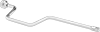
Use with a tap to thread holes by hand. These wrenches are more compact than straight-handle tap wrenches, so they can be used to tap in tighter spaces.
Switch from internal to external threading with interchangeable tap and die adapters. Use them with the included ratcheting wrench.
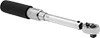
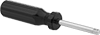
Also known as a can socket wrench, this tool opens telephone box fasteners and tightens nuts on binding posts.