We will reply to your message within an hour.
More
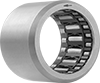
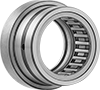
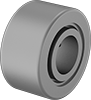
Also known as drawn-cup roller bearings, these are our thinnest roller bearings. The outer ring is drawn out to form a lip that holds the bearing together.
These bearings have higher radial load capacity, speed, and accuracy than standard needle-roller bearings.
Adapt high-precision needle-roller bearings to use on unhardened, unground shafts.
The needles in these bearings roll freely in one direction, but lock to transmit torque when the rotation of the shaft is reversed. Also known as drawn-cup roller clutches.
Found anywhere from machine tool spindles to conveyor rollers, these bearings have a two-piece design that allows for adjustment.
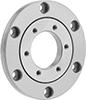
With thicker inner and outer raceways, these bearings can handle heavier loads than thin-profile crossed roller bearings. Mounting holes on the inner and outer rings allow for fastening onto hollow joints and shafts.
For a more compact machine, these bearings have thinner inner and outer rings than high-load crossed-roller bearings. Route hydraulic lines, electrical wiring, and other components through the inside of the bearing.
The thicker inner and outer raceways on these bearings can handle heavier loads than the thin-profile crossed-roller bearings.
With thinner inner and outer rings, these bearings keep your machines more compact than high-load crossed-roller bearings. Route hydraulic lines, electrical wiring, and other components through the inside of the bearing. Mounting holes on the rings allow for fastening onto hollow joints and shafts.
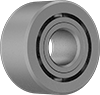
A built-in thrust ball bearing reduces wear from adjacent shaft components, while the needle-roller bearing supports radial loads.
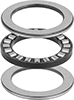
Thinner rollers allow these bearings to fit in tighter spaces than tapered-roller thrust bearings.
Adapt needle-roller thrust bearings to use on unhardened, unground surfaces.
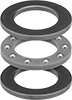
Cylindrical-roller thrust bearings handle higher loads than needle-roller thrust bearings. They also run at faster speeds than tapered-roller thrust bearings.
These steel ball bearings handle higher loads than stainless steel and plastic bearings.
A solid polymer lubricant surrounds the balls, eliminating the need for additional lubrication. Because it's solid, the lubricant blocks out water and dust, extending the life of the bearing.
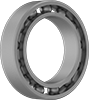
For greater accuracy and higher speeds, these bearings are made to tighter tolerances than standard ball bearings.
With a spherical raceway and two rows of balls, these bearings compensate for shaft misalignment.
Good for use in electric motors and power generators, these bearings have ceramic balls that insulate against stray current to prevent damage to the bearing.
Internal locking elements (sprags) lock to transmit torque in one direction while turning freely in the other direction.
For use on tapered shafts and round shafts with adapter sleeves, these ball-bearings have a spherical raceway to compensate for shaft misalignment.
Bearings are 440C stainless steel for good corrosion resistance.
A solid polymer lubricant surrounds the balls, eliminating the need for additional lubrication. Bearings are 440C stainless steel.
Good for applications with incidental food contact, these 440C stainless steel bearings have a food-grade, solid polymer lubricant between the balls and race that eliminates the need for additional lubrication.
These 316 stainless steel bearings are more corrosion resistant than our other stainless steel bearings, but they have a lower load capacity.
Made of slippery plastic, these bearings do not require lubrication and have excellent corrosion and chemical resistance.
With two rows of balls, these lightweight bearings have greater durability and load capacity—and a wider profile—than single-row plastic bearings.
Flanged and creating twice as many contact points as angular-contact ball bearings, these bearings ensure correct positioning within a tube or housing and resist radial loads.
Slip these bearings onto a shaft and secure with the included set screws, no special tools required.
Quickly secure these bearings onto shafts with the clamp-on collar for a concentric, mar-free hold.
Made with either PEEK or graphite, these ball bearings work in applications that are too hot for most other ball bearings.
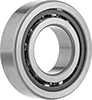
Install these bearings for use with combined radial and thrust loads. They are often used in spindle applications and can be combined with cylindrical roller bearings to better handle radial loads.
These bearings have twice as many contact points as angular-contact ball bearings.
An ABEC-7 rating means these bearings are made to some of the tightest tolerances, so they operate at the highest speeds.
Steel balls and washers allow these bearings to handle higher loads than bearings with stainless steel components.
Ball bearings operate with less friction than other bearings, so they can run at higher speeds.
Designed with a thin, compact housing, these bearings are good for space-constrained applications.
Also known as tapped-base bearings, these ball bearings mount to surfaces from the bottom through threaded holes. Because of their narrow profile, they’re commonly used in tight-clearance spaces, including systems where multiple shafts are mounted close together.
Ball bearings operate with less friction than other bearings, so you can run them at higher speeds.
Used in food, beverage, pharmaceutical, and chemical plants, these mounted ball bearings are IP69K certified for washdown environments and have a two-bolt flange for mounting.
Permanently lubricated and IP69K certified for washdown environments, these mounted ball bearings are useful for hard-to-reach areas in food, beverage, pharmaceutical, and chemical plants. Mount them using their two-bolt flange.
A bolt in each corner makes for a secure, even hold.
Made to withstand frequent washdowns, these bearings are permanently lubricated, which means you’ll never have to add lubricant. Use them in hard-to-reach areas in food, beverage, pharmaceutical, and chemical plants.
Made of high-performance plastic, these insert bearings last longer than metal insert bearings. They also don’t require lubrication.
Swap out worn inserts instead of replacing the entire mounted unit.
Rated IP69K for washdowns, these bearings stand up to frequent cleanings in food, beverage, pharmaceutical, and chemical plants.
Also known as yoke-style cam followers, these rollers have more mounting flexibility than threaded track rollers. They're typically mounted onto a shaft or clevis rod end.
With a double row of cylindrical roller bearings, these rollers provide the highest combination of speed and dynamic radial load ratings of any shaft-mount track roller we offer.
Use ball bearings in debris-free environments and when speed is a necessity. They operate with less friction than sleeve bearings, so you can run them at higher speeds.
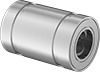
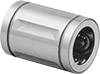
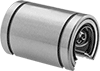
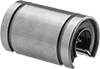
Engineered for simultaneous linear and rotary motion, these bearings are used with round end-supported shafts.
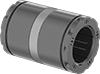
Designed to handle heavy loads, these bearings have higher load capacities than comparable standard linear ball bearings.
The choice for low-friction motion in high-temperature environments.
Ball bearings create less friction than sleeve bearings, so they require less force to operate.
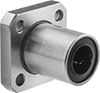
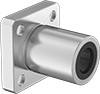
The flanged housing makes these bearings a good solution for vertical linear motion applications.
The shell, housing, and balls of these bearings are stainless steel for excellent corrosion resistance.
Choose ball bearings for debris-free environments and when speed is a necessity. They operate with less friction than sleeve bearings, so you can run them at higher speeds.
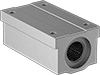
Designed to handle heavy loads, these bearings have the highest load capacities of any mounted linear ball bearings we offer.
Outdoor as well as mild chemical environments are no problem for these bearings. They have stainless steel balls for corrosion resistance.
Mount these bearings on a support rail shaft for applications requiring maximum rigidity.
Designed to handle heavy loads, these bearings have higher load capacities than comparable standard mounted linear ball bearings for support rail shafts.
For precise positioning in your linear motion system, add these brakes to manually lock a bearing in place on a shaft.