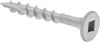
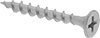
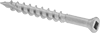
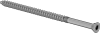
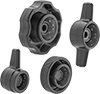
We will reply to your message within two hours.
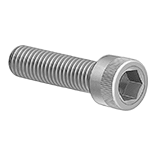
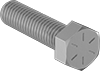
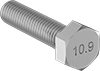
The standard for high-strength fastening.
Choose these screws for their adherence to strict military standards for material and construction.
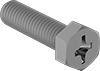
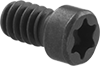
A Torx-Plus drive has more points of contact than a hex drive, allowing you to tighten these screws with less slippage or damage to the recess.
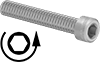
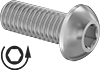
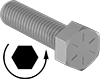
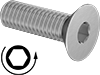
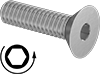
Tighten these screws by turning them to the left; once fastened, they prevent counterclockwise-moving parts from loosening.
These screws are specially tempered to meet ASTM A193 specifications for temperatures up to 1100° F.
Use these general purpose 18-8 stainless steel screws for a variety of fastening applications. They have good chemical resistance.
Insert these plugs into the drive socket to block debris and provide a finished look.
Choose these screws for their adherence to strict military standards for material and construction. Screws are 18-8 stainless steel for good chemical resistance.
Cleaned and double bagged in an ISO Class 5 (Fed. Std. Class 100) clean room, these screws are ready to use on chambers and components in high-vacuum systems.
Tighten these screws by turning them to the left; once fastened, they prevent counterclockwise-moving parts from loosening. Made from 18-8 stainless steel, these screws have good chemical resistance.
More corrosion resistant than 18-8 stainless steel screws, these 316 stainless steel screws have excellent resistance to chemicals and salt water.
Often used to fasten parts in engines and turbines, these are our strongest stainless steel screws. They are comparable in strength to alloy steel with the corrosion resistance of 18-8 stainless steel.
These screws are hardened to be 40% stronger than standard 316 stainless steel screws, yet they still have excellent corrosion resistance. Use them in chemical and marine applications.
Plastic screws are chemical and oil resistant, nonconductive, and lightweight.
Brass screws are electrically conductive, nonmagnetic, and have good corrosion resistance.
Aluminum screws are one-third the weight of steel and have good corrosion resistance.
Our most corrosion-resistant metal screws, titanium screws withstand salt water, acids, and chemicals. They have a high strength-to-weight ratio and are about 40% lighter than steel screws.
More corrosion resistant than stainless steel screws, nickel alloy screws have excellent resistance to salt water and some acids.
Bronze screws are about 40% stronger than brass screws and provide more corrosion resistance to salt water, gases, and sewage. They are nonmagnetic and electrically conductive.
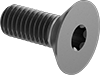
Made of alloy steel, these low-profile screws are nearly twice as strong as their stainless steel counterparts. With half the height of a standard socket head, these low-profile screws fit in tight spaces.
Nearly as strong as steel, these stainless steel screws won’t rust in outdoor, washdown, and other corrosive environments. With half the height of a standard socket head, these low-profile screws fit in tight spaces.
More corrosion resistant than 18-8 stainless steel screws, these 316 stainless steel screws have excellent resistance to chemicals and salt water. Use these low-profile screws where space is limited.
Made from alloy steel, these screws are nearly twice as strong as stainless steel low-profile screws. With a head height one-third the size of a standard socket head, they fit in the tightest spaces.
More corrosion resistant than 18-8 stainless steel screws, these 316 stainless steel screws have excellent resistance to chemicals and salt water. Their ultra-low-profile lets them fit in the tightest spaces.
With a head one and a half times taller than a standard socket head, these screws are easier to install in deep counterbored holes and other hard-to-reach places.
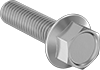
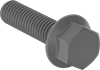
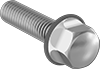
These general purpose flanged screws distribute pressure where the screw meets the surface, eliminating the need for a washer.
For use where sideways forces are a concern, these screws have a precisely measured unthreaded portion (grip) for a strong hold. Their flanged head distributes pressure where the screw meets the surface, so you don't need a washer.
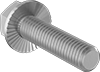
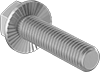
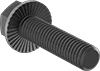
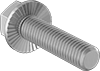
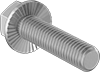
Serrations under the head grip the material's surface for mild vibration resistance. The flange distributes pressure across the material's surface, eliminating the need for a washer.
These screws have good chemical resistance. A thread locker bonded to the threads prevents loosening from vibration.
More corrosion resistant than 18-8 stainless steel screws, these screws have excellent resistance to chemicals and salt water. They have a thread locker to resist vibration.
With a tensile strength of 170,000 psi, these alloy steel screws are among the strongest we carry. They are stronger than Grade 8 steel screws and are nearly two and a half times stronger than stainless steel thread-locking screws. They have a thread locker to prevent loosening from vibration.
Stainless steel screws have excellent corrosion resistance in most environments. Wire these screws together for more vibration resistance than other types of socket head screws.
With a tensile strength of 170,000 psi, these alloy steel screws are among the strongest we carry. They are stronger than Grade 8 steel screws and are more than twice as strong as stainless steel wire-lockable screws. These resist vibration better than any other socket head screw.
Stainless steel screws have excellent corrosion resistance in most environments. They have a split lock washer to create tension and resist loosening from vibration.
With a tensile strength of 180,000 psi, these alloy steel screws are among the strongest we carry. They are stronger than Grade 8 steel screws and more than two and a half times stronger than stainless steel screws with split lock washer. The split lock washer helps to resist vibration.
Drilled through the head and shaft, these screws vent fluid and gases trapped below the screw, making them good for vacuum applications.
Fasten these screws inside a high-vacuum system without bringing in contaminants.
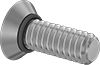
Seal out contaminants and prevent leaks—a rubber O-ring under the head prevents leaks and seals out contaminants.
A freely rotating washer distributes pressure over a wider area than a flange, preventing damage to your material's surface.
The nylon patch bonded to the threads of these socket head screws adds friction to keep vibration from loosening them, while their O-ring prevents leaks and seals out contaminants.
Nonconductive and softer than brass, the nylon tip reduces vibration and eliminates damage from metal touching metal.
The nonmarring brass tip is electrically conductive and harder than nylon, but soft enough to conform to most surfaces and reduce damage from metal-on-metal contact.
No need for separate bits—these screws lock directly onto square-drive socket wrenches, reducing the risk of dropping parts during installation.
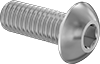
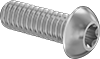
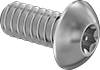
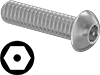
18-8 stainless steel button head screws have good chemical resistance and may be mildly magnetic.
More corrosion resistant than 18-8 stainless steel screws, these button head screws have excellent resistance to chemicals and salt water. They may be mildly magnetic.
316 stainless steel screws resist corrosion from chemicals and salt water better than 18-8 stainless steel screws. They may be mildly magnetic.
Closely spaced threads on these screws fit in holes with a fine pitch. They're not compatible with standard metric threads.
These metric alloy steel screws are nearly twice as strong as stainless steel button head screws.
Brass button head screws are corrosion resistant in wet environments, nonmagnetic, and electrically conductive.
Made from brass, these metric button head screws are corrosion resistant in wet environments, nonmagnetic, and electrically conductive.
As strong as alloy steel and about 40% lighter, these metric titanium screws are known for their high strength-to-weight ratio. They stand up to salt water, acids, and chemicals.
Known for their high strength-to-weight ratio, these titanium screws are as strong as alloy steel and about 40% lighter. They stand up to salt water, acids, and chemicals.
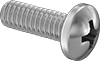
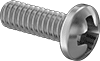
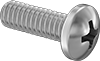
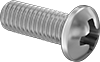
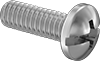
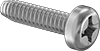
18-8 stainless steel pan head screws have good chemical resistance and may be mildly magnetic.
Made from 18-8 stainless steel, these metric pan head screws have good chemical resistance and may be mildly magnetic.
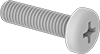
More corrosion resistant than 18-8 stainless steel screws, these pan head screws have excellent resistance to chemicals and salt water. They may be mildly magnetic.
These metric 316 stainless steel screws resist corrosion from chemicals and salt water better than 18-8 stainless steel screws. They may be mildly magnetic.
Made to Japanese Industrial Standards, these screws have narrower and shorter heads than standard Phillips pan head screws.
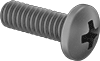
These steel pan head screws are coated for corrosion resistance.
A zinc plating makes these metric pan head screws corrosion resistant in wet environments.
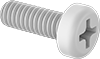
Nylon pan head screws are chemical and oil resistant, nonconductive, and lightweight. Exposure to moisture may cause them to expand.
Made from nylon, these metric pan head screws are chemical and oil resistant, nonconductive, and lightweight. Exposure to moisture may cause them to expand.
These metric PEEK screws are reliable in harsh environments up to 500° F and withstand acids, bases, and salt solutions. All are chemical and oil resistant, nonconductive, and lightweight.
Reliable in harsh environments up to 500° F, PEEK screws withstand acids, bases, and salt solutions. They are chemical and oil resistant, nonconductive, and lightweight.
Polycarbonate screws resist breaking in high-impact applications. All are chemical and oil resistant, nonconductive, and lightweight.
Made from polycarbonate, these metric pan head screws resist breaking in high-impact applications. They are chemical and oil resistant, nonconductive, and lightweight.
Brass pan head screws are corrosion resistant in wet environments, nonmagnetic, and electrically conductive.
Made from brass, these metric pan head screws are corrosion resistant in wet environments, nonmagnetic, and electrically conductive.
Our most corrosion-resistant screws, these titanium pan head screws withstand salt water, acids, and chemicals. They have a high strength-to-weight ratio.
The most corrosion-resistant pan head screws we offer, these metric titanium screws withstand salt water, acids, and chemicals. They have a high strength-to-weight ratio.
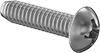
These 18-8 stainless steel screws have good chemical resistance and may be mildly magnetic. The extra-wide truss head distributes holding pressure to reduce the likelihood of crushing thin material.
Made from 18-8 stainless steel, these metric screws have good chemical resistance and may be mildly magnetic. The extra-wide truss head distributes holding pressure to reduce the likelihood of crushing thin material.
More corrosion resistant than 18-8 stainless steel screws, these screws have excellent resistance to chemicals and salt water. The extra-wide truss head distributes holding pressure to reduce the likelihood of crushing thin material. Screws may be mildly magnetic.
These metric 316 stainless steel screws resist corrosion from chemicals and salt water better than 18-8 stainless steel screws. The extra-wide truss head distributes holding pressure to reduce the likelihood of crushing thin material. Screws may be mildly magnetic.
Stainless steel screws have excellent corrosion resistance in most environments.
A zinc plating provides mild corrosion resistance.
A narrow head allows these screws to fit in tight spaces and a deep drive lets you maximize driving power.
Taller than cheese head screws, these have a deep drive to maximize driving power and a narrow diameter to fit in tight spaces.
Good for use outdoors and in washdown environments, these metric 18-8 stainless steel screws are more corrosion resistant than steel and nearly as strong. Their pan-shaped head sits nearly flat on the fastened surface, so there’s no need to countersink a hole.
These metric 316 stainless steel pan head screws resist corrosion from chemicals and salt water better than 18-8 stainless steel screws. They may be mildly magnetic.
These pan head screws are zinc plated for corrosion resistance in wet environments.
Install these metric pan head screws for a low-profile, finished look—no countersink required.
Nylon screws are chemical and oil resistant, nonconductive, and lightweight. Exposure to moisture may cause them to expand.
Made from nylon, these metric screws are chemical and oil resistant, nonconductive, and lightweight. Exposure to moisture may cause them to expand.
PTFE screws withstand harsh chemicals and temperatures from -100° F to 500° F. They are nonconductive, lightweight, and resist wear due to their slippery surface.
These metric PTFE screws withstand harsh chemicals and temperatures from -100° F to 500° F. They are nonconductive, lightweight, and resist wear due to their slippery surface.
More corrosion resistant than steel, and almost as strong, these 18-8 stainless steel screws have a narrower head than pan head screws to fit into tight spaces. They’re often used in electrical panels and next to flanges and raised surfaces in humid, damp, and washdown environments, but will corrode if exposed to salt water or chemicals.
More corrosion resistant than 18-8 stainless steel screws, these screws have excellent resistance to chemicals and salt water.
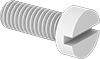
With a narrower head than pan head screws, these cheese head screws fit in tight spaces, such as in electrical panels and next to flanges and raised surfaces.
Made from nylon, these screws are chemical and oil resistant, nonconductive, and lightweight.
Made from brass, these screws are corrosion resistant in wet environments, nonmagnetic, and electrically conductive.
These screws have good chemical resistance.
One-third the weight of steel, aluminum screws resist corrosion in wet environments.
PTFE screws withstand harsh chemicals and temperatures from -100° F to 500° F.
Brass screws are corrosion resistant in wet environments, nonmagnetic, and electrically conductive.
When head height is important, these screws fit into spaces where other wide head screws won't fit. Also known as shutter screws, their ultra-wide truss head distributes the load over a large area for excellent holding pressure.
Fit these metric screws into spaces where head height is important and other wide head screws won't fit. Also known as shutter screws, they have an ultra-wide truss head to distribute the load over a large area for excellent holding pressure.
Plastic screws are ?chemical and oil resistant, nonconductive, and lightweight.
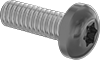
18-8 stainless steel screws have good chemical resistance and may be mildly magnetic. A Torx drive has more points of contact than other drives, allowing you to tighten the screw without damaging the recess.
Made from 18-8 stainless steel, these screws have good chemical resistance and may be mildly magnetic. Torx and Torx-Plus drives have more points of contact than other drives, allowing you to tighten the screw without damaging the recess.
The Torx or Torx-Plus drive on these metric screws have more points of contact than other drives, allowing you to tighten them without damaging the recess.
Made from alloy steel, these screws are three times stronger than standard steel button head Torx screws. A Torx-Plus drive has more points of contact than other drives, allowing you to tighten the screw without damaging the recess.
A286 stainless steel screws have comparable strength to alloy steel with the corrosion and chemical resistance of 18-8 stainless steel. They have a Torx drive that has more points of contact than other drives, allowing you to tighten the screw without damaging the recess.
Made from A286 stainless steel, these metric screws provide the strength of alloy steel and the corrosion and chemical resistance of 18-8 stainless steel. They have a Torx drive that has more points of contact than other drives, allowing you to tighten the screw without damaging the recess.
These metric 18-8 stainless steel screws have good chemical resistance and may be mildly magnetic. Torx drives have more points of contact than other drives, allowing you to tighten the screw without damaging the recess.
These metric screws have a Torx drive for more points of contact than other drives, allowing you to tighten the screw without damaging the recess.
These screws have a Torx or Torx-Plus drive for more points of contact than other drives, allowing you to tighten the screw without damaging the recess.
Add a decorative look when fastening parts—these metric screws have a painted head.
Create a decorative appearance on your finished product—the head of these screws is painted.
Made from stainless steel, these screws are chemical resistant and may be mildly magnetic.
These metric 18-8 stainless steel screws have good chemical resistance and may be mildly magnetic.
These screws have a tall, domed head that provides a finished appearance. They're zinc plated to resist corrosion in wet environments.
Designed for use in food, pharmaceutical, and other sanitary environments, these screws have an extra-wide truss head that distributes holding pressure to reduce the likelihood of crushing thin materials.
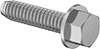
Made from 18-8 stainless steel, these metric screws have good chemical resistance and may be mildly magnetic. They have a flange that distributes pressure across a wide surface, eliminating the need for a separate washer.
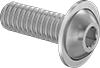
18-8 stainless steel screws have good chemical resistance and may be mildly magnetic. The flange distributes pressure across a wide surface, eliminating the need for a separate washer.
These metric 316 stainless steel screws resist corrosion from chemicals and salt water better than 18-8 stainless steel screws. They have a flange that distributes pressure across a wide surface, eliminating the need for a separate washer. Screws may be mildly magnetic.
More corrosion resistant than 18-8 stainless steel screws, these screws have excellent resistance to chemicals and salt water. They have a flange that distributes pressure across a wide surface, eliminating the need for a separate washer. Screws may be mildly magnetic.
Made from alloy steel, these screws are nearly twice as strong as stainless steel button head screws. They have a flange that distributes pressure across a wide surface, eliminating the need for a separate washer.
These metric alloy steel screws are nearly twice as strong as stainless steel button head screws. They have a flange that distributes pressure across a wide surface, eliminating the need for a separate washer.
These aluminum screws are lightweight and resist corrosion in wet environments. They have a flange that is wider and thicker than our other flanged screws, so they distribute pressure the best.
Made from aluminum, these metric screws are lightweight and resist corrosion in wet environments. The flange is wider and thicker than our other flanged screws, so they distribute pressure the best.
Made from 18-8 stainless steel, these screws have good chemical resistance and may be mildly magnetic. The flange is wider and thicker than our other flanged screws, so they distribute pressure the best.
These metric 18-8 stainless steel screws have good chemical resistance and may be mildly magnetic. The flange is wider and thicker than our other flanged screws, so they distribute pressure the best.
With a flange comparable in size to a washer, these metric screws distribute pressure better than standard flanged screws. Made from 316 stainless steel, they have excellent resistance to chemicals and salt water. Screws may be mildly magnetic.
Comparable in diameter to a washer, the flange on these screws distributes pressure better than standard flanged screws. Made from 316 stainless steel, they have excellent resistance to chemicals and salt water. Screws may be mildly magnetic.
These stainless steel screws have good chemical resistance and may be mildly magnetic. The washer has sharp internal teeth that dig into surfaces to resist large amounts of vibration while the smooth outside edge provides a finished look. Also known as Sems screws, the washer rotates freely but is permanently attached.
Made from stainless steel, these metric screws have good chemical resistance and may be mildly magnetic. The washer has sharp internal teeth that dig into surfaces to resist large amounts of vibration while the smooth outside edge provides a finished look. Also known as Sems screws, the washer rotates freely but is permanently attached.
Sharp internal teeth dig into surfaces to resist large amounts of vibration, while the smooth outside edge provides a finished look. Also known as Sems screws, the washer rotates freely but is permanently attached.
These metric screws have a washer with sharp internal teeth that dig into surfaces to resist large amounts of vibration. The smooth outside edge of the washer provides a finished look. Also known as Sems screws, the washer rotates freely but is permanently attached.
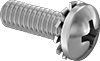
Made from stainless steel, these screws have good chemical resistance and may be mildly magnetic. All have a washer with sharp external teeth that dig into surfaces for maximum holding power and vibration resistance. Also known as Sems screws, the washer rotates freely but is permanently attached.
These metric stainless steel screws have good chemical resistance and may be mildly magnetic. All have a washer with sharp external teeth that dig into surfaces for maximum holding power and vibration resistance. Also known as Sems screws, the washer rotates freely but is permanently attached.
The washer on these screws has sharp external teeth that dig into surfaces for maximum holding power and vibration resistance. Also known as Sems screws, the washer rotates freely but is permanently attached.
These metric screws have a washer with sharp external teeth that dig into surfaces for maximum holding power and vibration resistance. Also known as Sems screws, the washer rotates freely but is permanently attached.
These metric stainless steel screws have good chemical resistance and may be mildly magnetic. A curved washer protects delicate surfaces while providing constant tension. Also known as Square Cone Sems screws, the washer rotates freely but is permanently attached.
Made from stainless steel, these screws have good chemical resistance and may be mildly magnetic. A curved washer protects delicate surfaces while providing constant tension. Also known as Square Cone Sems screws, the washer rotates freely but is permanently attached.
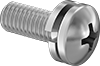
As you tighten these metric screws, the split lock washer flattens to add tension and prevent loosening from small amounts of vibration. Also known as Sems screws, the washer rotates freely but is permanently attached.
When compressed, the split lock washer flattens to add tension and prevent loosening from small amounts of vibration. Also known as Sems screws, the washer rotates freely but is permanently attached.
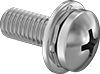
The flat washer distributes holding pressure and protects delicate surfaces from damage while the split lock washer adds tension to prevent loosening from small amounts of vibration.
Made from 18-8 stainless steel, these screws have good chemical resistance and may be mildly magnetic. A nylon patch bonded to the threads adds friction to prevent loosening from vibration.
These metric 18-8 stainless steel screws have good chemical resistance and may be mildly magnetic. A nylon patch bonded to the threads adds friction to prevent loosening from vibration.
Made from alloy steel, these screws are nearly twice as strong as stainless steel button head screws.
A nylon patch bonded to the threads adds friction to prevent loosening from vibration. Made from 18-8 stainless steel, these screws have good chemical resistance and may be mildly magnetic.
These metric screws have a nylon patch bonded to the threads that adds friction to prevent loosening from vibration. Made from 18-8 stainless steel, they have good chemical resistance and may be mildly magnetic.
The epoxy adhesive on the threads provides twice the holding power of standard thread-locking screws, but requires time to harden.
Wire these screws together through the hole in the head for better vibration resistance than any other rounded head screw.
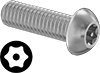
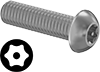
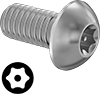
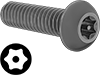
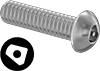
These 18-8 stainless steel button head screws have good chemical resistance and may be mildly magnetic. The tamper-resistant Torx drive (also known as a pin-in Torx drive) makes them difficult to remove without special tools.
Made from 18-8 stainless steel, these metric button head screws have good chemical resistance and may be mildly magnetic. The tamper-resistant Torx drive (also known as a pin-in Torx drive) makes them difficult to remove without special tools.
To prevent unwanted removal, these metric screws have a tamper-resistant Torx drive—also known as a pin-in Torx drive—that makes them difficult to unscrew without special tools. An O-ring under the head blocks leaks and seals out dust and dirt.
To prevent unwanted removal, these screws have a tamper-resistant Torx drive—also known as a pin-in Torx drive—that makes them difficult to unscrew without special tools. An O-ring under the head blocks leaks and seals out dust and dirt.
Made from alloy steel, these screws are nearly twice as strong as stainless steel button head screws. Their tamper-resistant Torx drive (also known as a pin-in Torx drive) makes them difficult to remove without special tools.
Nearly twice as strong as stainless steel button head screws, these metric screws are made from alloy steel. Their tamper-resistant Torx drive (also known as a pin-in Torx drive) makes them difficult to remove without special tools.
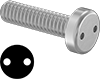
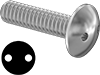
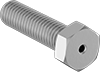
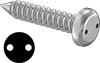
A tamper-resistant drilled spanner drive makes these screws difficult to remove without special tools. They're 18-8 stainless steel for good chemical resistance and may be mildly magnetic.
These metric screws have a drilled spanner drive, making them difficult to remove without special tools. Made from 18-8 stainless steel, they have good chemical resistance and may be mildly magnetic.
The extra-wide head distributes holding pressure to reduce the likelihood of crushing thin materials.
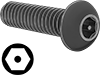
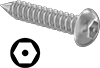
These 18-8 stainless steel button head screws have good chemical resistance and may be mildly magnetic. The tamper-resistant hex drive (also known as a pin-in hex drive) makes them difficult to remove without special tools.
Made from 18-8 stainless steel, these metric button head screws have good chemical resistance and may be mildly magnetic. The tamper-resistant hex drive (also known as a pin-in hex drive) makes them difficult to remove without special tools.
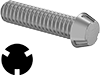
Difficult to remove without special tools, these screws have three grooves.
These button head screws have a unique drive that is sold only by McMaster-Carr, making them difficult to remove without a special driver bit. Made from 18-8 stainless steel, they have good chemical resistance and may be mildly magnetic.
A rubber O-ring prevents leaks and seals out contaminants. Made from 18-8 stainless steel, these screws have good chemical resistance and may be mildly magnetic.
These metric screws have a silicone O-ring that prevents leaks and seals out contaminants. Made from 18-8 stainless steel, they have good chemical resistance and may be mildly magnetic.
A nylon patch bonded to the threads adds friction to resist loosening from vibration.
These screws are drilled through the shaft to vent fluids and gases trapped under the screw. Made from 18-8 stainless steel, they have good chemical resistance and may be mildly magnetic.
To vent fluid and gas trapped under the screw, these metric screws are drilled through the shaft. Made from 18-8 stainless steel, they have good chemical resistance and may be mildly magnetic.
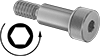
Turn these metric screws to the left to tighten; once fastened, they prevent loosening from counterclockwise motion. Made from 18-8 stainless steel, they have good chemical resistance and may be mildly magnetic.
Tighten these screws by turning them to the left; once fastened, they prevent loosening from counterclockwise motion. Made from 18-8 stainless steel, these screws have good chemical resistance and may be mildly magnetic.
Made from Grade 8 steel, these screws can be used in high-stress applications, such as valves, pumps, motors, and automotive suspension systems. They are at least 25% stronger than medium-strength steel screws.
Choose these metric screws for high-strength fastening. Often used in high-stress applications, such as valves, pumps, motors, and automotive suspension systems, these screws are at least 25% stronger than medium-strength steel screws.
These screws come with a traceable lot number and a physical and chemical test report. Use them for high-strength fastening.
When clearance for a wrench is limited, these screws have a Phillips drive so you can install them with a screwdriver. They are used for high-strength fastening.
Choose these screws for their adherence to strict military standards for material and construction. Their high tensile strength means they can be used in demanding, high-stress applications.
Tighten these screws by turning them to the left; once fastened, they prevent counterclockwise-moving parts from loosening. For use in high-strength fastening applications.
Twice as strong as low-strength steel screws, these screws are suitable for fastening most machinery and equipment.
Choose these metric screws for fastening most machinery and equipment. They are twice as strong as low-strength steel screws.
Choose these screws for their adherence to strict military standards for material and construction. Use them to fasten most machinery and equipment.
These screws are made to stringent Army-Navy specifications that ensure performance and reliability. They're comparable in strength to Grade 5 steel screws.
These screws are made to Japanese Industrial Standards. They are suitable for fastening most machinery and equipment.
These metric screws help prevent counterclockwise-moving parts from loosening. Use them for medium-strength fastening.
Tighten these screws by turning them to the left; once fastened, they prevent counterclockwise-moving parts from loosening. For use in medium-strength fastening applications.
About half as strong as medium-strength steel screws, these screws can be used for light duty fastening applications, such as securing access panels.
These screws are the strongest we offer. They are about 20% stronger than high-strength steel screws and are often used in heavy duty applications such as stamping and earth-moving equipment.
Choose these metric screws for heavy duty stamping applications as well as earth-moving machinery such as bulldozers and excavators. These screws are 10% stronger than our high-strength metric steel screws.
Choose these screws for their excellent corrosion resistance—comparable to 316 stainless steel—and the strength of steel. Use them for high-strength fastening in chemical and marine applications.
With the strength of steel and the corrosion resistance of 18-8 stainless steel, these 17-4 PH stainless steel screws are suitable for high-strength fastening in corrosive environments.
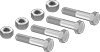
Use these kits to connect standard-size stainless steel pipe flanges for ANSI Class 150 or 300.
Our most corrosion-resistant metal screws, titanium screws withstand salt water, acids, and chemicals. They have a high strength-to-weight ratio—stronger than medium-strength steel screws and about 40% lighter.
Bronze screws are 30% stronger than brass screws and provide more corrosion resistance to salt water, gases, and sewage. They are nonmagnetic and electrically conductive.
Ceramic screws won't melt, rust, seize, or become brittle—even at extreme temperatures. They are nonconductive and highly resistant to corrosive gases.
Fiberglass screws are stronger than plastic screws, chemical and oil resistant, nonconductive, and lightweight.
More corrosion resistant than 316 stainless steel, nickel alloy screws have excellent resistance to salt water and some acids.
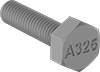
The most common heavy hex head screw, these steel screws meet ASTM A325 regulations for structural joints, such as mating I-beams and scaffolding.
Designed for construction and exterior building applications, these metric screws are often used to join I-beams and scaffolding. Their partial threading leaves an unthreaded portion that is strong enough to stand up to the sideways forces of joints.
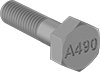
50% stronger than our medium-strength steel heavy hex head screws, these screws meet ASTM A490 specifications for structural applications. Use them in joints that require more tensile strength than ASTM A325 screws.
These Grade B8 screws are made from 18-8 stainless steel and have good chemical resistance. Also known as pressure bolts, they meet the high-pressure and high-temperature regulations of ASTM A193 and are used to secure pressure tanks, valves, and flanges.
Made from 316 stainless steel, these Grade B8M screws are more corrosion resistant than 18-8 stainless steel screws and have excellent resistance to chemicals and salt water. Screws meet ASTM A193 regulations, so they can be used in high-pressure and high-temperature applications. Also known as pressure bolts.
These Grade B7 steel screws are nearly twice as strong as our stainless steel screws for high-pressure applications. Also known as pressure bolts, they meet the high-pressure, high-temperature regulations of ASTM A193 and are used to secure pressure tanks, valves, and flanges.
Made from Grade 8 steel, these screws can be used in high-stress applications, such as valves, pumps, motors, and automotive suspension systems. They are at least 25% stronger than medium-strength steel screws. The flange distributes pressure over the surface, eliminating the need for a washer.
These metric screws are at least 25% stronger than medium-strength steel screws. Use them in high-stress applications, such as valves, pumps, motors, and automotive suspension systems. The flange distributes pressure where the screw meets the surface, so there's no need for a washer.
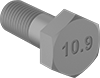
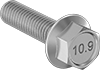
Made to Japanese Industrial Standards, these Class 10.9 steel screws can be used in high-stress applications, such as valves, pumps, motors, and automotive suspension systems. They are at least 25% stronger than medium-strength steel screws. The flange eliminates the need for a washer.
Choose these metric screws for fastening most machinery and equipment. With a flange distributing pressure where the screw meets the surface, there is no need for a separate washer.
Made from Grade 5 steel, these screws are suitable for fastening most machinery and equipment. The flange distributes pressure where the screw meets the surface, eliminating the need for a washer.
Comparable in strength to Grade 9 screws, these are about 20% stronger than high-strength steel screws and often used in heavy duty applications, such as stamping and earth-moving equipment. The flange eliminates the need for a washer.
Made from 18-8 stainless steel, these screws have good chemical resistance. A flange under the head distributes pressure over the surface, eliminating the need for a washer.
Install these screws with a wrench or a screwdriver. Made from stainless steel, they have good corrosion resistance. A flange under the head means a separate washer is not necessary.
For strength comparable to that of Grade 9 steel and the corrosion resistance of stainless steel, choose these screws. They are work-hardened for extreme strength. The flange eliminates the need for a separate washer.
These screws are chemical and oil resistant, nonconductive, and lightweight. The flange eliminates the need for a washer, distributing pressure where the screw meets the surface.
Made from Grade 5 steel, these screws are suitable for fastening most machinery and equipment. Serrations under the flange provide mild vibration resistance.
These metric screws are suitable for fastening most machinery and equipment. They have a serrated flange that helps prevent loosening from vibration.
Choose these metric screws for high-stress applications, such as valves, pumps, motors, and automotive suspension systems. They are about 10% stronger than medium-strength steel screws. Their serrated flange helps to resist vibration.
About 20% stronger than medium-strength steel screws, these Grade 8 steel screws can be used in high-stress applications, such as valves, pumps, motors, and automotive suspension systems. Serrations under the flange provide mild vibration resistance.
Made from 18-8 stainless steel, these screws have good chemical resistance. Their flange is serrated to help prevent loosening from vibration.
More corrosion resistant than 18-8 stainless steel screws, these 316 stainless steel screws have excellent resistance to chemicals and salt water. A serrated flange provides mild vibration resistance.
These screws have a flange that's at least 10% larger than a standard flange for more gripping power. Serrations under the head provide mild vibration resistance.
These Grade 5 steel screws are over 70% stronger than our stainless steel wire-lockable hex head screws. Wire these screws together through the hole in the head to get more vibration resistance than any other screw.
Made from 18-8 stainless steel, these screws have the best chemical and corrosion resistance of our wire-lockable screws. Wire these screws together for more vibration resistance than other types of hex head screws.
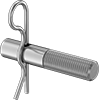
Place a cotter pin through the hole in the shank to keep a nut from loosening. These screws have a stronger hold than screws with thread lockers or lock washers.
Made from Grade 8 steel, these screws can be used in high-stress applications, such as valves, pumps, motors, and automotive suspension systems. They are more than twice as strong as our stainless steel thread-locking screws. The thread locker helps resist loosening from vibration.
These Class 8.8 steel screws are suitable for fastening most machinery and equipment. They are over 50% stronger than stainless steel thread-locking screws. For vibration resistance, they have a thread locker bonded to the threads.
Made from 18-8 stainless steel, these screws have good chemical resistance. They have a thread locker to prevent loosening from vibration.
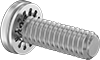
Also known as Sems screws, these screws have a permanently attached but freely rotating tooth lock washer that bites into the mating surface for vibration resistance.
Place one of these retainers around a hex head screw or nut, then attach wire to lock the screw or nut in place and keep it from loosening.
A freely rotating but permanently attached washer distributes pressure over a wider area than a flange, preventing damage to your material's surface.
A high-strength alternative to blind rivets, use these screws when only one side of the material is accessible.
An O-ring under the head prevents leaks and seals out contaminants.
Bolt down equipment in food processing or sanitary areas while sealing out contaminants.
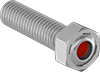
An indicator dot changes from red to black when the screw is properly tightened. If it comes loose, the dot changes back to red.
These 18-8 stainless steel screws have good chemical resistance and may be mildly magnetic.
More corrosion resistant than 18-8 stainless steel screws, these screws have excellent resistance to chemicals and salt water. They may be mildly magnetic.
More corrosion resistant than 18-8 stainless steel screws, these metric screws have excellent resistance to chemicals and salt water. They may be mildly magnetic.
These metric brass screws are electrically conductive, nonmagnetic, and have good corrosion resistance.
These screws have good chemical resistance and may be mildly magnetic.
These metric screws have good chemical resistance and may be mildly magnetic.
More corrosion resistant than 18-8 stainless steel screws, these metric screws have excellent resistance to chemicals and salt water.
These screws meet Japanese Industrial Standards.
These steel screws have a zinc plating for mild corrosion resistance.
A zinc plating on these metric steel screws provides mild corrosion resistance.
Aluminum screws are lightweight and have good corrosion resistance.
Our most corrosion resistant screws, these metric titanium screws withstand salt water, acids, and chemicals.
Our most corrosion resistant screws, titanium screws withstand salt water, acids, and chemicals.
These screws have a decorative, domed head that sits above the surface when installed.
These metric screws have a decorative, domed head that sits above the surface when installed.
These metric alloy-steel screws are twice as strong as standard steel Torx flat head screws.
Made from alloy steel, these screws are twice as strong as standard steel Torx flat head screws.
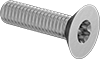
These metric A286 stainless steel screws have comparable strength to alloy steel with the corrosion resistance of 18-8 stainless steel.
A286 stainless steel screws have comparable strength to alloy steel with the corrosion resistance of 18-8 stainless steel.
Lower strength than alloy steel, use these screws for light duty fastening.
These screws are chemical and oil resistant, nonconductive, and lightweight. Exposure to moisture may cause them to expand.
These metric screws are chemical and oil resistant, nonconductive, and lightweight. Exposure to moisture may cause them to expand.
Polycarbonate screws resist breaking in high impact applications better than other plastic screws. All are chemical and oil resistant, nonconductive, and lightweight.
These metric polycarbonate screws resist breaking in high-impact applications better than other plastic screws. All are chemical and oil resistant, nonconductive, and lightweight.
PTFE screws are more chemical resistant than other plastic screws and withstand temperatures from -100° F to 500° F.
These screws are more reliable in high-stress, high-temperature environments than other plastic screws. They withstand water, steam, and temperatures up to 500° F.
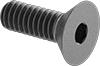
Angled under the head, these metric screws fit in countersunk holes and sit flush with the surface of your part.
Made of 18-8 stainless steel, these screws have good chemical resistance and may be mildly magnetic.
Also known as wall plate screws, these screws are painted to match the color of a switch or outlet cover.
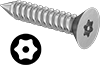
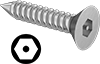
With a tamper-resistant Torx or Torx Plus drive (also known as a pin-in Torx or Torx Plus drive), these screws are difficult to remove without special tools.
With a tamper-resistant Torx drive (also known as a pin-in Torx drive), these metric screws are difficult to remove without special tools.
With an O-ring under the head, these metric screws seal out leaks and contaminants while also preventing unwanted removal.
Prevent unwanted removal, leaks, and contamination with these sealing Torx screws.
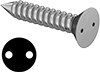
These screws have a tamper-resistant drilled spanner drive, which makes them difficult to remove without special tools.
These metric screws have a tamper-resistant drilled spanner drive, making them difficult to remove without special tools.
A tamper-resistant hex drive (also known as pin-in hex drive) makes these screws difficult to remove without special tools.
With a tamper-resistant hex drive (also known as a pin-in hex drive), these metric screws are difficult to remove without special tools.
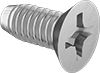
Made from alloy steel, these screws are nearly twice as strong as stainless steel flat head screws.
A nylon patch bonded to the threads of these metric screws adds friction to prevent loosening from vibration. Made of 18-8 stainless steel, they have good chemical resistance and may be mildly magnetic.
A nylon patch bonded to the threads adds friction to prevent loosening from vibration. Made of 18-8 stainless steel, these screws have good chemical resistance and may be mildly magnetic.
With an O-ring under the head, these screws prevent leaks and seal out contaminants.
To prevent leaks and seal out contaminants, these metric screws have an O-ring under the head.
These screws are drilled through the shaft to vent fluids and gases trapped under the screw.
To vent fluids and gases trapped under the screw, these metric screws are drilled through the shaft.
Tighten these metric screws by turning them to the left; once fastened, they prevent loosening from counterclockwise motion.
Tighten these screws by turning them to the left; once fastened, they prevent loosening from counterclockwise motion.
18-8 stainless steel screws have good chemical resistance.
More corrosion resistant than 18-8 stainless steel screws, these have excellent resistance to chemicals and salt water.
Stronger and more wear resistant than 18-8 and 316 stainless steel, these screws are mildly chemical resistant.
These steel screws are available with corrosion-resistant finishes.
These steel screws are zinc plated to resist corrosion in wet environments.
Brass screws are corrosion resistant in wet environments and electrically conductive.
Made from 18-8 stainless steel, these screws are chemical resistant.
A Torx drive has more points of contact than Phillips, slotted, and square drives, allowing you to apply extra force with less slippage or damage to the recess.
A thick, decorative head provides a finished appearance.
A tamper-resistant Torx driver is required for installation and removal. Also known as pin-in-Torx, these screws allow you to apply extra force with less slippage or damage to the recess.
Also known as pin-in-hex, install and remove these screws with a tamper-resistant hex driver.
Install and remove these screws with a tamper-resistant spanner driver.
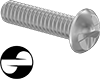
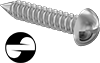
The S-shaped drive can be installed with a standard slotted driver, but requires a special tool for removal.
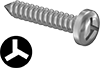
These screws require a Tri-Wing® driver for installation and removal.
A free-rotating, permanently attached washer distributes holding pressure over a wider area than a flange and remains stationary to prevent scratching the material surface as you tighten the screw.
A flange under the head distributes holding pressure and reduces the risk of crushing thin metal.
These square-drive screws have a flange under the head that distributes holding pressure and reduce the risk of crushing thin metal.
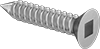
These square-drive screws are beveled under the head for use in countersunk holes.
These steel screws have a black-oxide finish to resist corrosion in dry environments.
Stronger and more wear resistant than 316 and 18-8 stainless steel, these screws are mildly chemical resistant.
These screws have a hex head for a secure grip with a wrench.
A rubber O-ring under the head creates a seal that withstands liquid and gas pressure.
Also known as Fastite screws, these offer more thread engagement in 0.028" to 0.063" thick sheets to prevent overtightening and damaging threads.
Able to penetrate overlapping sheets, these screws have a secure hold in wood.
Made from 410 stainless steel, these screws are strong, wear resistant, and mildly chemical resistant.
Serrations under the head act as a brake to prevent over-tightening and damaging threads.
These steel screws have corrosion-resistant finishes.
410 stainless steel is strong, wear resistant, and mildly chemical resistant.
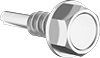
These 18-8 stainless steel screws have a hardened steel drill point to penetrate steel and are coated to increase corrosion resistance.
These screws have the strength of 410 stainless steel with added corrosion resistance.
Cutting their own pilot hole and threads as you fasten them into material, these metric screws have a drilling tip.
Stronger and more wear resistant than 18-8 stainless steel, these screws are mildly chemical resistant.
Drill a pilot hole, cut threads, and fasten in one motion with these metric-threaded screws. Made of steel, they’re strong and wear resistant.
By drilling their own holes and fastening in a single operation, these square-drive screws save time and effort. Made of 410 stainless steel, they're both stronger and more wear resistant than 18-8 stainless steel screws.
The extra-wide truss head distributes holding pressure to reduce the risk of crushing thin metal.
Also known as pancake head screws, these have a head that is about two-thirds the height of standard rounded head screws.
Made from stainless steel, these screws are more corrosion resistant than steel, and almost as strong.
These steel screws save you time and effort by drilling their own holes and fastening in a single operation.
With a drilling tip, these metric screws cut their own pilot hole and threads as you fasten them into material.
A decorative rounded top provides a finished appearance.
Made from 18-8 stainless steel, these screws have good chemical resistance.
Known for their strength, these alloy steel screws are coated to provide corrosion resistance in wet environments.
Made from stainless steel to resist galvanic corrosion, use these screws to fasten aluminum to aluminum and steel framing. They save you time and effort by drilling their own holes and fastening in a single operation.
Beveled under the head for use in countersunk holes.
These steel screws are available with corrosion resistant finishes. A rubber-bonded washer compresses to form a watertight seal. They save you time and effort by drilling their own holes and fastening in a single operation.
These steel screws have a head encapsulated by 18-8 stainless steel.
These screws have a free-rotating, permanently attached washer that remains stationary while tightening to prevent bunching while attaching tarps and other fabric to metal.
Serrations under the head act as a brake to prevent overtightening and damaging threads.
Also known as roofing screws, these screws are long and made from hardened steel to fasten rigid insulation board to steel decking.
These steel screws cut threads in drilled holes as they’re turned, so they require less driving torque and cause less stress on your material than thread forming screws.
A Torx drive has more points of contact than a Phillips drive, allowing you to apply extra force with less slippage or damage to the recess.
For a finished appearance that reduces the chance of snags on other material, these screws fit snugly in countersunk holes and have a domed head.
A wide cutting slot provides excellent chip clearing and low driving torque in soft metal.
Commonly used with door hinge hardware, these screws cut threads in material such as aluminum and brass.
The green color identifies these as grounding screws. They have a flange that provides a wide flat surface for making solid electrical connections.
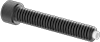
These metric screws have a triangular shank that presses tightly as it forms threads, so screws resist loosening in soft metals such as brass, aluminum, and copper.
The triangular shank presses tightly as it forms threads, so screws resist loosening in soft metals such as brass, aluminum, and copper.
Also known as Swageform screws, threads at the tip are designed to grab material for a fast start with low torque in a wide range of materials.
Also known as Tap-Flex screws, these are made from hardened steel to penetrate hard material. They have a five-edged shank that presses tightly against the material to form threads and resist loosening.
These screws are beveled under the head for use in countersunk holes.
Beveled under the head for use in countersunk holes, these steel screws press threads into material for a tight, secure hold.
With more points of contact than Phillips-, slotted-, and square-drive screws, you can firmly press these Torx-drive screws into wood without stripping them or damaging the recess—their threads create a tight hold.
A decorative rounded top provides a finished appearance. These Phillips screws are beveled under the head for use in countersunk holes. They press threads into material for a tight, secure hold.
Drive the pointed tip of these screws into soft material, such as wood and drywall. They are also known as lag bolts.
These Phillips head screws have a decorative rounded top that provides a finished appearance.
With a low-profile rounded head that’s flanged to sit flush for a finished appearance, these screws press threads into wood on cabinets, trim, molding, and light duty framing.
These steel screws are hot-dipped galvanized to resist corrosion in wet environments.
These 316 stainless steel screws have excellent resistance to chemicals and salt water.
These screws speed installation by drilling, tapping, and fastening wood and metal in a single operation.
Thread-forming screws press threads into drilled holes for a tight vibration-resistant assembly.
Also known as Type 17 auger point screws, these penetrate hardwood and reduce driving torque. They require a pilot hole to prevent splitting when used near an edge.
Screws are beveled under the head for use in countersunk holes.
Also known as deck screws, these Phillips screws have a sharp point and narrow body to penetrate softwood and plastic-wood composite decking material.
Because these steel screws cut threads into drilled holes as they’re turned, they require less driving torque and cause less stress on material than thread-forming screws. Also known as trim-head deck screws, they have a small flat head and slender shank to reduce the risk of splitting boards.
Thread-forming screws press threads into drilled holes for a tight, vibration-resistant assembly.
Threads change direction to cut into composites and push material back into the hole to prevent distorting the surface around the hole.
The neoprene-backed washer seals out contaminants.
Often used for drawer slides and cabinet hardware, these screws—also known as Euro and Type B screws—create a strong hold in small, shallow holes in wood.
These 18-8 stainless steel screws have good chemical resistance.
These steel screws have a black-oxide or zinc-plated finish to resist corrosion.
These steel screws are beveled under the head for use in countersunk holes.
Press threads into plastic to create a strong hold. Use a wrench, hex socket bit, or nutdriver to securely grip the hex head and tighten these screws.
Stronger and more wear resistant than 18-8 stainless steel screws, these are mildly chemical resistant.
These steel screws have alternating high and low threads to minimize cracking and splitting in brittle material such as phenolic and glass-filled plastic.
These screws cut threads into drilled holes as they’re turned, so they require less driving torque and cause less stress on material than thread-forming screws.
A point centers the screw in a starter hole and widely spaced threads reduce the risk of cracking plastic.
Cutting wings under the head allow plastic to expand and contract without cracking. A washer made from aluminum and rubber bonded to steel adds a watertight seal.
Also known as Tapcons, use these screws in applications requiring high strength.
These blue and silver ultra-corrosion-resistant coated steel screws stand up to wet environments.
These 410 stainless steel screws are more corrosion resistant than ultra-corrosion-resistant coated steel screws.
Attach the components of these sets onto a hammer drill to install tapping screws in concrete, block, and brick.
Hang drywall to wood framing. These screws have a sharp point that penetrates drywall and a curved neck that sinks in without tearing the paper surface.
Alternating high and low threads minimize driving torque and allow the screw to hold more material between threads for a stronger hold and better strip-resistance than standard drywall screws for wood.
Ribs under the head act as a brake to prevent over-tightening and damaging threads.
Power through drywall and into metal studs up to 0.105" thick.
Hold sheets of drywall together until glue sets
Attach drywall to metal studs up to 0.036" thick.
A drill point powers through metal up to 0.105" thick.
Attach metal framing to metal studs up to 0.036" thick.
With a square-drive head, these screws attach drywall to metal studs up to 0.036" thick. The head is one-third smaller than other drywall screws.
These screws have a head that's one-third smaller than other drywall screws. Use them to attach drywall to metal studs up to 0.036" thick.
These square-drive screws have a drill point that powers through drywall and into metal studs up to 0.105" thick. Heads are one-third smaller than those of other drywall screws.
A drill point powers through drywall and into metal studs up to 0.105" thick. Heads are one-third smaller than those of other drywall screws.
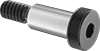
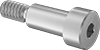
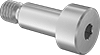
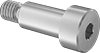
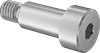
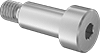
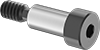
Comparable in strength to Grade 8 steel. These screws have inch thread sizes.
Comparable to Class 12.9 steel.
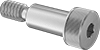
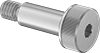
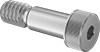
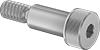
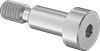
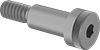
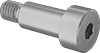
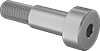
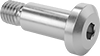
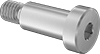
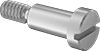
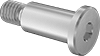
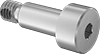
Use these screws in thin materials; they have a shorter threaded portion than our standard shoulder screws. They’re comparable in strength to Grade 8 steel.
With threads the same diameter as the shoulder, these inch-sized screws can handle heavy loads. They’re comparable to Grade 8 steel.
The metric-sized threads on these screws are the same diameter as the shoulder. Comparable in strength to Class 12.9 steel.
These shoulder screws come with a traceable lot number and material test report. Similar in strength to Grade 8 steel.
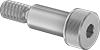
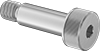
Made from 18-8 stainless steel, these inch-sized shoulder screws have good chemical resistance.
These screws have metric thread sizes. They are 18-8 stainless steel for good chemical resistance.
With inch-sized threads the same diameter as the shoulder, these screws can handle heavy loads. They’re 18-8 stainless steel for good chemical resistance.
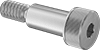
More corrosion resistant than 18-8 stainless steel shoulder screws, these have excellent resistance to chemicals and salt water. These screws have inch thread sizes.
For metric thread sizes with excellent resistance to chemicals and salt water, choose these 316 stainless steel shoulder screws.
Shoulder screws made of 17-4 PH stainless steel are nearly twice as strong as 18-8 stainless steel and have the same corrosion resistance. These screws have inch thread sizes.
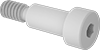
These shoulder screws are chemical resistant, nonconductive, and lightweight.
One-third the weight of steel, aluminum shoulder screws are lightweight and have good corrosion resistance.
Titanium shoulder screws have a high strength-to-weight ratio and are more resistant to acids and salt water than nickel shoulder screws.
Nickel alloy shoulder screws are more resistant to acids and salt water than stainless steel shoulder screws.
With a reduced head size and an unthreaded shoulder, use these screws as a shaft or dowel pin for small rotating parts in low-clearance applications.
The head height of these screws is about two-thirds the head height of a standard shoulder screw. Use them in low-clearance applications such as inside machines.
These metric screws have a head height that's about two-thirds the head height of a standard shoulder screw. Use them in low-clearance applications such as inside machines.
These have a head height about one-third the head height of a standard shoulder screw.
Also known as wheel and axle bolts, these metric screws have an unthreaded shoulder that acts as a shaft, so material attached to the threaded end can rotate.
Stainless steel shoulder screws have excellent corrosion resistance in most environments.
A locking element on the threads adds friction to resist loosening. Comparable to Grade 8 steel, these alloy steel shoulder screws are the strongest we offer.
Available in metric sizes, these screws have a locking element on the threads that adds friction to resist loosening. Comparable to Grade 8 steel, they are the strongest screws we offer.
These shoulder screws have good chemical resistance.
More corrosion resistant than 18-8 stainless steel shoulder screws, these have excellent resistance to chemicals and salt water.
These shoulder screws are angled under the head to sit flush in countersunk holes.
Screw these shoulders onto a stud.
With a hex socket at the tip as well as the head, you can fasten these shoulder screws from the tip when the head cannot be reached.
Tighten these shoulder screws by turning them to the left; once fastened, they resist loosening from counterclockwise motion.
These shoulder screws come with a traceable lot number and material test report.
With a shoulder that’s twice as precise as standard shoulder screws, these metric shoulder screws act as a shaft or axle for bearings and other moving parts in applications that require smooth and accurate movement, such as measuring and lab equipment. Made of 18-8 stainless steel, they’re nearly as strong as steel but won’t rust in outdoor or washdown environments.
Install and remove these metric shoulder screws by hand or with a hex key.
Install and remove these shoulder screws by hand or with a hex key.
These metric 316 stainless steel shoulder screws are more corrosion resistant than 18-8 stainless steel shoulder screws. They also have excellent resistance to chemicals and salt water.
Made of 416 stainless steel, these shoulder screws are almost twice as strong as 18-8 stainless steel and have the same corrosion resistance.
Without a head to get in the way, these screws fit in tight spaces where standard shoulder screws cannot. Either thread them in a countersunk hole for a flush mount, or install them with the shoulder sticking out to use them as pins or dowels for aligning and locating components.
Comparable to Grade 8 steel, these screws are the strongest precision shoulder screws we offer.
Brass shoulder screws are electrically conductive, nonmagnetic, and have good corrosion resistance.
Offered in metric sizes, these brass shoulder screws are electrically conductive, nonmagnetic, and have good corrosion resistance.
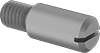
These screws have a head height about one-third the head height of a standard shoulder screw. Use them in low-clearance applications such as inside machines.
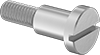
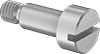
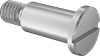
These slotted screws have a head height about one-third the head height of a standard shoulder screw. Use them in low-clearance applications such as inside machines.
Made from alloy steel, these inch size set screws have a thin edge that digs into hard surfaces for a secure hold.
These alloy steel set screws have a thin edge that digs into hard surfaces for a secure hold. They're available in metric sizes.
Choose these set screws for their adherence to strict military standards for material and construction.
Made from 18-8 stainless steel, these set screws have good chemical resistance.
These metric set screws have good chemical resistance.
Made from 316 stainless steel, these set screws have excellent chemical resistance and can be used in saltwater environments.
These metric 316 stainless steel set screws have excellent chemical resistance and can be used in saltwater environments.
Brass set screws are corrosion resistant in wet environments, nonmagnetic, and electrically conductive.
More corrosion resistant than stainless steel, nickel alloy set screws have excellent resistance to salt water and some acids.
Use these steel set screws for light duty holding.
These set screws have good chemical resistance.
More corrosion resistant than 18-8 stainless steel set screws, these have excellent resistance to chemicals and salt water.
Alloy steel set screws dig into hard surfaces for a secure hold.
These alloy steel set screws have a thin edge that digs into hard surfaces for a secure hold. A nylon locking element grips threads to resist loosening.
Made from alloy steel, these metric set screws have a thin edge that digs into hard surfaces for a secure hold. They have a nylon locking patch that grips threads to resist loosening.
Made from 18-8 stainless steel, these metric set screws are chemical resistant. They have a nylon locking patch that grips threads to resist loosening.
These 18-8 stainless steel set screws are chemical resistant. They have a nylon locking patch that grips threads to resist loosening.
Made from black-oxide alloy steel, these set screws resist corrosion in dry environments. They dig into hard surfaces for a secure hold and have serrations on the cup edge that grip the material surface to resist loosening.
These metric alloy steel set screws dig into hard surfaces for a secure hold. They have serrations on the cup edge that grip the material surface to resist loosening.
Made from 18-8 stainless steel, these set screws are chemical resistant. They have serrations on the cup edge that grip the material surface to resist loosening.
These metric 18-8 stainless steel set screws are chemical resistant. They have serrations on the cup edge that grip the material surface to resist loosening.
These inch size set screws are vented to allow fluid and gas to pass through.
These metric set screws are vented to allow fluid and gas to pass through.
These metric 18-8 stainless steel set screws are chemical resistant. The tip makes good contact on flat surfaces and allows you to make frequent adjustments with minimal surface damage.
Made from 18-8 stainless steel, these set screws are chemical resistant. The tip makes good contact on flat surfaces and allows you to make frequent adjustments with minimal surface damage.
These metric 316 stainless steel set screws have excellent chemical resistance and can be used in saltwater environments. The tip makes good contact on flat surfaces and allows you to make frequent adjustments with minimal surface damage.
Made from 316 stainless steel, these set screws have excellent chemical resistance and can be used in saltwater environments. The tip makes good contact on flat surfaces and allows you to make frequent adjustments with minimal surface damage.
The tip makes good contact on flat surfaces and allows you to make frequent adjustments with minimal surface damage.
These metric set screws have a tip that makes good contact on flat surfaces and allows you to make frequent adjustments with minimal surface damage.
These nylon set screws are chemical resistant, lightweight, and nonconductive. The tip makes good contact on flat surfaces and allows you to make frequent adjustments with minimal surface damage.
Secure gears, pulleys, and other objects that require frequent adjustments, even in wet environments.
Made from nylon, these set screws are lightweight, resist chemicals, and won’t carry an electric current.
Often used to secure gears and pulleys to shafts, these metric nylon set screws are lightweight and won’t carry an electrical current.
Strong and durable, these alloy steel set screws hold objects tightly against flat surfaces.
Secure objects to flat surfaces in washdown and corrosive environments.
A nylon locking patch grips threads to resist loosening.
These chemical-resistant 18-8 stainless steel screws have an extra-soft nylon tip, which minimizes the damage that can occur from metal-on-metal contact. Use them on soft surfaces such as aluminum.
Made of chemical-resistant 18-8 stainless steel, these metric screws have an extra-soft nylon tip that reduces the noise, vibration, and damage that can occur from metal-on-metal contact. Use them on soft surfaces such as aluminum.
These alloy steel set screws have an extra-soft nylon tip, which minimizes the damage that can occur from metal-on-metal contact. Use them set screws on soft surfaces such as aluminum.
Available in metric sizes, these alloy steel set screws have an extra-soft nylon tip that minimizes the damage that can occur from metal-on-metal contact. Use them on soft surfaces such as aluminum.
With a tip that's harder than nylon and silver, these alloy steel set screws provide a secure hold on hard surfaces. The body has a black-oxide finish to resist corrosion in dry environments.
These metric set screws have a brass tip, which is harder than nylon and silver, for a secure hold on hard surfaces. The body has a black-oxide finish to resist corrosion in dry environments.
These set screws have a tip that is harder than nylon and silver to provide a secure hold on hard surfaces. The body is 18-8 stainless steel for good chemical resistance.
Available in metric sizes, these screws have a tip that is harder than nylon and silver to provide a secure hold on hard surfaces. The body is 18-8 stainless steel for good chemical resistance.
These set screws have a softer tip than brass-tip set screws to minimize surface damage. Use them on hard surfaces.
Made of alloy steel, these set screws are often used in U-shaped and V-shaped grooves and on other sloped or angled surfaces. The oval tip allows for frequent adjustments with minimal surface damage.
These metric set screws have a protruding tip that locks within a mating hole or slot to keep parts aligned. They're also known as dog-point set screws.
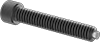
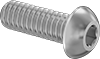
Also known as half dog-point set screws, these set screws have a protruding tip that locks within a mating hole or slot to keep parts aligned.
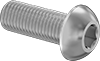
These 18-8 stainless steel set screws have good chemical resistance. Also known as half dog-point set screws, they have a protruding tip that locks within a mating hole or slot to keep parts aligned.
Also known as dog-point set screws, these metric set screws have a protruding tip that locks within a mating hole or slot to keep parts aligned. Made of 18-8 stainless steel, they have good chemical resistance.
These metric screws have a square head, so you can turn them by hand or use a wrench for more torque. Also known as half dog-point set screws, they have a protruding tip that locks within a mating hole or slot to keep parts aligned.
Use the square head to turn these screws by hand, or use a wrench when you need more torque. Also known as half dog-point set screws, they have a protruding tip that locks within a mating hole or slot to keep parts aligned.
Turn these metric screws by hand using the hex head, or tighten them with a wrench for extra torque. With an extended tip that locks into a mating hole or slot—sometimes known as a dog point—they are often used to align and secure parts such as gears and pulley wheels.
Stainless steel set screws have excellent corrosion resistance in most environments.
Also known as full dog-point set screws, the tip is twice as long as the tip on other extended-tip set screws for greater engagement in deep mating holes.
These alloy steel set screws have a pointed tip that wedges into the contact surface for a secure hold on soft materials such as brass.
Made from alloy steel, these metric set screws have a pointed tip that wedges into the contact surface for a secure hold on soft materials such as brass.
These 18-8 stainless steel set screws are chemical resistant. A pointed tip wedges into the contact surface for a secure hold on soft materials such as brass.
These metric 18-8 stainless steel set screws are chemical resistant. A pointed tip wedges into the contact surface for a secure hold on soft materials such as brass.
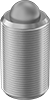
These metric set screws have a rolling ball that swivels 360° to minimize surface damage and allow for slight adjustments without loosening the screw.
A rolling ball swivels 360° to minimize surface damage and allow for slight adjustments without loosening the screw.
Fine threads give you precise control.
Also known as jam set screws, these lock other screws in place, hold pins, and adjust spring tension. A black-oxide finish provides corrosion resistance in dry environments.
A low-profile flat-faced ball tip allows these metric set screw to be used in low-clearance applications.
These set screws have a low-profile flat-faced ball tip for use in low-clearance applications.
The tip is narrow to pass through threaded holes.
A wide tip provides more gripping power than standard swivel-tip set screws. To use, remove the tip, thread the screw through the hole, and attach the tip on the other side.
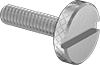
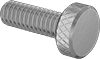
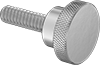
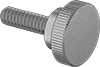
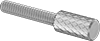
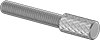
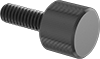
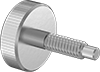
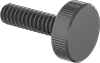
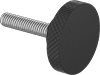
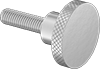
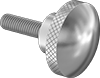
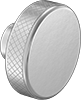
These metric thumb screws are made of chemical-resistant 18-8 stainless steel. They have a thin, knurled head for use in low-clearance applications.
Made from 18-8 stainless steel, these thumb screws are chemical resistant. They have a thin, knurled head for use in low-clearance applications.
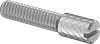
These slotted thumb screws have a thin, knurled head for use in low-clearance applications. Made of 18-8 stainless steel, they are chemical resistant.
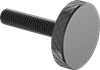
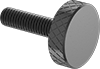
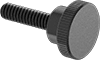
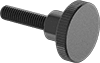
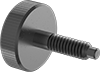
These metric thumb screws have a thin, knurled head for use in low-clearance applications. They have a black-oxide finish to resist corrosion in dry environments.
A thin, knurled head allows these thumb screws to be used in low-clearance applications. They have a black-oxide finish to resist corrosion in dry environments.
Brass thumb screws are corrosion resistant in wet environments and electrically conductive.
Stainless steel thumb screws have excellent corrosion resistance in most environments.
Aluminum thumb screws are lightweight and resist corrosion in wet environments.
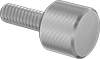
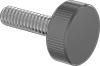
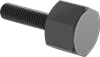
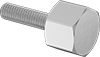
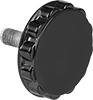
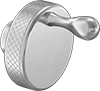
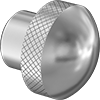
These metric thumb screws are made of chemical-resistant 18-8 stainless steel. They have a raised head that makes them easy to grip.
Made from 18-8 stainless steel, these thumb screws are chemical resistant. They have a raised head that makes them easy to grip.
A raised head makes these thumb screws easy to grip. They have a black-oxide finish to resist corrosion in dry environments.
These metric thumb screws have a raised head that makes them easy to grip. A black-oxide finish provides corrosion resistance in dry environments.
Use these slim thumb screws in tight spaces.
These slotted thumb screws are slim to fit in tight spaces.
With a slim profile, these metric thumb screws fit in tight spaces.
These steel thumb screws have a black-oxide finish to resist corrosion in dry environments.
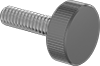
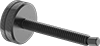
A knurled head allows for slip-resistant controlled adjustment.
These metric thumb screws have a knurled head for a slip-resistant controlled adjustment.
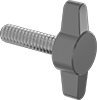
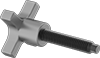
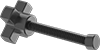
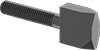
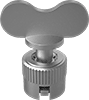
Arms provide a flat surface to push your fingers against.
Tighten these thumb screws by hand or with a hex key for more torque.
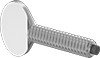
A large head allows you to grip these screws with your entire hand for greater torque while tightening than standard knurled plastic-head thumb screws.
These metric thumb screws have a large head that allows you to grip them with your entire hand for greater torque while tightening than standard knurled plastic-head thumb screws.
These metric thumb screws are made of chemical-resistant 18-8 stainless steel. Also known as dog- and pilot-point thumb screws, insert the point into a drilled hole or slot to hold items in place.
Made from 18-8 stainless steel, these thumb screws are chemical resistant. Also known as dog- and pilot-point thumb screws, insert the point into a drilled hole or slot to hold items in place.
These metric thumb screws have arms that provide a flat surface to push your fingers against.
A wide tip provides more gripping power than standard swivel-tip thumb screws. To use, remove the tip, thread the screw through the hole, and attach the tip on the other side.
For maximum contact with angled and uneven surfaces, the tip swivels in all directions. The tip is narrow so it will fit through threaded holes.
A large swivel angle allows these thumb screws to make better contact with angled and uneven surfaces than nonremovable swivel-tip thumb screws.
A soft nylon tip conforms to textured surfaces and minimizes damage when holding items in place.
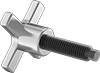
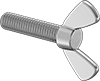
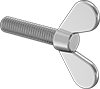
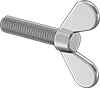
Wings provide more leverage than spade-head thumb screws for greater torque while tightening. A zinc plating provides corrosion resistance in wet environments.
These metric thumb screws have wings that provide more leverage than spade-head thumb screws for greater torque while tightening. A zinc plating provides corrosion resistance in wet environments.
Fasten material by hand, so tools don’t scratch or contaminate parts you frequently adjust in food-processing or pharmaceutical plants.
A flange provides a bearing surface to hold parts under the head.
A raised head makes these thumb screws easy to grip. Made from nylon, they're chemical resistant, nonconductive, and lightweight.
Stronger than standard nylon, these thumb screws are chemical resistant, nonconductive, and lightweight. They have a raised head that makes them easy to grip.
These nylon thumb screws are chemical resistant, nonconductive, and lightweight.
A thin head allows these thumb screws to be used in low-clearance applications.
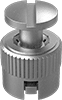
The head fits through a slit in a latch or panel to hold it in place.
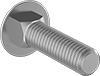
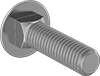
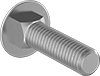
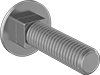
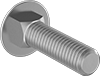
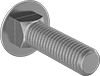
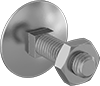
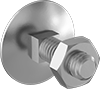
Twice as strong as low-strength steel bolts, these bolts are suitable for fastening most machinery and equipment. Carriage bolts have a smooth, rounded head for a finished look. The square neck keeps these bolts from turning when tightening a nut.
Choose these metric bolts for fastening most machinery and equipment. They are twice as strong as low-strength steel bolts. Carriage bolts have a smooth, rounded head for a finished look. The square neck keeps these bolts from turning when tightening a nut.
About half the strength of medium-strength bolts, these Grade 2 bolts are for light duty fastening. Carriage bolts have a smooth, rounded head for a finished look. The square neck keeps these bolts from turning when tightening a nut.
Made from Grade 8 steel, these bolts can be used in high-stress applications, such as valves, pumps, motors, and automotive suspension systems. Carriage bolts have a smooth, rounded head for a finished look. The square neck keeps these bolts from turning when tightening a nut.
These bolts have good chemical resistance. Carriage bolts have a smooth, rounded head for a finished look. The square neck keeps these bolts from turning when tightening a nut.
More corrosion resistant than 18-8 stainless steel bolts, these bolts have excellent resistance to chemicals and salt water. Carriage bolts have a smooth, rounded head for a finished look. The square neck keeps these bolts from turning when tightening a nut.
Bronze bolts are resistant to salt water, electrically conductive, and nonmagnetic. Carriage bolts have a smooth, rounded head for a finished look. The square neck keeps these bolts from turning when tightening a nut.
These bolts are suitable for fastening most machinery and equipment. Carriage bolts have a smooth, rounded head for a finished look. The knurled neck grips the inside of the hole to keep these bolts from turning when tightening a nut.
About half the strength of medium-strength bolts, these bolts are for light duty fastening. Carriage bolts have a smooth, rounded head for a finished look. The knurled neck grips the inside of the hole to keep these bolts from turning when tightening a nut.
These include a barrel and a screw.
Use these barrels with a screw you already have or pair with a different type of screw to create a custom fastener. Made from 18-8 stainless steel, they are chemical resistant.
Pair these screws with a barrel you already have or couple with a different barrel to create a custom fastener. Made from 18-8 stainless steel, they are chemical resistant.
Use these barrels with a screw you already have or pair with a different type of screw to create a custom fastener. Made from 316 stainless steel, they have excellent chemical resistance and can be used in saltwater environments.
These include a barrel and a screw with an extra-wide (truss) head. Made from 316 stainless steel, they have excellent chemical resistance and can be used in saltwater environments.
Pair with a barrel you already have or couple with a different barrel to create a custom fastener. Made from 316 stainless steel, they have excellent chemical resistance and can be used in saltwater environments.
Use these barrels with a screw you already have or pair with a different type of screw to create a custom fastener. They're zinc plated to resist corrosion in wet environments.
Designed with a shoulder for the strength to handle side and shear loads.
Shorter than shoulder screws for use in thin material.
Use these hex drive screws and binding barrels as a low-profile alternative to standard nut and bolt combinations.
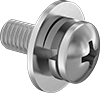
An unthreaded barrel allows quick assembly with a press or a hammer.
Stainless steel binding barrels and screws have excellent corrosion resistance in most environments.
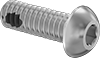
One-third the weight of steel, aluminum binding barrels and screws resist corrosion in wet environments.
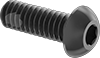
Add length to a binding barrel.
Brass binding barrels and screws are corrosion resistant in wet environments and electrically conductive.
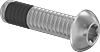
Plastic binding barrels and caps are chemical resistant, nonconductive, and lightweight.
These barrels and caps are corrosion resistant in wet environments.
Create strong joints in wood and wood composite.
Install in a cutout to create a secure joint between boards, butcher blocks, and countertops.
Angled under the head for a flush finish in countersunk holes.
A tamper-resistant Torx driver is required for installation and removal.
Install these binding barrels and screws with a standard slotted screwdriver. They require a special tool to remove.
These binding barrels and screws have good chemical resistance.
More corrosion resistant than 18-8 stainless steel binding barrels and screws, these have excellent resistance to chemicals and salt water.
Sealed with PVC foam under the head to prevent leaks and keep contaminants out.
Good for high-strength fastening, these screws are made from alloy steel comparable in strength to Grade 9 steel. The head makes 12 points of contact with a wrench to handle more torque than a socket head or hex head screw.
These hardened stainless steel screws combine excellent resistance to chemicals and solvents with strength comparable to Grade 9 steel. The head makes 12 points of contact with a wrench to handle more torque than a socket head or hex head screw.
Install these socket head screws through a hole and thread on a retainer to keep secure—no special tools are required.
Install these thumb-screw-head screws through a hole and thread on a retainer to keep secure—no special tools are required.
Install these rounded head screws through a hole and thread on a retainer to keep secure—no special tools are required.
Install in soft material such as aluminum and low-carbon steel at least 0.036" thick with an arbor press or similar pressure tool.
These screws mount flush against the outer panel's surface for low-clearance applications.
Snap these screws into panels up to 0.125" thick—no tools are required for installation.
The base flares out during installation, creating a backside flange in hard materials and near edges in panels up to 0.312" thick. Install with a flare-in installation tool and an arbor press.
Press these rounded head nuts into a closed-end hole or thick panel in applications where the back of the panel is inaccessible. A quarter-turn locks and releases access panels, doors, and covers.
Press these wing head nuts into a closed-end hole or thick panel in applications where the back of the panel is inaccessible. A quarter-turn locks and releases access panels, doors, and covers.
Press these wing head nuts into the backside of a panel in applications where you have access to both sides of the panel. A quarter-turn locks and releases access panels, doors, and covers.
Press these rounded head nuts into the backside of a panel in applications where you have access to both sides of the panel. A quarter-turn locks and releases access panels, doors, and covers.
These rounded head nuts can be riveted into thin panels for a flush fit. They can be mounted without spaces between the panels. A quarter-turn locks and releases access panels, doors, and covers.
Rivet these wing head nuts into thin panels for a flush fit. They can be mounted without space between panels. A quarter-turn locks and releases access panels, doors, and covers.
These rounded head screws have a nut that clips onto the edge of a thin panel, allowing you to mount the screw near edges. A quarter-turn locks and releases access panels, doors, and covers.
These wing-head screws have a clip-on nut that allows you to mount them near the edge of a thin panel. Use them to lock and release access panels, doors, and covers with a quarter-turn.
An expanding rubber bushing damps vibration while holding panels together.
Push the plunger to secure and pull to release for quick access.
About half the strength of medium-strength screws, these screws are for light duty fastening applications, such as securing access panels. Large flat sides make these screws easy to grip with a wrench and keep them from rotating in square holes.
Made from Grade 5 steel, these screws are suitable for fastening most machinery and equipment. Large flat sides make these screws easy to grip with a wrench and keep them from rotating in square holes.
Made from Grade 8 steel, these screws can be used in high-stress applications, such as valves, pumps, motors, and automotive suspension systems. Large flat sides make these screws easy to grip with a wrench and keep them from rotating in square holes.
About half the strength of medium-strength bolts, these Grade 2 bolts are for light duty fastening. These bolts are commonly used in tight spaces with moving parts, such as grain elevators and other belting systems, because the smooth, low-profile head provides a flush fit when installed. The square neck keeps these bolts from turning when tightening a nut.
Made from Grade 5 steel, these bolts are suitable for fastening most machinery and equipment. These bolts are commonly used in tight spaces with moving parts, such as grain elevators and other belting systems, because the smooth, low-profile head provides a flush fit when installed. The square neck keeps these bolts from turning when tightening a nut.
Made from stainless steel, these chemical-resistant bolts have a square neck that keeps them from turning when tightening a nut. They're commonly used in tight spaces with moving parts, such as grain elevators and other belting systems, because the smooth, low-profile head provides a flush fit when installed.
Ribs under the head dig into the surface of soft metal and plastic to keep these bolts from turning when tightening a nut. Commonly used in tight spaces with moving parts, such as grain elevators and other belting systems, elevator bolts have a smooth, low-profile head that provides a flush fit when installed.
Sharp teeth bite into the surface of wood, rubber belting, and other soft materials to keep the bolt from turning when tightening a nut. These bolts are commonly used in tight spaces with moving parts, such as grain elevators and other belting systems, because the smooth, low-profile head provides a flush fit when installed.
Also known as tank-strap bolts, these T-bolts are commonly used with a band clamp or a strap to hold fuel tanks and other objects in place.
Also known as clamping pins, these bolts have a collar that slides along the shaft and can be welded in place to clamp work in place and prevent over torquing.
You can use these versatile hangers in a threaded hole (as you would a screw), or secure them with a nut (as you would a bolt).
These hangers have internal threads for use with threaded rods, bolts, and anchors.
Wedge these hangers in concrete and other solid materials.
Drill holes with the point on these hangers.
Drive these hangers into wood with an adjustable wrench, pliers, or a special driver bit.
These hangers are a popular choice for overhead applications.
The spring holds the washer and toggle against opposite sides of the wall, so everything's in position before you begin tightening. Once tightened, the spring adds vibration resistance.
Used on heavy equipment, such as plows, these bolts have a smooth head that's angled underneath to sit flush within countersunk holes. The square neck keeps these bolts from turning when tightening a nut.
The thicker, domed head on these bolts provides greater wear resistance than flat head plow bolts. The underside of the head is angled to sit flush within countersunk holes for use on heavy equipment, such as plows. The square neck keeps these bolts from turning when tightening a nut.
Also known as reverse-key plow screws and bucket-tooth bolts, these bolts have a locking key that keeps them from turning when tightening a nut. Often used on heavy equipment, such as plows, they have a head that's angled underneath to sit flush within countersunk holes.
The five-sided head provides tamper resistance by making these screws difficult to remove without special tools. Also known as penta-bolts and 5-point screws.
About half the strength of medium-strength bolts, these bolts are for light duty work-holding.
Made from steel comparable to Grade 5 steel, these bolts are suitable for most work-holding applications.
Grade B7, these threaded rods have a tensile strength about one and a half times stronger than low-strength steel rods. They meet the pressure and temperature requirements of ASTM A193 and are often used to secure pressure tanks, valves, and flanges.
The tensile strength of these metric Grade B7 rods is about one and a half times higher than low-strength steel rods.
Made of Grade B7 steel, the tensile strength of these threaded rods is one and a half times higher than low-strength steel threaded rods. They also meet the pressure and temperature requirements of ASTM A193 and are often used to secure pressure tanks, valves, and flanges.
Drive and secure these threaded rods on both ends with the included nuts. They’re Grade B7, so their tensile strength is about one and half times higher than low-strength steel rods.
Tighten these threaded rods by turning them to the left; once fastened, they resist loosening from counterclockwise motion. Made from Grade B7 steel, their tensile strength is one and a half times higher than low-strength steel rods.
An economical alternative to Grade B7 and Grade B16 threaded rods, these metric Class 8.8 rods are suitable for fastening most machinery and equipment.
Grade B16 threaded rods maintain their strength at higher temperatures than Grade B7 threaded rods. They meet the pressure and temperature requirements of ASTM A193 and are often used to secure pressure tanks, valves, and flanges.
About half the strength of medium-strength steel threaded rods, use these for light duty hanging, mounting, and fastening.
These metric threaded rods are about half the strength of medium-strength steel threaded rods for light duty hanging, mounting, and fastening.
About half the strength of medium-strength steel threaded rods, use these metric fine-thread rods for light duty hanging, mounting, and fastening.
These metric threaded rods tighten when turned to the left; once fastened, they resist loosening from counterclockwise motion. About half the strength of medium-strength steel threaded rods, use them for light duty hanging, mounting, and fastening.
Tighten these threaded rods by turning them to the left; once fastened, they resist loosening from counterclockwise motion. About half the strength of medium-strength steel threaded rods, use them for light duty hanging, mounting, and fastening.
Comparable to Grade 8 steel, these threaded rods have a tensile strength of 150,000 psi, making them about 25% stronger than medium-strength steel rods.
These Class 10.9 steel threaded rods are about 25% stronger than medium-strength steel rods.
Class 12.9 rods are about 20% stronger than Class 10.9 threaded rods and are for use in heavy machinery.
18-8 stainless steel threaded rods have good chemical resistance.
Available in metric sizes, these 18-8 stainless steel threaded rods have good chemical resistance.
Tighten these threaded rods by turning them to the left; once fastened, they resist loosening from counterclockwise motion.
Grade B8 threaded rods meet the pressure and temperature requirements of ASTM A193 and are often used to secure pressure tanks, valves, and flanges. They have good chemical resistance.
Stronger and more wear resistant than 18-8 stainless steel, these threaded rods are mildly chemical resistant. They meet the pressure and temperature requirements of ASTM A193 and are often used to secure pressure tanks, valves, and flanges.
More corrosion resistant than 18-8 and 410 stainless steel threaded rods, these 316 stainless steel rods have excellent resistance to chemicals and salt water.
These metric 316 stainless steel threaded rods are more corrosion resistant than 18-8 and 410 stainless steel threaded rods and have excellent resistance to chemicals and salt water.
Grade B8M threaded rods meet the pressure and temperature requirements of ASTM A193 and are often used to secure pressure tanks, valves, and flanges.
These hardened 316 stainless steel threaded rods are 40% stronger than standard Grade B8M threaded rods. They meet the pressure and temperature requirements of ASTM A193 and are often used to secure pressure tanks, valves, and flanges.
The most corrosion resistant stainless steel threaded rods we offer, these Alloy 20 stainless steel threaded rods contain nickel to withstand exposure to sulfuric, phosphoric, and nitric acids.
Made from nylon 6/6, these threaded rods resist oil, grease, and solvents. They’re nonconductive, making them good for use around sensitive electrical components.
These metric threaded rods are made from nylon 6/6 and resist oil, grease, and solvents. They’re nonconductive, making them good for use around sensitive electrical components.
Unlike metal rods, these threaded rods will not warp at extreme temperatures, making them ideal for heat treating and furnace fixtures.
Unlike metal rods, these metric threaded rods will not warp at extreme temperatures, making them ideal for heat treating and furnace fixtures.
Fiberglass threaded rods are stronger than nylon threaded rods. They resist acids, solvents, salt water, and oil.
PTFE threaded rods withstand temperatures up to 250° F and resist oil, grease, detergents, and most mineral acids. They're the lowest friction plastic threaded rods we offer, so they thread on smoothly.
These acetal threaded rods won't absorb moisture like nylon and fiberglass rods, so they're good for use in wet environments. They resist alcohol, gasoline, and solvents.
PVC threaded rods resist acids, alkalies, salt solutions, and alcohol.
One-third the weight of steel, aluminum threaded rods resist corrosion in wet environments.
Brass threaded rods are corrosion resistant in wet environments, electrically conductive, and nonmagnetic.
These metric brass threaded rods are corrosion resistant in wet environments, electrically conductive, and nonmagnetic.
Titanium threaded rods have a high strength-to-weight ratio and are resistant to acids and salt water.
Bronze threaded rods are stronger and more resistant to salt water than brass rods.
More corrosion resistant than 400 nickel threaded rods, these C276 nickel rods are often used in marine environments and chemical-processing plants.
Commonly used in valves, pumps, and shafts, these 400 nickel threaded rods resist salt water and caustic chemicals.
Ideal for environments that require frequent cleaning, such as food and pharmaceutical manufacturing, these rods have a removable cover that protects their threads from dirt and grime.
A hex drive on one end allows these rods to be turned with a hex key for ease of installation.
Screw these studs into a tapped hole and use them as a pivot point, hinge, shaft, or locator pin.
Screw the threaded end of these metric studs into a tapped hole and use the unthreaded end as a pivot point, hinge, shaft, or locator pin.
Also known as hood pins, these studs have a cotter pin lodged through a drilled hole in the unthreaded portion for light duty holding, such as securing access panels and locking other fasteners.
Also known as setup studs, these studs withstand sideways forces better than fully threaded studs because they have an unthreaded middle that is stronger than the treaded ends.
Known as setup studs, these studs withstand sideways forces better than fully threaded studs because they have a strong unthreaded middle.
Also known as tap-end, fixture, and setup studs, these studs have Class SK6 friction-fit threads on one end to resist loosening and Class 6g standard threads on the other end for attaching a nut.
Also known as tap-end, fixture, and setup studs, these studs have Class 5 friction-fit threads on one end to resist loosening and Class 2A standard threads on the other end for attaching a nut.
The shoulder’s diameter is slightly smaller than listed, so these studs fit most machinery and equipment.
These steel studs are zinc plated to resist corrosion in wet environments.
18-8 stainless steel studs have good chemical resistance.
18-8 stainless steel studs have good chemical resistance and may be mildly magnetic. Also known as hanger bolts, use them to hang, mount, and fasten parts to wood structures.
These metric 316 stainless steel studs have excellent resistance to chemicals and salt water. Also known as hanger bolts, use them to hang, mount, and fasten parts to wood structures.
These studs are also known as hanger bolts—use them to hang, mount, and fasten parts to wood structures.
Turn these studs with a hex key for ease of installation.
Pass these studs through a hole and weld them in place.
These studs have good chemical resistance. Weld them to stainless steel surfaces.
Weld these studs to uncoated steel surfaces.
316 stainless steel studs have excellent resistance to chemicals and salt water.
Stick these studs to nearly any surface for a strong bond and a watertight seal.
Add a stud to thin material when you only have access to one side.
A hollow center allows these studs to be used as an axle, a vent, or a passageway for wiring.
Also known as dowel screws, use these to join two pieces of wood.
Connect and separate threaded rods, studs, and other components. These hollow rods have internal threads on both ends, so you can make connections and still pass wiring and other objects through the center of the rod.
These assortments include hex head screws and hex nuts.
These assortments include button head screws.
These assortments include pan head screws.
Fasten sheet metal up to 0.200" thick.
Drilling screws save you time and effort by drilling their own holes and fastening metal up to 0.500" thick in a single operation.
Also known as Tapcons, these screws are often used to anchor parts to concrete, block, and brick. Assortments include a drill bit.
Set screws exert pressure at the tip to hold objects in place.
Flat head screws are angled under the head to fit flush within countersunk holes.
Shoulder screws have a cylindrical shoulder under the head that allows parts to rotate around or slide along its length. They have a standard shoulder with an undersized tolerance to fit most machinery and equipment.
A wing-like toggle holds against the back of the material and spreads the force over a large area to hold 30 lbs. or more.
Use these light duty anchors to hold 20 lbs. or less.
Keep a variety of standoffs in different lengths and thread sizes on hand.
Position components in assemblies, as well as separate or connect parts with these standoffs.
These standoffs are made to NAS specifications.
A nylon patch bonded to the threads adds friction, preventing these standoffs from loosening from vibration.
Secure computer cables and panels.
Mount components onto food processing lines, walls, and sanitary equipment while leaving space to clean in between.
The magnetic end of these standoffs makes it easy to temporarily mount or reposition components on magnetic surfaces.
These steel anchors are available with corrosion-resistant finishes.
These 18-8 stainless steel anchors have good chemical resistance.
More corrosion resistant than 18-8 stainless steel anchors, these 316 stainless steel anchors have excellent resistance to chemicals and salt water.
Keep fixtures solidly in place—these anchors have two locking wedges that won't shake loose.
The removable flat head provides a flush finish in countersunk holes.
A zinc plating provides corrosion resistance in wet environments.
An open-end cap nut provides a finished appearance.
Drive these tools with a hammer until the thicker portion of the tool makes contact with the anchor, causing it to expand.
These 316 stainless steel anchors have excellent resistance to chemicals and salt water.
Install like a stud anchor—just thread the anchor, a nut, and a washer onto the end of a threaded rod, drive into a hole, and turn the nut to expand the base. Also known as rod anchors, they're often used with threaded rod to hang pipe and wiring.
Often referred to as four-way expansion anchors, these expand in four directions to resist loosening from vibration.
Drive these tools with a hammer to expand anchors.
An adjustable stop allows you to set anchors at consistent depths. Use with a hammer.
The fastest way to install shallow-hole female-threaded anchors. Just push the tip of the tool into the anchor and turn the tool with a power drill.
Also known as caulk-in anchors, these stay secure when there's not much material to hold.
Also known as double expansion anchors, these expand from both sides for full contact and a secure hold.
Also known as mungo anchors, these have large fins that prevent rotation.
Use with any type of sheet metal or wood screw.
Also known as lag shields, these anchors are designed for use with large-diameter wood screws.
Also known as drive rivets, install these anchors by hammering the pin into the body. Pry out the pin to remove.
These anchors are also known as drive rivets. To install, hammer the pin into the body. Pry out the pin to remove.
Also known as drive rivets, install by hammering the screw into the body. Unthread the screw to remove.
These anchors are also known as drive rivets. To install, hammer the screw into the body. Unthread the screw to remove.
Use in applications requiring high strength.
A tamper-resistant nut prevents unwanted removal of the object you are anchoring.
Also known as tap-in or uni-tap rivets, these anchors are barbed to resist pull out. Made from nylon, they're chemical resistant.
A hex head allows for a secure grip with a wrench.
Bolts are beveled under the head for a flush finish in countersunk holes.
Turn the bolt to expand the nut for a secure hold in concrete. These anchors are often used to anchor machinery.
18-8 stainless steel anchors have good chemical resistance.
These stud anchors strengthen the parts of buildings where steel framing connects to concrete. They’re also known as Nelson studs.
For narrow holes and small cavities where toggle anchors won't fit.
A pivoting toggle bar creates a strong hold.
These stud-style anchors include a nut and a washer.
Used with adhesive in bricks and hollow blocks, such as cinder blocks, these mesh tubes create a stronger hold for rods and studs than other anchors.
A spring-loaded toggle holds against the back of the material.
A shallow head makes these bolts good for low-clearance applications.
Bolts are beveled under the head for use in countersunk holes.
Use these stud-style anchors with nuts.
High-strength toggle anchors provide an extremely strong hold and stay in position when a bolt is removed.
These anchors fit a range of sheet metal and wood screw sizes since they form their own threads when installed.
Fins prevent these anchors from spinning during installation.
Easy to install, tap these anchors in like a nail—no drilled hole required.
A drilled hole is required for installation.
Install these spring plungers with a screwdriver—they're slotted on one or both ends.
Install with a hex key for more torque than slotted ball-nose spring plungers.
Install with a hex key for more torque than slotted long-nose spring plungers.
Install with a driver.
Slotted on both ends for installation with a screwdriver.
Fasten from the nose end with a wrench for more torque than slotted long-nose spring plungers.
These spring plungers have a nose that is about three-times longer than standard long hex-nose spring plungers.
Retract the nose by pulling the knob.
Lock the nose into the retracted position by pulling the knob and rotating it 90°.
Quickly align, join, or hold machine components in place in food, pharmaceutical, and other sanitary environments. Pulling the plunger knob and twisting it 90° will lock the nose into its retracted position.
The ring allows you to attach these spring plungers to a lanyard.
Lock the nose into the retracted position by pulling the ring and rotating it 90°.
Use the lanyard as a tether to secure the spring plunger to machinery and prevent accidental drops.
Lock the nose into the retracted position by pulling the handle and rotating it 90°.
Install by hand or with a hex key in low-clearance applications.
Thread onto machinery or attach a knob or handle to the threaded spindle.
Change thread sizes or types, such as fine to coarse threads, on parts without changing gender.
In addition to joining male- and female-threaded parts, these adapters can increase or decrease metric thread sizes and change the thread pitch.
Change inch threads to metric with these adapters, or swap metric threads for inch. An external hex lets you tighten or loosen them with a wrench.
Connect male- and female-threaded parts of different thread types and sizes, while allowing air, liquids, wire, or other thin materials to pass through.
The through hole allows you to connect float rods to float valves.
Need to join two female-threaded parts, such as coupling nuts, with dissimilar inch thread sizes? Attach them to these adapters and tighten the exterior hex nut for a secure connection.
Twist these adapters onto female metric threads to change pitch or switch thread sizes.
One side inch, one side metric, and a hex in the middle—these handy fasteners connect two female-threaded parts, such as coupling nuts, adapting from inch threads to metric. Tighten with a standard wrench.
Join two female-threaded parts of various thread types and sizes, while allowing air, liquids, wire, or other thin materials to pass through.
Connect two differently sized male-threaded parts, such as threaded rods, and tighten with a standard wrench.
Increase or decrease metric thread size from one male-threaded part to another. Commonly used to connect two differently sized threaded rods, they have a hex-shaped body, so you can tighten them with a standard wrench.
Often called sleeve nuts, these thread adapters fasten parts with right-hand threads to parts with left-hand threads.
Adapt threaded rods from inch to metric. These adapters connect two male-threaded fasteners, so you can change the gender of a mating part or increase or decrease its thread size. The hex-shaped body fits into the head of a standard wrench.
Position, pivot, and align components. Also known as pilot pins and PEM® TP4, TPS, and MPP pins.
Often used in cell phones and laptops, these pins attach thin panels such as printed circuit boards to metal and plastic bases. Also known as PEM® TA and T4 TackPins.
The grooves in these pins grip plastics and other soft materials. Press them in to hold panels together. Also known as PEM® TKA and TK4 TackSert pins.
Also known as round-head Type U drive screws.
Also known as flat-head Type 21 screws.
Also known as spiral-shank nails, the shank turns as you drive, so these nails provide a strong hold in hard woods such as birch, oak, and maple.
The flat head sits flush with the surface for a smooth, finished appearance.
The domed head sits above the surface.
18-8 stainless steel has good corrosion resistance.
Mount these knobs into a threaded hole. They provide a secure grip to position, tighten, and hold fixtures, equipment, and machinery.
Identify equipment controls and components at a glance by their color. Mount these knobs into a threaded hole. They provide a secure grip to position, tighten, and hold fixtures, equipment, and machinery.
A rubber coating provides a comfortable grip to position, tighten, and hold fixtures, equipment, and machinery. Mount these knobs into a threaded hole.
Suitable for food-processing areas, these one-piece knobs have no joints to collect dirt or debris. They provide a secure grip to position, tighten, and hold fixtures, equipment, and machinery. Mount them into a threaded hole.
Bonded to the stud is an acrylic adhesive that adds friction to resist loosening from vibration. Use these knobs to position, tighten, and hold fixtures, equipment, and machinery. They mount into a threaded hole.
The domed top allows you to firmly hold these knobs in the palm of your hand to position, tighten, and hold fixtures, equipment, and machinery. Mount them into a threaded hole.
Never lose these knobs—tether them to equipment to keep them where you need them. They provide a secure grip to position, tighten, and hold fixtures, equipment, and machinery. Mount them into a threaded hole.
Knobs have left-hand threads; they're used in applications where counterclockwise motion can loosen common right-hand threads. Mount them into a threaded hole to position, tighten, and hold fixtures, equipment, and machinery.
Made for use in food processing facilities, these plastic knobs have a metal additive that sets off metal detectors if a piece breaks off into your line.
To build a custom knob or thumb screw, pair one of these knobs with a hex or socket head screw. They provide a secure grip to position, tighten, and hold fixtures, equipment, and machinery.
Keep a convenient selection of knobs on hand. To build a custom knob or thumb screw, pair one of these knobs with a socket head screw. They provide a secure grip to position, tighten, and hold fixtures, equipment, and machinery.
Convert screws into knobs so large you can grip them with heavy work gloves. Slip these knobs onto a hex or socket head screw and tighten the set screw to secure. They provide a secure grip to position, tighten, and hold fixtures, equipment, and machinery.
Use these knobs to display important messages. To build a custom knob or thumb screw, pair one of these knobs with a socket head screw. They provide a secure grip to position, tighten, and hold fixtures, equipment, and machinery.
Mill specific holes or keyways in the hub to meet your specifications, or weld in place. These knobs provide a secure grip to position, tighten, and hold fixtures, equipment, and machinery.
A handle makes these knobs easy to turn. Mill specific holes or keyways in the hub to meet your specifications, or weld in place. These knobs provide a secure grip to position, tighten, and hold fixtures, equipment, and machinery.
The domed top allows you to firmly hold these knobs in the palm of your hand. Mill specific holes or keyways in the hub to meet your specifications, or weld in place. Use these knobs to position, tighten, and hold fixtures, equipment, and machinery.
Install these knobs on a threaded stud. They provide a secure grip to position, tighten, and hold fixtures, equipment, and machinery.
Mount these knobs into a threaded hole. Turn the knob to move the stud 0.005" per graduation and make precise adjustments.
To build a custom precise-control knob or thumb screw, pair one of these knobs with a socket head screw. Turn the knob to move the screw 0.005" per graduation and make precise adjustments.
Mill specific holes or keyways in the hub to meet your specifications or weld in place. Insert a bar between the arms and twist. The bar provides maximum leverage to tighten knobs securely.
Fasten these knobs directly to the front of your surface to open and close a variety of doors and drawers, including those on furniture, machines, and equipment.
Thread a screw through a hole from the back of your surface into the knobs to open and close a variety of doors and drawers, including those on furniture, machines, and equipment.
Mount these knobs in a cutout to keep them out of the way when not in use. Push the grip to extend, and push it again to recess. Use these knobs to open and close a variety of doors and drawers, including those on furniture, machines, and equipment.
Create custom threads to secure these handles to the front of your surface from the backside. Use them to open and close a variety of doors and drawers, including those on furniture, machines, and equipment.
Thread these sanitary knobs into holes so you can open doors and drawers in hygienic environments.
With a sanitary design, these threaded-hole knobs are often used to open and close doors and drawers on furniture, machines, and other equipment in pharmaceutical and food-processing facilities.
Also known as single-start and self-locking lead screws and nuts, these have a single thread that runs the length of the screw. The nut travels only when the screw turns, so your system won't unexpectedly move when the lead screw is at rest.
Multiple thread channels (also known as thread starts) create faster linear travel than lead screws with a single thread start.
Combine with an externally threaded acme nut to create a custom flange nut.
Also known as trapezoidal-thread lead screws and nuts.
Found in hand-powered clamps, vises, grates, doors, and work tables, lead screws and nuts have broad, square threads that are well suited for quick assembly, high clamping forces, and lifting and lowering heavy objects.
These metric lead screws and nuts have broad, square threads that are well suited for quick assembly, high clamping forces, and lifting and lowering heavy objects. They're commonly found in hand-powered clamps, vises, grates, doors, and work tables.
Thread these one-piece collars onto an Acme lead screw.
Mount these two-piece collars anywhere on an Acme lead screw without removing components.
Install these threaded collars on a metric lead screw to separate and position components, or use them as an end stop to limit travel.
Internal ball bearings provide smooth low-friction travel in applications that require high speeds, accurate positioning, and repeatable movement. Also known as single-start metric ball screws and nuts, these have a single thread that runs the length of the screw.
Also known as single-start ball screws and nuts, these have a single thread that runs the length of the screw. They operate with more torque than fast-travel ball screws and nuts.
Multiple thread channels (also known as thread starts) create faster linear travel than ball screws with a single thread start.
Keep your ball screw spinning without the ball nut damaging your system. When the ball nut reaches the stop pin at either end of the ball screw, it disengages and begins to idle.
Broad, strong Acme threads make these screw jacks better than ball screw jacks for heavy loads, intermittent positioning applications, and where vibration is present.
The mounting plate provides a flat surface for supporting loads.
Attach these fittings to the end of a screw jack to create pivoting connections with clevis rod ends and other linkages.
Add a flat mounting surface to to a screw jack to support loads.
Add a flat mounting surface to a ball screw jack to support loads.
Attach these fittings to the end of a ball screw jack to create pivoting connections with clevis rod ends and other linkages.
Low-friction ball bearings allow these screw jacks to use half the power required by an Acme screw jack to lift the same load. Typically used as actuators, they run at higher speeds than Acme screw jacks.
A set of ball bearings reduces friction and secures the end of a metric ball or lead screw.
A set of ball bearings reduces friction and secures the end of a ball or lead screw.
A crisscross thread pattern allows you to drive the nut back and forth without changing the lead screw's direction of rotation. When the nut reaches one end of the lead screw, it changes direction and travels back to the other end.
Install these nuts on a rotary shaft to create a linear positioning system without a lead screw. Instead of threads, a set of angled ball bearings drives the nut along a shaft as it spins.
The matching jaws are ground flat for a firm grip and even pressure when clamping smooth surfaces.
Each jaw can be positioned at an angle to hold round, angled, and odd-shaped material.
Replace worn screws or customize your clamps.
Combine fast-threading components to build a clamping assembly.
The spring-loaded tips on these clamps swivel in all directions to make maximum contact with angled and uneven workpieces.
Also known as press screws, mount these clamps through a drilled hole and turn the crank to move the jaw end of the screw in and out.
When loosened, you can spin the body of this clamp around its mounting point for better access to the workpiece.
Hold a workpiece securely from the side with minimal contact, leaving more of the workpiece free for machining.
Unlike the smooth and flat edges of standard fixture clamps, these clamps have ridges that bite into parts, making them good for gripping castings and rough-cut stock.
Machine these clamps to match the contours of your workpiece and turn the screw to grip.
Install these clamps into a slot in your fixture to grip at the bottom of a workpiece edge, giving the cutting tool maximum access.
Machine these fixture clamps to match the contours of your workpiece for a stronger grip.
Set one of these clamps between two workpieces in a fixture and tighten the screw to push the clamp's sides out for a secure hold.
Machine these fixture clamps to match the contours of your workpieces for a stronger grip. Place the clamp between the two workpieces in a fixture and tighten the screw to extend the sides of the clamp, creating a secure hold against both workpieces.
Tighten the spring-loaded socket head cap screw on these clamps to hold your workpiece from above.
Secure a workpiece from the inside, leaving the outside clear for machining.
These clamps wedge against the workpiece ID to grip cast, unfinished, or uneven parts, leaving the outside clear for machining.
For quicker setups than a separate T-slot nut and stud, slide these bolts into T-slot tracks on machine tool tables.
For mounting items to your machine table, these kits contain the full system of necessary components.
Slide 1/4"-20 hex head screws anywhere along the track to create mounting points for clamps and jigs.
Also known as machinery eyebolts.
Also known as nut eyebolts, these are designed for through-hole applications.
Unlike conventional eyebolts, you can rotate the eye 360° to match the angle of your load.
Route wire and cable through the smooth eye without snagging.
The matte black-oxide finish won't reflect light, allowing the eyebolts to blend into the background.
These eyebolts retain their strength in temperatures as low as -40° F.
Create your own lifting eye by adding an eye nut to a stud or bolt.
Use these eyebolts for routing wire and for other light duty applications.
Also known as screw eyes, use the sharp point of these eyebolts to mount directly into wood.
Also known as blank eyebolts, you can weld or thread these to suit your application.
Also known as thimble eyebolts, the large, contoured groove in the eye reduces kinks and minimizes the wear on your wire rope.
Replace worn or broken caster axles.
Add on to an existing screw conveyor or keep it running like new.
Attach these light duty hangers to ceilings and walls. They have a stiff wire for supporting suspended ceilings and lighting fixtures.
Add an eye nut to threaded rod to hang the rod from rings, hooks, and hangers.
Reduce tooling setup time—install the holder once and alternate between applications by switching out the bit.
When it's time to replace the screws in a carbide insert holder, use the reference number on your holder to find the right size.
Replace clamps, screws, seats, and slotted pins in carbide insert holders.
Replace worn or missing clamps and clamp screws in high-performance carbide insert holders for threading and grooving.
Replace Torx keys and screws for boring carbide insert holders with coolant hole.
Screw and nut sets or nuts secure brackets and other accessories to rails.
Build test fixtures, prototypes, and other small structures with this miniature version of T-slotted framing and fittings.
Make your old puller work like new by replacing worn forcing screws.
Use adapters on the ends of forcing screws and face-grip puller legs when pulling shafts, bearing caps, and pinions.
Use a shaft protector on the tip of your forcing screw to prevent damage from pressure applied by the puller and forcing screw.
Pull bearings, gears, and other parts from hollow shafts and housings. Place one of these adapters in the end of your hollow shaft to provide a surface for the forcing screw to push against.
Turn the flat-end bolts and screws that are commonly used for wire guiding and hanging pipes and fixtures.
Designed for use with right-hand, internally threaded rod ends, these rods have right-hand threads on both ends. Use them for remote valve operators, throttle controllers, shifting mechanisms, and virtually any push/pull assembly.
Designed for use with right-hand, externally threaded rod ends, these rods have right-hand threads on both ends. Use them for remote valve operators, throttle controllers, shifting mechanisms, and virtually any push/pull assembly.
Similar to turnbuckles, these rods have right-hand threads on one end and left-hand threads on the other so you can make a linkage that adjusts for tension. Add right- and left-hand threaded rod ends to build your linkages.
Similar to turnbuckles, these rods have right-hand threads on one end and left-hand threads on the other so you can make a linkage that adjusts for tension.
Threads on one end make it easy to screw these hooks directly into a wall.
Hang up to six pictures with the included screw eyes, hooks, and wire.
With threads on one end, screw eyes can be easily screwed into wood. They are often used with wire to hang pictures.
With threads on one end, holders can easily be screwed into a wall.
Convert drum openings with metric or BSPP threads to a 2 NPT pipe size.
Give open-ended standoffs a finished look and protect them from dirt and debris.
Conceal and protect the tops of socket head or button head screws.
Sized to fit hex nuts, these caps snap on for a tight hold and provide protection from corrosion.
Pin holes on the side of these caps let you insert an installation tool for increased leverage when tightening, making them difficult to remove.
A thin head means these caps sit nearly flush with your surface for a clean look.
A one-piece hinged design allows frequent access to screw heads without misplacing the top. To conceal and protect the entire screw head, insert your screw through the hole in the base and flip the hinged top over.
To conceal and protect the entire screw head, insert your screw through the hole in the base and snap on the top.
Create a common grounding path for not only internal components and circuits, but also your enclosure’s body.
Connect grounding wires to steel structures, fence posts, and transformers.
Mount components to your enclosure without worrying about leaks—these kits seal out water from washdowns, rain, and snow when used with enclosures rated NEMA 4X.
These kits come with everything you need to mount enclosures to round poles or beams. They clamp on to a range of pole diameters to hold enclosures securely in place.
Before making a permanent connection, use these connectors to test a circuit. Also known as binding posts, they mount through panels to create a connection point.
Splice large size wires without special tools—insert your wires and tighten the hex nut to make a connection.
Includes charts that list specifications and tightening guidelines for socket screws as well as charts that provide decimal equivalents and drill sizes.
A black-oxide finish provides mild corrosion resistance.
These stainless steel anchor studs offer excellent corrosion resistance.
Also known as transfer screws, these punches have a uniform shoulder height so you can quickly transfer multiple hole locations at once.
Also known as transfer screws, the punches in these sets can be used in any threaded hole to transfer the hole location. Use the handle to screw a punch into a hole.
The punches in these sets have a uniform shoulder height so you can quickly transfer multiple hole locations at once. Also known as transfer screws.
These mounts have fine threads that give you precise leveling control.
Meant for light duty applications, these mounts are not rated for capacity.
Connect float valve bodies and floats with these rods.
From one compact system, transmit linear or rotary motion or both at once (sometimes called spiral motion). Because of these different motions, these ball screw/splines and bearings create efficient, fluid movements in complex automated applications, such as pick-and-place robots.