


Filter by
Container Type


Color


For Use On
For Joining
For Use Outdoors
Environment
Performance
Hardness Rating
Container Size
Type
Mixing Required
Minimum Temperature
Maximum Temperature
Primer Required for Use On
Export Control Classification Number (ECCN)

DFARS Specialty Metals
Sealants
 |
These sealants are non-sagging, so they won't drip from vertical and overhead surfaces.
Elongation and joint compression/expansion tolerance indicate flexibility. For joints between dissimilar materials and in environments with wide temperature fluctuation, choose a sealant with a higher elongation or joint compression/expansion tolerance. For high-wear applications, choose a harder sealant for the most abrasion resistance.
Container | Temp., ° F | Each | ||||||||||||||
|---|---|---|---|---|---|---|---|---|---|---|---|---|---|---|---|---|
Size, fl. oz. | Type | Begins to Harden, min. | Reaches Full Strength, day | Elongation | Joint Compression/Expansion Tolerance | Tensile Strength, psi | Hardness Rating | Min. | Max. | For Joining | Color (Clarity) | 1-11 | 12-Up | |||
Polymer | ||||||||||||||||
| 10.1 | Cartridge | 5 | 3 | 500% | -25% to 25% | 400 | Medium (Durometer 50A) | -40 | 190 | Glass Masonry Metal Plastic Rubber Wood Metal to Glass Metal to Plastic Metal to Rubber Plastic to Glass Plastic to Rubber Rubber to Glass | Limestone (Opaque) | 7606A59 | 00000 | 00000 | ||
| 10.1 | Cartridge | 60 | 3 | 1,000% | -50% to 50% | 350 | Soft (Durometer 25A) | -40 | 200 | Glass Masonry Metal Plastic Rubber Wood Metal to Glass Metal to Plastic Metal to Rubber Plastic to Glass Plastic to Rubber Rubber to Glass | Limestone (Opaque) | 7606A49 | 0000 | 0000 | ||
All-Weather Application Structural Sealants
|  |
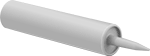
Cartridge | Limestone |
Apply these sealants in cold temperatures, on wet surfaces, and even through running water. They are structural sealants that combine the mechanical strength of an adhesive with excellent sealing properties and high flexibility. Sealants are non-sagging, so they won't drip from vertical and overhead surfaces.
Elongation and joint compression/expansion tolerance indicate flexibility—the higher the values are, the more joint movement sealants can sustain. These sealants are good for use between dissimilar materials and in environments with wide temperature fluctuation.
Container | Temp., ° F | |||||||||||||||
|---|---|---|---|---|---|---|---|---|---|---|---|---|---|---|---|---|
Size, fl. oz. | Type | Begins to Harden, min. | Reaches Full Strength, day | Elongation | Joint Compression/Expansion Tolerance | Tensile Strength, psi | Hardness Rating | Application Temp. Range, ° F | Min. | Max. | For Joining | Color (Clarity) | Each | |||
Polyether | ||||||||||||||||
| 10.1 | Cartridge | 20 | 7 | 525% | -35% to 35% | 370 | Medium (Durometer 45A) | 32 to 200 | -40 | 200 | Asphalt Composite Glass Masonry Metal Plastic Rubber Wood Composite to Glass Metal to Composite Metal to Glass Metal to Plastic Metal to Rubber Plastic to Composite Plastic to Glass Plastic to Rubber Rubber to Composite Rubber to Glass Wood to Glass | Limestone (Opaque) | 1534N41 | 000000 | ||
High-Strength Self-Leveling Concrete Joint Sealants
|
Container | For Max. Crack | Each | Package | ||||||||||||||||||
|---|---|---|---|---|---|---|---|---|---|---|---|---|---|---|---|---|---|---|---|---|---|
Mfr. Model No. | Size, fl. oz. | Type | Begins to Harden | Reaches Full Strength, day | Elongation | Joint Compression/Expansion Tolerance | Tensile Strength, psi | Hardness Rating | Wd. | Dp. | Application Temp. Range, ° F | Temp. Range, ° F | For Joining | Color | Each | Pkg. Qty. | Pkg. | ||||
Sika Sikaflex Polyurethane Rubber | |||||||||||||||||||||
| 1C SL | 10.1 | Cartridge | 2 hr. | 5 | 320% | -25% to 25% | 150 | Medium Soft (Durometer 35A) | 1/2" | 1/2" | 40 to 100 | -40 to 170 | Composite Glass Masonry Metal Plastic Rubber Wood | Limestone | 1660N12 | 000000 | 24 | 1660N121 | 0000000 | ||
| 1C SL | 29 | Cartridge | 2 hr. | 5 | 320% | -25% to 25% | 150 | Medium Soft (Durometer 35A) | 1/2" | 1/2" | 40 to 100 | -40 to 170 | Composite Glass Masonry Metal Plastic Rubber Wood | Limestone | 1660N13 | 00000 | 12 | 1660N131 | 000000 | ||
Silicone Rubber | |||||||||||||||||||||
| — | 29 | Cartridge | 60 min. | 7 | 1,000% | -50% to 100% | 20 | Soft (Durometer 20A) | 1" | 1/2" | 60 to 85 | -60 to 300 | Composite Glass Masonry Metal Plastic Rubber Wood | Limestone | 1660N11 | 00000 | 10 | 1660N111 | 000000 | ||
Structural Sealants
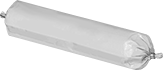 |
Sausage Pack |
These structural sealants combine the mechanical strength of an adhesive with excellent sealing properties and high flexibility. They’re non-sagging, so they won't drip from vertical and overhead surfaces.
Elongation and joint compression/expansion tolerance indicate flexibility—the higher the values are, the more joint movement sealants can sustain. For joints between dissimilar materials and in environments with wide temperature fluctuation, choose a sealant with a higher elongation or joint compression/expansion tolerance. For high-wear applications, choose a harder sealant for the most abrasion resistance.
Container | Temp., ° F | ||||||||||||||||
|---|---|---|---|---|---|---|---|---|---|---|---|---|---|---|---|---|---|
Mfr. Model No. | Size, fl. oz. | Type | Begins to Harden, hr. | Reaches Full Strength, day | Elongation | Joint Compression/Expansion Tolerance | Tensile Strength, psi | Hardness Rating | Min. | Max. | For Joining | Primer Req. for Use On | Color (Clarity) | Each | |||
Sika Sikaflex Polyurethane Rubber | |||||||||||||||||
| 1-A | 20 | Sausage Pack | 6 | 7 | 550% | -35% to 35% | 175 | Medium Soft (Durometer 35A) | -40 | 170 | Composite Masonry Metal Plastic Rubber Wood Metal to Composite Metal to Plastic Metal to Rubber Plastic to Composite Plastic to Rubber Rubber to Composite | Aluminum Plastic Stainless Steel Galvanized Steel | Limestone (Opaque) | 6937T401 | 000000 | ||
High-Strength Concrete Joint Sealants
|
Cartridge |
Seal concrete joints in high-traffic areas—these sealants stand up to heavy wear and tear, such as steel wheel traffic. They're non-sagging, so they won't drip from vertical and overhead surfaces. Made from silicone rubber, sealants are RTV (room-temperature vulcanizing).
Elongation and joint compression/expansion tolerance indicate flexibility—the higher the values are, the more joint movement sealants can sustain. These sealants are best suited to joints between similar materials that aren't exposed to wide temperature fluctuation. For high-wear applications, choose a harder sealant for the most abrasion resistance.
Container | For Max. Crack | Each | Package | ||||||||||||||||||
|---|---|---|---|---|---|---|---|---|---|---|---|---|---|---|---|---|---|---|---|---|---|
Mfr. Model No. | Size, fl. oz. | Type | Begins to Harden, min. | Reaches Full Strength, day | Elongation | Joint Compression/Expansion Tolerance | Tensile Strength, psi | Hardness Rating | Wd. | Dp. | Application Temp. Range, ° F | Temp. Range, ° F | For Joining | Color | Each | Pkg. Qty. | Pkg. | ||||
Sika Sikasil Silicone Rubber | |||||||||||||||||||||
| 728 NS | 29 | Cartridge | 25 | 7 | 1,000% | -50% to 100% | 175 | Soft (Durometer 10A) | 1" | 1/2" | 35 to 95 | -80 to 350 | Composite Masonry Metal Plastic Rubber Wood | Limestone | 1671N13 | 000000 | 12 | 1671N131 | 0000000 | ||
Structural Glass Sealants
|
Sausage Pack |
Make seals that support glass under heavy loads in equipment and buildings. These sealants are also known as glazing compounds. They’re non-sagging, so they won't drip from vertical and overhead surfaces. Made from silicone rubber, sealants are RTV (room-temperature vulcanizing).
Joint compression/expansion tolerance indicates flexibility—the higher the value is, the more joint movement a sealant can sustain.
Container | Temp., ° F | ||||||||||||||||
|---|---|---|---|---|---|---|---|---|---|---|---|---|---|---|---|---|---|
Mfr. Model No. | Size, fl. oz. | Type | Begins to Harden, hr. | Reaches Full Strength, day | Elongation | Joint Compression/Expansion Tolerance | Tensile Strength, psi | Hardness Rating | Application Temp. Range, ° F | Min. | Max. | For Joining | Color (Clarity) | Each | |||
Dow Silicone Rubber | |||||||||||||||||
| 795 | 20 | Sausage Pack | 3 | 14 | Not Rated | -50% to 50% | 60 | Medium Soft (Durometer 35A) | -20 to 120 | -40 | 300 | Metal | Limestone (Opaque) | 7452A22 | 000000 | ||
