We will reply to your message within an hour.
More
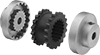
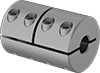
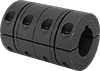
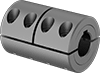
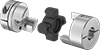
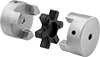
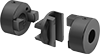
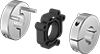
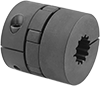
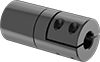
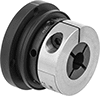
Designed to grip evenly around your shaft, clamping couplings provide more holding power than set screw couplings without marring the shaft.
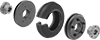
When one of your shafts is undersized from wear, oversized from coatings, or uncommonly sized, machine one end of these couplings to fit. They clamp around your shafts for a secure hold that won’t cause damage.
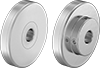
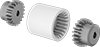
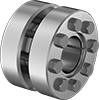
These couplings have the gripping strength to handle higher torque than most other couplings.
When you need a strong hold and even grip on shafts that are oversized due to finishes, undersized from wear, or uncommonly sized, we’ll make a coupling for you that fits just right. These couplings clamp around your shafts to prevent marring them.
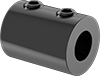
Set screws bite into your shaft to hold these couplings in place.
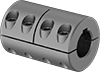
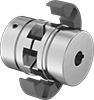
Install and remove these shaft couplings without disconnecting the shafts, motors, and other attached components—they’re made in two pieces so you don’t need to slide them onto shaft ends. They’re also useful when you have limited access to the ends of the shafts.
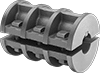
When your shafts are not close enough to use standard couplings, these have the length to bridge the gap.
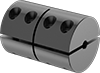
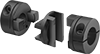
Machine the pilot hole in these couplings to whatever size you need. Often used for shafts that are undersized from wear or oversized from coatings. These couplings are two-piece, so you can remove and reinstall them without moving your shafts.
For hard-to-access shafts that are oversized from coatings or undersized from wear, we’ll get you a coupling in the right size that clamps on as two pieces, so you don’t need to move your shafts or installed components.
Support the weight of a motor and transfer torque to another shaft at the same time with these couplings.
Access one shaft without disconnecting the other. These rigid couplings have a solid bottom that connects the shafts and two top pieces that clamp the shafts independently.
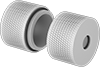
Extend the life of your rigid shaft couplings by blocking out dirt, water, lubricants, and other contaminants. These two-piece covers twist together to form a shell around the coupling.
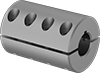
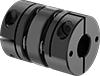
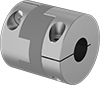
Designed to grip evenly around your shaft, these couplings provide more holding power than set screw couplings without marring the shaft.
Tighten the set screws to fasten these couplings to your shaft. Set screws bite into the shaft to hold the couplings in place.
Each hub includes a set screw, which bites into your shaft to hold the coupling in place.
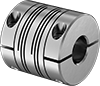
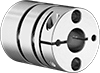
Also called double-loop couplings, these have a flexible center that reduces vibration and compensates for high parallel and angular shaft misalignment.
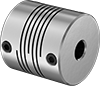
Able to handle high twisting forces as well as misalignment, these couplings are good for high-performance servomotor applications.
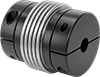
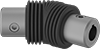
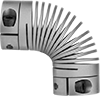
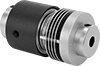
With a bellows between two hubs, these couplings handle all types of misalignment and are good for precision stepper and encoder motion-control applications.
Connect shafts and ball screws to high-speed servomotors and stepper motors—these shaft couplings handle four times more speed than standard servomotor couplings.
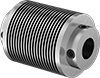
Specially designed ridges allow these bellows couplings to compensate for more misalignment than other precision couplings—useful for low-torque, high-precision applications such as instrumentation and motion control.
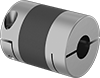
An acetal plastic spacer at the center of these couplings insulates bearings, encoders, and other shaft components from stray electric current. Use them with servomotors, which sometimes generate current that travels down the shaft and can damage circuit boards, interfere with readings, and cause wear on bearing raceways.
Each hub includes a set screw (unless noted), which bites into your shaft to hold the coupling in place.
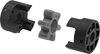
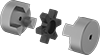
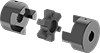
The thick split spider on these couplings takes on twice as much torque as standard split spiders, while a set screw holds the hubs in place on your shaft. Also known as jaw couplings, use them to connect motors to pumps, mixers, and other high-torque equipment.
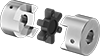
Customize the bore of these flexible couplings to align uncommon shaft sizes as well as shafts that have become undersized from wear or oversized from coatings.
Often used in electronics manufacturing facilities and other extra-clean environments, these shaft couplings are cleaned and individually bagged to keep out contaminants.
Safely connect slightly misaligned shafts near food lines—the spider on these couplings contains metal, so it’ll trigger a metal detector if a piece frays off and contaminates your batch.
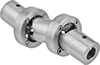
Also known as Schmidt couplings, these handle higher angular misalignment than other three-piece couplings. Good for applications with varying shaft misalignment, they're commonly used with conveyor rollers and roller feeds in printing and packaging machines.
A strip of flexible spring steel wraps around the teeth of both hubs to absorb sharp, momentary load increases that can come from motor startups, emergency braking, or sudden impact with hard objects.
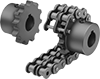
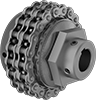
With a rugged roller-chain design, these couplings provide excellent torque and angular misalignment capacities.
With a rigid gear design, these steel couplings transmit more torque than other couplings of the same size.
Use these gear-shaped couplings for high-speed and high-torque applications.
A flexible tire on these couplings safeguards components on your shafts by reducing vibration and shock.
Magnetic force transfers torque from one half of these couplings to the other; there’s no contact between the parts, so they won’t wear. Couplings compensate for angular and parallel misalignment.
Made with lightweight nylon sleeves, these gear couplings require less energy to move than other high-torque flexible couplings. They compensate for parallel, angular, and axial misalignment.
Connect splined shafts to keyed shafts. These couplings are commonly used to connect hydraulic pumps, compressors, and other heavy duty equipment, which often have splined shafts, to electric motors and other components that often have keyed shafts.
For use with splined shafts, which are commonly found in gearboxes and pumps, these couplings are capable of transmitting more torque than couplings for round and keyed shafts.
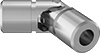
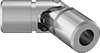
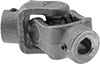
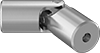
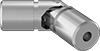
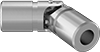
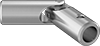
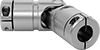
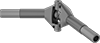
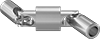
Connect and transfer torque between two shafts that are misaligned at an angle.
Use these U-joints in wet environments to connect and transfer torque between two shafts.
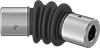
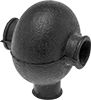
A cover (also known as a boot or bellows) seals out contaminants and seals in lubricant.
With a maximum torque of at least 11,600 in.-lbs., these U-joints handle more torque than any other U-joint in our offering.
Ideal for wet environments, these U-Joints are stainless steel, so they have good corrosion resistance while also balancing strength. They have a heat- and water-resistant silicone cover (also known as a boot or bellows) to keep lubricant in and contaminants out.
Often found in food, cosmetic, and pharmaceutical plants, these U-joints connect misaligned shafts in sanitary environments.
Made to meet strict military standards for material and construction, these stainless steel U-joints also balance strength with good corrosion resistance. Customize their bores until they fit your shafts.
Customize the bores of these U-joints to fit the exact dimensions of your shafts.
Drill the bores to create custom U-joints that meet strict military standards for material and construction.
Often found in continuously running applications, these U-joints operate at higher speeds and last longer than other types of joints, thanks to their needle bearings.
Choose these U-joints for applications that run continuously in wet environments.
A good choice when you need accurate and repeatable motion, these U-joints have zero backlash (no play), so there’s no motion lost when your shafts change direction.
Ideal for use in assemblies that change frequently, these U-joints have clamping screws that can be quickly loosened when you need to move them.
The gears on these U-joints transmit rotary motion between shafts that are misaligned at angles up to 136°, the widest angle of all our U-joints.
To keep your shafts moving in sync, the flexible spring on these joints makes the output shaft move at the same rate as the input shaft.
Since these U-joints have zero backlash (no play), there’s no motion lost when your shafts change direction, so machines move smoothly with more accurate, repeatable motion. As double U-joints, they connect and transfer torque between two shafts that are either parallel to each other or are misaligned at an angle.
Lengthen and shorten these telescoping U-joints to fit your application. They’re a good choice when you need accurate and repeatable motion because they have zero backlash (no play), so there’s no motion lost when the shafts change direction.
Drill custom bore sizes to connect shafts that are either parallel to each other or are misaligned at an angle.
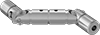
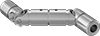
Connect and transfer torque between two shafts that are either parallel to each other or are misaligned at an angle.
A spring automatically lengthens or shortens these U-joints to fit your application, making them a good choice for assemblies with frequent changes.
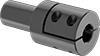
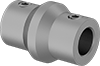
Increase the diameter of your shaft while also making it longer.
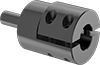
Reduce the diameter of your shaft while adding length.
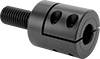
Adapt your shaft to a threaded end without having to machine threads onto your shaft.
One side is unfinished for milling custom pulleys, threaded hubs, sprockets, collars, knobs, sensor targets, or just about anything imaginable; the other side is a one-piece clamping coupling for mounting whatever you’ve created to your shaft.
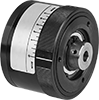
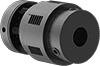
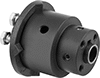
Protect your machinery if there is a jam, emergency stop, or other overload by cutting off torque between shafts when a maximum torque is reached.
To protect power-transmission components from damage, these couplings will shear or tear in overtorque conditions (approximately 10-20 times the maximum rated torque) to sever connections between shafts.
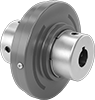
Using magnetic force instead of friction to transmit torque, these torque limiters won't wear when they slip.
Use friction to prevent torque overload, control tension, and brake.
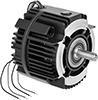
From one assembly, electrically control when to transmit power with a clutch and when to hold a load in place with a brake.
With rugged roller chains, these torque limiters handle more torque than other torque limiters. They have a disc that creates friction to prevent torque overload, control tension, and brake.
With zero backlash (no play), there’s no motion lost when these torque limiters transfer torque, so machines move smoothly with accurate and repeatable motion. They protect your machinery if there is a jam, emergency stop, or other overload by cutting off torque when a maximum torque is reached.
Prevent corrosion from interfering with these torque limiters’ ability to protect your machinery if there’s a jam, emergency stop, or other overload.
Use your air system to remotely make changes to the torque setting or cut off torque completely, even during operation.
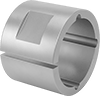
Instead of replacing your shaft or keeping components, such as couplings, with various bore diameters on hand, these reducers adapt the bore of a component to a smaller size.
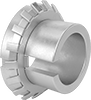
Make up for imperfections and gaps between your bearing and shaft for a tight fit.
These steel rod ends are machined to SAE standards.
In addition to offering superior chemical resistance, these lightweight, fiber-reinforced nylon rod ends also reduce noise and vibration.
Made of zinc-plated steel or stainless steel, these clevis rod ends offer more corrosion resistance than standard steel clevis rod ends.
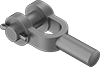
Make quick adjustments to these rod ends by inserting and releasing the clevis pins without the need to bend them into place.
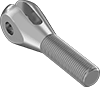
Thread or weld the unfinished shank of these rod ends to meet your specific linkage needs.
A male-threaded shank lets you build a linkage with a tapped tube or any female-threaded connection.
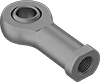
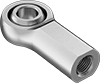
Made of stainless steel, these internally threaded rod ends provide excellent corrosion resistance.
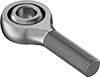
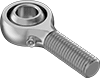
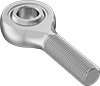
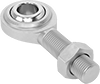
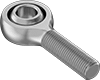
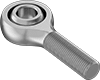
Made of stainless steel, these externally threaded rod ends provide excellent corrosion resistance.
These anodized aluminum rod ends are lighter than stainless steel rod ends and have good corrosion resistance. Internal threads mate with rod end bolts, threaded rods, and other components with male threads.
These anodized aluminum rod ends are lighter than stainless steel rod ends and have good corrosion resistance.
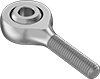
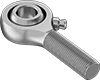
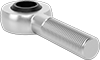
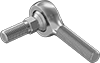
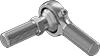
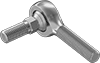
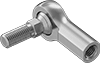
Also known as rod‐end bearings, ball joint rod ends have an eyelet and a ball that swivels to support angular misalignment.
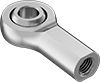
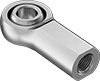
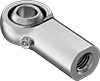
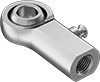
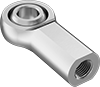
These internally threaded rod ends have an eyelet and a ball that swivels to support angular misalignment. Also known as rod-end bearings.
An oil-embedded bronze insert slowly releases lubricant throughout the life of these internally threaded rod ends.
An oil-embedded bronze insert slowly releases lubricant throughout the life of the rod end.
An oil-embedded bronze insert slowly releases lubricant to the rod end. Connect your grease gun to the fitting to relubricate.
These internally threaded rod ends have an oil-embedded bronze insert that slowly releases lubricant over time. Connect your grease gun to the fitting to relubricate.
Connect your grease gun to the fitting to lubricate.
Connect your grease gun to the fitting to lubricate. Internal threads mate with rod end bolts, threaded rods, and other components with male threads.
A carbon fiber-reinforced insert or PTFE liner reduces wear, handles shock loads, and eliminates the need for lubrication.
For ease of installation, these rod ends come with a compatible jam nut. They have an eyelet and a ball that swivel to support angular misalignment.
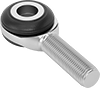
Made to extremely tight tolerances, these externally threaded rod ends are for applications that require positioning accuracy, such as accelerators and other types of control linkages.
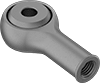
Made of cadmium-plated steel, these internally threaded rod ends generally handle higher loads than stainless steel, aluminum, and nylon rod ends.
Made to extremely tight tolerances, these internally threaded rod ends are for applications that require positioning accuracy, such as accelerators and other types of control linkages.
With at least 55° of ball swivel, these rod ends accommodate greater misalignment than any other internally threaded rod end we offer.
With at least 55° of ball swivel, these externally threaded rod ends accommodate greater misalignment than any other we offer.
Seals keep out dirt and an oil-embedded foam insert slowly releases lubricant for a long life.
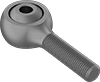
Made of cadmium-plated steel, these externally threaded rod ends generally handle higher loads than stainless steel, aluminum, and nylon rod ends.
Made of impact-resistant nylon, these internally threaded rod ends withstand corrosion as well as fuels, lyes, and weak acids. They do not require lubrication and are 80% lighter than steel rod ends.
Made of impact-resistant nylon, these externally threaded rod ends withstand corrosion as well as fuels, lyes, and weak acids. They do not require lubrication and are 80% lighter than steel rod ends.
These internally threaded rod ends have an innovative body design that keeps the ball from being pushed out when supporting thrust loads.
These externally threaded steel rod ends handle loads that are at least 25% higher than other comparably sized rod ends.
These internally threaded steel rod ends handle loads that are at least 25% higher than other comparably sized rod ends.
A double row of precision ball bearings allows high speeds and smooth operation.
Along with internal threads, these rod ends have a double row of precision ball bearings that allows high speeds and smooth operation.
An innovative body design keeps the ball from being pushed out when supporting thrust loads.
With a ball joint at the top of the shank, these rod ends pivot in the middle of the body instead of in the eyelet. Use them for linear push applications that require movement along the length of the connecting rod.
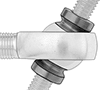
Decrease the ID of your rod end to allow approximately 60° of misalignment.
Without changing the ID, these inserts handle some misalignment on rod ends.
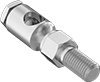
Able to stand up to frequent use, these linkages offer excellent wear resistance. They consist of ball joint rod ends with a ball stud attached to simplify mounting.
These linkages offer excellent wear resistance. They consist of internally threaded ball joint rod ends with a ball stud attached to simplify mounting.
Along with excellent wear resistance, these linkages have a grease fitting for easy lubrication. An internally threaded rod end connects to threaded rods, studs, and other parts with male threads.
These internally threaded linkages have a slippery PTFE liner that reduces wear and eliminates the need for lubrication.
A slippery PTFE liner reduces wear and eliminates the need for lubrication.
Along with excellent wear resistance, these linkages have a grease fitting for easy lubrication.
An oil-embedded bronze insert slowly releases lubricant throughout the life of the joint.
An oil-embedded bronze insert slowly releases lubricant to the rod end.
Made of stainless steel, these ball joint linkages offer more corrosion resistance than steel and zinc ball joint linkages.
Made of stainless steel, these ball joint linkages offer more corrosion resistance than steel ball joint linkages.
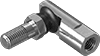
A spring-loaded sleeve allows for rapid assembly and disassembly. These ball joint linkages are made of steel.
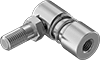
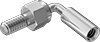
Use these bent linkages for light duty applications.
Use these linkages to create inline pivoting connections. They have internal threads on one end and external threads on the other.
Use these externally threaded linkages to create inline pivoting connections.
Attach these nuts to rods, pipes, and tubes to make pivoting and hinge movements where misalignment is not a concern.
Made of stainless steel for excellent corrosion resistance, these nuts make pivoting and hinge movements where misalignment is not a concern.
These rod end bolts are good for wet and corrosive environments—for maximum mounting flexibility, cut the fully threaded shaft to whatever length you need.
Good for general purpose applications where corrosion and high strength aren’t a concern, these rod end bolts are made of carbon steel.
These alloy steel rod end bolts have the highest tensile strength of any steel fully threaded rod end bolt we offer.
These black-oxide steel rod end bolts are heat treated for added strength.
Pivot and hinge components in wet and corrosive environments with these stainless steel or brass rod end bolts.
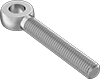
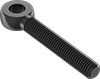
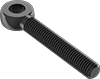
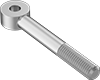
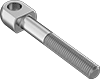
Also known as swing bolts and eyebolts, these internally threaded rod end bolts have no moving parts. They're designed to make pivoting or hinge movements in applications that don't need to compensate for misalignment.
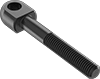
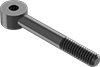
Create pivoting connections in applications that require high shear strength—the partially threaded shank of these rod end bolts withstands more side force than a fully threaded shank.
Made of stainless steel, these rod end bolts are stronger and more corrosion resistant than our standard flat-shoulder rod end bolts.
Made of stainless steel, these rod end bolts are more corrosion resistant than steel rod end bolts.
With a rubber bushing, these bolts reduce noise and vibration—attach them to rods, pipes, tubes, and cable linkages that have male threading. They’re commonly known as isolated rod ends.
These alloy steel bolts have the highest tensile strength of any blank rod end bolt we offer.
To reduce noise and vibration, these bolts have a rubber bushing—connect them to rods, pipes, tubes, and cable linkages that have female threading. They’re also known as isolated rod ends.
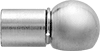
A spring-loaded socket locks your gas spring to the ball stud—squeeze the ends together to attach and to release.
Thread these ball socket end fittings onto gas springs. They rotate in any direction on a ball stud to compensate for misalignment.
These end fittings snap right on a ball stud—an integral retaining clip grips the ball stud for secure attachment until you apply enough force to pop it off.
Made from stainless steel for excellent corrosion resistance in damp environments.
Lift the clip on these end fittings to secure and release attachment to your ball stud.
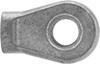
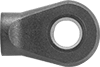
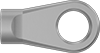
Made of aluminum, these eyelet end fittings are lightweight.
Good for use around flammable materials, these end fittings are made of nylon, which doesn't generate sparks.
Thread these eyelet end fittings onto gas springs.
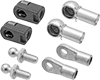
Keep a convenient selection of gas spring fittings on hand—assortments include ball socket end fittings, eyelet end fittings, and ball studs.
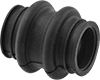
Shield ball joint rod ends to keep lubricants in and contaminants out.
Protect U-joints to keep lubricants in and contaminants out.
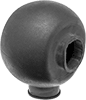
Enclose ball joint linkages to keep lubricants in and contaminants out.