

Filter by
For Joining


Solder Type
System of Measurement
Melting Temperature

Environment
Width
REACH


Container Type

Maximum Temperature
DFARS Specialty Metals
Solder for Drinking Water
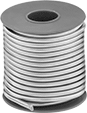 |
This solder meets NSF/ANSI Standard 61 for drinking water. It does not have a flux core, so you can choose the flux that works best for your application.
Lead-Free—Lead-free solder is safer to use than leaded solder and helps meet industry regulations.
Material Composition | ||||||||||||
|---|---|---|---|---|---|---|---|---|---|---|---|---|
Solder Alloy | Tin | Silver | Copper | Lead | Melting Temp., ° F | Solder Type | Dia. | Wt., lb. | Each | |||
For Joining Aluminum, Brass, Bronze, Copper, Nickel, Stainless Steel, Steel, and Zinc Alloy | ||||||||||||
| Sn95Cu4.8Ag0.2 | 95% | 0.2% | 4.8% | 0% | 440 | Lead-Free, Flux Required | 0.118" | 1 | 76805A61 | 000000 | ||
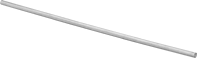
No-Flux Solder for Aluminum
Lead-Free, No Flux Required
 |
Material Composition | 2 lb. | |||||||||
|---|---|---|---|---|---|---|---|---|---|---|
Solder Alloy | Zinc | Aluminum | Lead | Dia. | Melting Temp., ° F | Lg. | Pkg. | |||
For Joining Aluminum | ||||||||||
| Zn98Al2 | 98% | 2% | 0% | 0.125" | 760 | 18" | 7664A4 | 000000 | ||
Low-Melting-Point Solder for Low-Temperature Applications
Leaded, Flux Required
 |
Leaded solder has greater tensile strength and density than other indium-based solders, giving it a stronger hold.
Material Composition | 0.16 oz. | ||||||||||
|---|---|---|---|---|---|---|---|---|---|---|---|
Solder Alloy | Indium | Silver | Lead | Dia. | Melting Temp., ° F | Thermal Conductivity, W/(m⋅°C) | Tensile Strength, psi | Each | |||
For Joining Aluminum, Brass, Bronze, Ceramic, Glass, Gold, Nickel, Quartz, Stainless Steel, Steel, and Zinc Alloy | |||||||||||
| In80Pb15Ag5 | 80% | 5% | 15% | 0.030" | 310 | 43 | 2,550 | 6976N11 | 0000000 | ||
Lead-Free, Flux Required
|
Lead-free solder is safer to use than leaded solder and helps meet industry regulations.
100% Indium—Solder that is 100% indium has better thermal conductivity than solder that contains tin, and will cold weld more easily. However, it has lower tensile and shear strength than solder with tin.
48% Tin—Solder with 48% tin has greater tensile and shear strength than 100% indium solder, but lower thermal and electrical conductivity.
Material Composition | 0.11 oz. | ||||||||||
|---|---|---|---|---|---|---|---|---|---|---|---|
Solder Alloy | Indium | Tin | Lead | Dia. | Melting Temp., ° F | Thermal Conductivity, W/(m⋅°C) | Tensile Strength, psi | Each | |||
For Joining Aluminum, Brass, Bronze, Ceramic, Glass, Nickel, Quartz, Stainless Steel, Steel, and Zinc Alloy | |||||||||||
| In52Sn48 | 52% | 48% | 0% | 0.030" | 245 | 34 | 1,720 | 8514N13 | 0000000 | ||
| In100 | 100% | — | 0% | 0.030" | 315 | 86 | 270 | 8514N11 | 000000 | ||
Solder for Aluminum
High-Density Low-Melting-Point Solder
Lead-Free, No Flux Required
 |
Lead-free solder is safer to use than leaded solder and helps meet industry regulations.
1% Silver—Solder with 1% silver forms stronger bonds than solder without silver. It’s also more malleable and ductile. However, it has a higher melting point, so it takes longer to solder.
Brazing Alloys for Joining Aluminum to Copper
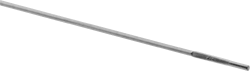 |
Join aluminum to copper and copper-based alloys, such as brass and bronze. These alloys don’t contain cadmium, so they’re safer than other brazing alloys with cadmium and help you meet industry regulations.
Material Composition | ||||||||||||
|---|---|---|---|---|---|---|---|---|---|---|---|---|
Zinc | Aluminum | Cadmium | Melting Temp. Range, ° F | Braze Type | Dia. | Lg. | Approx. Rods per lb. | Wt., lb. | Pkg. | |||
For Joining Aluminum, Brass, Bronze, and Copper | ||||||||||||
| 85% | 15% | 0% | 720 to 845 | Flux Required, Without Cadmium | 5/64" | 20" | 52 | 0.25 | 7795A23 | 000000 | ||
Low-Melting-Point Solder Ribbon for Low-Temperature Applications
Leaded, Flux Required
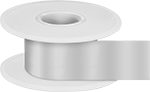 |
Leaded solder has greater tensile strength and density than other indium-based solders, giving it a stronger hold.
Material Composition | 0.1 oz. | ||||||||||||
|---|---|---|---|---|---|---|---|---|---|---|---|---|---|
Solder Alloy | Indium | Silver | Lead | Melting Temp., ° F | Thermal Conductivity, W/(m⋅°C) | Tensile Strength, psi | Lg. | Wd. | Thk. | Each | |||
For Joining Aluminum, Brass, Bronze, Ceramic, Glass, Gold, Nickel, Quartz, Stainless Steel, Steel, and Zinc Alloy | |||||||||||||
| In80Pb15Ag5 | 80% | 5% | 15% | 310 | 43 | 2,550 | 12" | 1" | 0.002" | 5940N11 | 0000000 | ||
Lead-Free, Flux Required
|
Lead-free solder is safer to use than leaded solder and helps meet industry regulations.
Material Composition | 0.1 oz. | ||||||||||||
|---|---|---|---|---|---|---|---|---|---|---|---|---|---|
Solder Alloy | Indium | Tin | Lead | Melting Temp., ° F | Thermal Conductivity, W/(m⋅°C) | Tensile Strength, psi | Lg. | Wd. | Thk. | Each | |||
For Joining Aluminum, Brass, Bronze, Ceramic, Glass, Gold, Nickel, Quartz, Stainless Steel, Steel, and Zinc Alloy | |||||||||||||
| In52Sn48 | 52% | 48% | 0% | 245 | 34 | 1,720 | 12" | 1" | 0.002" | 7906N12 | 0000000 | ||
| In100 | 100% | — | 0% | 315 | 86 | 270 | 12" | 1" | 0.002" | 7906N11 | 000000 | ||
Flux-Included Brazing Alloys for Joining Aluminum to Copper
|
Flux is already built into these alloys, so there’s no need to add it when joining aluminum to copper. These alloys don’t contain cadmium, so they’re safer than other brazing alloys with cadmium and help you meet industry regulations.
Material Composition | |||||||||||
|---|---|---|---|---|---|---|---|---|---|---|---|
Zinc | Aluminum | Cadmium | Melting Temp. Range, ° F | Braze Type | Dia. | Lg. | Pkg. Qty. | Pkg. | |||
For Joining Aluminum and Copper | |||||||||||
| 78% | 22% | 0% | 800 to 900 | Flux Core, Without Cadmium | 0.09" | 20" | 4 | 7218N11 | 000000 | ||
Brazing Alloys for Aluminum
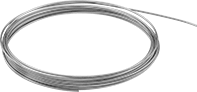 |
Join aluminum to aluminum. These alloys do not contain cadmium, so they are safer to use than alloys with cadmium and help meet industry regulations.
BAlSi-3—BAlSi-3 alloys are good for filling in large gaps because they melt into a thicker liquid than BAlSi-4 alloys.
Material Composition | |||||||||||||
|---|---|---|---|---|---|---|---|---|---|---|---|---|---|
AWS Material Code | Aluminum | Silicon | Cadmium | Melting Temp. Range, ° F | Braze Type | Dia. | Lg., ft. | Wt., oz. | Includes | Each | |||
For Joining Aluminum | |||||||||||||
| BAlSi-4 | 88% | 12% | 0% | 1,070 to 1,080 | Flux Required, Without Cadmium | 1/16" | 10 | 0.75 | 1/3 oz. Tube of Flux | 7797A11 | 000000 | ||
| BAlSi-3 | 90% | 10% | 0% | 970 to 1,085 | Flux Required, Without Cadmium | 3/64" | 33 | 1.1 | — | 7797A102 | 00000 | ||
| BAlSi-3 | 90% | 10% | 0% | 970 to 1,085 | Flux Required, Without Cadmium | 1/16" | 19 | 1.1 | — | 7797A101 | 00000 | ||
Soldering Flux for Aluminum
 |
Container | ||||||||
|---|---|---|---|---|---|---|---|---|
For Joining | Size, fl. oz. | Type | Form | Cleanup Method | Mil. Spec. | Each | ||
| Aluminum | 4 | Jar | Paste | Water | DOD-STD-1866 | 7696A3 | 000000 | |
No-Flux Brazing Alloys for Aluminum
|
No need to add flux when brazing aluminum parts such as radiators, power tools, and castings—these alloys don’t require it. All have excellent corrosion resistance. They don’t contain cadmium, so they’re safer than other brazing alloys with cadmium and help you meet industry regulations.
No-Clean Brazing Flux for Joining Aluminum to Copper
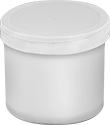
Brazing Flux for Aluminum
Soldering Flux for High-Temperature Aluminum
