Filter by


Relative Aperture Size
Export Control Classification Number (ECCN)

Color Measurement Mode
REACH
U.S.–Mexico–Canada Agreement (USMCA) Qualifying
DFARS Specialty Metals
RoHS
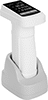
Light Spectrum Meters
 |
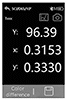 |
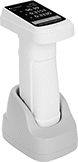
Digital Touch Screen Display |
Evaluate how dyes, pharmaceuticals, food products, and raw materials respond to light to determine their purity and quality. Also known as spectrophotometers, these are often used to measure how a sample’s concentration changes when exposed to light. They measure absorbance and transmittance to check how much light is absorbed or passes through a sample. They also take reflectance measurements to help you test paint and coatings by checking how much light bounces off them. To use these meters, point the light toward your sample.
Fields of view represent how the human eye sees color. The 2° field of view mimics viewing color up close. The 10° field of view mimics viewing color as you’d see it from a few feet away.
Aperture sizes control the amount of light you expose your sample to. Use the 11 mm aperture to measure textured samples and average color over a larger area. The 6 mm aperture is best for general purpose measurements. The 3 mm × 1 mm aperture measures small samples.
Diffuse illumination distribution means these meters scatter light around your sample for even coverage. This gives you accurate readings on rough and uneven surfaces. The 8° illumination angle reduces light reflections when measuring glossy materials.
Color spaces give numbered color values for standard colors in different industries. These meters support standard color spaces for printing, textiles, digital displays, food and pharmaceuticals, and lighting design.
Color distance formulas measure how different two colors are from each other. ΔE76 is used for comparison in general purpose, non-critical applications. ΔECMC is often used to measure textiles, ceramics, and uneven or glossy surfaces. ΔE94 is often used to measure paints and coatings for vehicles. ΔE2000 is the most accurate and precise measurement formula. It is the standard adopted by ISO. You’ll see it used in applications where color measurements are more critical, such as laboratories or pharmaceutical manufacturing facilities.
Illumination | |||||||||||||
|---|---|---|---|---|---|---|---|---|---|---|---|---|---|
For Wavelength Range, nm | Measuring Increments, nm | Accuracy | Repeatability | Field of View | Aperture Size | Distribution | Angle | Color Space | Color Distance Formula | Each | |||
LED with Visible Light Spectrum | |||||||||||||
Bluetooth Connection, USB-C Connection | |||||||||||||
| 400 to 700 | 10 | ΔE*ab Less Than or Equal to 0.25 | ΔE*ab Less Than or Equal to 0.025 | 2°, 10° | 11 mm Dia. (Medium) 6 mm Dia. (Small) 3 mm Lg. × 1 mm Wd. (Extra Small) | Diffuse | 8° | CIELAB, CIELCH, CIELUV, CMYK, HunterLab, Rgb, Yxy | ΔE*ab, ΔE*94, ΔE*cmc, ΔE*00 | 7758N11 | 000000000 | ||