
We will reply to your message within an hour.
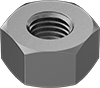
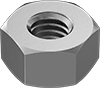
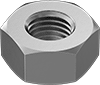
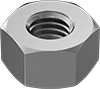
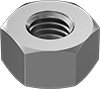
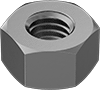
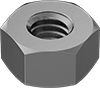
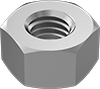
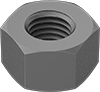
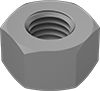
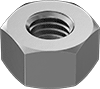
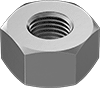
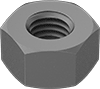
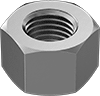
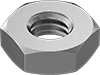
Because they’re about 10% wider and taller than standard hex nuts, these heavy hex nuts distribute the load over a large area. Grade 2H nuts are comparable in strength to Grade 9 bolts.
Comparable in strength to Class 12.9 bolts. About 10% wider and taller than standard hex nuts, these metric-sized heavy hex nuts distribute the load over a large area.
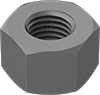
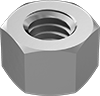
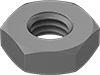
About 10% wider and taller than standard hex nuts, these heavy nuts distribute the load over a large area. Medium-strength steel nuts are suitable for fastening most machinery and equipment.
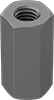
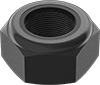
These nuts tighten when turned to the left; once fastened, they resist loosening from counterclockwise motion. About 10% wider and taller than standard hex nuts, these heavy hex nuts distribute the load over a large area.

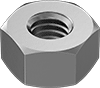
To distribute the load over a large area, these heavy hex nuts are about 10% wider and taller than standard hex nuts. They're about half the strength of medium-strength steel nuts and used for light duty fastening applications, such as securing access panels.

These Class 10 nuts are about 25% stronger than medium-strength steel heavy hex nuts.
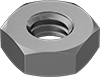
These nuts have good chemical resistance. Considered heavy hex nuts, they are about 10% wider and taller than standard hex nuts and distribute the load over a large area.
More corrosion resistant than 18-8 stainless steel nuts, these nuts can be used in saltwater environments. They're considered heavy hex nuts because they are about 10% wider and taller than standard hex nuts and distribute the load over a large area.
Brass nuts are resistant to corrosion in wet environments and electrically conductive. These nuts are considered heavy hex nuts because they are about 10% wider and taller than standard hex nuts and distribute the load over a large area.
Bronze nuts are stronger and more resistant to salt water than brass nuts. About 10% wider and taller than standard hex nuts, these heavy hex nuts distribute the load over a large area.
Made from 400 nickel—also known as Monel—these nuts are often used on valves, pumps, and shafts because they resist salt water and caustic chemicals. They’re considered heavy hex nuts because they’re about 10% wider and taller than standard hex nuts and distribute the load over a large area.
These nuts are designed to secure ASTM A325 bolts in structural joints. About 10% wider and taller than standard hex nuts, these heavy hex nuts distribute the load over a large area.
More corrosion resistant than 18-8 stainless steel nuts, these nuts have excellent resistance to chemicals and salt water. They're able to maintain their strength in high-pressure and high-temperature environments and are used with ASTM A193 bolts to fasten pressure tanks, valves, and flanges. Considered heavy hex nuts, they are about 10% wider and taller than standard hex nuts and distribute the load over a large area.
These nuts have good chemical resistance. They maintain their strength in high-pressure and high-temperature environments and are used with ASTM A193 bolts to fasten pressure tanks, valves, and flanges. About 10% wider and taller than standard hex nuts, these heavy hex nuts distribute the load over a large area.
Able to maintain their strength in high-pressure and high-temperature environments, these nuts are used with ASTM A193 bolts to fasten pressure tanks, valves, and flanges. They are heavy nuts, so they’re about 10% wider and taller than standard hex nuts and distribute the load over a large area.
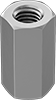
Taller than standard hex nuts, these metric nuts provide a larger gripping area for installation with a wrench.
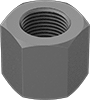
Taller than standard hex nuts, these nuts provide a larger gripping area for installation with a wrench.
Stainless steel nuts have excellent corrosion resistance in most environments.
These nuts are often used in conjunction with a heavy hex nut to fasten Grade 9 bolts in heavy machinery, such as earth-moving equipment.
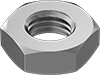
Use these nuts for light duty fastening applications, such as securing access panels.
Brass nuts are resistant to corrosion in wet environments and electrically conductive.
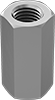
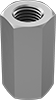
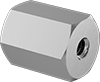
These coupling nuts have good chemical resistance.
These metric coupling nuts have good chemical resistance.
More corrosion resistant than 18-8 stainless steel coupling nuts, these metric nuts have excellent resistance to chemicals and salt water.
More corrosion resistant than 18-8 stainless steel coupling nuts, these nuts have excellent resistance to chemicals and salt water.
For light duty applications, choose these metric-sized coupling nuts.
About half the strength of medium-strength steel coupling nuts, these nuts are for light duty fastening applications.
The left-hand threads on these coupling nuts resists loosening from counterclockwise vibration. Use in light duty applications.
Choose these locknuts to fasten standard metric threads. They’re Class 8 steel, so they can be used in most fastening applications.
Made from Grade 5 steel, these inch-sized coupling nuts are suitable for most applications.
Comparable in strength to Grade 9 bolts, these coupling nuts are about 20% stronger than high-strength steel coupling nuts. Available in inch thread sizes.
Made from Grade 8 steel, these nuts are about 25% stronger than medium-strength steel coupling nuts. Furnished in inch thread sizes.
These metric-sized coupling nuts are Class 10 steel, so they’re about 25% stronger than medium-strength steel coupling nuts.
One-third the weight of steel, aluminum coupling nuts resist corrosion in wet environments.
Brass coupling nuts are corrosion resistant in wet environments and electrically conductive.
Plastic coupling nuts are chemical resistant, nonconductive, and lightweight.
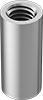
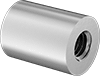
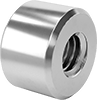
A smooth rounded body provides a finished look.
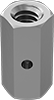
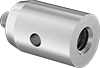
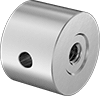
Use the sight hole to check for proper thread engagement.
Known for their strength, steel coupling nuts are available with a corrosion-resistant finish.
Stainless steel coupling nuts have excellent corrosion resistance in most environments.
Known for their strength, these locknuts are zinc-plated to resist corrosion in wet environments.
These locknuts have good chemical resistance.
More corrosion resistant than 18-8 stainless steel locknuts, these have excellent resistance to chemicals and salt water.
Made from Grade 8 steel, these locknuts are about 25% stronger than the same locknut made with medium-strength steel.
Use these locknuts for light duty fastening applications, such as securing access panels.
Comparable in strength to Grade 8 bolts, these locknuts are about three times stronger than the same locknut made with low-strength steel.
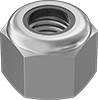
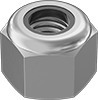
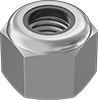
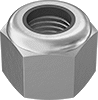
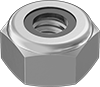
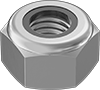
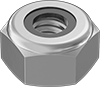
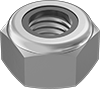
Made from medium-strength steel with a nylon insert, these Class 8 metric locknuts are strong enough to use on most machinery and equipment that’s prone to vibration and temperature changes.
High-strength steel locknuts are about 25% stronger than medium-strength steel locknuts.
These locknuts are suitable for fastening most machinery and equipment.
Known for their strength, these steel locknuts are cadmium plated to resist corrosion in wet environments.
Stainless steel locknuts have excellent corrosion resistance in most environments.
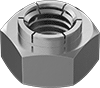
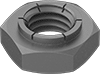
About half the height and 10% wider than standard flex-top locknuts, these locknuts are often referred to as thin heavy locknuts. Use them in low-clearance applications or jam one against a heavy hex nut to hold it in place.
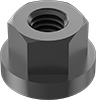
Also known as collar nuts, these metric nuts have a flange that distributes pressure across the surface, so you don't need a washer. Made of high-strength Class 10 steel, they’re about 25% stronger than medium-strength steel flange nuts.
Choose these standoffs for their adherence to NAS 1831 specifications.
A nickel-chrome plating gives these standoffs a mirror-like finish.
A nylon patch bonded to the threads adds friction, preventing these standoffs from loosening from vibration.
Mount components onto food processing lines, walls, and sanitary equipment while leaving space to clean in between.
The magnetic end of these standoffs makes it easy to temporarily mount or reposition components on magnetic surfaces.
Protect components from electrical charges.
Position components in assemblies, as well as separate or connect parts with these standoffs.
These standoffs are made to NAS specifications.
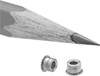
These standoffs are designed to fit in the limited space of compact electronics such as laptops and hand-held devices.
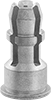
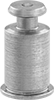
Also known as captive standoffs, a recess under the hex clinches the panel for a strong hold that won't push, pull, or twist out. When mounted, the hex sits flush with the surface and the closed end creates a neat, finished appearance.
A recess under the hex clinches a panel for a strong hold that won't push, pull, or twist out. When mounted with a lever press, the hex sits flush with the surface and the open end creates a through hole.
In enclosures and other places where you don’t want to drill a hole, mount circuit boards and other thin panels with these supports.
Often called swage standoffs because you permanently crimp them into a panel.
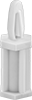
The flat top supports boards without drilling a hole while wings on the other end add tension for a secure hold in a hole.
Thread the male connection into a tapped hole and snap the other end into a panel for a secure hold that can be released for repairs and upgrades.
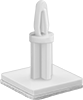
Stick these supports to surfaces where you don't want to drill a hole. The snap-in end can be released for repairs and upgrades.
Designed for multi-level printed circuit board applications, these self-aligning, through-hole supports have a chamfered female end for stacking. The other end snaps and locks in place for a permanent connection.
Both ends snap and lock in place for a permanent connection.
The ends of these removable supports snap in and compress between panels to reduce vibration of miniature cooling fans in compact electronics.
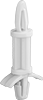
Wings add tension to strengthen the hold in a hole. The other end is releasable for repairs and upgrades.
Secure the self-tapping female connection with a screw; the other end snaps snugly into a panel, yet can be released for repairs and upgrades.
With the end clinched in place, the prongs allow you to quickly snap a panel on and off these supports.
Once the end is clinched in place, panels with keyholes easily slide on and off these supports.
Keep a variety of standoffs in different lengths and thread sizes on hand.