


Filter by
System of Measurement
Thread Size

Fastener Strength Grade/Class


Material
Threading

Thread Spacing

Thread Type
Tensile Strength
Thread Direction


Specifications Met
DFARS Specialty Metals
Export Control Classification Number (ECCN)
Sold As

Shank Thread Size


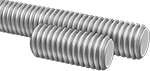
Threaded Rods
Medium-Strength Steel
 |
Lg. | Tensile Strength, psi | Fastener Strength Grade/Class | Hardness | Specs. Met | Each | |||
|---|---|---|---|---|---|---|---|---|
Zinc-Yellow-Chromate-Plated Steel | ||||||||
1 1/4"-12 | ||||||||
| 6" | 125,000 | ASTM Grade B7 | Rockwell C35 | ASTM A193 | 99086A358 | 000000 | ||
| 1 ft. | 125,000 | ASTM Grade B7 | Rockwell C35 | ASTM A193 | 99086A373 | 00000 | ||
| 2 ft. | 125,000 | ASTM Grade B7 | Rockwell C35 | ASTM A193 | 99086A388 | 00000 | ||
| 3 ft. | 125,000 | ASTM Grade B7 | Rockwell C35 | ASTM A193 | 99086A334 | 00000 | ||
Steel | ||||||||
1 1/4"-12 | ||||||||
| 6" | 125,000 | ASTM Grade B7 | Rockwell C35 | ASTM A193 | 98750A527 | 00000 | ||
| 1 ft. | 125,000 | ASTM Grade B7 | Rockwell C35 | ASTM A193 | 98957A414 | 00000 | ||
| 2 ft. | 125,000 | ASTM Grade B7 | Rockwell C35 | ASTM A193 | 98957A821 | 00000 | ||
| 3 ft. | 125,000 | ASTM Grade B7 | Rockwell C35 | ASTM A193 | 92580A116 | 00000 | ||
| 6 ft. | 125,000 | ASTM Grade B7 | Rockwell C35 | ASTM A193 | 92580A216 | 000000 | ||
| 12 ft. | 125,000 | ASTM Grade B7 | Rockwell C35 | ASTM A193 | 92580A316 | 000000 | ||
High-Strength Steel
|
With a tensile strength of 150,000 psi, these rods are strong enough to stabilize steel frameworks and structural supports, such as I-beams. They are about 25% stronger than medium-strength steel rods. To avoid stripped threads during installation, make sure your nuts are also high-strength steel.
Zinc-Yellow-Chromate-Plated Steel—The most common choice for areas with occasional exposure to moisture.
Steel—Best for dry environments since moisture will cause these rods to rust.
Lg. | Tensile Strength, psi | Fastener Strength Grade/Class | Hardness | Specs. Met | Each | |||
|---|---|---|---|---|---|---|---|---|
Zinc-Yellow-Chromate-Plated Steel | ||||||||
1 1/4"-12 | ||||||||
| 3 ft. | 150,000 | ASTM Grade BD | Rockwell C33 | ASTM A354 Grade BD | 3313N113 | 0000000 | ||
Steel | ||||||||
1 1/4"-12 | ||||||||
| 6" | 150,000 | ASTM Grade BD | Rockwell C33 | ASTM A354 Grade BD | 90322A367 | 00000 | ||
| 1 ft. | 150,000 | ASTM Grade BD | Rockwell C33 | ASTM A354 Grade BD | 90322A368 | 00000 | ||
| 2 ft. | 150,000 | ASTM Grade BD | Rockwell C33 | ASTM A354 Grade BD | 90322A369 | 000000 | ||
| 3 ft. | 150,000 | ASTM Grade BD | Rockwell C33 | ASTM A354 Grade BD | 90322A237 | 000000 | ||
| 6 ft. | 150,000 | ASTM Grade BD | Rockwell C33 | ASTM A354 Grade BD | 90322A238 | 000000 | ||
Low-Strength Steel
|
Lg., ft. | Tensile Strength, psi | Hardness | Pkg. Qty. | Pkg. | |||
|---|---|---|---|---|---|---|---|
Zinc-Plated Steel | |||||||
1 1/4"-12 | |||||||
| 1 | 50,000 | Rockwell B61 | 1 | 90034A335 | 000000 | ||
| 2 | 50,000 | Rockwell B61 | 1 | 90032A040 | 00000 | ||
| 3 | 50,000 | Rockwell B61 | 1 | 98842A040 | 00000 | ||
| 6 | 50,000 | Rockwell B61 | 1 | 98915A040 | 000000 | ||
Steel | |||||||
1 1/4"-12 | |||||||
| 1 | 50,000 | Rockwell B61 | 1 | 98790A440 | 00000 | ||
| 2 | 50,000 | Rockwell B61 | 1 | 98791A040 | 00000 | ||
| 3 | 50,000 | Rockwell B61 | 1 | 98838A040 | 00000 | ||
| 6 | 50,000 | Rockwell B61 | 1 | 98911A040 | 000000 | ||
Coupling Nuts
 |
Low-Strength Steel
Each | |||||||||
|---|---|---|---|---|---|---|---|---|---|
Thread Size | Lg. | Wd. | Threading | 1-9 | 10-49 | 50-Up | |||
Zinc-Plated Steel | |||||||||
| 1 1/4"-12 | 3" | 1 5/8" | Fully Threaded | 90264A275 | 000000 | 000000 | 000000 | ||
High-Strength Steel
Each | ||||||||||
|---|---|---|---|---|---|---|---|---|---|---|
Thread Size | Lg. | Wd. | Fastener Strength Grade/Class | Threading | 1-9 | 10-49 | 50-Up | |||
Zinc-Plated Steel | ||||||||||
| 1 1/4"-12 | 3" | 1 7/8" | SAE Grade 8 | Fully Threaded | 90983A262 | 000000 | 000000 | 000000 | ||
Internally Threaded Ball Joint Rod Ends
 |
 |
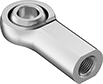
Made of steel, these rod ends generally handle higher loads than stainless steel, aluminum, and nylon rod ends. They don’t come lubricated, so you’ll need to lubricate them during installation and on an ongoing basis.
Oversized Shank—Rod ends with an oversized shank have a shank that is one size larger than the ID to handle greater stress.
Zinc-Plated Carbon Steel—Zinc-plated steel rod ends provide moderate corrosion resistance.
Shank | |||||||||||||
|---|---|---|---|---|---|---|---|---|---|---|---|---|---|
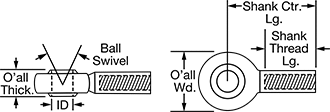
Thread Size | Ctr. Lg. | Thread Lg. | ID | Max. Ball Swivel | Overall Wd. | Overall Thk. | Static Radial Load Cap., lb. | Material | Choose a Shank Thread Direction | Each | |||
Ball Joints | |||||||||||||
| 1 1/4"-12 | 4 1/8" | 2 1/8" | 1 1/4" | 7° | 2 3/4" | 1 1/16" | 44,500 | Zinc-Plated Alloy Steel | Right Hand, Left Hand | 60645K75 | 0000000 | ||
Ball Joints with Oversized Shank | |||||||||||||
| 1 1/4"-12 | 4 1/8" | 2 1/8" | 1" | 17° | 2 3/4" | 1 3/8" | 40,850 | Zinc-Plated Carbon Steel | Right Hand, Left Hand | 60645K74 | 00000 | ||
Internally Threaded Lubrication-Free Ball Joint Rod Ends
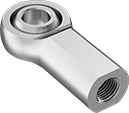 | |
Ball Joint Rod End |
Shank | |||||||||||||
|---|---|---|---|---|---|---|---|---|---|---|---|---|---|
Thread Size | Ctr. Lg. | Thread Lg. | ID | Max. Ball Swivel | Overall Wd. | Overall Thk. | Static Radial Load Cap., lb. | Material | Choose a Shank Thread Direction | Each | |||
Ball Joints | |||||||||||||
| 1 1/4"-12 | 4 1/8" | 2 1/8" | 1" | 17° | 2 3/4" | 1 3/8" | 40,850 | Zinc-Plated Chrome-Moly Steel | Right Hand, Left Hand | 2458K82 | 000000 | ||
Mil. Spec. Ball Joint Rod Ends
 |
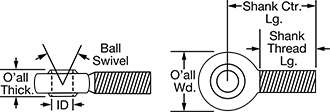 |
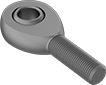
Made of cadmium-plated steel, these rod ends generally handle higher loads than stainless steel, aluminum, and nylon rod ends. They provide moderate corrosion resistance. All have a PTFE liner that allows smooth ball rotation and eliminates the need for lubrication. Liner meets SAE AS81820.
Oversized Shank—Rod ends with an oversized shank have a shank that is one size larger than the ID to handle greater stress.
Shank | |||||||||||||||
|---|---|---|---|---|---|---|---|---|---|---|---|---|---|---|---|
Thread Size | Ctr. Lg. | Thread Lg. | ID | Max. Ball Swivel | Overall Wd. | Overall Thk. | Static Radial Load Cap., lb. | Mil. Spec. | Specs. Met | Material | Shank Thread Direction | Each | |||
Ball Joints with Oversized Shank | |||||||||||||||
| 1 1/4"-12 | 4 1/8" | 2 5/16" | 1" | 12° | 2 3/4" | 1 3/8" | 80,300 | MIL-B-81935 | SAE AS81820 SAE AS81935 | Cadmium-Plated Alloy Steel | Right Hand | 2998K221 | 0000000 | ||
Ball Joint Rod Ends
 | |
Shank | |||||||||||||
|---|---|---|---|---|---|---|---|---|---|---|---|---|---|
Thread Size | Ctr. Lg. | Thread Lg. | ID | Max. Ball Swivel | Overall Wd. | Overall Thk. | Static Radial Load Cap., lb. | Material | Choose a Shank Thread Direction | Each | |||
Ball Joints | |||||||||||||
| 1 1/4"-12 | 4 1/8" | 2 1/8" | 1 1/4" | 7° | 2 3/4" | 1 1/16" | 44,500 | Zinc-Plated Alloy Steel | Right Hand, Left Hand | 60645K65 | 0000000 | ||
Ball Joints with Oversized Shank | |||||||||||||
| 1 1/4"-12 | 4 1/8" | 2 1/8" | 1" | 17° | 2 3/4" | 1 3/8" | 43,500 | Zinc-Plated Carbon Steel | Right Hand, Left Hand | 60645K64 | 00000 | ||
High-Load Ball Joint Rod Ends
 | |
These steel rod ends handle loads that are at least 25% higher than other comparably sized rod ends. PTFE allows smooth rotation and eliminates the need for lubrication.
Oversized Shank—Rod ends with an oversized shank have a shank that is one size larger than the ID to handle greater stress.
Nylon/PTFE Insert—Rod ends with Nylon/PTFE insert have a durable, self-sealing insert that reduces wear.
Zinc-Plated Alloy Steel Insert—Rod ends with zinc-plated steel insert provide moderate corrosion resistance.
Shank | |||||||||||||
|---|---|---|---|---|---|---|---|---|---|---|---|---|---|
Thread Size | Ctr. Lg. | Thread Lg. | ID | Max. Ball Swivel | Overall Wd. | Overall Thk. | Static Radial Load Cap., lb. | Material | Choose a Shank Thread Direction | Each | |||
Ball Joints with Oversized Shank | |||||||||||||
Nylon/PTFE Insert | |||||||||||||
| 1 1/4"-12 | 4 1/8" | 2 1/8" | 1" | 17° | 2 3/4" | 1 3/8" | 76,200 | Chrome-Moly Steel | Right Hand, Left Hand | 4483T11 | 000000 | ||
Zinc-Plated Alloy Steel Insert and PTFE Liner | |||||||||||||
| 1 1/4"-12 | 4 1/2" | 2 1/2" | 1" | 17° | 2 15/16" | 1 3/8" | 107,150 | Zinc-Plated Alloy Steel | Right Hand, Left Hand | 60745K31 | 000000 | ||
Internally Threaded High-Load Ball Joint Rod Ends
 |
|
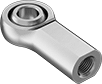
These steel rod ends handle loads that are at least 25% higher than other comparably sized rod ends. PTFE allows smooth rotation and eliminates the need for lubrication.
Oversized Shank—Rod ends with an oversized shank have a shank that is one size larger than the ID to handle greater stress.
Nylon/PTFE Insert—Rod ends with Nylon/PTFE insert have a durable, self-sealing insert that reduces wear.
Zinc-Plated Alloy Steel Insert—Rod ends with zinc-plated steel insert provide moderate corrosion resistance.
Shank | |||||||||||||
|---|---|---|---|---|---|---|---|---|---|---|---|---|---|
Thread Size | Ctr. Lg. | Thread Lg. | ID | Max. Ball Swivel | Overall Wd. | Overall Thk. | Static Radial Load Cap., lb. | Material | Choose a Shank Thread Direction | Each | |||
Ball Joints with Oversized Shank | |||||||||||||
Nylon/PTFE Insert | |||||||||||||
| 1 1/4"-12 | 4 1/8" | 2 1/8" | 1" | 17° | 2 3/4" | 1 3/8" | 76,200 | Chrome-Moly Steel | Right Hand | 4483T291 | 000000 | ||
Zinc-Plated Alloy Steel Insert and PTFE Liner | |||||||||||||
| 1 1/4"-12 | 4 1/8" | 2 1/8" | 1" | 17° | 2 3/4" | 1 3/8" | 76,200 | Zinc-Plated Alloy Steel | Right Hand, Left Hand | 60745K51 | 000000 | ||
Internally Threaded Mil. Spec. Ball Joint Rod Ends
 |
|
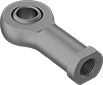
Made of cadmium-plated steel, these rod ends generally handle higher loads than stainless steel, aluminum, and nylon rod ends. They provide moderate corrosion resistance. All have a PTFE liner that allows smooth ball rotation and eliminates the need for lubrication. Liner meets SAE AS81820.
Oversized Shank—Rod ends with an oversized shank have a shank that is one size larger than the ID to handle greater stress.
Shank | |||||||||||||||
|---|---|---|---|---|---|---|---|---|---|---|---|---|---|---|---|
Thread Size | Ctr. Lg. | Thread Lg. | ID | Max. Ball Swivel | Overall Wd. | Overall Thk. | Static Radial Load Cap., lb. | Mil. Spec. | Specs. Met | Material | Shank Thread Direction | Each | |||
Ball Joints with Oversized Shank | |||||||||||||||
| 1 1/4"-12 | 4 1/8" | 2 1/8" | 1" | 12° | 2 3/4" | 1 3/8" | 80,300 | MIL-B-81935 | SAE AS81820 SAE AS81935 | Cadmium-Plated Alloy Steel | Right Hand | 2998K411 | 0000000 | ||
Lubrication-Free Ball Joint Rod Ends
 | |
Shank | |||||||||||||
|---|---|---|---|---|---|---|---|---|---|---|---|---|---|
Thread Size | Ctr. Lg. | Thread Lg. | ID | Max. Ball Swivel | Overall Wd. | Overall Thk. | Static Radial Load Cap., lb. | Material | Choose a Shank Thread Direction | Each | |||
Ball Joints | |||||||||||||
| 1 1/4"-12 | 4 1/8" | 2 1/8" | 1" | 17° | 2 3/4" | 1 3/8" | 43,500 | Zinc-Plated Carbon Steel | Right Hand, Left Hand | 2458K441 | 000000 | ||
