We will reply to your message within an hour.
Designed for high-purity processes, this tubing is made without plasticizers like DEHP that can contaminate the fluid passing through it.
This tubing has a seamless construction with no weld bead for unrestricted flow and is stronger than welded tubing.
When your application does not require a smooth interior, this tubing is an economical choice.
This tubing is made to tighter tolerances than other stainless steel tubing.
This tubing is suitable for extreme-pressure applications reaching 15,000 psi—the highest pressure rating of all the tubing we offer.
A titanium additive gives this tubing excellent strength and superior corrosion resistance. It meets MIL-T-8808.
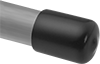
This tubing comes cleaned and capped to prevent moisture and dirt from contaminating the inside.
Compared to other stainless steel tubing, this tubing is harder, stronger, and more durable.
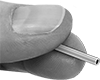
Also known as hypodermic or needle tubing, this tubing has thin walls and is made to tight tolerances for use in precision applications.
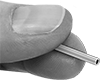
This tubing withstands high pressures up to 13,700 psi. It is also known as capillary tubing.
The outside of this tubing is polished to a high-luster finish for a shiny appearance.
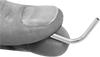
This tubing has a 90° bend that holds its shape.
This tubing comes cleaned and capped to prevent moisture and dirt from contaminating the inside. It is also known as refrigeration and air conditioning tubing.
The inside of this tubing is lined with 99% pure tin for added corrosion resistance.
This tubing has special markings to identify it as a gas line.
A soft metal frequently used with air, gasoline, natural gas, propane, and plumbing applications. Tubing is not as corrosion resistant as stainless steel.
Seamless construction with no weld bead gives this tubing an interior with unrestricted flow. It can be flared without splitting.
Tubing is welded with a smoothed weld bead on the inside to reduce particle buildup. It is also known as DOM (drawn over mandrel) tubing.
This tubing can withstand temperatures up to 1200° F—the highest temperature rating of all the non-stainless steel tubing we offer. It is also known as Inconel.
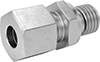
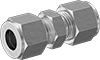
Use these fittings at pressures up to 9,700 psi. Also known as instrumentation fittings, they are made to tight tolerances for use in high-precision applications. They are compatible with Swagelok®, Let-Lok, and Parker A-Lok fittings.
Save time installing sleeves and nuts—these sets come oriented in the correct direction and order on a dispenser.
Couple these sleeves with Yor-Lok nuts and fittings to create an extra-strong seal on stainless steel tubing.
For applications that require an extra level of cleanliness, these fittings are individually bagged to prevent contamination.
These fittings have the highest pressure rating of all the Yor-Lok tube fittings we offer.
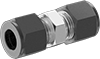
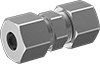
A single sleeve (ferrule) bites into tubing as you tighten the nut, creating a strong seal. The nut and sleeve are included.
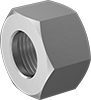
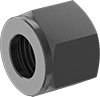
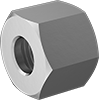
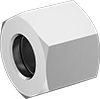
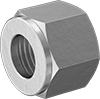
Use these nuts with compression sleeves and fittings to create a strong seal on stainless steel tubing.
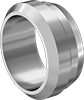
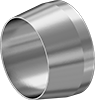
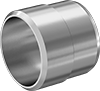
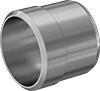
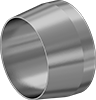
Use these sleeves with compression nuts and fittings to create a strong seal on stainless steel tubing.
When used with high-pressure compression fittings and nuts, these sleeves bite into stainless steel tubing to form a strong seal.
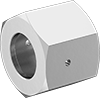
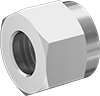
Tighten these nuts onto high-pressure compression sleeves and fittings to create a strong seal on stainless steel tubing.
The thick walls of these fittings can withstand more than twice the pressure of standard compression fittings.
Instead of a metal sleeve (ferrule), these fittings have a rubber sleeve that cushions tubing and absorbs vibration to maintain a tight seal, even when connected to large pumps.
Pair these nuts with vibration-resistant compression sleeves and fittings for a strong seal on stainless steel tubing.
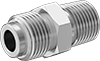
Also known as JIC (Joint Industrial Council) fittings, these provide a tight metal-to-metal seal on stainless steel tubing that is flared to 37°.
The male pipe threads on these fittings have a sealant applied for extra protection against leaks.
Individually bagged to prevent contamination, these fittings are suitable for applications that require a high level of cleanliness.
Polished to at least a 15 Ra finish on the inside, these fittings have an ultra-smooth interior surface that helps prevent contamination. They are also known as ultra-high-purity fittings.
Originally used on satellites, rocket propulsion systems, and even Mars rovers, these fittings will handle your most challenging industrial environments. They're designed to withstand high vibration and ultra-high vacuum without generating particles that could disrupt your operation.
With a nickel-plated finish, these compression fittings resist corrosion better than plain brass fittings.
Use these sleeves with compression nuts and fittings to create a strong seal on copper tubing.
Create a strong seal on copper tubing when you couple these nuts with compression sleeves and fittings.
Also known as instrumentation fittings, these are made to tighter tolerances than standard compression fittings. They are compatible with Parker CPI fittings.
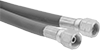
This hose meets CGA (Compressed Gas Association) standards for use with oxygen and acetylene gas.
Run natural and LP gas through this heavy duty hose that's flexible enough for routing through walls and ceilings.
Change the fuel source for your propane torch from a fuel cylinder to a propane tank. This hose is often used for extended-use applications, or when a propane tank can’t be moved.
These CGA adapters allow you to connect a hose to a propane torch.
Use these CGA fittings to connect welding hose to pressure regulators and torches.
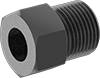
These CGA adapters have a male threaded end that connects to a propane tank and a male threaded end that connects to welding hose.
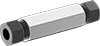
Commonly used in low-pressure welding applications, these fittings connect downstream of your pressure regulator. Slide the barbed end into hose and secure with a crimp-on hose ferrule.
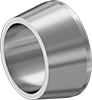
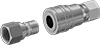
These couplings consist of a plug and socket that connect and disconnect quickly. Use them if you need to frequently link and unlink welding hoses, torches, and regulators. They are also known as CGA couplings.
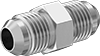
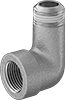
Commonly used in high-pressure welding applications, these nipples connect your tank to the inlet of a pressure regulator. One side has a threaded pipe end and the other side has a rounded end that sits inside a threaded nut to make a threaded connection.
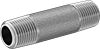
Designed to handle high-pressure welding applications, these CGA fittings are commonly used to connect pressure regulators to compressed gas tanks or cylinders.
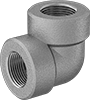
Use these couplings when you need frequent access to a gas line. A complete coupling consists of a plug and a socket that connect and disconnect quickly.
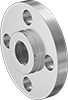
Often used for loading and unloading gas tankers, these couplings are tough enough to handle frequent connections and designed to be virtually spill-free.
Typically used with standard-wall and low-pressure stainless steel unthreaded pipe fittings.
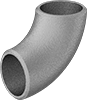
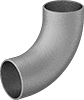
Butt-weld fittings allow for a smooth, flush connection that provides maximum flow.
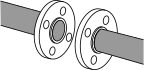
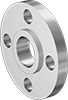
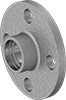
Bolt two same-size flanges together with a gasket to create an access point within a pipe line.
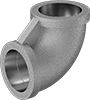
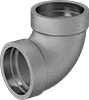
Socket-connect fittings are easier to weld than butt-weld fittings because the fitting doesn't need to align perfectly to the pipe. Slip the pipe into the socket and weld.
Typically used with thin-wall stainless steel unthreaded pipe fittings.
Also known as Schedule 10 fittings, these are thin, lightweight, and corrosion resistant.
Typically used with thick-wall and high-pressure stainless steel unthreaded pipe fittings.
Use these heavy duty forged flanges for high-pressure applications.
Typically used with extreme-pressure stainless steel unthreaded pipe fittings.
The strongest socket-connect fittings we offer, these heavy duty forged fittings are also known as Pressure Class 6000.
Typically used with low-pressure stainless steel threaded pipe fittings.
Keep a variety of lengths of pipe and pipe nipples on hand for areas where corrosion is a concern.
Use these corrosion-resistant fittings in a low-pressure pipe line.
Unlike other stainless steel fittings, these are made in the U.S.A. for superior quality. As another marker of quality, they come with a certificate with a traceable lot number and test report that guarantees material composition.
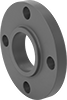
Also known as Pressure Class 150 flanges, these corrosion-resistant flanges are designed for low-pressure pipe applications.
The male threads on these fittings have a sealant applied for extra leak protection.
Typically used with medium- to high-pressure stainless steel threaded pipe fittings.
Use these heavy duty, corrosion-resistant fittings in high-pressure flow applications.
Also known as ANSI flanges.
These fittings are made to tighter tolerances than other stainless steel pipe fittings. They are also known as instrumentation fittings.
When space is at a premium choose these compact fittings.
Choose these fittings when you want the same high-quality found in our low-pressure pipe fittings, but need more strength to handle higher pressures.
Also known as Schedule 40, this steel pipe is designed for low-pressure applications.
Assortments contain threaded pipe in various lengths.
For extra leak protection in low-pressure lines, the threads of this Schedule 40 pipe have sealant already applied.
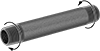
Pipe has clockwise (right-hand) threads on one end and counterclockwise (left-hand) threads on the other end. When you use a wrench to turn, connections on both ends tighten at the same time.
Use these fittings for low-pressure applications in noncorrosive environments.
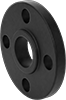
Use these Pressure Class 150 pipe flanges in low-pressure lines where temperatures drop down to -40° F.
To prevent leaks in low-pressure lines, the male threads on these fittings have an acrylic sealant already applied for extra protection.
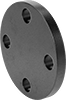
These flanges are for low-pressure applications in noncorrosive environments.
The threads on these fittings have clockwise (right-hand) threads on one end and counterclockwise (left-hand) threads on the other end.
Suitable for use in fire-protection applications, these pipe fittings are made of cast iron, so they are brittle and can be quickly opened with the strike of a sledge hammer.
Suitable for use in fire-protection applications, these flanges are brittle and can be quickly opened with the strike of a sledge hammer.
Made of galvanized steel, this Schedule 40 pipe has fair corrosion resistance and is designed for low-pressure applications.
The acrylic sealant on this pipe offers extra protection against leaks. Also known as schedule 40 pipe, this pipe is designed for use in low-pressure environments.
The galvanized finish on these fittings provides fair corrosion resistance. Fittings are for use in low-pressure applications.
The galvanized finish on these Pressure Class 150 flanges provides fair corrosion resistance.
One end of these fittings has clockwise (right-hand) threads and the other has counterclockwise (left-hand) threads. Their galvanized finish gives them fair corrosion resistance.
Typically used with medium-pressure galvanized iron and steel threaded pipe fittings. Also known as Schedule 80.
A galvanized finish gives these fittings fair corrosion resistance. They have the strength to handle medium-pressure applications.
Also known as Pressure Class 300 flanges, these medium-pressure flanges have a galvanized finish for fair corrosion resistance.
Typically used with medium-pressure iron and steel threaded pipe fittings. Also known as Schedule 80.
For use in noncorrosive environments, these fittings have better strength than our low-pressure iron and steel pipe fittings.
With better strength than our low-pressure steel flanges, these are for use in medium-pressure applications.
Use these unions to connect different metals in a piping or plumbing system. They have a gasket with a plastic sleeve that inhibits destructive corrosion.
Typically used with high-pressure iron and steel threaded pipe fittings. Also known as Schedule 160.
These fittings can stand up to high-pressure applications. Use them in noncorrosive environments.
Also known as Pressure Class 1500 steel flanges, these have the strength to handle high pressures.
The heavy duty caps and plugs in these assortments come in various sizes and stand up to high-pressure flow applications. Made of steel, they’re for use in noncorrosive environments.
Typically used with high-pressure galvanized iron and steel threaded pipe fittings. Also known as Schedule 160.
A galvanized finish gives these fittings better corrosion resistance than our plain steel high-pressure fittings. Also known as Pressure Class 3000 fittings.
Typically used with extreme-pressure iron and steel threaded pipe fittings. Also known as Schedule XXH.
The strongest steel fittings we offer, these can withstand extreme-pressure applications.
These fittings are strong enough to handle extreme pressures, yet small enough to fit into cramped spaces.
Made to tighter tolerances than other steel pipe fittings, these are also known as instrumentation fittings.
Typically used with standard-wall and low-pressure iron and steel unthreaded pipe fittings. Also known as Schedule 40.
Even in temperatures as low as -46°, these A350 LF2 steel flanges won’t become brittle, so they absorb impact better than other low-pressure steel flanges.
Bolt two flanges of the same size together with a gasket to create an access point in a pipe line.
Crimp these fittings onto steel pipe to form a tightly sealed connection that’s faster than threading or welding and doesn’t require heat.
FM-approved for fire protection applications, these flanges are cast iron, so they're brittle and can be quickly opened by hitting them with a sledge hammer.
Typically used with thick-wall and high-pressure iron and steel unthreaded pipe fittings. Also known as Schedule 80.
Socket-connect fittings are easier to weld than butt-weld fittings because the fitting doesn't need to align perfectly to the pipe. Slide the pipe into the socket and weld.
With thicker, stronger walls than our standard-wall butt-weld pipe fittings, these fittings stand up to your high strength applications.
Forged for extra strength, these heavy duty unthreaded flanges can withstand high-pressure applications.
Typically used with extreme-pressure iron and steel unthreaded pipe fittings. Pipe is also known as Schedule XXH .
For excellent strength in extreme-pressure applications, choose these heavy duty Pressure Class 1500 flanges.
Also known as Pressure Class 6000 fittings, these heavy duty forged fittings are the strongest steel fittings we offer.
FM approved, these fittings are suitable for use in fire-protection systems. All have flat-surface flanged ends that only mate to another same-size flat-surface flange, pump, or valve with a gasket to create an access point in a pipeline.
Typically used with high-pressure brass and bronze threaded pipe fittings.
The plating on these brass fittings creates a shiny finish and provides extra protection in corrosive environments. Fittings have the strength to handle high-pressure applications.
These brass fittings have the strength to handle high-pressure applications.
Not only do these brass fittings have the strength to handle high-pressure applications, the male threads have a sealant applied for extra protection against leaks.
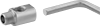
Install and remove these high-pressure brass fittings with a socket wrench or hex key (sold separately).
Typically used with low-pressure brass and bronze threaded pipe fittings.
Keep various lengths of brass pipe on hand for applications requiring good corrosion resistance.
Use these fittings in low-pressure flow applications. They have good corrosion resistance.
Also known as Pressure Class 150 flanges, these brass flanges are designed for low-pressure applications.
The male threads on these brass fittings have a sealant applied for extra protection against leaks. Also known as Pressure Class 125 fittings, they are built for use in low-pressure applications.
Used in low-pressure pipe lines, these brass fittings have a plating that makes them shiny and improves corrosion resistance.
Also known as instrumentation fittings, these have the most precise threads and the tightest tolerances of all the brass pipe fittings we offer.
Extreme pressures are no problem for these heavy-duty brass fittings.
Typically used with medium-pressure brass and bronze threaded pipe fittings.
Choose these fittings when you need better strength than our low-pressure brass and bronze pipe fittings.
Typically used with brass and bronze unthreaded pipe fittings.
Also known as Silbraze fittings.
Bolt these flanges to another same-size flange with a gasket to create an access point within a pipe line. They are also known as Silbraze flanges.
Also known as Pressure Class 200 pipe.
Also known as Pressure Class 200 fittings.
Also called close nipples, these Schedule 40 nipples are threaded on both ends to the center.
These fittings have excellent resistance to stress cracking and have better corrosion resistance than most stainless steel alloys.
Titanium has similar strength to steel, but is approximately 40% lighter. It has better corrosion resistance than most stainless steel alloys and can handle corrosive substances, such as salt water and acids.