We will reply to your message within an hour.
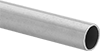
Commonly used in marine applications, this tubing contains magnesium for extra corrosion resistance.
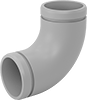
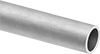
A thin layer of zinc yellow-chromate gives this tubing extra corrosion resistance, making it an economical alternative to stainless steel.
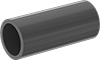
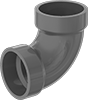
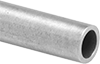
Run corrosive substances through this tubing without worrying about pitting and stress cracking. It is also known as Hastelloy.
This tubing won't degrade, even when used with harsh acids. It is also known as Monel.
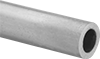
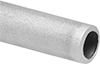
Seamless construction with no weld bead gives this tubing an interior with unrestricted flow. It is stronger than welded tubing and can be flared without splitting.
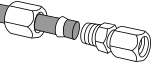
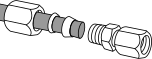
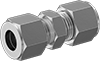
With the best corrosion resistance of any metal fitting we offer, these Hastelloy fittings will stand up to aggressive chemicals and are resistant to pitting and stress cracking. Also known as instrumentation fittings, they include a nut with two sleeves.
These Monel fittings have the corrosion resistance to handle hydrofluoric and sulfuric acid. Also known as instrumentation fittings, they include a nut with two sleeves.
Also known as Pressure Class 200 pipe.
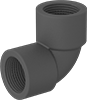
Also known as Pressure Class 200 fittings.
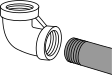
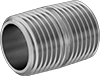
Also called close nipples, these Schedule 40 nipples are threaded on both ends to the center.
These fittings have excellent resistance to stress cracking and have better corrosion resistance than most stainless steel alloys.
Titanium has similar strength to steel, but is approximately 40% lighter. It has better corrosion resistance than most stainless steel alloys and can handle corrosive substances, such as salt water and acids.
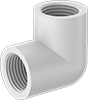
Connect to CPVC pipe fittings for use in high-temperature plumbing and water supply applications up to 170° or 200° F.
Connect to CPVC pipe for use in high-temperature plumbing and water supply applications.
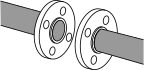
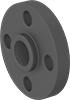
Bolt two same-size flanges together with a gasket to create an access point within a line. They are also known as Pressure Class 150 flanges. Use in high-temperature plumbing and water supply applications up to 200° F.
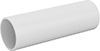
This polypropylene pipe resists the damaging effects of ultraviolet light, so it’s suitable for outdoor use. It has the chemical resistance to withstand acids, solvents, and other harsh substances.
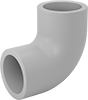
Made of polypropylene, these fittings won’t deteriorate when exposed to the damaging effects of ultraviolet light and are suitable to use outdoors. They have the chemical resistance to withstand acids, solvents, and other harsh substances.
Use these polypropylene flanges in outdoor environments—they resist the damaging effects of ultraviolet light. They have the chemical resistance to stand up to acids, solvents, and other harsh substances. Bolt two same-size flanges together with a gasket to create an access point within a line. Flanges are also known as Pressure Class 150 flanges.
Also known as manifold flange fittings, these have a clamp-together design that lets you access your line for routine maintenance. Fittings resist acids, solvents, and other harsh chemicals. They won’t deteriorate when exposed to the damaging effects of ultraviolet light, so they’re suitable for outdoor use.
The inside of this pipe won’t leach contaminants into your line or accumulate particles—it’s polished to an ultra-smooth 12 Ra finish, which also makes it easy to clean. Made of polypropylene, it resists organic solvents, acids, and alkalis better than CPVC pipe.
The inside of these fittings won’t leach contaminants into your line or accumulate particles—they’re polished to an ultra-smooth 12 Ra finish, which also makes it easy to clean. Made of polypropylene, they resist organic solvents, acids, and alkalis better than CPVC fittings.
The inside of these flanges won’t leach contaminants into your line or accumulate particles—they’re polished to an ultra-smooth 12 Ra finish, which also makes them easy to clean. Made of polypropylene, they resist organic solvents, acids, and alkalis better than CPVC pipe flanges.
Made of PVDF that’s finished to a 12 Ra smoothness, this pipe handles some of the harshest chemicals without leaching contaminants into your line.
Made of PVDF that’s finished to a 12 Ra smoothness, these fittings handle some of the harshest chemicals without leaching contaminants into your line. Comparable to Kynar, they handle most organic solvents that would dissolve CPVC, and chlorine or nitric acid that would weaken polypropylene.
Pipe meets UL 94 V-0 for flame retardance to delay the spread of flames to valuable equipment. It is made of PVDF, which is comparable to Kynar, and has the chemical resistance to stand up to solvents and other harsh substances.
Bolt two same-size flanges together with a gasket to create an access point within a line. Flanges meet UL 94 V-0 for flame retardance to delay the spread of flames to valuable equipment. They are PVDF, which is comparable to Kynar, and has the chemical resistance to stand up to solvents and other harsh substances. Also known as Pressure Class 150 flanges.
These PVDF fittings meet UL 94 V-0 for flame retardance, so they delay the spread of flames to valuable equipment. PVDF is comparable to Kynar, and has the chemical resistance to stand up to solvents and other harsh substances.
Not only do these PFA fittings have the chemical resistance to handle acid and salt water, they also have better crack resistance than other plastic pipe fittings for chemicals. They are commonly used in high-purity chemical flow processes, such as semiconductor and clean room applications.
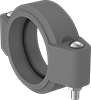
Use these clamps to connect easy-access CPVC pipe fittings and pipe.
Also known as Victaulic pipe, this pipe has grooved ends that connect to fittings and flanges with a clamp, so you can access your line for routine maintenance. It is CPVC, which has excellent chemical resistance to withstand a variety of salt solutions, acids, and other harsh substances.
Also known as Victaulic fittings, these have grooved ends that connect to pipe with a clamp, so you can access your chemical process line for routine maintenance. Fittings have excellent chemical resistance to withstand a variety of salt solutions, acids, and other harsh substances.
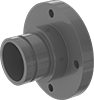
The grooved ends on these flanges connect to pipe with a clamp, so you can access your chemical process line for routine maintenance. Flanges have excellent chemical resistance to withstand a variety of salt solutions, acids, and other harsh substances. They are also known as Victaulic flanges.
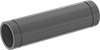
Made of polypropylene, this gravity-flow pipe stands up to tough organic solvents, such as acetone, that would dissolve CPVC pipe. You can also use it for lines with highly corrosive acids, such as hydrochloric acid, and alkalies.
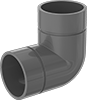
Made of polypropylene, these gravity-flow fittings withstand organic solvents, such as acetone, that would dissolve CPVC pipe. They also stand up to highly corrosive acids, such as hydrochloric acid, and alkalies.
Use this pipe in gravity-flow applications that involve highly-corrosive chemicals–it is NSF certified for use in corrosive waste systems. Pipe is made of CPVC, which has better chemical resistance than ABS plastic to stand up to acids and other harsh substances.
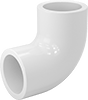
These fittings are NSF certified for use in corrosive waste gravity-flow systems. Made of CPVC, they have better chemical resistance than ABS plastic gravity-flow fittings and can stand up to highly-corrosive acids and other harsh substances.
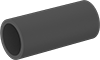
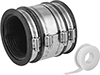
With an FEP sleeve and PTFE sealing tape, these connectors withstand chemicals better than rubber connectors. Use them for joining low-pressure chemical waste drainpipe and fittings or transitioning between different chemical piping.