We will reply to your message within an hour.
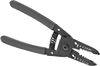
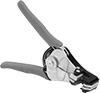
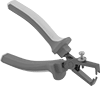
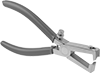
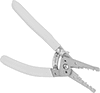
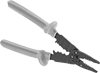
The plier nose on these wire strippers is useful for pulling and looping wire.
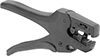
Use the adjustable stop to precisely set the strip length.
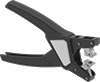
Because you insert wire from the front, you can use this tool in tight spaces.
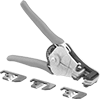
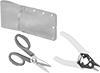
This kit includes a wire stripper plus blades to strip electrical wire and coaxial cable.
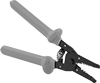
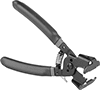
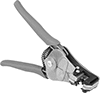
One squeeze strips insulation and pulls it off the wire.
Insulated handles protect against shock from accidental contact with live electrical circuits. These wire strippers are tested to 1,000 volts to meet IEC 60900 and ASTM F1505.
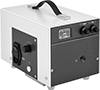
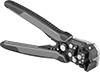
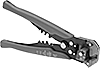
Automatically strip insulation off high volumes of wire. These strippers sit on your workbench but are portable enough to cart around your facility.
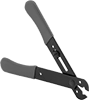
Small enough to fit in your pocket, these wire strippers are 5" or shorter.
Since you insert wire from the front, these strippers are useful in tight spaces. The insulated handles protect against shock from accidental contact with live electrical circuits.
To protect you against shock from accidental contact with live electrical circuits, these strippers have insulated handles.
Made of aluminum-bronze that is FM approved, these wire strippers satisfy OSHA requirements that specify nonsparking tools for locations where flammable vapors and combustible residues are present.
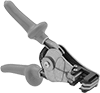
The blade on these strippers swivels so you can make end and center strips.
An ergonomic handle provides a comfortable grip and protects your knuckles from scrapes.
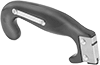
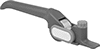
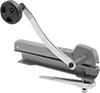
Get more leverage when cutting through heavy duty cable jackets with these ratcheting cable strippers.
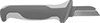
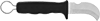
The rubber handle on this knife provides a more secure and comfortable grip than plastic handle knives.
The handle and the back of the blade are insulated to protect against shock from accidental contact with live electrical circuits. These knives are tested to 1,000 volts to meet IEC 60900 or ASTM F1505.
Knife has a polycarbonate handle with a finger guard.
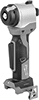
Often used in high-volume applications, these cordless strippers automatically remove insulation, so they’re faster than manual strippers and reduce repetitive motion.
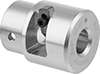
Snap these bushings in and out of our cordless wire strippers to quickly remove insulation across multiple wire sizes and material.
Useful in tight spots, you insert cable into the front of these strippers. One squeeze strips insulation and pulls it off your cable.
Remove the outer and inner insulation of NM-B building cable, commonly found inside your walls running power to light fixtures and switches.
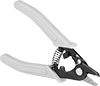
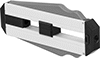
With just a squeeze, strip and remove outer insulation from your cable.
Angled jaws let you insert building cable into the front of these strippers, so they’re useful in tight spots, such as inside electrical boxes.
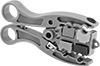
Strip armored cable, such as BX and MC cable, in addition to flexible metal conduit.
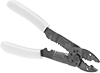
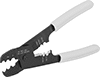
Strip wire and crimp connectors with one tool.
Insulated handles protect against shock from accidental contact with live electrical circuits while stripping wire or crimping connectors.
For three-layer stripping, this stripper includes a replaceable blade cartridge, four V-blocks to accommodate a variety of cable outer diameters, and an L-key to adjust blade height.
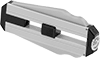
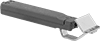
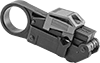
This tool turns like a screwdriver to strip a short coaxial cable in a tight space.
One squeeze strips insulation and pulls it off your coaxial cable.
Strip coaxial cable and crimp connectors onto it with one tool.
Cut and strip fiber-optic cable.
Strip twisted-pair Ethernet cable.
Designed to turn like a screwdriver, these tools strip short lengths of twisted-pair Ethernet cable in tight spaces.
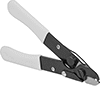
Small enough to fit in your pocket, take these strippers with you to remove the insulation from fiber-optic cable.
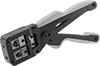
With just one tool, you can strip Ethernet cable and crimp connectors onto it.
Strip fiber-optic cables without scratching or damaging them. These cable strippers have three nonmarring openings to handle different thicknesses of fiber-optic cable jackets and buffer coatings.
An adjustable stop lets you set the precise length you want to strip from your fiber-optic cable.
Strip both Ethernet and coaxial cable.
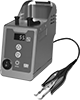
Insert wire between the heated tips to melt off and strip insulation without the risk of nicking the wire.