

Switch Starting Position Switch Starting Position |
|---|
Industry Designation Industry Designation | Show |
|---|
Industry Designation Industry Designation | Hide |
|---|
Mounting Location Mounting Location |
|---|
|
Number of Circuits Controlled Number of Circuits Controlled |
|---|
|
Relay Type Relay Type |
|---|
 | Standard |
Switch Action Switch Action |
|---|
|
Application Application |
|---|
|
Switch 2nd Signal Starting Position Switch 2nd SignalStarting Position |
|---|
|
Wire Connection Type Wire Connection Type |
|---|
 | Screw Terminals |
Power Power |
|---|
|
Operation Type Operation Type |
|---|
|
DFARS (Defense Acquisition Regulations Supplement) DFARS (Defense AcquisitionRegulations Supplement) |
|---|
Mechanical Life Cycles Mechanical Life Cycles |
|---|
|
Maximum Switching Voltage Maximum Switching Voltage |
|---|
|
REACH (Registration, Evaluation, Authorization and Restriction of Chemicals) REACH (Registration,Evaluation, Authorization and Restriction of Chemicals) |
|---|
|
RoHS (Restriction of Hazardous Substances) RoHS (Restriction ofHazardous Substances) |
|---|
|
Height Height |
|---|
|
Choosing an Electrical Switch
More
Sequenced Latching Relays
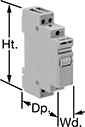
These relays switch through a series of different circuit configurations every time they receive an input voltage. The input voltage latches them in position, so they don’t require a constant voltage to stay switched. Use them to control motors, pumps, and lighting. The covered terminals prevent contact with live connections. Mount to 35 mm DIN rail. Also known as step relays.
 For technical drawings and 3-D models, click on a part number.
| Switch Starting Position | Input Voltage | Control Power | Switching Current @ 24V AC/120V AC | Max. Switching Voltage | hp @ Switching Voltage | Ht. | Wd. | Dp. | Each | |
2 Circuits Controlled—DPST-1NO/1NC | ||||||||||
|---|---|---|---|---|---|---|---|---|---|---|
With 6 Terminals | ||||||||||
| 1st Signal—1 Off (Normally Open) and 1 On (Normally Closed) 2nd Signal—1 On (Normally Closed) and 1 Off (Normally Open) | 24V AC | 6.5VA | 16A | 277V AC | 1/2 hp @ 120 V AC | 3.3" | 0.7" | 2.4" | 00000000 | 000000 |
| 1st Signal—1 Off (Normally Open) and 1 On (Normally Closed) 2nd Signal—1 On (Normally Closed) and 1 Off (Normally Open) | 120V AC | 6.5VA | 16A | 277V AC | 1/2 hp @ 120 V AC | 3.3" | 0.7" | 2.4" | 00000000 | 00000 |
| 1st Signal—1 Off (Normally Open) and 1 On (Normally Closed) 2nd Signal—1 On (Normally Closed) and 1 Off (Normally Open) | 240V AC | 6.5VA | 16A | 277V AC | 1/2 hp @ 120 V AC | 3.3" | 0.7" | 2.4" | 00000000 | 00000 |
| 1st Signal—1 Off (Normally Open) and 1 On (Normally Closed) 2nd Signal—1 On (Normally Closed) and 1 Off (Normally Open) | 12V DC | 5W | 16A | 277V AC | 1/2 hp @ 120 V AC | 3.3" | 0.7" | 2.4" | 00000000 | 00000 |
| 1st Signal—1 Off (Normally Open) and 1 On (Normally Closed) 2nd Signal—1 On (Normally Closed) and 1 Off (Normally Open) | 24V DC | 5W | 16A | 277V AC | 1/2 hp @ 120 V AC | 3.3" | 0.7" | 2.4" | 00000000 | 00000 |
Two-Hand Safety Switches
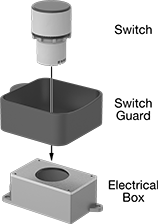
It takes two hands to activate these switches, minimizing the risk of accidental equipment start up. A complete system requires two switches, one safety relay, and two outlet boxes.
Switches meet OSHA requirements and ANSI standards for machine operator safety. They're rated IP64 for protection from splashing water.
For technical drawings and 3-D models, click on a part number.
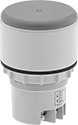
Actuator | |||||||||||
|---|---|---|---|---|---|---|---|---|---|---|---|
| Input Voltage | No. of Circuits Controlled | Switch Starting Position | Switch Action | No. of Terminals | Industry Designation | Material | Color | Switching Current @ Voltage | Dia. | Each | |
| 24V DC | 2 | 1 Off (Normally Open) and 1 On (Normally Closed) | Springs Back (Momentary) | 4 | DPST-1NO/1NC | Plastic | Gray | 1 A @ 250 V AC/90 V DC | 2 3/8" | 00000000 | 0000000 |
| 120V AC | 2 | 1 Off (Normally Open) and 1 On (Normally Closed) | Springs Back (Momentary) | 4 | DPST-1NO/1NC | Plastic | Gray | 1 A @ 250 V AC/90 V DC | 2 3/8" | 00000000 | 000000 |