

Filter by
Product Family


For Joining
System of Measurement
Solder Alloy
Solder Type

Container Type


Material
Thermal Conductivity
Formulation
Export Control Classification Number (ECCN)

Width
Thickness
DFARS Specialty Metals
REACH
Specifications Met
Length
Manufacturer
Low-Melting-Point Solder for Low-Temperature Applications
Leaded, Flux Required
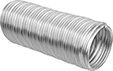 |
Leaded solder has greater tensile strength and density than other indium-based solders, giving it a stronger hold.
Material Composition | 0.16 oz. | ||||||||||
|---|---|---|---|---|---|---|---|---|---|---|---|
Solder Alloy | Indium | Silver | Lead | Dia. | Melting Temp., ° F | Thermal Conductivity, W/(m⋅°C) | Tensile Strength, psi | Each | |||
For Joining Aluminum, Brass, Bronze, Ceramic, Glass, Gold, Nickel, Quartz, Stainless Steel, Steel, and Zinc Alloy | |||||||||||
| In80Pb15Ag5 | 80% | 5% | 15% | 0.030" | 310 | 43 | 2,550 | 6976N11 | 0000000 | ||
Lead-Free, Flux Required
|
Lead-free solder is safer to use than leaded solder and helps meet industry regulations.
100% Indium—Solder that is 100% indium has better thermal conductivity than solder that contains tin, and will cold weld more easily. However, it has lower tensile and shear strength than solder with tin.
48% Tin—Solder with 48% tin has greater tensile and shear strength than 100% indium solder, but lower thermal and electrical conductivity.
Material Composition | 0.11 oz. | ||||||||||
|---|---|---|---|---|---|---|---|---|---|---|---|
Solder Alloy | Indium | Tin | Lead | Dia. | Melting Temp., ° F | Thermal Conductivity, W/(m⋅°C) | Tensile Strength, psi | Each | |||
For Joining Aluminum, Brass, Bronze, Ceramic, Glass, Nickel, Quartz, Stainless Steel, Steel, and Zinc Alloy | |||||||||||
| In52Sn48 | 52% | 48% | 0% | 0.030" | 245 | 34 | 1,720 | 8514N13 | 0000000 | ||
| In100 | 100% | — | 0% | 0.030" | 315 | 86 | 270 | 8514N11 | 000000 | ||
Low-Melting-Point Solder Ribbon for Low-Temperature Applications
Leaded, Flux Required
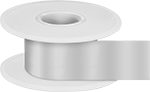 |
Leaded solder has greater tensile strength and density than other indium-based solders, giving it a stronger hold.
Material Composition | 0.1 oz. | ||||||||||||
|---|---|---|---|---|---|---|---|---|---|---|---|---|---|
Solder Alloy | Indium | Silver | Lead | Melting Temp., ° F | Thermal Conductivity, W/(m⋅°C) | Tensile Strength, psi | Lg. | Wd. | Thk. | Each | |||
For Joining Aluminum, Brass, Bronze, Ceramic, Glass, Gold, Nickel, Quartz, Stainless Steel, Steel, and Zinc Alloy | |||||||||||||
| In80Pb15Ag5 | 80% | 5% | 15% | 310 | 43 | 2,550 | 12" | 1" | 0.002" | 5940N11 | 0000000 | ||
Lead-Free, Flux Required
|
Lead-free solder is safer to use than leaded solder and helps meet industry regulations.
Material Composition | 0.1 oz. | ||||||||||||
|---|---|---|---|---|---|---|---|---|---|---|---|---|---|
Solder Alloy | Indium | Tin | Lead | Melting Temp., ° F | Thermal Conductivity, W/(m⋅°C) | Tensile Strength, psi | Lg. | Wd. | Thk. | Each | |||
For Joining Aluminum, Brass, Bronze, Ceramic, Glass, Gold, Nickel, Quartz, Stainless Steel, Steel, and Zinc Alloy | |||||||||||||
| In52Sn48 | 52% | 48% | 0% | 245 | 34 | 1,720 | 12" | 1" | 0.002" | 7906N12 | 0000000 | ||
| In100 | 100% | — | 0% | 315 | 86 | 270 | 12" | 1" | 0.002" | 7906N11 | 000000 | ||
Conductive Adhesives for Electronics
Epoxy
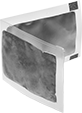 | 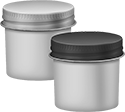 |
Single-Use Packet | Can |
Epoxy adhesives are two-part adhesives that need to be mixed together. The size listed is the combined total of the two parts.
ASTM E595—Adhesives that meet ASTM E595, a standard used by NASA, produce almost no volatile emissions that could damage sensitive electronics, even in a vacuum.
Container | ||||||||||||||||
|---|---|---|---|---|---|---|---|---|---|---|---|---|---|---|---|---|
Mfr. Model No. | Size, fl. oz. | Net Wt., oz. | Type | Surface Resistivity | Begins to Harden | Reaches Full Strength | Thermal Conductivity, W/(m⋅°C) | Mix Ratio | Consistency | Max. Temp., ° F | Specs. Met | For Joining | Each | |||
Loctite® | ||||||||||||||||
| 2902 | — | 0.09 | Single-Use Packet | 1× 10^-3Ω⋅cm | 60 min. | 24 hr. | 2.99 | 100:6 | Paste | 230 | ASTM E595 | Ceramic, Glass, Metal | 7595A113 | 000000 | ||
| 2902 | — | 0.35 | Single-Use Packet | 1× 10^-3Ω⋅cm | 60 min. | 24 hr. | 2.99 | 100:6 | Paste | 230 | ASTM E595 | Ceramic, Glass, Metal | 7595A114 | 000000 | ||
Other Conductive Adhesives | ||||||||||||||||
| — | — | 0.09 | Single-Use Packet | 5× 10^-2Ω⋅cm | 3 hr. | 24 hr. | 1.55 | 1:1.15 | Paste | 230 | — | Ceramic, Glass, Metal | 7661A13 | 00000 | ||
| — | 0.5 | — | Can | 9× 10^-5Ω⋅cm | 4 hr. | 5 day | 7.9 | 1:1 | Paste | 175 | ASTM E595 | Ceramic, Glass, Metal | 7595A111 | 000000 | ||
| — | 1 | — | Can | 9× 10^-5Ω⋅cm | 4 hr. | 5 day | 7.9 | 1:1 | Paste | 175 | ASTM E595 | Ceramic, Glass, Metal | 7595A112 | 000000 | ||
