

For Joining For Joining | Show |
|---|
|
For Joining For Joining | Hide |
|---|
Solder Type Solder Type |
|---|
|
Thermal Conductivity Thermal Conductivity |
|---|
|
|
System of Measurement System of Measurement |
|---|
|
Diameter Diameter |
|---|
|
Electrical Properties Electrical Properties |
|---|
|
Weight Weight |
|---|
|
DFARS (Defense Acquisition Regulations Supplement) DFARS (Defense AcquisitionRegulations Supplement)  |
|---|
Length Length |
|---|
|

Width Width |
|---|
|
RoHS (Restriction of Hazardous Substances) RoHS (Restriction ofHazardous Substances) |
|---|
|
Container Type Container Type |
|---|
 | Single-Use Packet |
Adhesive Type Adhesive Type |
|---|
|
Type Type |
|---|
|
Surface Resistivity Surface Resistivity |
|---|
|
Consistency Consistency |
|---|
|
Maximum Temperature Maximum Temperature |
|---|
|
Formulation Formulation |
|---|
|
About Structural Adhesives
More
Low-Melting-Point Solder for Low-Temperature Applications
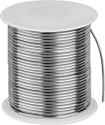
Made with lead and silver, this solder has greater tensile strength and density than other indium-based solders, giving it a stronger hold. Indium is soft and malleable—even as temperatures approach absolute zero—allowing this solder to form an airtight seal between metal and certain non-metal materials. It’s commonly used in cryogenic applications, including with liquid nitrogen. Unlike tin-based solders, this solder won’t damage gold plating on circuit boards. It’s also a good conductor of heat and electricity, although not as good as solder with greater indium content. Indium-based solder can be cold welded, meaning it will bond to itself without heat. More durable than standard tin-lead solder, this solder is less likely to crack from repeated temperature swings. It’s low outgassing, so it’s good for use in high-vacuum applications. Use soldering flux to prepare workpieces for this solder.
Material Composition | |||||||||
|---|---|---|---|---|---|---|---|---|---|
| Indium | Lead | Silver | Melting Temperature, °F | Thermal Conductivity, W/m-°C | Tensile Strength, psi | Diameter | Weight, oz. | Each | |
For Joining Aluminum, Brass, Bronze, Ceramic, Glass, Gold, Nickel Alloys, Quartz, Stainless Steel, Steel, Zinc | |||||||||
| 80% | 15% | 5% | 310° | 43 | 2,550 | 0.030" | 0.16 | 0000000 | 0000000 |
Low-Melting-Point Solder Ribbon for Low-Temperature Applications
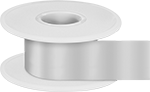
Made with lead and silver, this solder ribbon has greater tensile strength and density than other indium-based solders, giving it a stronger hold. Solder ribbon is more easily used on large, flat areas than wire solder. Indium is soft and malleable—even as temperatures approach absolute zero—allowing this solder to form an airtight seal between metal and certain non-metal materials. It’s commonly used in cryogenic applications, including with liquid nitrogen. Unlike tin-based solders, this solder won’t damage gold plating on circuit boards. It’s also a good conductor of heat and electricity, although not as good as solder with greater indium content. Indium-based solder can be cold welded, meaning it will bond to itself without heat. More durable than standard tin-lead solder, this solder is less likely to crack from repeated temperature swings. It’s low outgassing, so it’s good for use in high-vacuum applications. Use soldering flux to prepare workpieces for this solder.
Material Composition | |||||||||||
|---|---|---|---|---|---|---|---|---|---|---|---|
| Indium | Lead | Silver | Melting Temperature, °F | Thermal Conductivity, W/m-°C | Tensile Strength, psi | Length | Width | Thickness | Weight, oz. | Each | |
For Joining Aluminum, Brass, Bronze, Ceramic, Glass, Gold, Nickel Alloys, Quartz, Stainless Steel, Steel, Zinc | |||||||||||
| 80% | 15% | 5% | 310° | 43 | 2,550 | 12" | 1" | 0.002" | 0.1 | 0000000 | 0000000 |
Low-Melting-Point Lead-Free Solder for Low-Temperature Applications
Made of indium, this solder is soft and malleable—even as temperatures approach absolute zero—to form an airtight seal between metal and certain non-metal materials. It’s commonly used in cryogenic applications, including with liquid nitrogen. Unlike tin-based solders, this solder won’t damage gold plating on circuit boards. It’s a good conductor of heat and electricity, as well. Indium-based solder can be cold welded, meaning it will bond to itself without heat. More durable than standard tin-lead solder, this solder is less likely to crack from repeated temperature swings. It’s low outgassing, so it’s good for use in high-vacuum applications. Use soldering flux to prepare workpieces for this solder.
100% indium solder has better thermal conductivity than solder that contains tin, and will cold weld more easily. However, it has lower tensile and shear strength than solder with tin.
48% tin solder has greater tensile and shear strength than 100% indium solder, but lower thermal and electrical conductivity.
Material Composition | |||||||||
|---|---|---|---|---|---|---|---|---|---|
| Indium | Tin | Lead | Melting Temperature, °F | Thermal Conductivity, W/m-°C | Tensile Strength, psi | Diameter | Weight, oz. | Each | |
For Joining Aluminum, Brass, Bronze, Ceramic, Glass, Nickel Alloys, Quartz, Stainless Steel, Steel, Zinc | |||||||||
| 52% | 48% | 0% | 245° | 34 | 1,720 | 0.030" | 0.11 | 0000000 | 0000000 |
| 100% | __ | 0% | 315° | 86 | 270 | 0.030" | 0.11 | 0000000 | 000000 |
Low-Melting-Point Lead-Free Solder Ribbon for Low-Temperature Applications
For use on large, flat areas, this indium ribbon solder is soft and malleable—even as temperatures approach absolute zero—to form an airtight seal between metal and certain non-metal materials. It’s commonly used in cryogenic applications, including with liquid nitrogen. Unlike tin-based solders, this solder won’t damage gold plating on circuit boards. It’s a good conductor of heat and electricity, as well. Indium-based solder can be cold welded, meaning it will bond to itself without heat. More durable than standard tin-lead solder, this solder is less likely to crack from repeated temperature swings. It’s low outgassing, so it’s good for use in high-vacuum applications. Use soldering flux to prepare workpieces for this solder.
100% indium solder has better thermal conductivity than solder that contains tin, and will cold weld more easily. However, it has lower tensile and shear strength than solder with tin.
48% tin solder has greater tensile and shear strength than 100% indium solder, but lower thermal and electrical conductivity.
Material Composition | |||||||||||
|---|---|---|---|---|---|---|---|---|---|---|---|
| Indium | Tin | Lead | Melting Temperature, °F | Thermal Conductivity, W/m-°C | Tensile Strength, psi | Length | Width | Thickness | Weight, oz. | Each | |
For Joining Aluminum, Brass, Bronze, Ceramic, Glass, Nickel Alloys, Quartz, Stainless Steel, Steel, Zinc | |||||||||||
| 52% | 48% | 0% | 245° | 34 | 1,720 | 12" | 1" | 0.002" | 0.1 | 0000000 | 0000000 |
| 100% | __ | 0% | 315° | 86 | 270 | 12" | 1" | 0.002" | 0.1 | 0000000 | 000000 |
Conductive Adhesives for Electronics
An alternative to solder, these flexible, silver-filled adhesives accommodate joint movement. Use them to bond electrical components and repair circuits.
Epoxy adhesives are two-part adhesives that need to be mixed together. The size listed is the combined total of the two parts.
Container | ||||||||||
|---|---|---|---|---|---|---|---|---|---|---|
| Net Weight, oz. | Begins to Harden | Reaches Full Strength | Thermal Conductivity, W/m-K | Surface Resistivity, ohms-cm | Mix Ratio | Consistency | Temp. Range, °F | For Joining | Each | |
One-Time-Use Packet | ||||||||||
| 0.09 | 3 hrs. | 24 hrs. | 1.55 | 0.05 | 1:1.15 | Paste | -75° to 230° | Ceramic, Glass, Metal | 0000000 | 000000 |