

For Use With For Use With |
|---|
|
DFARS (Defense Acquisition Regulations Supplement) DFARS (Defense AcquisitionRegulations Supplement)  |
|---|
For Testing For Testing |
|---|
|
Baume Measuring Range Baume Measuring Range |
|---|
|
|
RoHS (Restriction of Hazardous Substances) RoHS (Restriction ofHazardous Substances) |
|---|
|
REACH (Registration, Evaluation, Authorization and Restriction of Chemicals) REACH (Registration,Evaluation, Authorization and Restriction of Chemicals) |
|---|
|
Maximum Automatic Temperature Compensation (ATC) MaximumAutomatic Temperature Compensation (ATC) |
|---|
|
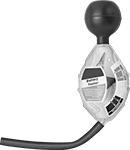
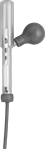
Battery Testing Density Meters

Specific Gravity Range
and Built-in Thermometer
1.1 to 1.35
Specific Gravity Range
Check the condition of battery fluid by measuring its density to indicate the state of charge.
Meter with built-in thermometer compensates for temperature variations for more accurate readings.
Meter with specific gravity range of 1.1 to 1.35 can withstand drops as high as 10 feet.
Density Meters

Also known as hydrometers, these measure the density of a liquid compared to the density of water. Pour your liquid into a tall container and immerse the density meter into the liquid until it floats. Take the reading where the surface of the liquid touches the scale on the meter. Heavy liquids sink in water and light liquids float in water.
| Scale | Scale Range | Graduation Marks | Material | Each | |
For Heavy Liquids | |||||
|---|---|---|---|---|---|
| Baume | 0° to 50° | 1° | Glass | 0000000 | 000000 |
| Baume | 0° to 70° | 1° | Glass | 0000000 | 00000 |
| Baume, Specific Gravity | 0° to 72°, 1 to 2 | 1°, 0.010 | Glass | 0000000 | 00000 |
| Specific Gravity | 1 to 1.22 | 0.002 | Glass | 00000000 | 00000 |
| Specific Gravity | 1 to 2 | 0.010 | Glass | 0000000 | 00000 |
| Specific Gravity | 1.2 to 1.42 | 0.002 | Glass | 00000000 | 00000 |
| Specific Gravity | 1.6 to 1.82 | 0.002 | Glass | 00000000 | 00000 |
For Light Liquids | |||||
| Baume, Specific Gravity | 10° to 100°, 0.6 to 1 | 1°, 0.005 | Glass | 0000000 | 00000 |
| Specific Gravity | 0.65 to 1 | 0.005 | Glass | 0000000 | 00000 |
| Specific Gravity | 0.7 to 0.81 | 0.001 | Glass | 00000000 | 00000 |
| Specific Gravity | 0.8 to 0.91 | 0.001 | Glass | 00000000 | 00000 |
| Specific Gravity | 0.9 to 1 | 0.001 | Glass | 00000000 | 00000 |
For Salt Water | |||||
| Saturation | 0 to 100% | 1% | Glass | 0000000 | 00000 |
Concentration Meters
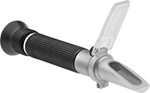
Also known as refractometers, these measure concentration with two or three drops of a solution. Place your sample on the reflecting prism and look through the eyepiece to view the concentration on the internal scale.
Concentration meters with automatic temperature compensation standardize readings at 68° F to prevent inaccurate results in fluctuating temperatures.
Concentration meters with freezing-point scale measure the freezing point of propylene glycol and ethylene glycol as well as the specific gravities of battery acids from 1.15 to 1.30.
| Temperature Range | Graduation Marks | Automatic Temperature Compensation (ATC) Range | Specific Gravity | Lg. | Material | Container Material | Each | |
For Testing Freezing Point and Specific Gravity | ||||||||
|---|---|---|---|---|---|---|---|---|
| -60° to 32° F | 2° F | 50° to 86° F | 1.15 to 1.3 | 7" | Nickel-Plated Brass | Plastic | 000000 | 0000000 |
| -50° to 0° C | 1° C | 10° to 30° C | 1.15 to 1.3 | 7" | Nickel-Plated Brass | Plastic | 000000 | 000000 |
Easy-Read Concentration Meters
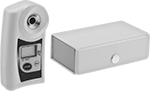
Don’t strain your eyes reading a scale—these concentration meters indicate exact results on the display. Automatic temperature compensation standardizes readings at 68° F to prevent inaccurate results in fluctuating temperatures.