


Spring Type Spring Type |
|---|
 | Extension |
Spring Rate Spring Rate |
|---|
|
System of Measurement System of Measurement |
|---|
|
Length Length | Show |
|---|
|
Length Length | Hide |
|---|
Material Material |
|---|
|
Finish Finish |
|---|
|
DFARS (Defense Acquisition Regulations Supplement) DFARS (Defense AcquisitionRegulations Supplement) |
|---|
End Type End Type |
|---|
 | Loop |
REACH (Registration, Evaluation, Authorization and Restriction of Chemicals) REACH (Registration,Evaluation, Authorization and Restriction of Chemicals) |
|---|
|
RoHS (Restriction of Hazardous Substances) RoHS (Restriction ofHazardous Substances) |
|---|
|
Overload-Prevention Extension Springs
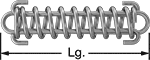
These zinc-plated steel springs have mild corrosion resistance. All have drawbars to prevent overextending, which can cause failure.
As you stretch an extension spring, it gets harder to pull. Minimum load is the amount of force required to start to extend the spring. Maximum load is the amount of force required to fully extend the spring. Spring rate is the amount of force required for every inch of extension.
 For technical drawings and 3-D models, click on a part number.
Corrosion-Resistant Overload-Prevention Extension Springs
Made of stainless steel, these springs are more corrosion resistant than steel extension springs. All have drawbars to prevent overextending, which can cause failure.
As you stretch an extension spring, it gets harder to pull. Minimum load is the amount of force required to start to extend the spring. Maximum load is the amount of force required to fully extend the spring. Spring rate is the amount of force required for every inch of extension.
For technical drawings and 3-D models, click on a part number.