


System of Measurement System of Measurement |
|---|
|
Spring Type Spring Type |
|---|
 | Compression |
Length Length | Show |
|---|
|
Length Length | Hide |
|---|
Compressed Length @ Maximum Load Compressed Length@ Maximum Load |
|---|

|
|
Material Material |
|---|
|


Spring Rate Spring Rate |
|---|
|
|
DFARS (Defense Acquisition Regulations Supplement) DFARS (Defense AcquisitionRegulations Supplement) |
|---|
REACH (Registration, Evaluation, Authorization and Restriction of Chemicals) REACH (Registration,Evaluation, Authorization and Restriction of Chemicals) |
|---|
|
RoHS (Restriction of Hazardous Substances) RoHS (Restriction ofHazardous Substances) |
|---|
|
Maximum Spring Rate Tolerance Maximum SpringRate Tolerance |
|---|
|
Minimum Spring Rate Tolerance Minimum SpringRate Tolerance |
|---|
|
Finish Finish |
|---|
|

Shaft Type Shaft Type |
|---|
 | Slotted |
Head Type Head Type |
|---|
 | Plain |
Minimum Hardness Minimum Hardness |
|---|
|
Corrosion-Resistant Compression Springs

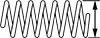
These springs are more corrosion resistant than standard compression springs. They're also easier to compress than standard compression springs. As you squeeze a compression spring, it pushes back to return to its original length. Spring rate is the amount of force required for every inch of compression or, for metric springs, millimeter of compression. The higher the spring rate, the harder it is to compress the spring.
302 stainless steel springs have good corrosion resistance.
316 stainless steel springs have excellent corrosion resistance.
Cobalt-nickel alloy springs have excellent corrosion resistance as well as high strength.
 For technical drawings and 3-D models, click on a part number.
| OD, mm | ID, mm | Wire Dia., mm | Compressed Lg. @ Max. Load, mm | Max. Load , lbs. | Spring Rate, lbs./mm | Material | End Type | Pkg. Qty. | Pkg. | |
5 mm Lg. | ||||||||||
|---|---|---|---|---|---|---|---|---|---|---|
| 1.32 | 1.04 | 0.14 | 1.55 | 0.21 | 0.06 | Cobalt-Nickel Alloy | Closed | 5 | 00000000 | 000000 |
| 1.32 | 1.1 | 0.11 | 1.17 | 0.11 | 0.03 | Cobalt-Nickel Alloy | Closed | 5 | 00000000 | 00000 |
| 1.4 | 0.9 | 0.25 | 4.06 | 0.51 | 0.55 | Passivated 316 Stainless Steel | Closed | 1 | 00000000 | 0000 |
| 1.4 | 1 | 0.2 | 3.6 | 0.27 | 0.19 | Passivated 316 Stainless Steel | Closed | 1 | 0000000 | 0000 |
| 1.65 | 1.37 | 0.14 | 1.22 | 0.15 | 0.04 | Cobalt-Nickel Alloy | Closed | 5 | 00000000 | 00000 |
| 1.65 | 1.43 | 0.11 | 0.89 | 0.09 | 0.02 | Cobalt-Nickel Alloy | Closed | 5 | 00000000 | 00000 |
| 2 | 1.4 | 0.3 | 3.78 | 0.63 | 0.52 | Passivated 316 Stainless Steel | Closed | 1 | 00000000 | 0000 |
| 2 | 1.5 | 0.25 | 3.43 | 0.37 | 0.23 | Passivated 316 Stainless Steel | Closed | 1 | 00000000 | 0000 |
| 2 | 1.6 | 0.2 | 2.97 | 0.2 | 0.09 | Passivated 316 Stainless Steel | Closed | 1 | 00000000 | 0000 |
| 2.39 | 1.58 | 0.41 | 3.4 | 1.8 | 1.13 | 302 Stainless Steel | Closed | 5 | 00000000 | 00000 |
| 2.49 | 1.88 | 0.3 | 2.39 | 0.86 | 0.33 | 302 Stainless Steel | Closed | 5 | 00000000 | 00000 |
| 2.5 | 1.9 | 0.3 | 3.43 | 0.52 | 0.33 | Passivated 316 Stainless Steel | Closed | 1 | 00000000 | 0000 |
| 2.5 | 2 | 0.25 | 3.07 | 0.3 | 0.15 | Passivated 316 Stainless Steel | Closed | 1 | 00000000 | 0000 |
Slotted Spring Pins
Also known as roll, tension, split, and expansion pins, these pins have a slot along one side that you squeeze closed to install them into unthreaded holes. Once installed, they expand slightly, creating outward tension that holds them tight against the hole wall. These pins absorb shock and vibration in your system, and keep parts from loosening. They are often used as hinge pins, or to hold springs and power transmission components in place.
Install these pins into a hole. They have at least one chamfered end, which means the end is angled to make insertion easier.
Breaking strength is measured as double shear, which is the amount of force required to break a pin into three pieces.
Some metric pins with the same diameter come in two different wall thicknesses. Thinner walls are more flexible, easier to install, and won’t weigh down your assembly as much as thicker pins. Layer a pin with a thin wall inside a pin with a thicker wall to increase the breaking strength. Make sure the slots are opposite one another for maximum strength.
Steel pins are strong and wear resistant.
18-8 stainless steel pins offer a balance of strength and corrosion resistance.
Pins that meet specifications for ISO 8752 (formerly DIN 1481) or ISO 13337 (formerly DIN 7346) adhere to international standards for pin dimensions.
For technical drawings and 3-D models, click on a part number.


| Lg., mm | For Hole Dia., mm | Wall Thick., mm | Min. Hardness | Breaking Strength, lbs. | Passivation | Specifications Met | Pkg. Qty. | Pkg. | |
1.5 mm Dia. | |||||||||
|---|---|---|---|---|---|---|---|---|---|
| 5 | 1.5-1.6 | 0.3 | Rockwell C42 | 350 | Not Passivated | DIN 1481, ISO 8752 | 100 | 000000000 | 00000 |
2 mm Dia. | |||||||||
| 5 | 2 | 0.2 | Rockwell C42 | 330 | Not Passivated | DIN 7346, ISO 13337 | 50 | 000000000 | 00000 |
| 5 | 2-2.1 | 0.4 | Rockwell C42 | 600 | Not Passivated | ISO 8752 | 200 | 000000000 | 00000 |
2.5 mm Dia. | |||||||||
| 5 | 2.5 | 0.25 | Rockwell C42 | 530 | Not Passivated | DIN 7346, ISO 13337 | 50 | 000000000 | 0000 |
3 mm Dia. | |||||||||
| 5 | 3 | 0.3 | Rockwell C42 | 780 | Not Passivated | DIN 7346, ISO 13337 | 50 | 000000000 | 0000 |
5 mm Dia. | |||||||||
| 5 | 5 | 0.5 | Rockwell C42 | 2,300 | Not Passivated | DIN 7346, ISO 13337 | 50 | 000000000 | 00000 |