We will reply to your message in the morning.
Also known as mild steel, low-carbon steel is easy to machine, form, and weld. It's widely fabricated into parts that don’t require high strength.
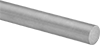
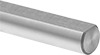
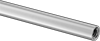
These rods are precision ground and held to a strict straightness tolerance, so they're ready for turning in a lathe.
These rods are zinc galvanized for good corrosion resistance.
The matte plating on these rods increases corrosion resistance and wear resistance.
Ready for turning in a lathe, these rods are precision ground and held to a strict straightness tolerance.
The lead additive acts as a lubricant, which allows 12L14 carbon steel to withstand very fast machining. It's used to fabricate a wide variety of machine parts.
Often called Stressproof, these rods are stress-relieved to minimize warping during machining.
These rods are precision ground and held to a strict straightness tolerance, so they're all set for turning applications in your lathe.
Also known as Fatigueproof, these rods have enhanced strength and resistance to breaking from repeated impact compared to High-Strength Easy-to-Machine 1144 Carbon Steel Rods.
A lead-free alternative to 12L14, 1215 carbon steel contains the same amount of sulfur and phosphorus for excellent machinability. It is often used for shaft couplings, studs, and pins.
Precision ground and held to a strict tightness tolerance, these rods are ready for turning in a lathe.
1117 carbon steel responds to surface-hardening heat treatment better than other easy-to-machine carbon steels. Use it to fabricate shaft couplings, studs, pins, and universal joints.
Stronger than low-carbon steel with equally good machinability, 1045 carbon steel is widely used for bolts, studs, and shafts.
The same steel used in automobile bodies, this AHSS (advanced high-strength steel) allows you to fabricate high-strength parts using thinner material than you could with other types of steel. It is formable, weldable, and more economical than alloy steel.
Ready for turning in your lathe, these rods are precision ground and held to a strict straightness tolerance.
The chrome plating on these rods increases corrosion resistance.
These rods are hardened for increased abrasion and impact resistance. Also known as chrome-moly steel, 4140 alloy steel resists fracturing from repeated stress.
Often called ETD-150, these rods are made from a modified version of 4140 alloy steel and have been drawn at high temperatures for excellent strength.
Also known as chrome-moly steel, this versatile 4140 alloy steel is used for a wide range of parts, such as gears, axles, shafts, collets, and die holders. It resists fracturing from repeated stress.
These hex bars are hardened for increased abrasion and impact resistance. They are also stress relieved to reduce the chance of warping during machining.
Also known as chrome-moly steel, this versatile 4140 alloy steel is used for a wide range of parts, such as axles, shafts, collets, and die holders. It resists fracturing from repeated stress.
4130 alloy steel has a low carbon content that provides good weldability. It's often used for gears, fasteners, and structural applications.
4130 alloy steel has a low carbon content that provides good weldability. It's often used for structural applications.
Also known as chrome steel, 52100 is an extremely hard and wear-resistant material. It’s used for parts such as bearings, bushings, and punches.
Easier to machine than 52100 alloy steel rods, these extremely hard and wear-resistant tubes are often used to create bearings, bushings, and other cylindrical parts that are under constant stress. They’re also known as chrome steel.
Use for power transmission and structural applications that involve extreme impact, heat, and wear.
A modified version of 4340 alloy steel, 300M is used in applications that require high yield strength, such as torsion bars and drive shafts.
While the low carbon content makes 8620 alloy steel easy-to-weld, it's the nickel, chromium, and molybdenum content that provides wear resistance.
The addition of lead gives 41L40 the best machinability of all the alloy steel we offer.
Often used for gears, shafts, and ball screws, 4150 alloy steel resists wear from friction and abrasion.
Offering excellent resistance to cracking from impact and compression, C300 alloy steel is often used for dies and tooling. It is also known as maraging steel and VascoMax.
A vacuum arc remelting (VAR) casting process gives 9310 superior strength, hardness, and fatigue resistance over other types of alloy steel. It's often machined into heavy duty gears, clutch parts, and ratchets.
These rods, also known as drill blanks, have an undersized diameter for machining your own jobbers'-length drill bits.
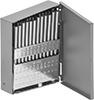
These rod sets are supplied in a metal index case with fold-out panels.
Also known as reamer blanks, these rods are hardened for increased abrasion and impact resistance.
Ready for turning in a lathe, these precision-ground rods have a tight diameter tolerance and are held to a strict straightness tolerance.
An oversized diameter allows for finishing to your exact requirements.
Also known as cobalt steel, this M42 tool steel maintains its hardness in high-speed cutting applications that generate intense heat. Use it to make tools for cutting extremely hard materials.
Made from powdered metal, M4 tool steel has a consistent microstructure that gives it outstanding resistance to wear and abrasion. It is comparable to CPM Rex M4.
Precision ground and held to a strict straightness tolerance, these rods are ready for turning in your lathe.
Hardened for increased abrasion and impact resistance, these rods are precision ground with a tight diameter tolerance.
Ready for turning in a lathe, these rods are precision ground to a tight diameter tolerance.
Hardened for increased abrasion and impact resistance, these precision-ground rods have a tight diameter tolerance and are ready for turning in your lathe.
All set for turning in your lathe, these precision-ground rods are held to a strict straightness tolerance.
The diameter on these rods is precision ground while the straightness is held to a strict tolerance, so they're ready for turning in a lathe.
Ground and held to strict diameter and straightness tolerances, these rods are ready to be turned in a lathe.
An oversized diameter on these rods allows for finishing to your exact requirements.
Furnished hardened, P20 tool steel is strong and easy to machine. It has the wear resistance and highly polishable surface needed to fabricate long-lasting molds and dies.
Resistant to wear, abrasion, and chipping, A11 is a hard material that is often made into punches and stamping tools.
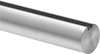
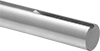
Combine these general purpose shafts with a linear bearing and shaft support to create a basic linear motion system.
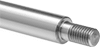
Mount these externally threaded shafts into tapped holes rather than using a shaft support, or attach a hex nut, shaft collar, or other threaded accessory.
Internal threads allow you to mount these shafts onto threaded studs and fasteners, no shaft supports needed.
With 2" of each end softened, it's easier to machine a custom end for mounting. The rest of the shaft is case-hardened, which increases hardness and wear resistance on the surface of the shaft while allowing the center to remain soft for absorbing stresses caused by shifting loads.
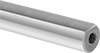
Lighter than solid shafts, hollow shafts reduce your total system weight and allow you to run various media such as electrical wiring, compressed air tubing, coolants, or lubricants through the center.
Keep a material certificate on hand for compliance and quality assurance needs. Certificates include a traceable lot number and material test report. These hollow shafts reduce system weight and allow you to run various media such as electrical wiring, compressed air tubing, coolants, or lubricants through the center.
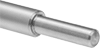
A shoulder near the end of the shaft allows for easy positioning of housings, shaft supports, and collars.
Clip retaining rings into the grooves to separate and position collars, supports, and housings.
Replace worn shafts in two-piece support-rail shaft systems, or mate with a support rail to create your own. The tapped mounting holes match those on our Support Rails.
These shafts include a support rail for a stable setup that eliminates bending and prevents linear bearings from rotating.
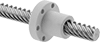
A removable collar allows access to the shaft without unbolting the flange. For use with light to medium loads where shaft alignment is not critical, these carbon steel supports allow you to hold linear shafts perpendicular to the mounting surface. Secure the shaft by tightening the clamping screw.
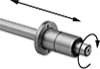
Use these general purpose shafts with bearings, sprockets, and gears to transmit rotary motion.
Eight times straighter than standard rotary shafts, these tight-tolerance shafts minimize vibrations and reduce wear to bearings and other components. They also have diameter tolerances that are twice as tight as standard rotary shafts.
Combine with a machine key to transmit torque to gears, sprockets, and other power transmission components.
These shafts have keyways only on the ends, leaving a plain shaft in the center. Use the keyways with machine keys to transmit torque to gears, sprockets, and other keyed components. Use the middle of the shaft with bearings and other round-bore components.
In addition to diameter tolerances that are twice as tight as standard keyed shafts, these shafts include a traceable lot number and test report. Use them with machine keys to transmit torque to gears, sprockets, and other power transmission components.
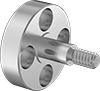
Mount the flange to a machine or wall to support idler sprockets and pulleys in tensioning applications. They include washers and a nut to position your component and hold it in place.
Thread these shafts into a tapped hole to support idler sprockets and pulleys in tensioning applications. They have a retaining-ring groove, retaining ring, and spacers to position your component and hold it in place.
A flat surface area allows set screws to dig into the shaft for securely mounting gears, sprockets, and bearings.
Connect these internally threaded shafts directly to threaded components, or use a fastener to secure. They have a flat surface area that allows set screws to dig into the shaft for securely mounting gears, sprockets, and bearings.
Connect these internally threaded shafts directly to threaded components, or use a fastener to secure.
Attach threaded accessories, such as mixer propellers and fan blades, to the end of these shafts.
A shoulder near the end of the shaft provides a stop for gears, sprockets, and bearings.
Clip retaining rings into the grooves to separate and position gears, sprockets, and bearings.
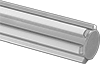
With a splined profile on one end, these shafts transmit high rotational loads—good for hydraulic systems, machine tools, and other high-torque applications. Compared to keyed shafts, they last longer, handle higher torque, and do not require as tight of a fit.
Grooves on the surface of these shafts transmit rotary power while allowing bearings to move freely along the length of the shaft.
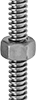
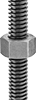
Found in hand-powered clamps, vises, grates, doors, and work tables, lead screws and nuts have broad, square threads that are well suited for quick assembly, high clamping forces, and lifting and lowering heavy objects.
These metric lead screws and nuts have broad, square threads that are well suited for quick assembly, high clamping forces, and lifting and lowering heavy objects. They're commonly found in hand-powered clamps, vises, grates, doors, and work tables.
Also known as single-start and self-locking lead screws and nuts, these have a single thread that runs the length of the screw. The nut travels only when the screw turns, so your system won't unexpectedly move when the lead screw is at rest.
Multiple thread channels (also known as thread starts) create faster linear travel than lead screws with a single thread start.
Also known as trapezoidal-thread lead screws and nuts.
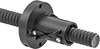
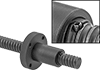
Internal ball bearings provide smooth low-friction travel in applications that require high speeds, accurate positioning, and repeatable movement. Also known as single-start metric ball screws and nuts, these have a single thread that runs the length of the screw.
Also known as single-start ball screws and nuts, these have a single thread that runs the length of the screw. They operate with more torque than fast-travel ball screws and nuts.
Multiple thread channels (also known as thread starts) create faster linear travel than ball screws with a single thread start.
Keep your ball screw spinning without the ball nut damaging your system. When the ball nut reaches the stop pin at either end of the ball screw, it disengages and begins to idle.
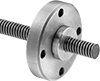
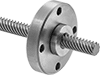
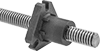
Thread these one-piece collars onto an Acme lead screw.
Mount these two-piece collars anywhere on an Acme lead screw without removing components.
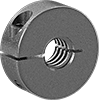
Install these threaded collars on a metric lead screw to separate and position components, or use them as an end stop to limit travel.
A set of ball bearings reduces friction and secures the end of a ball or lead screw.
A set of ball bearings reduces friction and secures the end of a metric ball or lead screw.
A crisscross thread pattern allows you to drive the nut back and forth without changing the lead screw's direction of rotation. When the nut reaches one end of the lead screw, it changes direction and travels back to the other end.
Comparable to Grade 8 steel, these threaded rods have a tensile strength of 150,000 psi, making them about 25% stronger than medium-strength steel rods.
These Class 10.9 steel threaded rods are about 25% stronger than medium-strength steel rods.
Class 12.9 rods are about 20% stronger than Class 10.9 threaded rods and are for use in heavy machinery.
These Grade B7 threaded rods meet the pressure and temperature requirements of ASTM A193 and are often used to secure pressure tanks, valves, and flanges.
These metric Grade B7 threaded rods meet the pressure and temperature requirements of ASTM A193 and are often used to secure pressure tanks, valves, and flanges.
These metric Grade B7 fine-threaded rods meet the pressure and temperature requirements of ASTM A193 and are often used to secure pressure tanks, valves, and flanges.
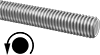
Tighten these threaded rods by turning them to the left; once fastened, they resist loosening from counterclockwise motion.
An economical alternative to Grade B7 and Grade B16 threaded rods, these metric Class 8.8 rods are suitable for fastening most machinery and equipment.
Grade B16 threaded rods maintain their strength at higher temperatures than Grade B7 threaded rods. They meet the pressure and temperature requirements of ASTM A193 and are often used to secure pressure tanks, valves, and flanges.
About half the strength of medium-strength steel threaded rods, use these for light duty hanging, mounting, and fastening.
These metric threaded rods are about half the strength of medium-strength steel threaded rods for light duty hanging, mounting, and fastening.
About half the strength of medium-strength steel threaded rods, use these metric fine-thread rods for light duty hanging, mounting, and fastening.
Tighten these threaded rods by turning them to the left; once fastened, they resist loosening from counterclockwise motion. About half the strength of medium-strength steel threaded rods, use them for light duty hanging, mounting, and fastening.
These metric threaded rods tighten when turned to the left; once fastened, they resist loosening from counterclockwise motion. About half the strength of medium-strength steel threaded rods, use them for light duty hanging, mounting, and fastening.
A hex drive on one end allows these rods to be turned with a hex key for ease of installation.
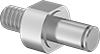
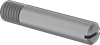
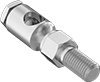
Screw the threaded end of these metric studs into a tapped hole and use the unthreaded end as a pivot point, hinge, shaft, or locator pin.
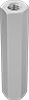
Connect and separate threaded rods, studs, and other components. These hollow rods have internal threads on both ends, so you can make connections and still pass wiring and other objects through the center of the rod.
These steel studs are zinc plated to resist corrosion in wet environments.
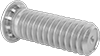
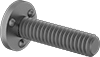
Pass these studs through a hole and weld them in place.
Weld these studs to uncoated steel surfaces.
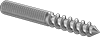
These studs are also known as hanger bolts—use them to hang, mount, and fasten parts to wood structures.
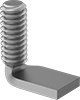
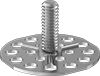
Add a stud to thin material when you only have access to one side.
Also known as dowel screws, use these to join two pieces of wood.
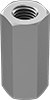
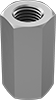
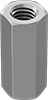
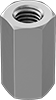
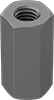
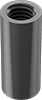
About half the strength of medium-strength steel coupling nuts, these nuts are for light duty fastening applications.
For light duty applications, choose these metric-sized coupling nuts.
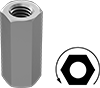
The left-hand threads on these coupling nuts resists loosening from counterclockwise vibration. Use in light duty applications.
Made from Grade 5 steel, these inch-sized coupling nuts are suitable for most applications.
Choose these locknuts to fasten standard metric threads. They’re Class 8 steel, so they can be used in most fastening applications.
Made from Grade 8 steel, these nuts are about 25% stronger than medium-strength steel coupling nuts. Furnished in inch thread sizes.
These metric-sized coupling nuts are Class 10 steel, so they’re about 25% stronger than medium-strength steel coupling nuts.
Comparable in strength to Grade 9 bolts, these coupling nuts are about 20% stronger than high-strength steel coupling nuts. Available in inch thread sizes.
Known for their strength, steel coupling nuts are available with a corrosion-resistant finish.
A smooth rounded body provides a finished look.
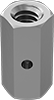
Use the sight hole to check for proper thread engagement.
Often called sleeve nuts, these thread adapters fasten parts with right-hand threads to parts with left-hand threads.
Connect two differently sized male-threaded parts, such as threaded rods, and tighten with a standard wrench.
Increase or decrease metric thread size from one male-threaded part to another. Commonly used to connect two differently sized threaded rods, they have a hex-shaped body, so you can tighten them with a standard wrench.
Adapt threaded rods from inch to metric. These adapters connect two male-threaded fasteners, so you can change the gender of a mating part or increase or decrease its thread size. The hex-shaped body fits into the head of a standard wrench.
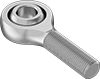
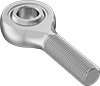
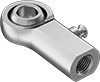
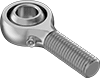
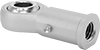
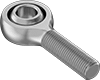
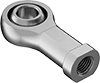
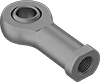
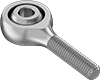
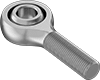
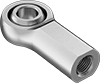
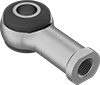
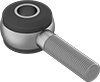
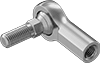
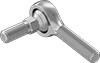
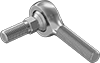
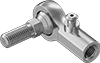
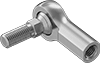
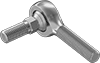
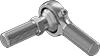
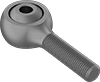
Also known as rod‐end bearings, ball joint rod ends have an eyelet and a ball that swivels to support angular misalignment.
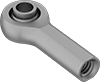
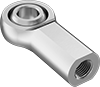
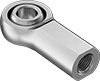
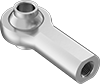
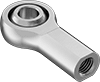
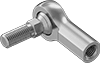
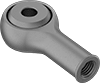
These internally threaded rod ends have an eyelet and a ball that swivels to support angular misalignment. Also known as rod-end bearings.
A carbon fiber-reinforced insert or PTFE liner reduces wear, handles shock loads, and eliminates the need for lubrication.
An oil-embedded bronze insert slowly releases lubricant throughout the life of these internally threaded rod ends.
An oil-embedded bronze insert slowly releases lubricant throughout the life of the rod end.
Connect your grease gun to the fitting to lubricate.
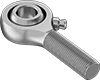
Connect your grease gun to the fitting to lubricate. Internal threads mate with rod end bolts, threaded rods, and other components with male threads.
An oil-embedded bronze insert slowly releases lubricant to the rod end. Connect your grease gun to the fitting to relubricate.
These internally threaded rod ends have an oil-embedded bronze insert that slowly releases lubricant over time. Connect your grease gun to the fitting to relubricate.
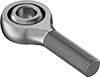
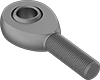
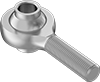
Made to extremely tight tolerances, these externally threaded rod ends are for applications that require positioning accuracy, such as accelerators and other types of control linkages.
Made to extremely tight tolerances, these internally threaded rod ends are for applications that require positioning accuracy, such as accelerators and other types of control linkages.
Made of cadmium-plated steel, these externally threaded rod ends generally handle higher loads than stainless steel, aluminum, and nylon rod ends.
With at least 55° of ball swivel, these externally threaded rod ends accommodate greater misalignment than any other we offer.
With at least 55° of ball swivel, these rod ends accommodate greater misalignment than any other internally threaded rod end we offer.
Made of cadmium-plated steel, these internally threaded rod ends generally handle higher loads than stainless steel, aluminum, and nylon rod ends.
These anodized aluminum rod ends are lighter than stainless steel rod ends and have good corrosion resistance.
These anodized aluminum rod ends are lighter than stainless steel rod ends and have good corrosion resistance. Internal threads mate with rod end bolts, threaded rods, and other components with male threads.
These externally threaded steel rod ends handle loads that are at least 25% higher than other comparably sized rod ends.
These internally threaded steel rod ends handle loads that are at least 25% higher than other comparably sized rod ends.
These internally threaded rod ends have an innovative body design that keeps the ball from being pushed out when supporting thrust loads.
An innovative body design keeps the ball from being pushed out when supporting thrust loads.
Along with internal threads, these rod ends have a double row of precision ball bearings that allows high speeds and smooth operation.
A double row of precision ball bearings allows high speeds and smooth operation.
With a ball joint at the top of the shank, these rod ends pivot in the middle of the body instead of in the eyelet. Use them for linear push applications that require movement along the length of the connecting rod.
Without changing the ID, these inserts handle some misalignment on rod ends.
Designed for use with right-hand, internally threaded rod ends, these rods have right-hand threads on both ends. Use them for remote valve operators, throttle controllers, shifting mechanisms, and virtually any push/pull assembly.
Designed for use with right-hand, externally threaded rod ends, these rods have right-hand threads on both ends. Use them for remote valve operators, throttle controllers, shifting mechanisms, and virtually any push/pull assembly.
Similar to turnbuckles, these rods have right-hand threads on one end and left-hand threads on the other so you can make a linkage that adjusts for tension. Add right- and left-hand threaded rod ends to build your linkages.
Similar to turnbuckles, these rods have right-hand threads on one end and left-hand threads on the other so you can make a linkage that adjusts for tension.
These steel rod ends are machined to SAE standards.
Made of zinc-plated steel or stainless steel, these clevis rod ends offer more corrosion resistance than standard steel clevis rod ends.
Make quick adjustments to these rod ends by inserting and releasing the clevis pins without the need to bend them into place.
A male-threaded shank lets you build a linkage with a tapped tube or any female-threaded connection.
Thread or weld the unfinished shank of these rod ends to meet your specific linkage needs.
Good for general purpose applications where corrosion and high strength aren’t a concern, these rod end bolts are made of carbon steel.
These alloy steel rod end bolts have the highest tensile strength of any fully threaded rod end bolt we offer.
Create pivoting connections in applications that require high shear strength—the partially threaded shank of these rod end bolts withstands more side force than a fully threaded shank.
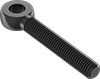
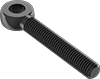
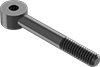
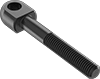
Also known as swing bolts and eyebolts, these internally threaded rod end bolts have no moving parts. They're designed to make pivoting or hinge movements in applications that don't need to compensate for misalignment.
With a rubber bushing, these bolts reduce noise and vibration—attach them to rods, pipes, tubes, and cable linkages that have male threading. They’re commonly known as isolated rod ends.
To reduce noise and vibration, these bolts have a rubber bushing—connect them to rods, pipes, tubes, and cable linkages that have female threading. They’re also known as isolated rod ends.
These alloy steel bolts have the highest tensile strength of any blank rod end bolt we offer.
These black-oxide steel rod end bolts are heat treated for added strength.
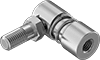
These linkages offer excellent wear resistance. They consist of internally threaded ball joint rod ends with a ball stud attached to simplify mounting.
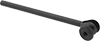
Able to stand up to frequent use, these linkages offer excellent wear resistance. They consist of ball joint rod ends with a ball stud attached to simplify mounting.
These internally threaded linkages have a slippery PTFE liner that reduces wear and eliminates the need for lubrication.
A slippery PTFE liner reduces wear and eliminates the need for lubrication.
Along with excellent wear resistance, these linkages have a grease fitting for easy lubrication. An internally threaded rod end connects to threaded rods, studs, and other parts with male threads.
These internally threaded linkages have an oil-embedded bronze insert that slowly releases lubricant throughout the life of the joint.
An oil-embedded bronze insert slowly releases lubricant throughout the life of the joint.
Along with excellent wear resistance, these linkages have a grease fitting for easy lubrication.
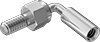
Use these bent linkages for light duty applications.
These ball joint linkages are made of steel.
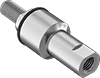
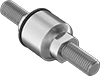
Use these linkages to create inline pivoting connections. They have internal threads on one end and external threads on the other.
Use these externally threaded linkages to create inline pivoting connections.
Attach these nuts to rods, pipes, and tubes to make pivoting and hinge movements where misalignment is not a concern.
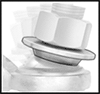
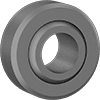
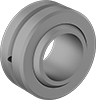
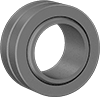
Also known as spherical bearings, swivel joints support angular misalignment. Press them into a hole or housing where a ball joint rod end won’t fit.
Specially designed lubrication channels and integral seals allow these joints to last up to three times longer than other swivel joints.
A unique design allows these joints to support heavy one-direction thrust loads as well as combined radial/thrust loads.
These electrodes are low hydrogen for X-ray quality welds.
These electrodes are designed for optimum performance when used with an AC power source.
These electrodes penetrate deeper into the base material for higher-quality welds than standard fast-deposit stick electrodes for steel.
Make welds quickly with these fast-melting electrodes.
Join gray iron, ductile iron, malleable iron, and alloy cast iron to themselves, and to each other.
Made of 85% pure nickel, these electrodes join cast iron to itself, and to mild steel and stainless steel.
Increase the wear resistance of your base metal, or restore a worn-down surface with these electrodes.
These rods create stronger welds than standard TIG welding rods for steel.
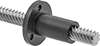
Make welds quickly with these fast-melting rods.
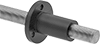
The flat tip creates a larger weld and can be used when appearance is less important.
The pointed tip is best for tight areas or for a small weld.
These rods make stronger welds than standard gas welding rods for steel.
Use these cadmium-free alloys with most metals in general purpose applications.
No need to add flux—these alloys have it built in.
Use these alloys with most metals in general purpose applications.
These alloys create stronger bonds than standard brazing alloys.
These alloys melt into thicker liquid than standard brazing alloys, which allows them to fill larger gaps.
When melted, these alloys form a thin liquid that easily flows into smaller gaps than standard gap-filling brazing alloys.
Start brazing with this assortment that includes alloy without cadmium for joining dissimilar metals, alloy without cadmium for copper and copper alloys, and a jar of flux.
Also known as trimetal brazing strips, these alloys have silver with nickel alloy sides and a copper core.
These alloys are also known as trimetal brazing strips. They have silver with nickel alloy sides and a copper core.
Secure setup clamps and fixtures to your machine table, or assemble heavy machines, such as engine mounts.
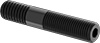
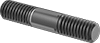
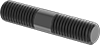
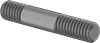
Also known as tap-end and fixture studs, these rods have friction-fit threads on one end to resist loosening and standard threads on the other side for attaching a nut.
Combine fast-threading components to build a clamping assembly.
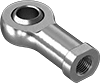
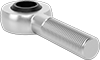
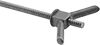
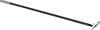
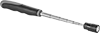
Push the plunger to engage the magnet; release to disengage. These retrievers bend into position and stay in place.
Bend the shaft to reach objects in awkward spaces.
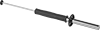
An extra-long shaft enables access to material in hard-to-reach areas. These retrievers can pick up heavier objects than our other magnetic retrievers.
LEDs light the magnetized tip for picking up screws, nuts, and other small steel objects in dark areas.
Magnetized on all sides, these wand-like tools remove steel chips from machinery, the floor, and your clothing. Pull the plunger to demagnetize and drop the chips into your collection bin.
An LED lights the wire jaws and the shaft bends to reach objects in awkward spaces.
Bend the shaft to reach into awkward spaces and grab small parts in the wire jaws.
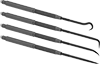
The handles of these assorted picks have a magnet at the end to pick up small steel objects. Use to hold and position wire, springs, and other small parts.
The handle has a magnet at the end to pick up small steel objects. Use these picks to hold and position wire, springs, and other small parts.
Suspend and secure tile frames to the ceiling.
Reduce the chance your concrete will crack from expansion and contraction and other tensile stresses.
To provide corrosion resistance in wet environments, this framing is galvanized.
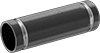
Also known as Schedule 40, this steel pipe is designed for low-pressure applications.
Pipe has clockwise (right-hand) threads on one end and counterclockwise (left-hand) threads on the other end. When you use a wrench to turn, connections on both ends tighten at the same time.
Assortments contain threaded pipe in various lengths.
Made of galvanized steel, this Schedule 40 pipe has fair corrosion resistance and is designed for low-pressure applications.
A plastic sleeve prevents destructive corrosion when connecting different metals.
Typically used with medium-pressure galvanized iron and steel threaded pipe fittings. Also known as Schedule 80.
Typically used with medium-pressure iron and steel threaded pipe fittings. Also known as Schedule 80.
Typically used with extreme-pressure iron and steel threaded pipe fittings. Also known as Schedule XXH.
Typically used with high-pressure galvanized iron and steel threaded pipe fittings. Also known as Schedule 160.
Typically used with high-pressure iron and steel threaded pipe fittings. Also known as Schedule 160.
Typically used with standard-wall and low-pressure iron and steel unthreaded pipe fittings. Also known as Schedule 40.
Typically used with thick-wall and high-pressure iron and steel unthreaded pipe fittings. Also known as Schedule 80.
Typically used with extreme-pressure iron and steel unthreaded pipe fittings. Pipe is also known as Schedule XXH .
This steel pipe has grooved ends that connect to fittings with a clamp (sold separately) for an easy way to install piping systems.
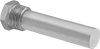
Also known as sacrificial anodes, these rods and pads protect tanks, water heaters, and heat exchangers from rusting by attracting corrosion that would otherwise damage equipment.
Mount one of these rods between the plunger and contact point to extend the reach of your indicator.
Use with swivel clamps to position indicators.
Mount these holders into a machine spindle and use with your indicator to center workpieces.
Attach the C-clamp on this holder to your Bridgeport J head to take indicator measurements without obstructing the cutting tool.
Attach the C-clamp on these holders to your milling machine head to take indicator measurements without obstructing the cutting tool.
Machine your own gears to fit the exact face width and shaft diameter required.
Connect an electrical system to a ground.
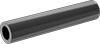
Connect lamp components and conceal wires.
Grind these hardened steel blanks to the size and shape you need.
Thread these ball socket end fittings onto gas springs. They rotate in any direction on a ball stud to compensate for misalignment.
These end fittings snap right on a ball stud—an integral retaining clip grips the ball stud for secure attachment until you apply enough force to pop it off.
A spring-loaded socket locks your gas spring to the ball stud—squeeze the ends together to attach and to release.
Thread these eyelet end fittings onto gas springs.
Easily grab iron and steel fasteners, small sheets, and other parts from work areas, bins, and hard-to-reach places.