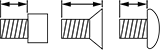
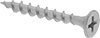
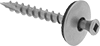
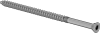
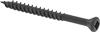
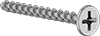
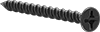
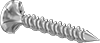
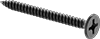
We will reply to your message within two hours.
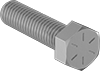
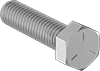
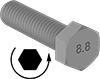
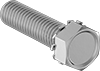
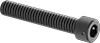
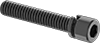
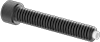
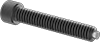
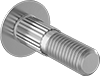
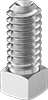
Made from Grade 8 steel, these screws can be used in high-stress applications, such as valves, pumps, motors, and automotive suspension systems. They are at least 25% stronger than medium-strength steel screws.
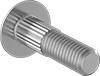
Choose these metric screws for high-strength fastening. Often used in high-stress applications, such as valves, pumps, motors, and automotive suspension systems, these screws are at least 25% stronger than medium-strength steel screws.
These screws come with a traceable lot number and a physical and chemical test report. Use them for high-strength fastening.
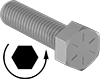
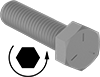
Tighten these screws by turning them to the left; once fastened, they prevent counterclockwise-moving parts from loosening. For use in high-strength fastening applications.
Choose these screws for their adherence to strict military standards for material and construction. Their high tensile strength means they can be used in demanding, high-stress applications.
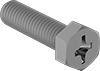
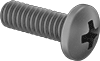
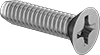
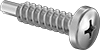
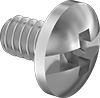
When clearance for a wrench is limited, these screws have a Phillips drive so you can install them with a screwdriver. They are used for high-strength fastening.
Twice as strong as low-strength steel screws, these screws are suitable for fastening most machinery and equipment.
Choose these metric screws for fastening most machinery and equipment. They are twice as strong as low-strength steel screws.
These screws are made to stringent Army-Navy specifications that ensure performance and reliability. They're comparable in strength to Grade 5 steel screws.
Choose these screws for their adherence to strict military standards for material and construction. Use them to fasten most machinery and equipment.
These metric screws help prevent counterclockwise-moving parts from loosening. Use them for medium-strength fastening.
Tighten these screws by turning them to the left; once fastened, they prevent counterclockwise-moving parts from loosening. For use in medium-strength fastening applications.
These screws are made to Japanese Industrial Standards. They are suitable for fastening most machinery and equipment.
About half as strong as medium-strength steel screws, these screws can be used for light duty fastening applications, such as securing access panels.
These screws are the strongest we offer. They are about 20% stronger than high-strength steel screws and are often used in heavy duty applications such as stamping and earth-moving equipment.
Choose these metric screws for heavy duty stamping applications as well as earth-moving machinery such as bulldozers and excavators. These screws are 10% stronger than our high-strength metric steel screws.
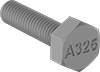
The most common heavy hex head screw, these steel screws meet ASTM A325 regulations for structural joints, such as mating I-beams and scaffolding.
Designed for construction and exterior building applications, these metric screws are often used to join I-beams and scaffolding. Their partial threading leaves an unthreaded portion that is strong enough to stand up to the sideways forces of joints.
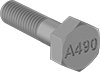
50% stronger than our medium-strength steel heavy hex head screws, these screws meet ASTM A490 specifications for structural applications. Use them in joints that require more tensile strength than ASTM A325 screws.
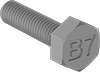
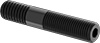
These Grade B7 steel screws are nearly twice as strong as our stainless steel screws for high-pressure applications. Also known as pressure bolts, they meet the high-pressure, high-temperature regulations of ASTM A193 and are used to secure pressure tanks, valves, and flanges.
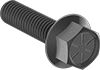
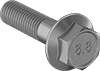
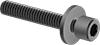
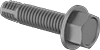
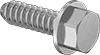
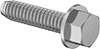
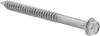
Made from Grade 8 steel, these screws can be used in high-stress applications, such as valves, pumps, motors, and automotive suspension systems. They are at least 25% stronger than medium-strength steel screws. The flange distributes pressure over the surface, eliminating the need for a washer.
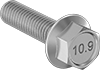
These metric screws are at least 25% stronger than medium-strength steel screws. Use them in high-stress applications, such as valves, pumps, motors, and automotive suspension systems. The flange distributes pressure where the screw meets the surface, so there's no need for a washer.
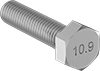
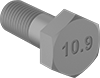
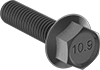
Made to Japanese Industrial Standards, these Class 10.9 steel screws can be used in high-stress applications, such as valves, pumps, motors, and automotive suspension systems. They are at least 25% stronger than medium-strength steel screws. The flange eliminates the need for a washer.
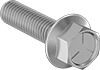
Choose these metric screws for fastening most machinery and equipment. With a flange distributing pressure where the screw meets the surface, there is no need for a separate washer.
Made from Grade 5 steel, these screws are suitable for fastening most machinery and equipment. The flange distributes pressure where the screw meets the surface, eliminating the need for a washer.
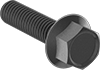
Comparable in strength to Grade 9 screws, these are about 20% stronger than high-strength steel screws and often used in heavy duty applications, such as stamping and earth-moving equipment. The flange eliminates the need for a washer.
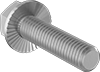
Made from Grade 5 steel, these screws are suitable for fastening most machinery and equipment. Serrations under the flange provide mild vibration resistance.
These metric screws are suitable for fastening most machinery and equipment. They have a serrated flange that helps prevent loosening from vibration.
About 20% stronger than medium-strength steel screws, these Grade 8 steel screws can be used in high-stress applications, such as valves, pumps, motors, and automotive suspension systems. Serrations under the flange provide mild vibration resistance.
Choose these metric screws for high-stress applications, such as valves, pumps, motors, and automotive suspension systems. They are about 10% stronger than medium-strength steel screws. Their serrated flange helps to resist vibration.
These screws have a flange that's at least 10% larger than a standard flange for more gripping power. Serrations under the head provide mild vibration resistance.
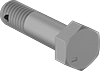
Place a cotter pin through the hole in the shank to keep a nut from loosening. These screws have a stronger hold than screws with thread lockers or lock washers.
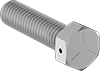
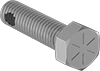
These Grade 5 steel screws are over 70% stronger than our stainless steel wire-lockable hex head screws. Wire these screws together through the hole in the head to get more vibration resistance than any other screw.
Made from Grade 8 steel, these screws can be used in high-stress applications, such as valves, pumps, motors, and automotive suspension systems. They are more than twice as strong as our stainless steel thread-locking screws. The thread locker helps resist loosening from vibration.
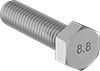
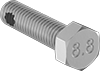
These Class 8.8 steel screws are suitable for fastening most machinery and equipment. They are over 50% stronger than stainless steel thread-locking screws. For vibration resistance, they have a thread locker bonded to the threads.
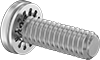
Also known as Sems screws, these screws have a permanently attached but freely rotating tooth lock washer that bites into the mating surface for vibration resistance.
Place one of these retainers around a hex head screw or nut, then attach wire to lock the screw or nut in place and keep it from loosening.
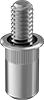
A high-strength alternative to blind rivets, use these screws when only one side of the material is accessible.
An indicator dot changes from red to black when the screw is properly tightened. If it comes loose, the dot changes back to red.
The standard for high-strength fastening.
Choose these screws for their adherence to strict military standards for material and construction.
Tighten these screws by turning them to the left; once fastened, they prevent counterclockwise-moving parts from loosening.
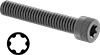
A Torx-Plus drive has more points of contact than a hex drive, allowing you to tighten these screws with less slippage or damage to the recess.
These screws are specially tempered to meet ASTM A193 specifications for temperatures up to 1100° F.
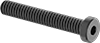
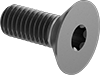
Made of alloy steel, these low-profile screws are nearly twice as strong as their stainless steel counterparts. With half the height of a standard socket head, these low-profile screws fit in tight spaces.
Made from alloy steel, these screws are nearly twice as strong as stainless steel low-profile screws. With a head height one-third the size of a standard socket head, they fit in the tightest spaces.
These general purpose flanged screws distribute pressure where the screw meets the surface, eliminating the need for a washer.
Serrations under the head grip the material's surface for mild vibration resistance. The flange distributes pressure across the material's surface, eliminating the need for a washer.
With a tensile strength of 170,000 psi, these alloy steel screws are among the strongest we carry. They are stronger than Grade 8 steel screws and are nearly two and a half times stronger than stainless steel thread-locking screws. They have a thread locker to prevent loosening from vibration.
With a tensile strength of 170,000 psi, these alloy steel screws are among the strongest we carry. They are stronger than Grade 8 steel screws and are more than twice as strong as stainless steel wire-lockable screws. These resist vibration better than any other socket head screw.
With a tensile strength of 180,000 psi, these alloy steel screws are among the strongest we carry. They are stronger than Grade 8 steel screws and more than two and a half times stronger than stainless steel screws with split lock washer. The split lock washer helps to resist vibration.
A freely rotating washer distributes pressure over a wider area than a flange, preventing damage to your material's surface.
Nonconductive and softer than brass, the nylon tip reduces vibration and eliminates damage from metal touching metal.
The nonmarring brass tip is electrically conductive and harder than nylon, but soft enough to conform to most surfaces and reduce damage from metal-on-metal contact.
These steel screws have a zinc plating for mild corrosion resistance.
A zinc plating on these metric steel screws provides mild corrosion resistance.
These screws meet Japanese Industrial Standards.
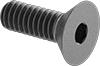
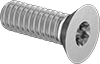
These metric alloy-steel screws are twice as strong as standard steel Torx flat head screws.
Made from alloy steel, these screws are twice as strong as standard steel Torx flat head screws.
Lower strength than alloy steel, use these screws for light duty fastening.
A zinc plating provides mild corrosion resistance.
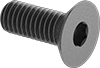
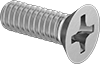
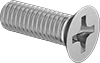
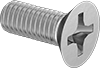
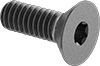
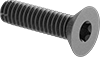
Angled under the head, these metric screws fit in countersunk holes and sit flush with the surface of your part.
Also known as wall plate screws, these screws are painted to match the color of a switch or outlet cover.
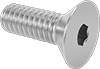
Made from alloy steel, these screws are nearly twice as strong as stainless steel flat head screws.
With a tamper-resistant Torx or Torx Plus drive (also known as a pin-in Torx or Torx Plus drive), these screws are difficult to remove without special tools.
These metric alloy steel screws are nearly twice as strong as stainless steel button head screws.
These steel pan head screws are coated for corrosion resistance.
A zinc plating makes these metric pan head screws corrosion resistant in wet environments.
Made to Japanese Industrial Standards, these screws have narrower and shorter heads than standard Phillips pan head screws.
The Torx or Torx-Plus drive on these metric screws have more points of contact than other drives, allowing you to tighten them without damaging the recess.
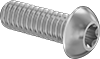
Made from alloy steel, these screws are three times stronger than standard steel button head Torx screws. A Torx-Plus drive has more points of contact than other drives, allowing you to tighten the screw without damaging the recess.
These metric screws have a Torx drive for more points of contact than other drives, allowing you to tighten the screw without damaging the recess.
Add a decorative look when fastening parts—these metric screws have a painted head.
Create a decorative appearance on your finished product—the head of these screws is painted.
These screws have a Torx or Torx-Plus drive for more points of contact than other drives, allowing you to tighten the screw without damaging the recess.
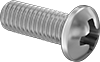
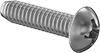
Install these metric pan head screws for a low-profile, finished look—no countersink required.
These pan head screws are zinc plated for corrosion resistance in wet environments.
With a narrower head than pan head screws, these cheese head screws fit in tight spaces, such as in electrical panels and next to flanges and raised surfaces.
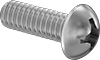
These screws have a tall, domed head that provides a finished appearance. They're zinc plated to resist corrosion in wet environments.
Made from alloy steel, these screws are nearly twice as strong as stainless steel button head screws. They have a flange that distributes pressure across a wide surface, eliminating the need for a separate washer.
These metric alloy steel screws are nearly twice as strong as stainless steel button head screws. They have a flange that distributes pressure across a wide surface, eliminating the need for a separate washer.
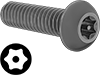
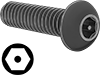
Nearly twice as strong as stainless steel button head screws, these metric screws are made from alloy steel. Their tamper-resistant Torx drive (also known as a pin-in Torx drive) makes them difficult to remove without special tools.
Made from alloy steel, these screws are nearly twice as strong as stainless steel button head screws. Their tamper-resistant Torx drive (also known as a pin-in Torx drive) makes them difficult to remove without special tools.
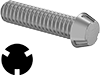
Difficult to remove without special tools, these screws have three grooves.
Made from alloy steel, these screws are nearly twice as strong as stainless steel button head screws.
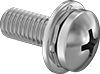
These metric screws have a washer with sharp internal teeth that dig into surfaces to resist large amounts of vibration. The smooth outside edge of the washer provides a finished look. Also known as Sems screws, the washer rotates freely but is permanently attached.
Sharp internal teeth dig into surfaces to resist large amounts of vibration, while the smooth outside edge provides a finished look. Also known as Sems screws, the washer rotates freely but is permanently attached.
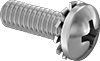
The washer on these screws has sharp external teeth that dig into surfaces for maximum holding power and vibration resistance. Also known as Sems screws, the washer rotates freely but is permanently attached.
These metric screws have a washer with sharp external teeth that dig into surfaces for maximum holding power and vibration resistance. Also known as Sems screws, the washer rotates freely but is permanently attached.
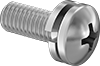
As you tighten these metric screws, the split lock washer flattens to add tension and prevent loosening from small amounts of vibration. Also known as Sems screws, the washer rotates freely but is permanently attached.
When compressed, the split lock washer flattens to add tension and prevent loosening from small amounts of vibration. Also known as Sems screws, the washer rotates freely but is permanently attached.
Comparable in strength to Grade 8 steel. These screws have inch thread sizes.
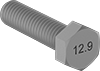
Comparable to Class 12.9 steel.
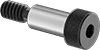
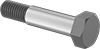
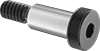
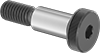
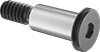
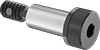
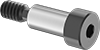
With threads the same diameter as the shoulder, these inch-sized screws can handle heavy loads. They’re comparable to Grade 8 steel.
The metric-sized threads on these screws are the same diameter as the shoulder. Comparable in strength to Class 12.9 steel.
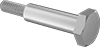
Use these screws in thin materials; they have a shorter threaded portion than our standard shoulder screws. They’re comparable in strength to Grade 8 steel.
These shoulder screws come with a traceable lot number and material test report. Similar in strength to Grade 8 steel.
Also known as wheel and axle bolts, these metric screws have an unthreaded shoulder that acts as a shaft, so material attached to the threaded end can rotate.
With a reduced head size and an unthreaded shoulder, use these screws as a shaft or dowel pin for small rotating parts in low-clearance applications.
The head height of these screws is about two-thirds the head height of a standard shoulder screw. Use them in low-clearance applications such as inside machines.
These metric screws have a head height that's about two-thirds the head height of a standard shoulder screw. Use them in low-clearance applications such as inside machines.
These have a head height about one-third the head height of a standard shoulder screw.
A locking element on the threads adds friction to resist loosening. Comparable to Grade 8 steel, these alloy steel shoulder screws are the strongest we offer.
Available in metric sizes, these screws have a locking element on the threads that adds friction to resist loosening. Comparable to Grade 8 steel, they are the strongest screws we offer.
Without a head to get in the way, these screws fit in tight spaces where standard shoulder screws cannot. Either thread them in a countersunk hole for a flush mount, or install them with the shoulder sticking out to use them as pins or dowels for aligning and locating components.
Comparable to Grade 8 steel, these screws are the strongest precision shoulder screws we offer.
These metric screws have a triangular shank that presses tightly as it forms threads, so screws resist loosening in soft metals such as brass, aluminum, and copper.
The triangular shank presses tightly as it forms threads, so screws resist loosening in soft metals such as brass, aluminum, and copper.
Also known as Tap-Flex screws, these are made from hardened steel to penetrate hard material. They have a five-edged shank that presses tightly against the material to form threads and resist loosening.
These screws have a hex head for a secure grip with a wrench.
Also known as Swageform screws, threads at the tip are designed to grab material for a fast start with low torque in a wide range of materials.
These steel screws are zinc plated to resist corrosion in wet environments.
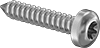
A Torx drive has more points of contact than a Phillips drive, allowing you to apply extra force with less slippage or damage to the recess.
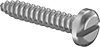
These steel screws cut threads in drilled holes as they’re turned, so they require less driving torque and cause less stress on your material than thread forming screws.
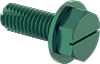
The green color identifies these as grounding screws. They have a flange that provides a wide flat surface for making solid electrical connections.
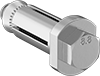
Commonly used with door hinge hardware, these screws cut threads in material such as aluminum and brass.
These steel screws have corrosion-resistant finishes.
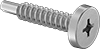
These 18-8 stainless steel screws have a hardened steel drill point to penetrate steel and are coated to increase corrosion resistance.
410 stainless steel is strong, wear resistant, and mildly chemical resistant.
These screws have the strength of 410 stainless steel with added corrosion resistance.
Cutting their own pilot hole and threads as you fasten them into material, these metric screws have a drilling tip.
Drill a pilot hole, cut threads, and fasten in one motion with these metric-threaded screws. Made of steel, they’re strong and wear resistant.
Stronger and more wear resistant than 18-8 stainless steel, these screws are mildly chemical resistant.
18-8 stainless steel screws have good chemical resistance.
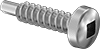
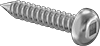
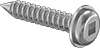
By drilling their own holes and fastening in a single operation, these square-drive screws save time and effort. Made of 410 stainless steel, they're both stronger and more wear resistant than 18-8 stainless steel screws.
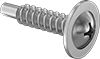
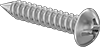
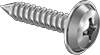
The extra-wide truss head distributes holding pressure to reduce the risk of crushing thin metal.
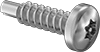
A tamper-resistant Torx driver is required for installation and removal. Also known as pin-in-Torx, these screws allow you to apply extra force with less slippage or damage to the recess.
Also known as pancake head screws, these have a head that is about two-thirds the height of standard rounded head screws.
Made from stainless steel, these screws are more corrosion resistant than steel, and almost as strong.
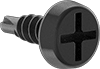
These steel screws save you time and effort by drilling their own holes and fastening in a single operation.
With a drilling tip, these metric screws cut their own pilot hole and threads as you fasten them into material.
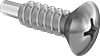
A decorative rounded top provides a finished appearance.
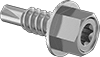
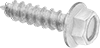
These steel screws are available with corrosion resistant finishes. A rubber-bonded washer compresses to form a watertight seal. They save you time and effort by drilling their own holes and fastening in a single operation.
These steel screws have a head encapsulated by 18-8 stainless steel.
Made from 410 stainless steel, these screws are strong, wear resistant, and mildly chemical resistant.
Known for their strength, these alloy steel screws are coated to provide corrosion resistance in wet environments.
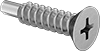
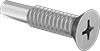
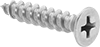
Beveled under the head for use in countersunk holes.
Serrations under the head act as a brake to prevent overtightening and damaging threads.
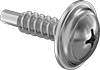
These screws have a free-rotating, permanently attached washer that remains stationary while tightening to prevent bunching while attaching tarps and other fabric to metal.
Also known as roofing screws, these screws are long and made from hardened steel to fasten rigid insulation board to steel decking.
These steel screws are available with corrosion-resistant finishes.
A Torx drive has more points of contact than Phillips, slotted, and square drives, allowing you to apply extra force with less slippage or damage to the recess.
A flange under the head distributes holding pressure and reduces the risk of crushing thin metal.
These square-drive screws have a flange under the head that distributes holding pressure and reduce the risk of crushing thin metal.
A free-rotating, permanently attached washer distributes holding pressure over a wider area than a flange and remains stationary to prevent scratching the material surface as you tighten the screw.
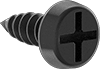
These steel screws have a black-oxide finish to resist corrosion in dry environments.
Made from 18-8 stainless steel, these screws are chemical resistant.
Also known as Fastite screws, these offer more thread engagement in 0.028" to 0.063" thick sheets to prevent overtightening and damaging threads.
Able to penetrate overlapping sheets, these screws have a secure hold in wood.
Serrations under the head act as a brake to prevent over-tightening and damaging threads.
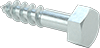
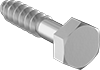
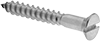
Drive the pointed tip of these screws into soft material, such as wood and drywall. They are also known as lag bolts.
These screws are beveled under the head for use in countersunk holes.
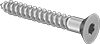
With more points of contact than Phillips-, slotted-, and square-drive screws, you can firmly press these Torx-drive screws into wood without stripping them or damaging the recess—their threads create a tight hold.
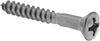
Beveled under the head for use in countersunk holes, these steel screws press threads into material for a tight, secure hold.
A decorative rounded top provides a finished appearance. These Phillips screws are beveled under the head for use in countersunk holes. They press threads into material for a tight, secure hold.
These steel screws are hot-dipped galvanized to resist corrosion in wet environments.
With a low-profile rounded head that’s flanged to sit flush for a finished appearance, these screws press threads into wood on cabinets, trim, molding, and light duty framing.
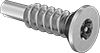
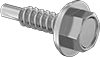
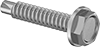
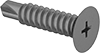
These screws speed installation by drilling, tapping, and fastening wood and metal in a single operation.
Thread-forming screws press threads into drilled holes for a tight vibration-resistant assembly.
These Phillips head screws have a decorative rounded top that provides a finished appearance.
Screws are beveled under the head for use in countersunk holes.
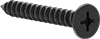
Often used for drawer slides and cabinet hardware, these screws—also known as Euro and Type B screws—create a strong hold in small, shallow holes in wood.
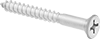
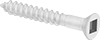
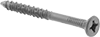
Also known as deck screws, these Phillips screws have a sharp point and narrow body to penetrate softwood and plastic-wood composite decking material.
The neoprene-backed washer seals out contaminants.
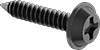
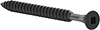
Because these steel screws cut threads into drilled holes as they’re turned, they require less driving torque and cause less stress on material than thread-forming screws. Also known as trim-head deck screws, they have a small flat head and slender shank to reduce the risk of splitting boards.
Thread-forming screws press threads into drilled holes for a tight, vibration-resistant assembly.
Also known as Tapcons, use these screws in applications requiring high strength.
These blue and silver ultra-corrosion-resistant coated steel screws stand up to wet environments.
These steel screws have a black-oxide or zinc-plated finish to resist corrosion.
These steel screws are beveled under the head for use in countersunk holes.
Press threads into plastic to create a strong hold. Use a wrench, hex socket bit, or nutdriver to securely grip the hex head and tighten these screws.
These steel screws have alternating high and low threads to minimize cracking and splitting in brittle material such as phenolic and glass-filled plastic.
Cutting wings under the head allow plastic to expand and contract without cracking. A washer made from aluminum and rubber bonded to steel adds a watertight seal.
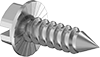
Power through drywall and into metal studs up to 0.105" thick.
Ribs under the head act as a brake to prevent over-tightening and damaging threads.
Hang drywall to wood framing. These screws have a sharp point that penetrates drywall and a curved neck that sinks in without tearing the paper surface.
Alternating high and low threads minimize driving torque and allow the screw to hold more material between threads for a stronger hold and better strip-resistance than standard drywall screws for wood.
Attach drywall to metal studs up to 0.036" thick.
Hold sheets of drywall together until glue sets
A drill point powers through metal up to 0.105" thick.
Attach metal framing to metal studs up to 0.036" thick.
With a square-drive head, these screws attach drywall to metal studs up to 0.036" thick. The head is one-third smaller than other drywall screws.
These screws have a head that's one-third smaller than other drywall screws. Use them to attach drywall to metal studs up to 0.036" thick.
A drill point powers through drywall and into metal studs up to 0.105" thick. Heads are one-third smaller than those of other drywall screws.
These square-drive screws have a drill point that powers through drywall and into metal studs up to 0.105" thick. Heads are one-third smaller than those of other drywall screws.
Good for high-strength fastening, these screws are made from alloy steel comparable in strength to Grade 9 steel. The head makes 12 points of contact with a wrench to handle more torque than a socket head or hex head screw.
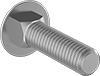
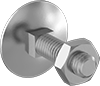
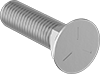
Twice as strong as low-strength steel bolts, these bolts are suitable for fastening most machinery and equipment. Carriage bolts have a smooth, rounded head for a finished look. The square neck keeps these bolts from turning when tightening a nut.
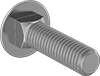
Choose these metric bolts for fastening most machinery and equipment. They are twice as strong as low-strength steel bolts. Carriage bolts have a smooth, rounded head for a finished look. The square neck keeps these bolts from turning when tightening a nut.
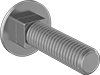
About half the strength of medium-strength bolts, these Grade 2 bolts are for light duty fastening. Carriage bolts have a smooth, rounded head for a finished look. The square neck keeps these bolts from turning when tightening a nut.
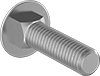
Made from Grade 8 steel, these bolts can be used in high-stress applications, such as valves, pumps, motors, and automotive suspension systems. Carriage bolts have a smooth, rounded head for a finished look. The square neck keeps these bolts from turning when tightening a nut.
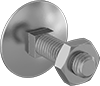
These bolts are suitable for fastening most machinery and equipment. Carriage bolts have a smooth, rounded head for a finished look. The knurled neck grips the inside of the hole to keep these bolts from turning when tightening a nut.
About half the strength of medium-strength bolts, these bolts are for light duty fastening. Carriage bolts have a smooth, rounded head for a finished look. The knurled neck grips the inside of the hole to keep these bolts from turning when tightening a nut.
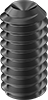
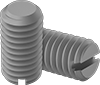
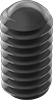
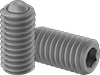
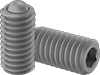
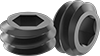
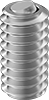
Made from alloy steel, these inch size set screws have a thin edge that digs into hard surfaces for a secure hold.
These alloy steel set screws have a thin edge that digs into hard surfaces for a secure hold. They're available in metric sizes.
Choose these set screws for their adherence to strict military standards for material and construction.
Use these steel set screws for light duty holding.
Alloy steel set screws dig into hard surfaces for a secure hold.
These alloy steel set screws have a thin edge that digs into hard surfaces for a secure hold. A nylon locking element grips threads to resist loosening.
Made from alloy steel, these metric set screws have a thin edge that digs into hard surfaces for a secure hold. They have a nylon locking patch that grips threads to resist loosening.
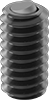
Made from black-oxide alloy steel, these set screws resist corrosion in dry environments. They dig into hard surfaces for a secure hold and have serrations on the cup edge that grip the material surface to resist loosening.
These metric alloy steel set screws dig into hard surfaces for a secure hold. They have serrations on the cup edge that grip the material surface to resist loosening.
Turn these metric screws by hand using the hex head, or tighten them with a wrench for extra torque. With an extended tip that locks into a mating hole or slot—sometimes known as a dog point—they are often used to align and secure parts such as gears and pulley wheels.
These metric screws have a square head, so you can turn them by hand or use a wrench for more torque. Also known as half dog-point set screws, they have a protruding tip that locks within a mating hole or slot to keep parts aligned.
Use the square head to turn these screws by hand, or use a wrench when you need more torque. Also known as half dog-point set screws, they have a protruding tip that locks within a mating hole or slot to keep parts aligned.
These metric set screws have a protruding tip that locks within a mating hole or slot to keep parts aligned. They're also known as dog-point set screws.
Also known as half dog-point set screws, these set screws have a protruding tip that locks within a mating hole or slot to keep parts aligned.
Also known as full dog-point set screws, the tip is twice as long as the tip on other extended-tip set screws for greater engagement in deep mating holes.
A nylon locking patch grips threads to resist loosening.
These metric set screws have a tip that makes good contact on flat surfaces and allows you to make frequent adjustments with minimal surface damage.
The tip makes good contact on flat surfaces and allows you to make frequent adjustments with minimal surface damage.
Strong and durable, these alloy steel set screws hold objects tightly against flat surfaces.
With a tip that's harder than nylon and silver, these alloy steel set screws provide a secure hold on hard surfaces. The body has a black-oxide finish to resist corrosion in dry environments.
These metric set screws have a brass tip, which is harder than nylon and silver, for a secure hold on hard surfaces. The body has a black-oxide finish to resist corrosion in dry environments.
These alloy steel set screws have an extra-soft nylon tip, which minimizes the damage that can occur from metal-on-metal contact. Use them set screws on soft surfaces such as aluminum.
Available in metric sizes, these alloy steel set screws have an extra-soft nylon tip that minimizes the damage that can occur from metal-on-metal contact. Use them on soft surfaces such as aluminum.
Made of alloy steel, these set screws are often used in U-shaped and V-shaped grooves and on other sloped or angled surfaces. The oval tip allows for frequent adjustments with minimal surface damage.
These metric set screws have a rolling ball that swivels 360° to minimize surface damage and allow for slight adjustments without loosening the screw.
A rolling ball swivels 360° to minimize surface damage and allow for slight adjustments without loosening the screw.
Also known as jam set screws, these lock other screws in place, hold pins, and adjust spring tension. A black-oxide finish provides corrosion resistance in dry environments.
A low-profile flat-faced ball tip allows these metric set screw to be used in low-clearance applications.
These set screws have a low-profile flat-faced ball tip for use in low-clearance applications.
The tip is narrow to pass through threaded holes.
A wide tip provides more gripping power than standard swivel-tip set screws. To use, remove the tip, thread the screw through the hole, and attach the tip on the other side.
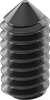
These alloy steel set screws have a pointed tip that wedges into the contact surface for a secure hold on soft materials such as brass.
Made from alloy steel, these metric set screws have a pointed tip that wedges into the contact surface for a secure hold on soft materials such as brass.
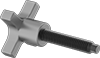
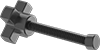
Arms provide a flat surface to push your fingers against.
These metric thumb screws have arms that provide a flat surface to push your fingers against.
These steel thumb screws have a black-oxide finish to resist corrosion in dry environments.
A wide tip provides more gripping power than standard swivel-tip thumb screws. To use, remove the tip, thread the screw through the hole, and attach the tip on the other side.
For maximum contact with angled and uneven surfaces, the tip swivels in all directions. The tip is narrow so it will fit through threaded holes.
A large swivel angle allows these thumb screws to make better contact with angled and uneven surfaces than nonremovable swivel-tip thumb screws.
A soft nylon tip conforms to textured surfaces and minimizes damage when holding items in place.
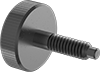
A thin, knurled head allows these thumb screws to be used in low-clearance applications. They have a black-oxide finish to resist corrosion in dry environments.
These metric thumb screws have a thin, knurled head for use in low-clearance applications. They have a black-oxide finish to resist corrosion in dry environments.
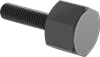
A raised head makes these thumb screws easy to grip. They have a black-oxide finish to resist corrosion in dry environments.
These metric thumb screws have a raised head that makes them easy to grip. A black-oxide finish provides corrosion resistance in dry environments.
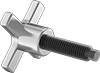
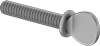
Wings provide more leverage than spade-head thumb screws for greater torque while tightening. A zinc plating provides corrosion resistance in wet environments.
A flange provides a bearing surface to hold parts under the head.
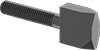
The head fits through a slit in a latch or panel to hold it in place.
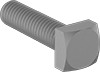
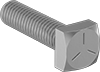
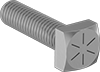
About half the strength of medium-strength screws, these screws are for light duty fastening applications, such as securing access panels. Large flat sides make these screws easy to grip with a wrench and keep them from rotating in square holes.
Made from Grade 5 steel, these screws are suitable for fastening most machinery and equipment. Large flat sides make these screws easy to grip with a wrench and keep them from rotating in square holes.
Made from Grade 8 steel, these screws can be used in high-stress applications, such as valves, pumps, motors, and automotive suspension systems. Large flat sides make these screws easy to grip with a wrench and keep them from rotating in square holes.
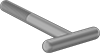
Also known as tank-strap bolts, these T-bolts are commonly used with a band clamp or a strap to hold fuel tanks and other objects in place.
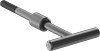
Also known as clamping pins, these bolts have a collar that slides along the shaft and can be welded in place to clamp work in place and prevent over torquing.
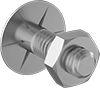
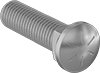
About half the strength of medium-strength bolts, these Grade 2 bolts are for light duty fastening. These bolts are commonly used in tight spaces with moving parts, such as grain elevators and other belting systems, because the smooth, low-profile head provides a flush fit when installed. The square neck keeps these bolts from turning when tightening a nut.
Made from Grade 5 steel, these bolts are suitable for fastening most machinery and equipment. These bolts are commonly used in tight spaces with moving parts, such as grain elevators and other belting systems, because the smooth, low-profile head provides a flush fit when installed. The square neck keeps these bolts from turning when tightening a nut.
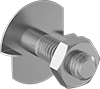
Ribs under the head dig into the surface of soft metal and plastic to keep these bolts from turning when tightening a nut. Commonly used in tight spaces with moving parts, such as grain elevators and other belting systems, elevator bolts have a smooth, low-profile head that provides a flush fit when installed.
Sharp teeth bite into the surface of wood, rubber belting, and other soft materials to keep the bolt from turning when tightening a nut. These bolts are commonly used in tight spaces with moving parts, such as grain elevators and other belting systems, because the smooth, low-profile head provides a flush fit when installed.
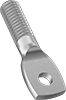
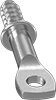
You can use these versatile hangers in a threaded hole (as you would a screw), or secure them with a nut (as you would a bolt).
These hangers have internal threads for use with threaded rods, bolts, and anchors.
Wedge these hangers in concrete and other solid materials.
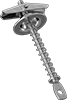
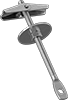
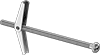
The spring holds the washer and toggle against opposite sides of the wall, so everything's in position before you begin tightening. Once tightened, the spring adds vibration resistance.
These hangers are a popular choice for overhead applications.
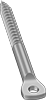
Drive these hangers into wood with an adjustable wrench, pliers, or a special driver bit.
Drill holes with the point on these hangers.
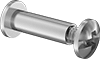
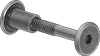
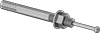
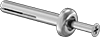
These include a barrel and a screw.
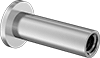
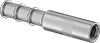
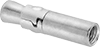
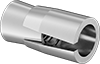
Use these barrels with a screw you already have or pair with a different type of screw to create a custom fastener. They're zinc plated to resist corrosion in wet environments.
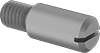
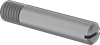
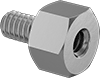
Shorter than shoulder screws for use in thin material.
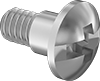
Designed with a shoulder for the strength to handle side and shear loads.
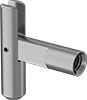
Create strong joints in wood and wood composite.
Install in a cutout to create a secure joint between boards, butcher blocks, and countertops.
Add length to a binding barrel.
An unthreaded barrel allows quick assembly with a press or a hammer.
Sealed with PVC foam under the head to prevent leaks and keep contaminants out.
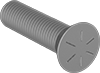
Used on heavy equipment, such as plows, these bolts have a smooth head that's angled underneath to sit flush within countersunk holes. The square neck keeps these bolts from turning when tightening a nut.
The thicker, domed head on these bolts provides greater wear resistance than flat head plow bolts. The underside of the head is angled to sit flush within countersunk holes for use on heavy equipment, such as plows. The square neck keeps these bolts from turning when tightening a nut.
Also known as reverse-key plow screws and bucket-tooth bolts, these bolts have a locking key that keeps them from turning when tightening a nut. Often used on heavy equipment, such as plows, they have a head that's angled underneath to sit flush within countersunk holes.
About half the strength of medium-strength bolts, these bolts are for light duty work-holding.
Made from steel comparable to Grade 5 steel, these bolts are suitable for most work-holding applications.
Press these wing head nuts into the backside of a panel in applications where you have access to both sides of the panel. A quarter-turn locks and releases access panels, doors, and covers.
Press these rounded head nuts into the backside of a panel in applications where you have access to both sides of the panel. A quarter-turn locks and releases access panels, doors, and covers.
Press these wing head nuts into a closed-end hole or thick panel in applications where the back of the panel is inaccessible. A quarter-turn locks and releases access panels, doors, and covers.
Press these rounded head nuts into a closed-end hole or thick panel in applications where the back of the panel is inaccessible. A quarter-turn locks and releases access panels, doors, and covers.
Rivet these wing head nuts into thin panels for a flush fit. They can be mounted without space between panels. A quarter-turn locks and releases access panels, doors, and covers.
These rounded head nuts can be riveted into thin panels for a flush fit. They can be mounted without spaces between the panels. A quarter-turn locks and releases access panels, doors, and covers.
These wing-head screws have a clip-on nut that allows you to mount them near the edge of a thin panel. Use them to lock and release access panels, doors, and covers with a quarter-turn.
These rounded head screws have a nut that clips onto the edge of a thin panel, allowing you to mount the screw near edges. A quarter-turn locks and releases access panels, doors, and covers.
Install in soft material such as aluminum and low-carbon steel at least 0.036" thick with an arbor press or similar pressure tool.
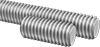
These Grade B7 threaded rods meet the pressure and temperature requirements of ASTM A193 and are often used to secure pressure tanks, valves, and flanges.
These metric Grade B7 fine-threaded rods meet the pressure and temperature requirements of ASTM A193 and are often used to secure pressure tanks, valves, and flanges.
These metric Grade B7 threaded rods meet the pressure and temperature requirements of ASTM A193 and are often used to secure pressure tanks, valves, and flanges.
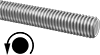
Tighten these threaded rods by turning them to the left; once fastened, they resist loosening from counterclockwise motion.
An economical alternative to Grade B7 and Grade B16 threaded rods, these metric Class 8.8 rods are suitable for fastening most machinery and equipment.
Grade B16 threaded rods maintain their strength at higher temperatures than Grade B7 threaded rods. They meet the pressure and temperature requirements of ASTM A193 and are often used to secure pressure tanks, valves, and flanges.
These Class 10.9 steel threaded rods are about 25% stronger than medium-strength steel rods.
Class 12.9 rods are about 20% stronger than Class 10.9 threaded rods and are for use in heavy machinery.
Comparable to Grade 8 steel, these threaded rods have a tensile strength of 150,000 psi, making them about 25% stronger than medium-strength steel rods.
About half the strength of medium-strength steel threaded rods, use these for light duty hanging, mounting, and fastening.
About half the strength of medium-strength steel threaded rods, use these metric fine-thread rods for light duty hanging, mounting, and fastening.
These metric threaded rods are about half the strength of medium-strength steel threaded rods for light duty hanging, mounting, and fastening.
These metric threaded rods tighten when turned to the left; once fastened, they resist loosening from counterclockwise motion. About half the strength of medium-strength steel threaded rods, use them for light duty hanging, mounting, and fastening.
Tighten these threaded rods by turning them to the left; once fastened, they resist loosening from counterclockwise motion. About half the strength of medium-strength steel threaded rods, use them for light duty hanging, mounting, and fastening.
A hex drive on one end allows these rods to be turned with a hex key for ease of installation.
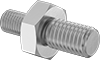
Screw the threaded end of these metric studs into a tapped hole and use the unthreaded end as a pivot point, hinge, shaft, or locator pin.
These steel studs are zinc plated to resist corrosion in wet environments.
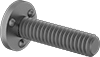
Pass these studs through a hole and weld them in place.
Weld these studs to uncoated steel surfaces.
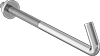
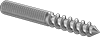
These studs are also known as hanger bolts—use them to hang, mount, and fasten parts to wood structures.
Connect and separate threaded rods, studs, and other components. These hollow rods have internal threads on both ends, so you can make connections and still pass wiring and other objects through the center of the rod.
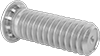
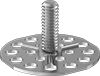
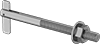
Add a stud to thin material when you only have access to one side.
Also known as dowel screws, use these to join two pieces of wood.
These steel anchors are available with corrosion-resistant finishes.
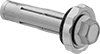
Keep fixtures solidly in place—these anchors have two locking wedges that won't shake loose.
A zinc plating provides corrosion resistance in wet environments.
The removable flat head provides a flush finish in countersunk holes.
An open-end cap nut provides a finished appearance.
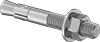
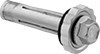
Install like a stud anchor—just thread the anchor, a nut, and a washer onto the end of a threaded rod, drive into a hole, and turn the nut to expand the base. Also known as rod anchors, they're often used with threaded rod to hang pipe and wiring.
Use in applications requiring high strength.
Also known as drive rivets, install by hammering the screw into the body. Unthread the screw to remove.
These anchors are also known as drive rivets. To install, hammer the screw into the body. Unthread the screw to remove.
A tamper-resistant nut prevents unwanted removal of the object you are anchoring.
Turn the bolt to expand the nut for a secure hold in concrete. These anchors are often used to anchor machinery.
Bolts are beveled under the head for a flush finish in countersunk holes.
These stud anchors strengthen the parts of buildings where steel framing connects to concrete. They’re also known as Nelson studs.
These stud-style anchors include a nut and a washer.
For narrow holes and small cavities where toggle anchors won't fit.
A pivoting toggle bar creates a strong hold.
A spring-loaded toggle holds against the back of the material.
Bolts are beveled under the head for use in countersunk holes.
A shallow head makes these bolts good for low-clearance applications.
Use these stud-style anchors with nuts.
A drilled hole is required for installation.
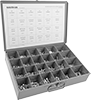
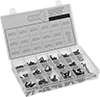
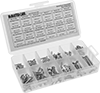
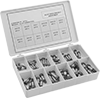
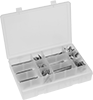
These assortments include hex head screws and hex nuts.
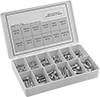
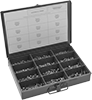
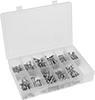
These assortments include pan head screws.
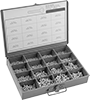
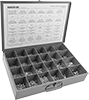
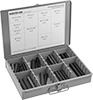
These assortments include button head screws.
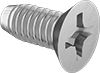
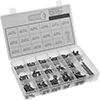
Flat head screws are angled under the head to fit flush within countersunk holes.
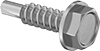
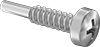
Drilling screws save you time and effort by drilling their own holes and fastening metal up to 0.500" thick in a single operation.
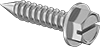
Fasten sheet metal up to 0.200" thick.
Also known as Tapcons, these screws are often used to anchor parts to concrete, block, and brick. Assortments include a drill bit.
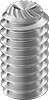
Set screws exert pressure at the tip to hold objects in place.
Shoulder screws have a cylindrical shoulder under the head that allows parts to rotate around or slide along its length. They have a standard shoulder with an undersized tolerance to fit most machinery and equipment.
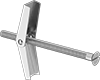
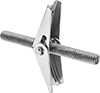
A wing-like toggle holds against the back of the material and spreads the force over a large area to hold 30 lbs. or more.
Use these light duty anchors to hold 20 lbs. or less.
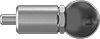
Retract the nose by pulling the knob.
Lock the nose into the retracted position by pulling the knob and rotating it 90°.
Lock the nose into the retracted position by pulling the handle and rotating it 90°.
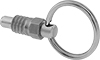
The ring allows you to attach these spring plungers to a lanyard.
Lock the nose into the retracted position by pulling the ring and rotating it 90°.
Use the lanyard as a tether to secure the spring plunger to machinery and prevent accidental drops.
Thread onto machinery or attach a knob or handle to the threaded spindle.
Install by hand or with a hex key in low-clearance applications.
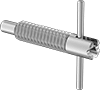
A T-handle makes these spring plungers easy to grip.
A quarter turn of the handle locks these plungers in the retracted position. The T-handle is easy to grip.
A quarter turn of the handle locks these plungers in the retracted position. The smooth ball handle is easy to grip and won't catch on other parts.
A smooth ball handle is easy to grip and won't catch on other parts.
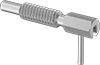
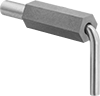
An L-handle takes up less space than a T-handle.
Add a knob or handle to the threaded shank.
Use an arbor press or similar pressure tool to install these spring plungers into a panel.
Lock the nose in the retracted position by pulling the knob and rotating it 90°.
Insert the nose into a panel; then thread on the nut and tighten using an installation wrench.
Install these spring plungers with a screwdriver—they're slotted on one or both ends.
Install with a hex key for more torque than slotted ball-nose spring plungers.
Designed with a flange to keep the plunger from being pushed through a hole when the ball is depressed.
The flangeless design allows these spring plungers to mount flush with a surface.
Install with a hex key for more torque than slotted long-nose spring plungers.
Fasten from the nose end with a wrench for more torque than slotted long-nose spring plungers.
These spring plungers have a nose that is about three-times longer than standard long hex-nose spring plungers.
Install with a driver.
Slotted on both ends for installation with a screwdriver.
A flange keeps the plunger from being pushed through a hole when the ball is depressed.
Change thread sizes or types, such as fine to coarse threads, on parts without changing gender.
Change inch threads to metric with these adapters, or swap metric threads for inch. An external hex lets you tighten or loosen them with a wrench.
In addition to joining male- and female-threaded parts, these adapters can increase or decrease metric thread sizes and change the thread pitch.
Need to join two female-threaded parts, such as coupling nuts, with dissimilar inch thread sizes? Attach them to these adapters and tighten the exterior hex nut for a secure connection.
One side inch, one side metric, and a hex in the middle—these handy fasteners connect two female-threaded parts, such as coupling nuts, adapting from inch threads to metric. Tighten with a standard wrench.
Twist these adapters onto female metric threads to change pitch or switch thread sizes.
Secure computer cables and panels.
18-8 stainless steel has good corrosion resistance.
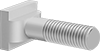
For quicker setups than a separate T-slot nut and stud, slide these bolts into T-slot tracks on machine tool tables.
Secure setup clamps and fixtures to your machine table, or assemble heavy machines, such as engine mounts.
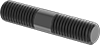
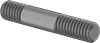
Also known as tap-end and fixture studs, these rods have friction-fit threads on one end to resist loosening and standard threads on the other side for attaching a nut.
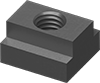
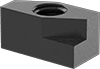
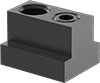
Designed to slide into T-slot tracks on machine tool tables, use these nuts to secure clamps and workpieces.
Install from the top of the T-slot track and secure with a quarter turn. Also known as quarter-turn T-slot nuts.
After sliding the nut into a T-slot, tighten the set screw to keep it in place.
Scrape debris out of machine table T-slots.
Combine fast-threading components to build a clamping assembly.
Replace worn screws or customize your clamps.
Slide 1/4"-20 hex head screws anywhere along the track to create mounting points for clamps and jigs.
Secure removable locating pins. The head of the lock screw fits into the notches on the shoulder of the pin.
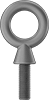
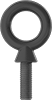
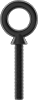
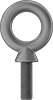
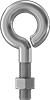
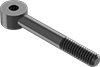
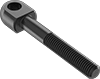
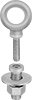
Also known as machinery eyebolts.
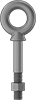
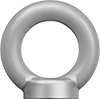
Also known as nut eyebolts, these are designed for through-hole applications.
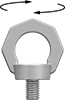
Unlike conventional eyebolts, you can rotate the eye 360° to match the angle of your load.
Route wire and cable through the smooth eye without snagging.
The matte black-oxide finish won't reflect light, allowing the eyebolts to blend into the background.
These eyebolts retain their strength in temperatures as low as -40° F.
Create your own lifting eye by adding an eye nut to a stud or bolt.
Use these eyebolts for routing wire and for other light duty applications.
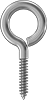
Also known as screw eyes, use the sharp point of these eyebolts to mount directly into wood.
Also known as blank eyebolts, you can weld or thread these to suit your application.
Also known as thimble eyebolts, the large, contoured groove in the eye reduces kinks and minimizes the wear on your wire rope.
Make your old puller work like new by replacing worn forcing screws.
Turn the flat-end bolts and screws that are commonly used for wire guiding and hanging pipes and fixtures.
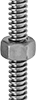
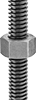
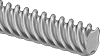
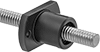
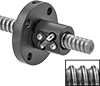
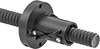
Found in hand-powered clamps, vises, grates, doors, and work tables, lead screws and nuts have broad, square threads that are well suited for quick assembly, high clamping forces, and lifting and lowering heavy objects.
These metric lead screws and nuts have broad, square threads that are well suited for quick assembly, high clamping forces, and lifting and lowering heavy objects. They're commonly found in hand-powered clamps, vises, grates, doors, and work tables.
Thread these one-piece collars onto an Acme lead screw.
Mount these two-piece collars anywhere on an Acme lead screw without removing components.
Install these threaded collars on a metric lead screw to separate and position components, or use them as an end stop to limit travel.
Also known as single-start and self-locking lead screws and nuts, these have a single thread that runs the length of the screw. The nut travels only when the screw turns, so your system won't unexpectedly move when the lead screw is at rest.
Multiple thread channels (also known as thread starts) create faster linear travel than lead screws with a single thread start.
Also known as trapezoidal-thread lead screws and nuts.
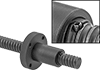
Internal ball bearings provide smooth low-friction travel in applications that require high speeds, accurate positioning, and repeatable movement. Also known as single-start metric ball screws and nuts, these have a single thread that runs the length of the screw.
Also known as single-start ball screws and nuts, these have a single thread that runs the length of the screw. They operate with more torque than fast-travel ball screws and nuts.
Multiple thread channels (also known as thread starts) create faster linear travel than ball screws with a single thread start.
Keep your ball screw spinning without the ball nut damaging your system. When the ball nut reaches the stop pin at either end of the ball screw, it disengages and begins to idle.
A crisscross thread pattern allows you to drive the nut back and forth without changing the lead screw's direction of rotation. When the nut reaches one end of the lead screw, it changes direction and travels back to the other end.
A set of ball bearings reduces friction and secures the end of a metric ball or lead screw.
A set of ball bearings reduces friction and secures the end of a ball or lead screw.
The mounting plate provides a flat surface for supporting loads.
Broad, strong Acme threads make these screw jacks better than ball screw jacks for heavy loads, intermittent positioning applications, and where vibration is present.
Low-friction ball bearings allow these screw jacks to use half the power required by an Acme screw jack to lift the same load. Typically used as actuators, they run at higher speeds than Acme screw jacks.
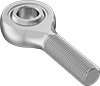
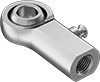
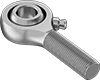
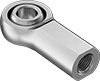
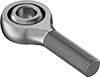
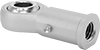
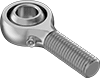
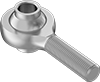
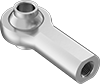
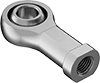
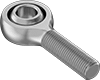
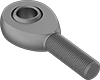
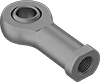
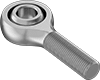
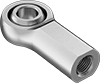
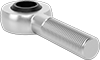
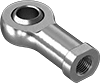
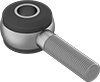
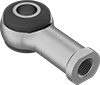
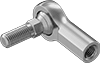
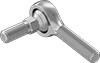
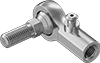
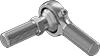
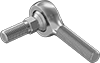
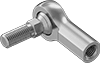
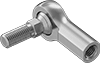
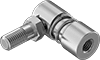
Also known as rod‐end bearings, ball joint rod ends have an eyelet and a ball that swivels to support angular misalignment.
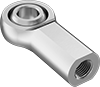
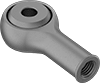
These internally threaded rod ends have an eyelet and a ball that swivels to support angular misalignment. Also known as rod-end bearings.
A carbon fiber-reinforced insert or PTFE liner reduces wear, handles shock loads, and eliminates the need for lubrication.
Connect your grease gun to the fitting to lubricate. Internal threads mate with rod end bolts, threaded rods, and other components with male threads.
Connect your grease gun to the fitting to lubricate.
An oil-embedded bronze insert slowly releases lubricant throughout the life of these internally threaded rod ends.
An oil-embedded bronze insert slowly releases lubricant throughout the life of the rod end.
These internally threaded rod ends have an oil-embedded bronze insert that slowly releases lubricant over time. Connect your grease gun to the fitting to relubricate.
An oil-embedded bronze insert slowly releases lubricant to the rod end. Connect your grease gun to the fitting to relubricate.
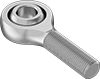
With at least 55° of ball swivel, these externally threaded rod ends accommodate greater misalignment than any other we offer.
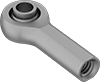
With at least 55° of ball swivel, these rod ends accommodate greater misalignment than any other internally threaded rod end we offer.
Made to extremely tight tolerances, these internally threaded rod ends are for applications that require positioning accuracy, such as accelerators and other types of control linkages.
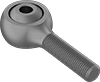
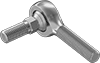
Made to extremely tight tolerances, these externally threaded rod ends are for applications that require positioning accuracy, such as accelerators and other types of control linkages.
Made of cadmium-plated steel, these externally threaded rod ends generally handle higher loads than stainless steel, aluminum, and nylon rod ends.
Made of cadmium-plated steel, these internally threaded rod ends generally handle higher loads than stainless steel, aluminum, and nylon rod ends.
These externally threaded steel rod ends handle loads that are at least 25% higher than other comparably sized rod ends.
These internally threaded steel rod ends handle loads that are at least 25% higher than other comparably sized rod ends.
An innovative body design keeps the ball from being pushed out when supporting thrust loads.
These internally threaded rod ends have an innovative body design that keeps the ball from being pushed out when supporting thrust loads.
Along with internal threads, these rod ends have a double row of precision ball bearings that allows high speeds and smooth operation.
A double row of precision ball bearings allows high speeds and smooth operation.
With a ball joint at the top of the shank, these rod ends pivot in the middle of the body instead of in the eyelet. Use them for linear push applications that require movement along the length of the connecting rod.
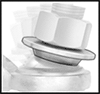
Without changing the ID, these inserts handle some misalignment on rod ends.
Designed for use with right-hand, internally threaded rod ends, these rods have right-hand threads on both ends. Use them for remote valve operators, throttle controllers, shifting mechanisms, and virtually any push/pull assembly.
Designed for use with right-hand, externally threaded rod ends, these rods have right-hand threads on both ends. Use them for remote valve operators, throttle controllers, shifting mechanisms, and virtually any push/pull assembly.
Similar to turnbuckles, these rods have right-hand threads on one end and left-hand threads on the other so you can make a linkage that adjusts for tension. Add right- and left-hand threaded rod ends to build your linkages.
Similar to turnbuckles, these rods have right-hand threads on one end and left-hand threads on the other so you can make a linkage that adjusts for tension.
Good for general purpose applications where corrosion and high strength aren’t a concern, these rod end bolts are made of carbon steel.
These alloy steel rod end bolts have the highest tensile strength of any fully threaded rod end bolt we offer.
Create pivoting connections in applications that require high shear strength—the partially threaded shank of these rod end bolts withstands more side force than a fully threaded shank.
Also known as swing bolts and eyebolts, these internally threaded rod end bolts have no moving parts. They're designed to make pivoting or hinge movements in applications that don't need to compensate for misalignment.
These black-oxide steel rod end bolts are heat treated for added strength.
To reduce noise and vibration, these bolts have a rubber bushing—connect them to rods, pipes, tubes, and cable linkages that have female threading. They’re also known as isolated rod ends.
With a rubber bushing, these bolts reduce noise and vibration—attach them to rods, pipes, tubes, and cable linkages that have male threading. They’re commonly known as isolated rod ends.
These alloy steel bolts have the highest tensile strength of any blank rod end bolt we offer.
These steel rod ends are machined to SAE standards.
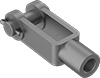
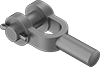
Made of zinc-plated steel or stainless steel, these clevis rod ends offer more corrosion resistance than standard steel clevis rod ends.
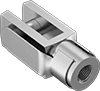
Make quick adjustments to these rod ends by inserting and releasing the clevis pins without the need to bend them into place.
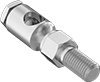
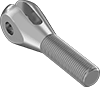
A male-threaded shank lets you build a linkage with a tapped tube or any female-threaded connection.
Thread or weld the unfinished shank of these rod ends to meet your specific linkage needs.
These linkages offer excellent wear resistance. They consist of internally threaded ball joint rod ends with a ball stud attached to simplify mounting.
Able to stand up to frequent use, these linkages offer excellent wear resistance. They consist of ball joint rod ends with a ball stud attached to simplify mounting.
Along with excellent wear resistance, these linkages have a grease fitting for easy lubrication. An internally threaded rod end connects to threaded rods, studs, and other parts with male threads.
Along with excellent wear resistance, these linkages have a grease fitting for easy lubrication.
A slippery PTFE liner reduces wear and eliminates the need for lubrication.
These internally threaded linkages have a slippery PTFE liner that reduces wear and eliminates the need for lubrication.
These internally threaded linkages have an oil-embedded bronze insert that slowly releases lubricant throughout the life of the joint.
An oil-embedded bronze insert slowly releases lubricant throughout the life of the joint.
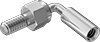
Use these bent linkages for light duty applications.
These ball joint linkages are made of steel.
Use these externally threaded linkages to create inline pivoting connections.
Use these linkages to create inline pivoting connections. They have internal threads on one end and external threads on the other.
Attach these nuts to rods, pipes, and tubes to make pivoting and hinge movements where misalignment is not a concern.
Replace worn or broken caster axles.
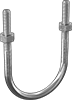
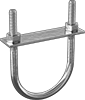
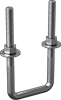
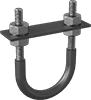
Mount these general purpose U-bolts into an existing bracket, or combine with a mounting plate for a secure hold at the mounting surface.
A mounting plate provides a more secure hold at the mounting surface.
Suspend and route flat-bottomed objects such as strut channel and small duct.
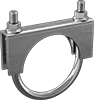
Also known as muffler clamps, these U-bolts have a rounded mounting plate that fully surrounds pipe, conduit, and tubing for a secure fit.
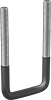
A durable rubber cushion and mounting plate prevent corrosion and wear caused by metal-to-metal contact. The mounting plate is removable, so the U-bolts can be installed onto an existing line without needing to dissemble it.
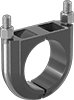
Reduce vibration and noise in your lines—a plastic cushion tightly grips pipe, tubing, and conduit to prevent movement. Nylon-insert locknuts grip the thread to resist loosening.
Reduce vibration and prevent metal-to-metal corrosion on flat-bottomed objects such as strut channel and small duct.
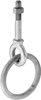
Anchor these ringbolts where you need them, then remove the ring when not in use. Once installed, the mounting bolt stays in place. Insert the ring by threading into the mounting bolt; remove by unthreading it.
Temporarily mount routing rings and other threaded components to steel and iron surfaces.
Also known as bridle rings, routing rings have an open-eye design that allows you to quickly install wire and cable.
Mount these ringbolts into a threaded hole, or use the nut for through-hole mounting. The pivoting ring allows material to move freely.
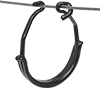
Hang cable and other flexible material beneath wire to prevent it from sagging and swaying. To install, hook the two ends of the ring around the wire—no fasteners required.
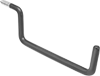
Threads on one end make it easy to screw these hooks directly into a wall.
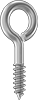
With threads on one end, screw eyes can be easily screwed into wood. They are often used with wire to hang pictures.
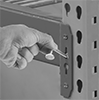
Prevent forklifts from knocking pallet racks apart—these 90° pins lock horizontal beams in place so you can safely load and unload pallets.
Screw and nut sets or nuts secure brackets and other accessories to rails.
To conceal and protect the entire screw head, insert your screw through the hole in the base and snap on the top.
Give open-ended standoffs a finished look and protect them from dirt and debris.
Curved track pieces allow you to create a wide variety of layouts for doors, curtains, and strip doors.
These strikes fit most deadbolt-style locks.
A black-oxide finish provides mild corrosion resistance.
In addition to providing a backing for springs, these screw caps can also be used to control spring tension.
Mount these jacks to equipment to raise and level it.
A swivel caster lets you reposition your load.
Fit these compact jacks under low-height loads.
Wrench-adjustable jacks require less clearance to turn than bar-adjustable jacks.
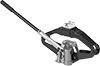
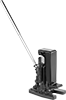
Use these versatile jacks for lifting, spreading, bending, pushing, and straightening.
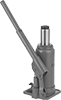
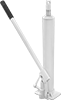
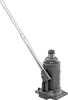
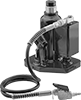
Pump the handle by hand to raise the jack. Turn the release valve to lower the load.
Jacks are equipped with two foot pedals for hands-free use, one to raise the ram and another to lower it.
With fewer moving parts than standard bottle jacks, these are made for frequent use.
These jacks have a short body to fit in low-clearance spaces. The handle pumps from side to side, requiring less vertical space than other bottle jacks.
As versatile as bottle jacks, but with two lifting points—a toe for lifting loads low to the ground, and a saddle for a higher, more stable lifting point.
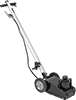
Roll from job to job and under hard-to-reach places.
Weld threaded studs and pins to steel and stainless steel without damaging the opposite side of the material. This process uses heat from resistance to an electrical current.
Replace battery terminal hardware.
Mount enclosures to the floor above hazards such as water.
Customize component placement without drilling leaky holes—these channels screw into the mounting bosses in your enclosure.