We will reply to your message within two hours.
More
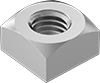
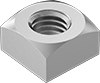
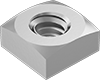
About half the strength of medium-strength steel square nuts, use these nuts in light duty fastening applications, such as securing access panels.
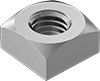
About half the strength of medium-strength steel square nuts, use these metric nuts in light duty fastening applications, such as securing access panels.
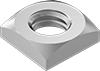
About half the strength and two-thirds the height of medium-strength steel square nuts, use these metric nuts in light duty, low-clearance applications.
These Grade 5 square nuts are suitable for fastening most machinery and equipment.
These square nuts have good chemical resistance and may be mildly magnetic.
Two-thirds the height of typical square nuts and made of stainless steel, these metric nuts are designed for use in low-clearance applications in humid, damp, and washdown environments.
Made from 18-8 stainless steel, these metric square nuts have good chemical resistance and may be mildly magnetic.
More corrosion resistant than 18-8 stainless steel square nuts, these nuts have excellent resistance to chemicals and salt water.
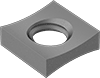
Also known as utility-pole nuts, these square nuts have a cupped shape that ensures a flush fit against curved surfaces and corners that bite into soft materials to resist loosening.
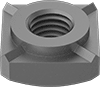
Square weld nuts have more weld points than hex weld nuts for a stronger hold. Use them on flat surfaces.
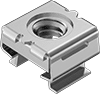
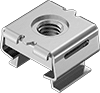
Snap these nuts into square holes in thin materials.
Stainless steel snap-in nuts have excellent corrosion resistance in most environments.
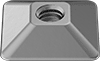
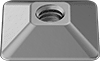
Sloped sides make these nuts difficult to grasp with standard hand tools to reduce the risk of unwanted removal.
Difficult to grasp with standard hand tools, these metric nuts have sloped sides to reduce the risk of unwanted removal.
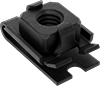
A hex- or square-shaped barrel allows these clip-on nuts to be gripped with a wrench to hold them in place when tightening a screw. They have multiple threads for more thread engagement than low-profile clip-on nuts.
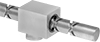
A crisscross thread pattern allows you to drive the nut back and forth without changing the lead screw's direction of rotation. When the nut reaches one end of the lead screw, it changes direction and travels back to the other end.