


Filter by
Voltage

Component
Current per Phase
Overall Length
Maximum Rotation Speed
Maximum Holding Torque
Number of Steps per Revolution


Export Control Classification Number (ECCN)
DFARS Specialty Metals
U.S.–Mexico–Canada Agreement (USMCA) Qualifying
Electrical Connection
Length
Mounting Position
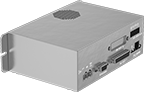
Stepper Motor Controller/Drives
 |
No. of Inputs/Outputs | Overall | ||||||||||||||
|---|---|---|---|---|---|---|---|---|---|---|---|---|---|---|---|
Current per Phase, amp | Voltage | Step Resolution | No. of Step Resolution Settings | Max. Step Freq., MHz | Digital (Input) | Digital (Output) | For Stepper Motor Polarity | Lg. | Wd. | Ht. | Includes | Features | Each | ||
| 0.1 to 6 | 12V DC to 48V DC | 1 to 1/256 | 25,501 | 2 | 8 | 4 | Bipolar | 2.4" | 3.9" | 0.9" | I/O Cable | — | 6627T93 | 0000000 | |
| 0.1 to 10 | 24V DC to 80V DC | 1 to 1/256 | 25,501 | 2 | 8 | 4 | Bipolar | 3" | 5" | 1.75" | — | Encoder Compatible | 6627T916 | 000000 | |
| 0.5 to 6 | 94V AC to 135V AC | 1 to 1/256 | 25,501 | 2 | 7 | 3 | Bipolar | 4.7" | 6.4" | 2.3" | — | — | 6627T917 | 00000000 | |
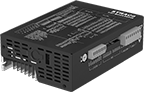
Stepper Motor Drives
 |
Overall | ||||||||||||
|---|---|---|---|---|---|---|---|---|---|---|---|---|
Current per Phase, amp | Voltage | Step Resolution | No. of Step Resolution Settings | Max. Step Freq., MHz | For Stepper Motor Polarity | Wire Connection | Lg. | Wd. | Ht. | Each | ||
| 0.3 to 2.2 | 12V DC to 48V DC | 1, 1/2, 1/10, 1/25, 1/64, 1/100 | 6 | 2 | Bipolar | Screw Terminal | 2.6" | 3.7" | 0.8" | 6627T911 | 0000000 | |
| 2.35 to 8 | 24V DC to 75V DC | 1, 1/2, 1/10, 1/25, 1/64, 1/100 | 6 | 2 | Bipolar | Screw Terminal | 3.3" | 4.7" | 1.3" | 6627T912 | 000000 | |
| 0.4 to 8 | 90V AC to 240V AC | 1, 1/2, 1/4, 1/5, 1/8, 1/10, 1/16, 1/20, 1/25, 1/32, 1/40, 1/50, 1/64, 1/100, 1/125, 1/128 | 16 | 2 | Bipolar | Screw Terminal | 4.7" | 7" | 2.1" | 6627T914 | 000000 | |
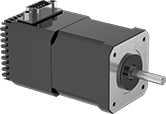
Stepper Motors with Integrated Motion Control
 |
Current per Phase, amp | Overall | Shaft | Temp. Range, ° F | |||||||||||||||||
|---|---|---|---|---|---|---|---|---|---|---|---|---|---|---|---|---|---|---|---|---|
Max. Holding Torque, in·ozf | Max. Rotation Speed, rpm | Min. | Max. | Voltage, V DC | Full Step Increment | Step Resolution | No. of Inputs/Outputs | Lg. | Wd. | Ht. | Dia. | Lg. | Ctr.-to-Base Lg. | Type | Min. | Max. | Each | |||
Motor/Controller/Drives | ||||||||||||||||||||
NEMA 17 Frame Size | ||||||||||||||||||||
| 40.3 | 1,200 | 0.1 | 2 | 12 to 40 | 1.8° | 1, 1/2, 1/4, 1/8, 1/16, 1/32, 1/64, 1/128, 1/256 | 2 Digital-Inputs/Outputs | 2.3" | 1.7" | 1.7" | 5 mm | 22 mm | 0.84" | Solid | 0 | 120 | 6627T25 | 0000000 | ||
| 74.9 | 1,000 | 0.1 | 2 | 12 to 40 | 1.8° | 1, 1/2, 1/4, 1/8, 1/16, 1/32, 1/64, 1/128, 1/256 | 2 Digital-Inputs/Outputs | 2.5" | 1.7" | 1.7" | 5 mm | 22 mm | 0.84" | Solid | 0 | 120 | 6627T26 | 000000 | ||
| 85.4 | 820 | 0.1 | 2 | 12 to 40 | 1.8° | 1, 1/2, 1/4, 1/8, 1/16, 1/32, 1/64, 1/128, 1/256 | 2 Digital-Inputs/Outputs | 2.8" | 1.7" | 1.7" | 5 mm | 22 mm | 0.84" | Solid | 0 | 120 | 6627T24 | 000000 | ||
NEMA 23 Frame Size | ||||||||||||||||||||
| 76 | 1,500 | 0.21 | 2.1 | 12 to 24 | 1.8° | 1, 1/2, 1/4, 1/8 | 2 Digital-Inputs, 1 Digital-Output | 3.7" | 2.3" | 2.3" | 1/4" | 13/16" | 1.17" | D-Profile | 0 | 120 | 6627T122 | 000000 | ||
| 175 | 1,500 | 0.21 | 2.1 | 12 to 24 | 1.8° | 1, 1/2, 1/4, 1/8 | 2 Digital-Inputs, 1 Digital-Output | 4.3" | 2.3" | 2.3" | 1/4" | 13/16" | 1.17" | D-Profile | 0 | 120 | 6627T123 | 000000 | ||
| 262 | 1,500 | 0.21 | 2.1 | 12 to 24 | 1.8° | 1, 1/2, 1/4, 1/8 | 2 Digital-Inputs, 1 Digital-Output | 5.1" | 2.3" | 2.3" | 1/4" | 13/16" | 1.17" | D-Profile | 0 | 120 | 6627T124 | 000000 | ||
| 425 | 1,500 | 0.21 | 2.1 | 12 to 24 | 1.8° | 1, 1/2, 1/4, 1/8 | 2 Digital-Inputs, 1 Digital-Output | 6.6" | 2.3" | 2.3" | 1/4" | 13/16" | 1.17" | D-Profile | 0 | 120 | 6627T125 | 000000 | ||
NEMA 34 Frame Size | ||||||||||||||||||||
| 637 | 1,500 | 0.43 | 4.3 | 20 to 80 | 1.8° | 1/10 | 2 Digital-Inputs, 1 Digital-Output | 6.6" | 3.5" | 3.5" | 1/2" | 1 1/4" | 1.76" | Keyed | 0 | 120 | 6627T126 | 000000 | ||
| 1,200 | 3,000 | 0.49 | 4.9 | 20 to 80 | 1.8° | 1/10 | 2 Digital-Inputs, 1 Digital-Output | 8.2" | 3.5" | 3.5" | 1/2" | 1 1/4" | 1.76" | Keyed | 0 | 120 | 6627T127 | 000000 | ||
| 1,700 | 1,800 | 0.5 | 5 | 20 to 80 | 1.8° | 1/10 | 2 Digital-Inputs, 1 Digital-Output | 9.6" | 3.5" | 3.5" | 5/8" | 1 1/4" | 1.76" | Keyed | 0 | 120 | 6627T128 | 000000 | ||
Motor/Controller/Drive/Encoders | ||||||||||||||||||||
NEMA 17 Frame Size | ||||||||||||||||||||
| 31 | 3,000 | 0.1 | 2.2 | 12 to 48 | 1.8° | 1 to 1/256 | 1 Analog-Input, 3 Digital-Inputs, 1 Digital-Output | 3.7" | 1.7" | 3" | 5 mm | 22 mm | 0.84" | D-Profile | 35 | 100 | 6627T104 | 000000 | ||
| 54 | 3,000 | 0.1 | 2.2 | 12 to 48 | 1.8° | 1 to 1/256 | 1 Analog-Input, 3 Digital-Inputs, 1 Digital-Output | 3.9" | 1.7" | 3" | 5 mm | 22 mm | 0.84" | D-Profile | 35 | 100 | 6627T105 | 000000 | ||
| 68 | 3,000 | 0.1 | 2.2 | 12 to 48 | 1.8° | 1 to 1/256 | 1 Analog-Input, 3 Digital-Inputs, 1 Digital-Output | 4.2" | 1.7" | 3" | 5 mm | 22 mm | 0.84" | D-Profile | 35 | 100 | 6627T106 | 000000 | ||
NEMA 23 Frame Size | ||||||||||||||||||||
| 100.5 | 2,475 | 0.3 | 3 | 12 to 40 | 1.8° | 1, 1/2, 1/4, 1/8, 1/16, 1/32, 1/64, 1/128, 1/256 | 4 Digital-Inputs/Outputs | 3.8" | 2.3" | 2.3" | 1/4" | 3/4" | 1.13" | D-Profile | 0 | 120 | 6627T101 | 000000 | ||
| 182.5 | 2,000 | 0.3 | 3 | 12 to 40 | 1.8° | 1, 1/2, 1/4, 1/8, 1/16, 1/32, 1/64, 1/128, 1/256 | 4 Digital-Inputs/Outputs | 4.3" | 2.3" | 2.3" | 1/4" | 3/4" | 1.13" | D-Profile | 0 | 120 | 6627T102 | 000000 | ||
| 294.5 | 820 | 0.3 | 3 | 12 to 40 | 1.8° | 1, 1/2, 1/4, 1/8, 1/16, 1/32, 1/64, 1/128, 1/256 | 4 Digital-Inputs/Outputs | 5.1" | 2.3" | 2.3" | 1/4" | 3/4" | 1.13" | D-Profile | 0 | 120 | 6627T103 | 000000 | ||
NEMA 24 Frame Size | ||||||||||||||||||||
| 340 | 2,400 | 3 | 5 | 12 to 70 | 1.8° | 1 to 1/256 | 1 Analog-Input, 4 Digital-Inputs/Outputs | 4.9" | 2.4" | 3.8" | 8 mm | 21 mm | 1.18" | D-Profile | 35 | 100 | 6627T107 | 00000000 | ||
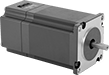
Stepper Motors
Motor/Drives
 |
 |
 |
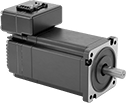
Reduce the size and complexity of your stepper motor setup—these motors have a drive built in, so you don’t need to run cable to a standalone drive. The drive delivers power to the motor based on signals from a PLC, pulse generator, or other controller. These motors are good for precise, repetitive movements, such as those made by the head of a 3D printer. Similar to the hands of a clock, their shaft turns in small, equal increments for smooth motion. When the shaft stops, it holds its position even when a counteracting force is applied to the load. You can control the position of the load without having to configure encoders or sensors. All are bipolar hybrid stepper motors, so the current can flow in both directions. This helps them deliver higher torque, precision, and efficiency than unipolar stepper motors.
For the Manufacturer User Manual, click on a part number and select Product Detail.
Maximum Holding Torque—Holding torque is the force needed to move the shaft out of position when it is stationary. When the shaft is in motion, torque generally decreases as speed increases. Use a torque-speed curve to confirm which motor will work for your application. Click on a part number and select “Product Detail” to view the curve for a motor.
Full Step Increment—Full step increment is the rotation of the shaft from one position to the next. A smaller full step increment means the rotor has more teeth, producing smoother and more precise motion. 1.8° is considered standard.
Step Resolution—You can adjust the step resolution down to 1/256 of a full step, which translates to 51,200 microsteps per revolution. Increasing the number of steps directs an even more precise position and reduces the step-step-step motion to mimic a smooth, continuous rotation. The higher the number of step resolution settings, the greater the flexibility you have for determining the size of the motor’s step.
Current per Phase, amp | Overall | Shaft | Temp. Range, ° F | ||||||||||||||||||
|---|---|---|---|---|---|---|---|---|---|---|---|---|---|---|---|---|---|---|---|---|---|
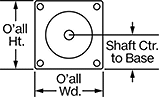
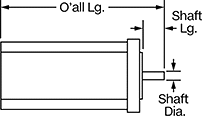
Max. Holding Torque, in·ozf | Max. Rotation Speed, rpm | Min. | Max. | Voltage, V DC | Full Step Increment | Step Resolution | Stepper Motor Polarity | No. of Wire Leads | Lg. | Wd. | Ht. | Dia. | Lg. | Ctr.-to-Base Lg. | Type | Min. | Max. | Each | |||
Square Body | |||||||||||||||||||||
NEMA 17 Frame Size | |||||||||||||||||||||
| 31 | 660 | 0.07 | 0.71 | 12 to 24 | 1.8° | 1, 1/2, 1/4, 1/8 | Bipolar | 7 | 3.2" | 1.7" | 1.7" | 5 mm | 21.8 mm | 0.85" | D-Profile | 0 | 120 | 6627T108 | 0000000 | ||
| 50 | 720 | 0.08 | 0.85 | 12 to 24 | 1.8° | 1, 1/2, 1/4, 1/8 | Bipolar | 7 | 3.4" | 1.7" | 1.7" | 5 mm | 21.8 mm | 0.85" | D-Profile | 0 | 120 | 6627T109 | 000000 | ||
| 62 | 720 | 0.08 | 0.85 | 12 to 24 | 1.8° | 1, 1/2, 1/4, 1/8 | Bipolar | 7 | 3.7" | 1.7" | 1.7" | 5 mm | 21.8 mm | 0.85" | D-Profile | 0 | 120 | 6627T112 | 000000 | ||
NEMA 23 Frame Size | |||||||||||||||||||||
| 76 | 1,500 | 0.21 | 2.1 | 12 to 24 | 1.8° | 1, 1/2, 1/8, 1/64, 1/256 | Bipolar | 7 | 3.8" | 2.2" | 2.2" | 1/4" | 3/4" | 1.11" | D-Profile | 0 | 120 | 6627T113 | 000000 | ||
| 175 | 1,500 | 0.21 | 2.1 | 12 to 24 | 1.8° | 1, 1/2, 1/8, 1/64, 1/256 | Bipolar | 7 | 4.2" | 2.2" | 2.2" | 1/4" | 3/4" | 1.11" | D-Profile | 0 | 120 | 6627T114 | 000000 | ||
| 262 | 1,500 | 0.21 | 2.1 | 12 to 24 | 1.8° | 1, 1/2, 1/8, 1/64, 1/256 | Bipolar | 7 | 5.1" | 2.2" | 2.2" | 1/4" | 3/4" | 1.11" | D-Profile | 0 | 120 | 6627T115 | 000000 | ||
| 425 | 1,500 | 0.21 | 2.1 | 12 to 24 | 1.8° | 1, 1/2, 1/8, 1/64, 1/256 | Bipolar | 7 | 6.6" | 2.2" | 2.2" | 1/4" | 3/4" | 1.11" | D-Profile | 0 | 120 | 6627T116 | 000000 | ||
NEMA 34 Frame Size | |||||||||||||||||||||
| 637 | 1,500 | 0.43 | 4.3 | 20 to 80 | 1.8° | 1 | Bipolar | — | 6.6" | 3.5" | 3.5" | 1/2" | 1 3/16" | 1.76" | Keyed | 0 | 120 | 6627T117 | 000000 | ||
| 1,200 | 3,000 | 0.49 | 4.9 | 20 to 80 | 1.8° | 1 | Bipolar | — | 8.1" | 3.5" | 3.5" | 1/2" | 1 3/16" | 1.76" | Keyed | 0 | 120 | 6627T118 | 000000 | ||
| 1,700 | 1,800 | 0.5 | 5 | 20 to 80 | 1.8° | 1 | Bipolar | — | 9.6" | 3.5" | 3.5" | 5/8" | 1 3/16" | 1.76" | Keyed | 0 | 120 | 6627T119 | 000000 | ||
Stepper Servomotors with Integrated Drive
 |
Overall | Shaft | No. of Inputs/Outputs | ||||||||||||||||||
|---|---|---|---|---|---|---|---|---|---|---|---|---|---|---|---|---|---|---|---|---|
Max. Holding Torque, in·ozf | Max. Rotation Speed, rpm | Voltage, V DC | Current, amp | Step Resolution | Full Step Increment | Lg. | Wd. | Ht. | Dia. | Lg. | Ctr.-to-Base Lg. | Control Communication Protocol | Digital Inputs | Analog Inputs | Digital Outputs | Enclosure Rating | Each | |||
NEMA 11 Frame Size | ||||||||||||||||||||
| 9.2 | 3,000 | 15 to 30 | 0.9 | 1 to 1/256 | 1.8° | 2.7" | 1.1" | 1.5" | 5 mm | 13 mm | 0.57" | Modbus RTU | 4 | — | 2 | IP20 | 5361N11 | 0000000 | ||
| 11.3 | 3,000 | 15 to 30 | 1 | 1 to 1/256 | 1.8° | 3" | 1.1" | 1.5" | 5 mm | 13 mm | 0.57" | Modbus RTU | 4 | — | 2 | IP20 | 5361N12 | 000000 | ||
| 17.7 | 3,000 | 15 to 30 | 1 | 1 to 1/256 | 1.8° | 3.5" | 1.1" | 1.5" | 5 mm | 13 mm | 0.57" | Modbus RTU | 4 | — | 2 | IP20 | 5361N13 | 000000 | ||
NEMA 17 Frame Size | ||||||||||||||||||||
| 40 | 3,000 | 12 to 48 | 1.3 | 1 to 1/256 | 1.8° | 3.5" | 1.7" | 3" | 6 mm | 18 mm | 0.83" | Modbus RTU | 8 | 1 | 4 | IP20 | 5361N14 | 000000 | ||
| 59 | 3,000 | 12 to 48 | 1.4 | 1 to 1/256 | 1.8° | 3.7" | 1.7" | 3" | 6 mm | 18 mm | 0.83" | Modbus RTU | 8 | 1 | 4 | IP20 | 5361N15 | 000000 | ||
| 73 | 3,000 | 12 to 48 | 1.3 | 1 to 1/256 | 1.8° | 4.1" | 1.7" | 3" | 6 mm | 18 mm | 0.83" | Modbus RTU | 8 | 1 | 4 | IP20 | 5361N16 | 000000 | ||
NEMA 23 Frame Size | ||||||||||||||||||||
| 142 | 3,000 | 12 to 70 | 3 | 1 to 1/256 | 1.8° | 4.4" | 2.3" | 3.2" | 1/4" | 3/4" | 1.1" | Modbus TCP/IP | 3 | 1 | 1 | IP20 | 5361N17 | 000000 | ||
| 212 | 3,000 | 12 to 70 | 3 | 1 to 1/256 | 1.8° | 5.3" | 2.3" | 3.2" | 1/4" | 3/4" | 1.1" | Modbus TCP/IP | 3 | 1 | 1 | IP20 | 5361N18 | 000000 | ||
| 212 | 3,000 | 12 to 70 | 3 | 1 to 1/256 | 1.8° | 5.6" | 2.3" | 3" | 8 mm | 22.4 mm | 1.1" | Modbus RTU | 8 | 1 | 4 | IP20 | 5361N22 | 000000 | ||
| 340 | 3,000 | 12 to 70 | 4 | 1 to 1/256 | 1.8° | 5.6" | 2.3" | 3.2" | 8 mm | 18 mm | 1.1" | Modbus TCP/IP | 3 | 1 | 1 | IP20 | 5361N19 | 000000 | ||
| 340 | 3,000 | 12 to 70 | 4.3 | 1 to 1/256 | 1.8° | 5.7" | 2.3" | 3" | 8 mm | 22.4 mm | 1.1" | Modbus RTU | 8 | 1 | 4 | IP20 | 5361N23 | 000000 | ||
NEMA 34 Frame Size | ||||||||||||||||||||
| 382 | 3,000 | 24 to 70 | 5.1 | 1 to 1/256 | 1.8° | 5.9" | 3.4" | 5" | 14 mm | 35 mm | 1.7" | Modbus RTU | 8 | 1 | 4 | IP20 | 5361N24 | 000000 | ||
| 736 | 3,000 | 24 to 70 | 5.1 | 1 to 1/256 | 1.8° | 7" | 3.4" | 5" | 14 mm | 35 mm | 1.7" | Modbus RTU | 8 | 1 | 4 | IP20 | 5361N25 | 00000000 | ||
| 949 | 3,000 | 24 to 70 | 5.1 | 1 to 1/256 | 1.8° | 8.2" | 3.4" | 5" | 14 mm | 35 mm | 1.7" | Modbus RTU | 8 | 1 | 4 | IP20 | 5361N26 | 00000000 | ||
| 1,161 | 3,000 | 48 to 70 | 5.2 | 1 to 1/256 | 1.8° | 9.4" | 3.4" | 5" | 14 mm | 35 mm | 1.7" | Modbus RTU | 8 | 1 | 4 | IP20 | 5361N27 | 00000000 | ||
Rotary Electric Actuators with Automated Controls
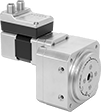 |
With a stepper motor and driver built in, these actuators come ready to use for clamping, sorting, and ejecting tasks. Their stepper motor is a bipolar hybrid, so it's precise enough to position your actuator in the right spot and efficient enough that you won't lose torque. They have integrated controls for quick and easy setup, or you can program start and end positions and track usage remotely using digital IO. Compared to air-powered systems, these actuators have fewer parts to repair and replace.
For the Manufacturer User Manual, click on a part number and select Product Detail.
0° to 90° Shaft Rotation—Actuators with a shaft rotation of 0° to 90° accelerate up to their prescribed speed at a faster rate than actuators with a shaft rotation of 0° to 180°.
Overall | ||||||||||||
|---|---|---|---|---|---|---|---|---|---|---|---|---|
Max. Torque, in·lbf | Voltage, V DC | Full Load Current, amp | Static Load Cap., lb. | Max. Rotation Speed, rpm | Repeatability | Lg. | Wd. | Ht. | Each | |||
0° to 90° Shaft Rotation | ||||||||||||
| 23.8 | 24 | 3 | 700 | 150 | -0.05° to 0.05° | 5 1/2" | 3 1/4" | 5" | 6328N11 | 000000000 | ||
| 49.5 | 24 | 5.3 | 800 | 100 | -0.1° to 0.1° | 5 1/2" | 4 1/16" | 5 7/8" | 6328N13 | 00000000 | ||
0° to 180° Shaft Rotation | ||||||||||||
| 23.8 | 24 | 3 | 700 | 150 | -0.05° to 0.05° | 5 1/2" | 3 1/4" | 5" | 6328N12 | 00000000 | ||
| 49.5 | 24 | 5.3 | 800 | 100 | -0.1° to 0.1° | 5 1/2" | 4 1/16" | 5 7/8" | 6328N14 | 00000000 | ||
DC Servomotors with Integrated Drive
 |
A built-in drive simplifies your servomotor setup, removing the need for cable between the motor and drive. DC servomotors are often used for small automation applications, such as pick-and-place machines, because they deliver lots of power in a small package. This system includes a motor, encoder, and drive for accurate positioning and fine control over speed and position.
These servomotors use the same step and direction commands as a stepper motor, so you can upgrade your current stepper motor system with this system. Use a computer to set up and calibrate the motor to your system. After initial setup, use a separate controller, such as a programmable logic controller (PLC), microcontroller, or indexer. The encoder relays distance, direction, and speed back to the servomotor. Based on this feedback, the servomotor dynamically adapts its movements to increase system efficiency.
Maximum Torque—Torque generally decreases as speed increases. Use a torque-speed curve to confirm which motor will work for your application. Click on a part number and select "Product Detail" to view the curve for a motor.
Servomotors | Servomotor Input/Output Cords | Servomotor Power Cords | ||||||||||||||||||
|---|---|---|---|---|---|---|---|---|---|---|---|---|---|---|---|---|---|---|---|---|
Overall | Shaft | |||||||||||||||||||
Max. Torque, in·lbf | Continuous Torque, in·lbf | Max. Rotation Speed, rpm | Wattage, W | Voltage, V DC | Lg. | Wd. | Ht. | Dia. | Lg. | No. of Counts per Rev. | Driver Control Mode | Enclosure Rating | Each | Each | Each | |||||
NEMA 23 Frame Size | ||||||||||||||||||||
| 18.1 | 3.6 | 4,000 | 120 | 75 | 4.1" | 2.3" | 3.2" | 1/4" | 3/4" | 6,400 | Step and Direction | IP53 | 5151N111 | 0000000 | 5151N102 | 000000 | 5151N103 | 000000 | ||
| 30.8 | 6.1 | 3,170 | 173 | 75 | 4.9" | 2.3" | 3.2" | 1/4" | 3/4" | 6,400 | Step and Direction | IP53 | 5151N121 | 000000 | 5151N102 | 00000 | 5151N103 | 00000 | ||
| 38.8 | 7.8 | 2,520 | 193 | 75 | 5.6" | 2.3" | 3.2" | 3/8" | 3/4" | 6,400 | Step and Direction | IP53 | 5151N131 | 000000 | 5151N102 | 00000 | 5151N103 | 00000 | ||
| 51.8 | 10.4 | 1,860 | 213 | 75 | 6.4" | 2.3" | 3.2" | 3/8" | 3/4" | 6,400 | Step and Direction | IP53 | 5151N141 | 000000 | 5151N102 | 00000 | 5151N103 | 00000 | ||
NEMA 34 Frame Size | ||||||||||||||||||||
| 39.9 | 9.4 | 2,320 | 220 | 75 | 4.4" | 3.4" | 4.3" | 1/2" | 1 3/16" | 6,400 | Step and Direction | IP53 | 5151N151 | 000000 | 5151N102 | 00000 | 5151N103 | 00000 | ||
| 68.4 | 18.1 | 1,410 | 227 | 75 | 5.1" | 3.4" | 4.3" | 1/2" | 1 3/16" | 6,400 | Step and Direction | IP53 | 5151N161 | 000000 | 5151N102 | 00000 | 5151N103 | 00000 | ||
| 87.3 | 24.5 | 1,130 | 267 | 75 | 5.9" | 3.4" | 4.3" | 1/2" | 1 3/16" | 6,400 | Step and Direction | IP53 | 5151N171 | 000000 | 5151N102 | 00000 | 5151N103 | 00000 | ||
| 115.3 | 30 | 840 | 280 | 75 | 6.6" | 3.4" | 4.3" | 1/2" | 1 3/16" | 6,400 | Step and Direction | IP53 | 5151N181 | 000000 | 5151N102 | 00000 | 5151N103 | 00000 | ||
 |
Overall | ||||||||
|---|---|---|---|---|---|---|---|---|
For Motor Voltage, V DC | Operating Voltage, V AC | Lg. | Wd. | Ht. | Cord Lg., ft. | Each | ||
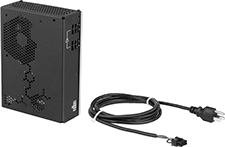
| 75 | 120 | 5.2" | 2.3" | 7.2" | 6 | 5151N21 | 0000000 | |
Stepper Servomotors
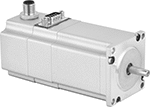 |
Combine the high torque at low speeds that traditional stepper motors are known for with the greater torque performance and positioning reliability of a servomotor. They create rotary motion based on signals from a drive (sold separately). As these servomotors move, their encoder relays the shaft’s distance, direction, and speed back to the drive. The drive increases your system’s efficiency by taking the electrical signal from the encoder and dynamically adapting the motor’s movements, also accounting for inconsistent loads and unexpected forces.
Maximum Holding Torque—Holding torque is the force needed to move the shaft out of position when it is stationary. Torque generally decreases as speed increases. Use a torque-speed curve to confirm which motor will work for your application. Click on a part number and select "Product Detail" to view the curve for a motor.
Servomotors | Servomotor Encoder Cords | Servomotor Power Cords | ||||||||||||||||
|---|---|---|---|---|---|---|---|---|---|---|---|---|---|---|---|---|---|---|
Overall | Shaft | |||||||||||||||||
Max. Holding Torque, in·ozf | Max. Rotation Speed, rpm | Voltage, V DC | Full Step Increment | Lg. | Wd. | Ht. | Dia. | Lg. | Ctr.-to-Base Lg. | Enclosure Rating | Each | Each | Each | |||||
NEMA 17 Frame Size | ||||||||||||||||||
| 70.8 | 1,740 | 48 | 1.8° | 4.6" | 1.7" | 2.2" | 5 mm | 22 mm | 0.83" | IP54 | 5203N11 | 0000000 | 5203N103 | 0000000 | 5203N101 | 0000000 | ||
NEMA 23 Frame Size | ||||||||||||||||||
| 113.3 | 2,720 | 48 | 1.8° | 4.8" | 2.3" | 2.7" | 1/4" | 3/4" | 1.11" | IP54 | 5203N12 | 000000 | 5203N103 | 000000 | 5203N101 | 000000 | ||
| 198.3 | 1,940 | 48 | 1.8° | 5.7" | 2.3" | 2.7" | 1/4" | 3/4" | 1.11" | IP54 | 5203N13 | 000000 | 5203N103 | 000000 | 5203N101 | 000000 | ||
NEMA 34 Frame Size | ||||||||||||||||||
| 354 | 2,130 | 48 | 1.8° | 5.5" | 3.4" | 3.9" | 11 mm | 25 mm | 1.69" | IP54 | 5203N14 | 000000 | 5203N103 | 000000 | 5203N102 | 000000 | ||
| 835.5 | 550 | 48 | 1.8° | 6.8" | 3.4" | 3.9" | 11 mm | 25 mm | 1.69" | IP54 | 5203N15 | 00000000 | 5203N103 | 000000 | 5203N102 | 000000 | ||
| 1,317 | 430 | 48 | 1.8° | 8" | 3.4" | 3.9" | 11 mm | 25 mm | 1.69" | IP54 | 5203N16 | 00000000 | 5203N103 | 000000 | 5203N102 | 000000 | ||
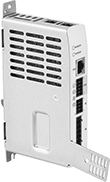 |
Drives have several control modes that power the motor—sequencing, position, speed, or torque. You can program target positions with speeds and accelerations in the drive to trigger sequences with minimal input from a controller. You can also use a computer, programmable logic controller (PLC), microcontroller, or indexer to set motion parameters, tune the motor to your mechanical system, and stream multiple commands to the driver to carry out complex motion sequences.
Overall | No. of Inputs/Outputs | |||||||||||
|---|---|---|---|---|---|---|---|---|---|---|---|---|
Max. Current per Phase, amp | Control Communication Protocol | Operating Voltage, V DC | Lg. | Wd. | Ht. | Inputs | Outputs | Enclosure Rating | Each | |||
For 48V DC Motor Voltage | ||||||||||||
| 20 | EtherCAT, Modbus TCP/IP, EtherNet/IP, PROFINET | 24 to 48 | 5.2" | 1.1" | 6.7" | 2 | 2 | IP20 | 5203N201 | 0000000 | ||
