


Filter by
Product Family
System of Measurement
Thread Size

Shaft Diameter


Thread Type

Thread Spacing

Thread Direction


Mount Type

Nose Material


Plunger Locking Type
Export Control Classification Number (ECCN)
DFARS Specialty Metals
Single-End Studs
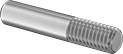 |
Screw the threaded end of these studs into a tapped hole, and use the unthreaded end as a pivot point, hinge, shaft, or locator pin.
18-8 Stainless Steel—Made from 18-8 stainless steel, these studs are chemical resistant and may be mildly magnetic.
Shaft | ||||||||||
|---|---|---|---|---|---|---|---|---|---|---|
Lg. | Thread Lg. | Lg. | Dia. | Dia. Tolerance | Tensile Strength, psi | Hardness | Each | |||
18-8 Stainless Steel | ||||||||||
3/4"-10 | ||||||||||
| 2" | 3/4" | 1 1/4" | 3/4" | -0.03" to 0.03" | 70,000 | Not Rated | 97042A824 | 000000 | ||
| 2 1/2" | 3/4" | 1 3/4" | 3/4" | -0.03" to 0.03" | 70,000 | Not Rated | 97042A127 | 00000 | ||
| 3" | 3/4" | 2 1/4" | 3/4" | -0.03" to 0.03" | 70,000 | Not Rated | 97042A840 | 00000 | ||
| 3 1/2" | 1" | 2 1/2" | 3/4" | -0.03" to 0.03" | 70,000 | Not Rated | 97042A128 | 00000 | ||
| 4" | 1" | 3" | 3/4" | -0.03" to 0.03" | 70,000 | Not Rated | 97042A852 | 00000 | ||
| 4 1/2" | 1 1/2" | 3" | 3/4" | -0.03" to 0.03" | 70,000 | Not Rated | 97042A129 | 00000 | ||
| 5" | 1 1/2" | 3 1/2" | 3/4" | -0.03" to 0.03" | 70,000 | Not Rated | 97042A131 | 00000 | ||
| 5 1/2" | 1 1/2" | 4" | 3/4" | -0.03" to 0.03" | 70,000 | Not Rated | 97042A132 | 00000 | ||
| 6" | 1 1/2" | 4 1/2" | 3/4" | -0.03" to 0.03" | 70,000 | Not Rated | 97042A868 | 00000 | ||
Knob-Grip Retractable Spring Plungers
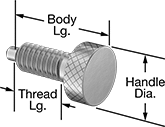 |
Nose | Nose Force, lbf | Body | Handle | Nonlocking | Twist-to-Lock | ||||||||||
|---|---|---|---|---|---|---|---|---|---|---|---|---|---|---|---|
Thread Size | Thread Lg. | Extended Lg. | Dia. | Extended | Compressed | Material | Lg. | Material | Dia. | Each | Each | ||||
Steel Nose | |||||||||||||||
| 3/4"-10 | 1.13" | 0.45" | 0.375" | 1.5 | 16 | Black-Oxide Steel | 2.15" | Steel | 1 1/2" | ——— | 0 | 8497A77 | 000000 | ||
| 3/4"-10 | 1.13" | 0.45" | 0.375" | 1.5 | 16 | Zinc-Plated Steel | 2.15" | Steel | 1 1/2" | ——— | 0 | 84915A779 | 00000 | ||
| 3/4"-10 | 1.2" | 0.45" | 0.375" | 1.5 | 16 | Zinc-Plated Steel | 2" | Steel | 1 1/2" | 84915A82 | 000000 | ——— | 0 | ||
18-8 Stainless Steel Nose | |||||||||||||||
| 3/4"-10 | 1.13" | 0.45" | 0.375" | 1.5 | 16 | 18-8 Stainless Steel | 2.15" | 18-8 Stainless Steel | 1 1/2" | ——— | 0 | 84935A51 | 00000 | ||
316 Stainless Steel Nose | |||||||||||||||
| 3/4"-10 | 1.13" | 0.45" | 0.375" | 1.5 | 16 | 316 Stainless Steel | 2.15" | 316 Stainless Steel | 1 1/2" | ——— | 0 | 8692A27 | 00000 | ||
| 3/4"-10 | 1.2" | 0.45" | 0.375" | 1.5 | 16 | 316 Stainless Steel | 2.01" | 316 Stainless Steel | 1 1/2" | 8692A17 | 00000 | ——— | 0 | ||
Brass Nose | |||||||||||||||
| 3/4"-10 | 1" | 0.45" | 0.375" | 1.5 | 16 | Brass | 2.01" | Brass | 1 1/2" | 8471A62 | 00000 | ——— | 0 | ||
| 3/4"-10 | 1.13" | 0.45" | 0.375" | 1.5 | 16 | Brass | 2.15" | Brass | 1 1/2" | ——— | 0 | 8471A23 | 00000 | ||
| 3/4"-10 | 1.2" | 0.45" | 0.375" | 1.5 | 16 | Brass | 2.01" | Brass | 1 1/2" | 8471A29 | 00000 | ——— | 0 | ||
Acetal Nose | |||||||||||||||
| 3/4"-10 | 1.13" | 0.45" | 0.375" | 1.5 | 16 | 18-8 Stainless Steel | 2.15" | 18-8 Stainless Steel | 1 1/2" | ——— | 0 | 2369A47 | 00000 | ||
T-Bolts with Collar
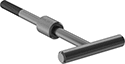 |
Also known as clamping pins, these bolts have a collar that slides along the shaft and can be welded in place to hold work and prevent over torquing. The large T-shaped head provides a secure grip for steady tightening. The black-oxide finish provides corrosion resistance in dry environments.
Length—Length is measured from the top of the head.
Head | ||||||||||
|---|---|---|---|---|---|---|---|---|---|---|
Thread Size | Lg. | Threading | Thread Spacing | Wd. | Thk. | Tensile Strength, psi | Each | |||
Black-Oxide Steel | ||||||||||
| 3/4"-10 | 6 7/8" | Partially Threaded | Coarse | 3 1/2" | 7/8" | 70,000 | 91660A190 | 000000 | ||
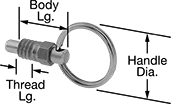
Ring-Grip Retractable Spring Plungers
 |
Spring Plunger |
Nose | Nose Force, lbf | Body | Handle | Nonlocking | Twist-to-Lock | ||||||||||
|---|---|---|---|---|---|---|---|---|---|---|---|---|---|---|---|
Thread Size | Thread Lg. | Extended Lg. | Dia. | Extended | Compressed | Material | Lg. | Material | Dia. | Each | Each | ||||
Steel Nose | |||||||||||||||
| 3/4"-10 | 0.88" | 0.5" | 0.437" | 1.5 | 6 | Zinc-Plated Steel | 1.5" | Steel | 1 1/8" | 8487A76 | 000000 | ——— | 0 | ||
18-8 Stainless Steel Nose | |||||||||||||||
| 3/4"-10 | 0.88" | 0.5" | 0.437" | 1.5 | 6 | 18-8 Stainless Steel | 1.5" | 18-8 Stainless Steel | 1 1/8" | 8500A56 | 00000 | ——— | 0 | ||
316 Stainless Steel Nose | |||||||||||||||
| 3/4"-10 | 0.88" | 0.5" | 0.437" | 1.5 | 6 | 316 Stainless Steel | 1.5" | 316 Stainless Steel | 1 1/8" | 8691A36 | 00000 | 8691A44 | 000000 | ||
| 3/4"-10 | 2.69" | 0.65" | 0.43" | 5 | 10 | 316 Stainless Steel | 4.06" | 316 Stainless Steel | 1.4" | 8691A52 | 00000 | 8691A59 | 00000 | ||
Brass Nose | |||||||||||||||
| 3/4"-10 | 0.88" | 0.5" | 0.437" | 1.5 | 6 | Brass | 1.5" | Steel | 1 1/8" | 8482A35 | 00000 | 8482A75 | 00000 | ||
| 3/4"-10 | 2.69" | 0.65" | 0.43" | 5 | 10 | Brass | 4.06" | Steel | 1.4" | 8482A45 | 00000 | 8482A23 | 00000 | ||
Steel Cotter-Pin-Locking Hex Head Screws
 |
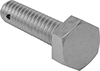 | 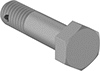 |  |
Fully Threaded | Partially Threaded | SAE Grade 5 |
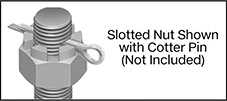
Secure rotating parts subjected to vibration, such as the wheels on carts and hand trucks. A cotter pin (not included) slides through the hole in the shank of these screws to keep nuts from loosening. They hold stronger than screws with threadlocker and lockwashers, but they aren’t recommended for high-vibration applications because prolonged stress can shear the pin. The head's six flat sides keep wrenches and sockets from slipping and rounding off the drive.
Length is measured from under the head.
Medium-Strength Fastener—Your go-to screws for fastening most machinery and equipment. They have tensile strengths from 90,000 to 120,000 psi.
Zinc-Plated Steel—A common choice for areas with occasional exposure to moisture.
%20--%3e%3cg%3e%3cg%20id='Layer_1'%3e%3cpath%20class='cls-1'%20d='M68,27.2c-14.6,0-26.4,11.7-26.4,26.3,0,7,2.8,13.7,7.7,18.7v44.8l18.8-16.1,18.7,16.1v-44.9c10.3-10.3,10.3-27,0-37.3-5-4.9-11.7-7.7-18.7-7.7h0ZM81.3,105l-13.2-11.4-13.2,11.4v-28.7c8.2,4.8,18.3,4.8,26.5,0v28.7ZM76.2,70.8c-5.2,2.5-11.2,2.5-16.4,0-9.5-4.5-13.5-15.9-9-25.4,4.5-9.5,15.9-13.5,25.4-9,9.5,4.5,13.5,15.9,9,25.4-1.9,4-5.1,7.1-9,9Z'/%3e%3cpath%20class='cls-2'%20d='M5.8,95.5c-1.2,0-2.1-1-2.1-2.1,0,0,0,0,0,0V29.4h20.9c2.1,0,3.8-1.7,3.8-3.8V3.7c.2,0,.4,0,.5,0h37.5c1.2,0,2.1,1,2.1,2.1v18.6c1.2,0,2.5.1,3.7.3V5.8C72.2,2.6,69.6,0,66.4,0H28.9c-1.5,0-3,.6-4.1,1.7h-.1c0,.1-23,23.2-23,23.2-1.1,1.1-1.7,2.6-1.7,4.1v64.3c0,3.2,2.6,5.8,5.8,5.8h41.7v-3.7H5.8ZM24.7,7.1v18.7H6L24.7,7.1Z'/%3e%3c/g%3e%3c/g%3e%3c/svg%3e)
Certificates with a traceable lot number are available for these products. Download certificates from ORDER HISTORY after your order ships.
Head | |||||||||||||
|---|---|---|---|---|---|---|---|---|---|---|---|---|---|
Lg. | Wd. | Ht. | Hole Dia. | For Cotter Pin Dia. | Threading | Thread Spacing | Fastener Strength Grade/Class | Tensile Strength, psi | Pkg. Qty. | Pkg. | |||
Medium-Strength Zinc-Plated Steel | |||||||||||||
3/4"-10 | |||||||||||||
| 2" | 1 1/8" | 15/32" | 0.141" | 1/8" | Fully Threaded | Coarse | SAE Grade 5 | 120,000 | 1 | 94871A123 | 00000 | ||
| 2 1/2" | 1 1/8" | 15/32" | 0.141" | 1/8" | Fully Threaded | Coarse | SAE Grade 5 | 120,000 | 1 | 94871A124 | 00000 | ||
| 3" | 1 1/8" | 15/32" | 0.141" | 1/8" | Partially Threaded | Coarse | SAE Grade 5 | 120,000 | 1 | 94871A125 | 00000 | ||
| 4" | 1 1/8" | 15/32" | 0.141" | 1/8" | Partially Threaded | Coarse | SAE Grade 5 | 120,000 | 1 | 94871A126 | 00000 | ||
Quick-Release-Pin Hoist Rings—For Lifting
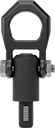 | 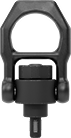 |
180° Pivot | 180° Pivot and 360° Swivel |
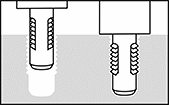 |
Retractable Threads |
Easily slip these hoist rings in and out of threaded holes by pushing the button to retract their threads. Install them flush to your mounting surface. Ideal for angular lifting, these hoist rings withstand stresses that break or bend eyebolts.
All are CE marked, so they meet European safety standards.
Note: Capacities listed are for vertical lifting only. As the lift angle changes from vertical, the amount of weight the hoist ring can lift is significantly reduced. For example, when lifting a 1,000 lb. load at a 45° angle, you must choose a hoist ring with a capacity of at least 1,400 lbs. Do not use at an angle less than 30°.
Warning: Never use to lift people or items over people.
180° Pivot—The ring on 180° pivot hoist rings moves from front to back. Their base does not swivel for added stability.
180° Pivot and 360° Swivel—180° pivot and 360° swivel hoist rings not only have a ring that moves from front to back, but their base also swivels to handle pitch, roll, and sway when lifting heavy or unbalanced loads.
Installation Tools for Female-Threaded Anchors
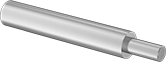 |
For Screw Size | For Thread Dp. | For Thread Size | Lg. | For Use In | Each | |||
|---|---|---|---|---|---|---|---|---|
Steel | ||||||||
| 3/4" | 1 3/8" | 3/4"-10 | 7 1/16" | Concrete | 97077A210 | 000000 | ||
Long-Nose Spring Plungers
 |  |
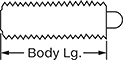 |
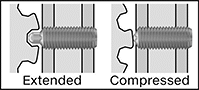
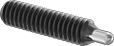
Lock heavy moving parts securely in place. Often used in indexing applications, these have a longer nose than ball-nose spring plungers to withstand greater side forces without disengaging. The nose compresses when a part presses against it, and then pops out into deep notches or grooves for a strong hold.
Spring plungers are available with or without a threadlocker. Those with a threadlocker won't wiggle loose from vibration. Spring plungers without a threadlocker are easier to remove.
Steel Nose—The strongest, most wear-resistant noses, these won't deform from stress and vibration. Steel is best for dry environments, however, since moisture will cause it to rust.
18-8 Stainless Steel Nose—The choice for wet and outdoor environments, 18-8 stainless steel resists rusting. It's strong enough for most jobs, but won't withstand stress and vibration as well as steel.
Spring Plungers | Spring Plunger Drivers | ||||||||||||
|---|---|---|---|---|---|---|---|---|---|---|---|---|---|
Nose | Nose Force, lbf | Body | |||||||||||
Thread Size | Extended Lg. | Dia. | Extended | Compressed | Material | Lg. | Drive Style | Each | Each | ||||
Steel Nose | |||||||||||||
| 3/4"-10 | 0.312" | 0.374" | 4 | 16 | Black-Oxide Steel | 1.75" | Spring Plunger Driver | 3126A39 | 000000 | 3382A19 | 000000 | ||
| 3/4"-10 | 0.313" | 0.374" | 6.7 | 37.3 | Black-Oxide Steel | 1.75" | Spring Plunger Driver | 3126A61 | 00000 | 3382A19 | 00000 | ||
18-8 Stainless Steel Nose | |||||||||||||
| 3/4"-10 | 0.313" | 0.374" | 6.7 | 37.3 | 18-8 Stainless Steel | 1.75" | Spring Plunger Driver | 84975A77 | 00000 | 3382A19 | 00000 | ||
| 3/4"-10 | 0.313" | 0.374" | 6.7 | 37.3 | Black-Oxide Steel | 1.75" | Spring Plunger Driver | 8490A66 | 00000 | 3382A19 | 00000 | ||
Spring Plunger Drivers
 |
For Thread Size | For Spring Plunger Nose Type | Each | |||
|---|---|---|---|---|---|
Steel | |||||
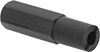
| 3/4"-10 | Ball, Long | 3382A19 | 000000 | ||
Hex-Nose Spring Plungers For Ejecting
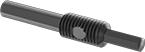 |
Punch large parts free from presses or dies with a nose that’s three times longer than others. These spring plungers have a long spring that doesn’t need to compress as far to retract the nose, so it can handle high-speed, repetitive ejecting jobs without wearing down. The nose is also hexagonal—take a wrench to it to install with more torque and a better hold than you could get with other tools.
Steel Nose—The strongest, most wear-resistant noses, these won't deform from stress and vibration. Steel is best for dry environments, however, since moisture will cause it to rust.
Nose | Nose Force, lbf | Body | |||||||||
|---|---|---|---|---|---|---|---|---|---|---|---|
Thread Size | Extended Lg. | Wd. | Extended | Compressed | Material | Lg. | Drive Style | Each | |||
Steel Nose | |||||||||||
| 3/4"-10 | 1" | 0.375" | 4 | 35 | Black-Oxide Steel | 3.75" | External Hex | 33705A21 | 000000 | ||
Anchors for Block and Brick
 |
Ultimate Strength, lbf | |||||||||||
|---|---|---|---|---|---|---|---|---|---|---|---|
Thread Size | Lg. | Drill Bit Size | Min. Installation Dp. | Material | Pull-Out | Shear | Conditions Tested In | Pkg. Qty. | Pkg. | ||
| 3/4"-10 | 3 15/16" | 1 1/4" | 3 1/2" | Zinc | 8,000 | 13,200 | 4,000 psi Concrete | 1 | 97031A046 | 00000 | |
Hex-Nose Spring Plungers
 |
Nose | Nose Force, lbf | Body | |||||||||
|---|---|---|---|---|---|---|---|---|---|---|---|
Thread Size | Extended Lg. | Wd. | Extended | Compressed | Material | Lg. | Drive Style | Each | |||
Steel Nose | |||||||||||
| 3/4"-10 | 0.313" | 0.375" | 6.7 | 37.3 | Black-Oxide Steel | 1.75" | External Hex | 3360A47 | 000000 | ||
High-Strength Anchors for Block and Brick
 |
Ultimate Strength, lbf | |||||||||||
|---|---|---|---|---|---|---|---|---|---|---|---|
Thread Size | Lg. | Drill Bit Size | Min. Installation Dp. | Material | Pull-Out | Shear | Conditions Tested In | Pkg. Qty. | Pkg. | ||
| 3/4"-10 | 3 1/8" | 1 1/4" | 3 1/8" | Zinc | 9,600 | 15,200 | 3,000 psi Concrete | 1 | 92915A160 | 000000 | |
High-Strength Anchors for Concrete
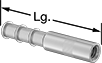 |
Offering the highest pull-out strengths, adhesive grips the anchors' lobes and knurls to keep anchors from shaking loose. These anchors are often used to secure heavy machinery with jarring starts and stops, such as compressors and compactors.
To install, fill a clean, drilled hole half full of epoxy adhesive (sold separately). Thread a screw or threaded rod into the anchor and then slightly twist the anchor into the hole until it's flush with the surface. Then, hammer the head of the screw or rod a few times for a snug fit. All create a permanent female-threaded connection that lets you remove and reinstall a screw or threaded rod.
Zinc-Plated Steel—The most common choice for areas with occasional exposure to moisture.
Highly Corrosion-Resistant 316 Stainless Steel—Superior to 18-8 stainless steel, these anchors won't degrade when exposed to harsh weather, salt water, and most chemicals.
Thread | Ultimate Strength | |||||||||||
|---|---|---|---|---|---|---|---|---|---|---|---|---|
Size | Dp. | Type | Lg. | Drill Bit Size | Min. Installation Dp. | Pull-Out, lbf | Shear | Conditions Tested In | Each | |||
Zinc-Plated Steel | ||||||||||||
| 3/4"-10 | 1 1/2" | UNC | 6 1/2" | 1" | 7 1/2" | 36,000 | Not Rated | 3,000 psi Concrete | 93980A210 | 000000 | ||
Highly Corrosion-Resistant 316 Stainless Steel | ||||||||||||
| 3/4"-10 | 1 1/2" | UNC | 6 1/2" | 1" | 7 1/2" | 36,000 | Not Rated | 3,000 psi Concrete | 93980A650 | 000000 | ||
Go/No-Go Left-Hand Threaded Plug Gauges with Handle
Class X Gauge
 |
Thread Size | Thread Type | Pitch Dia. Tolerance | Hardness | Material | Features | For Thread Fit | Each | |||
|---|---|---|---|---|---|---|---|---|---|---|
Plug Gauges with Accuracy Certificate Traceable to NIST | ||||||||||
| 3/4"-10 | UNC | -0.0003" to 0.0003" | Rockwell C70 | Chrome-Plated Tool Steel | Double-Ended Taperlock Handle | Unified Standard Class 2B | 7935N39 | 0000000 | ||
Plug Gauges with Calibration Certificate Traceable to NIST | ||||||||||
| 3/4"-10 | UNC | -0.0003" to 0.0003" | Rockwell C70 | Chrome-Plated Tool Steel | Double-Ended Taperlock Handle | Unified Standard Class 2B | 7938N39 | 000000 | ||
Go/No-Go Threaded Plug Gauges with Handle
Class X Gauge
 |
Double-Ended Taperlock Handle |
Calibration Certificate Traceable to NIST—Gauges with a calibration certificate traceable to NIST were calibrated in a lab. The certificate, sometimes called a test report or long-form certificate, details the tested measurements.
For Class 2B Unified Standard Thread Fit—For inch threads, the higher the class number, the tighter the fit. Unified Standard Class 2B is standard and works for most applications.
For Class 3B Unified Standard Thread Fit—The tightest fit for inch-sized threads. Unified Standard Class 3B fits completely flush in applications where parts need to stay in place, such as engines and suspension systems.
For Thread Fit—Thread fit designates the tightness or looseness of mating threads.
Thread Size | Thread Type | Pitch Dia. Tolerance | Hardness | Material | Features | Choose a Thread Fit | Each | |||
|---|---|---|---|---|---|---|---|---|---|---|
Go/No-Go Gauges | ||||||||||
| 3/4"-10 | UNC | -0.0003" to 0.0003" | Rockwell C70 | Chrome-Plated Tool Steel | Double-Ended Taperlock Handle | Unified Standard Class 2B, Unified Standard Class 3B | 2366A535 | 0000000 | ||
Go/No-Go Gauges with Calibration Certificate Traceable to NIST | ||||||||||
| 3/4"-10 | UNC | -0.0003" to 0.0003" | Rockwell C70 | Chrome-Plated Tool Steel | Double-Ended Taperlock Handle | Unified Standard Class 2B, Unified Standard Class 3B | 3157A44 | 000000 | ||
Threaded Plug Gauges
Class X Gauge
 |
Thread Size | Thread Type | Pitch Dia. Tolerance | Hardness | Material | For Thread Fit | Each | |||
|---|---|---|---|---|---|---|---|---|---|
Go Gauges | |||||||||
| 3/4"-10 | UNC | 0" to 0.0003" | Rockwell C70 | Chrome-Plated Tool Steel | Unified Standard Class 2B, Unified Standard Class 3B | 7968N32 | 000000 | ||
Go Gauges with Accuracy Certificate Traceable to NIST | |||||||||
| 3/4"-10 | UNC | 0" to 0.0003" | Rockwell C70 | Chrome-Plated Tool Steel | Unified Standard Class 2B, Unified Standard Class 3B | 7968N122 | 00000 | ||
No-Go Gauges | |||||||||
| 3/4"-10 | UNC | -0.0003" to 0" | Rockwell C70 | Chrome-Plated Tool Steel | Unified Standard Class 2B | 7968N75 | 00000 | ||
No-Go Gauges with Accuracy Certificate Traceable to NIST | |||||||||
| 3/4"-10 | UNC | -0.0003" to 0" | Rockwell C70 | Chrome-Plated Tool Steel | Unified Standard Class 2B | 7968N165 | 00000 | ||
Installation Tools for Shallow Female-Threaded Anchors
 |
For Thread Size | Lg. | Each | |||
|---|---|---|---|---|---|
Zinc-Plated Steel | |||||
| 3/4"-10 | 6 1/2" | 97020A124 | 000000 | ||
Go/No-Go Helical Insert Threaded Plug Gauges with Handle
 |
Plug Gauges with Accuracy Certificate Traceable to NIST | Plug Gauges with Calibration Certificate Traceable to NIST | |||||||||||
|---|---|---|---|---|---|---|---|---|---|---|---|---|
Thread Size | Thread Type | Pitch Dia. Tolerance | Hardness | Material | Features | For Thread Fit | Each | Each | ||||
Class X Gauge | ||||||||||||
| 3/4"-10 | UNC | -0.0003" to 0.0003" | Rockwell C70 | Chrome-Plated Tool Steel | Double-Ended Taperlock Handle | Unified Standard Class 2B | 7941N27 | 0000000 | 7941N45 | 0000000 | ||
Shallow-Install Anchors for Block and Brick
 | |
Installation Tools |
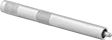
Secure window frames and doors in walls where your drilling depth is limited. These anchors have similar strengths to double
expansion anchors but only need about 75% of the installation depth. All have a sleeve that expands inside your hole to create a strong grip. The sleeve, commonly called a caulking sleeve, also creates a seal to block out air and moisture. Since the gripping force is distributed along the entire length of these anchors, they won’t crack soft materials like block and brick. They’re also known as caulk-in anchors.
To install, place the anchor into a drilled hole, cone end first. Insert an installation tool (sold separately) into the anchor to expand the sleeve over the cone. Then, position your component, insert a screw or threaded rod, and tighten. All create a permanent female-threaded connection that lets you remove and reinstall a screw or threaded rod. They cannot be used in overhead applications.
Anchors for Concrete
 |  |
Flush Profile | Installation Tools |
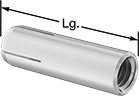
These anchors are your go-to for suspending conduit, lighting, and pipe overhead in concrete. All have an internal plug that expands in four directions to create a tight grip before inserting a threaded rod or bolt. Since the grip is focused at the base, these anchors are best suited for concrete, which can handle the gripping pressure better than softer block and brick. They’re also known as drop-in anchors.
To install, place the anchor into the hole, insert the required installation tool (sold separately), and drive with a hammer until the shoulder of the tool contacts the anchor. All create a permanent female-threaded connection that lets you remove and reinstall a screw or threaded rod.
Zinc-Plated Steel—The most common choice for areas with occasional exposure to moisture.
Corrosion-Resistant 18-8 Stainless Steel—The choice for wet and outdoor environments, these anchors resist rust. However, they’ll corrode or pit when exposed to salt water and
chemicals.
Highly Corrosion-Resistant 316 Stainless Steel—Superior to 18-8 stainless steel, these anchors won't degrade when exposed to harsh weather, salt water, and most chemicals.
Anchors | Installation Tools | |||||||||||||||
|---|---|---|---|---|---|---|---|---|---|---|---|---|---|---|---|---|
Thread | Ultimate Strength, lbf | |||||||||||||||
Size | Dp. | Type | Lg. | Drill Bit Size | Min. Installation Dp. | Pull-Out | Shear | Conditions Tested In | Certification | Pkg. Qty. | Pkg. | Each | ||||
Zinc-Plated Steel | ||||||||||||||||
Flush Profile | ||||||||||||||||
| 3/4"-10 | 1 3/8" | UNC | 3 3/16" | 1" | 3 3/16" | 9,400 | 15,680 | 4,000 psi Concrete | FM Approved, UL Listed | 1 | 97083A540 | 00000 | 97077A210 | 000000 | ||
Corrosion-Resistant 18-8 Stainless Steel | ||||||||||||||||
Flush Profile | ||||||||||||||||
| 3/4"-10 | 1 3/8" | UNC | 3 3/16" | 1" | 3 3/16" | 9,400 | 15,680 | 4,000 psi Concrete | — | 1 | 97082A046 | 00000 | 97077A210 | 00000 | ||
Highly Corrosion-Resistant 316 Stainless Steel | ||||||||||||||||
Flush Profile | ||||||||||||||||
| 3/4"-10 | 1 3/8" | UNC | 3 3/16" | 1" | 3 3/16" | 9,400 | 15,680 | 4,000 psi Concrete | — | 1 | 97095A210 | 00000 | 97077A210 | 00000 | ||
