








Filter by
Operating Voltage
Manufacturer Model Number
Component
Electrical Connection


Expansion Module Type
Manufacturer Series
Power Consumption
Wire Connection
Manufacturer
Operating System Compatibility
Export Control Classification Number (ECCN)


DFARS Specialty Metals
Certification


About PLCs
%20--%3e%3csvg%20version='1.1'%20id='Layer_1'%20xmlns='http://www.w3.org/2000/svg'%20xmlns:xlink='http://www.w3.org/1999/xlink'%20x='0px'%20y='0px'%20viewBox='0%200%20400%20400'%20style='enable-background:new%200%200%20400%20400;'%20xml:space='preserve'%3e%3cstyle%20type='text/css'%3e%20.st0{fill:%231A70A0;}%20.st1{opacity:0.5;}%20%3c/style%3e%3cg%3e%3cg%3e%3cpath%20class='st0'%20d='M200,56.9c38.35,0,74.4,14.93,101.51,42.05c27.11,27.11,42.05,63.17,42.05,101.51s-14.93,74.4-42.05,101.51%20S238.35,344.02,200,344.02s-74.4-14.93-101.51-42.05c-27.11-27.11-42.05-63.17-42.05-101.51s14.93-74.4,42.05-101.51%20S161.65,56.9,200,56.9%20M200,12.9C96.41,12.9,12.44,96.88,12.44,200.46c0,103.59,83.97,187.56,187.56,187.56%20c103.59,0,187.56-83.97,187.56-187.56C387.56,96.88,303.59,12.9,200,12.9L200,12.9z'/%3e%3c/g%3e%3cg%3e%3cg%20class='st1'%3e%3cpath%20class='st0'%20d='M235.49,152.24h16.15l-27.46,111.87c-1.94,7.8-2.91,12.5-2.91,14.1c0,1.82,0.58,3.29,1.73,4.41%20c1.16,1.12,2.69,1.68,4.61,1.68c5.23,0,11.78-3.85,19.63-11.55l17.22,21.34c-16.95,17.33-34.87,26-53.78,26%20c-8.37,0-15.45-1.47-21.23-4.41c-5.79-2.94-10.44-7.25-13.95-12.92c-3.51-5.67-5.27-11.18-5.27-16.53c0-1.93,0.35-5.24,1.05-9.94%20c1-6.94,2.05-12.54,3.15-16.82l15.22-62.15h-32.69l7.65-30.97C190.89,163.58,214.53,158.88,235.49,152.24z%20M230.44,80.84%20c8.24,0,14.66,2.62,19.26,7.86c4.6,5.24,6.9,11.55,6.9,18.94c0,5.46-1.42,10.7-4.25,15.73c-2.83,5.03-6.88,9.07-12.12,12.12%20c-5.24,3.05-10.33,4.57-15.24,4.57c-4.6,0-9.17-1.23-13.72-3.69c-4.55-2.46-8.02-5.78-10.43-9.95%20c-2.41-4.17-3.61-8.67-3.61-13.48c0-5.35,1.52-10.64,4.57-15.89c3.05-5.24,7.03-9.25,11.96-12.04%20C218.68,82.23,224.24,80.84,230.44,80.84z'/%3e%3c/g%3e%3cg%3e%3cpath%20class='st0'%20d='M214.08,152.24h16.15l-27.46,111.87c-1.94,7.8-2.91,12.5-2.91,14.1c0,1.82,0.58,3.29,1.73,4.41%20c1.16,1.12,2.69,1.68,4.61,1.68c5.23,0,11.78-3.85,19.63-11.55l17.22,21.34c-16.95,17.33-34.87,26-53.78,26%20c-8.37,0-15.45-1.47-21.23-4.41c-5.79-2.94-10.44-7.25-13.95-12.92c-3.51-5.67-5.27-11.18-5.27-16.53c0-1.93,0.35-5.24,1.05-9.94%20c1-6.94,2.05-12.54,3.15-16.82l15.22-62.15h-32.69l7.65-30.97C169.48,163.58,193.11,158.88,214.08,152.24z%20M209.03,80.84%20c8.24,0,14.66,2.62,19.26,7.86c4.6,5.24,6.9,11.55,6.9,18.94c0,5.46-1.42,10.7-4.25,15.73c-2.83,5.03-6.88,9.07-12.12,12.12%20c-5.24,3.05-10.33,4.57-15.24,4.57c-4.6,0-9.17-1.23-13.72-3.69c-4.55-2.46-8.02-5.78-10.43-9.95%20c-2.41-4.17-3.61-8.67-3.61-13.48c0-5.35,1.52-10.64,4.57-15.89c3.05-5.24,7.03-9.25,11.96-12.04%20C197.26,82.23,202.83,80.84,209.03,80.84z'/%3e%3c/g%3e%3c/g%3e%3c/g%3e%3c/svg%3e)
Select the sensors, switches, and actuators in your setup and we'll guide you to compatible PLCs.
Compact PLCs
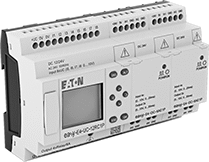 |
PLC Shown with Two Expansion Modules (Sold Separately) |
Support for up to 188 inputs and outputs—these PLCs are ideal for basic tasks where more advanced PLCs would be overkill, such as operating lighting and HVAC systems. They’re also known as smart relays. Connect these PLCs to your Ethernet network to control devices anywhere in your facility. They use an open communication protocol, so you can mix and match devices from different manufacturers. Mount them to 35 mm DIN rail in your electrical cabinet or use mounting brackets (sold separately) to secure them to a flat surface.
You’ll need a license key (sold separately) for the manufacturer’s software. Write your program in common PLC languages, such as Ladder Logic and Structured Text, then transfer your program to the PLC with an Ethernet cord. Use the software to monitor, test, and troubleshoot issues in real time. Add a memory card to back up, store, and transfer programs to multiple machines.
These PLCs have digital inputs and outputs.
For the Manufacturer User Manual, click on a part number and select Product Detail.
PLCs with Display
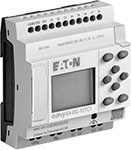 |
These PLCs have a screen and keypad that let you adjust timers and change basic settings without connecting to your computer. You can also view system errors and warnings for quick troubleshooting.
Screw Terminals—Screw terminals are the most common wire connection—insert your wires and tighten the screws to secure them.
Spring-Clamp Terminals—Spring-clamp terminals hold wires with a clamp instead of screws, so connections stay secure, even with vibration.
Relay Output—PLCs with relay outputs are ideal for devices that switch a few times per minute, such as compressors.
Transistor Output—PLCs with transistor outputs are ideal for devices that switch multiple times per second, such as indicator lights and stepper motor drives. They’re PNP outputs, also called sourcing outputs, so they work only with NPN devices. If you need to connect different devices, use an output converter or signal converter (both not included).
Analog Input Signal—PLCs with analog inputs receive signals from devices that monitor temperature, pressure, and other measurements that vary.
Outputs | Inputs | Screw Terminals | Spring-Clamp Terminals | ||||||||||||||||
|---|---|---|---|---|---|---|---|---|---|---|---|---|---|---|---|---|---|---|---|
Type (No. of) | Signal Type | Digital Signal | Max. Current @ Voltage | Type (No. of) | Signal Type | Digital Signal | Transistor Voltage | Analog Signal | Max. No. of Inputs/Outputs | Operating Voltage | Data Connection Type | Control Communication Protocol | Software Req. | Each | Each | ||||
Eaton Easy E4 Series | |||||||||||||||||||
| Relay (4) | Digital | — | 10 amp @ 240V AC 8 amp @ 24V DC | Transistor (4) Transistor/Analog (4) | Analog, Digital | PNP/NPN | 12V DC 24V DC | 0V DC to 10V DC | 188 | 24V AC 12V DC 24V DC | Ethernet RJ45 (1 each) microSD Card (1 each) | Modbus TCP/IP | Yes | 7244K9 | 0000000 | 7244K35 | 0000000 | ||
| Relay (4) | Digital | — | 10 amp @ 240V AC 8 amp @ 24V DC | Transistor (8) | Digital | PNP/NPN | 100V AC to 240V AC 100V DC to 240V DC | — | 188 | 100 to 240V AC 100 to 240V DC | Ethernet RJ45 (1 each) microSD Card (1 each) | Modbus TCP/IP | Yes | 7244K8 | 000000 | 7244K34 | 000000 | ||
| Transistor (4) | Digital | PNP | 0.5 amp @ 24V DC | Transistor (4) Transistor/Analog (4) | Analog, Digital | PNP/NPN | 24V DC | 0V DC to 10V DC | 188 | 24V DC | Ethernet RJ45 (1 each) microSD Card (1 each) | Modbus TCP/IP | Yes | 7244K12 | 000000 | 7244K36 | 000000 | ||
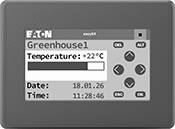 |
Shown Powered On |
Monitor status and control basic settings on these PLCs. These displays mount into a panel cutout or enclosure with the included clips. When mounted, the front is NEMA and IP rated for protection against washdowns and sprays of oil and coolant. These displays are designed to work with these PLCs right out of the box—just connect them to the PLC with an Ethernet cord (not included).
For Panel Cutout | ||||||||||
|---|---|---|---|---|---|---|---|---|---|---|
Diag. Screen Size | Screen Resolution | Data Connection Type | Operating Voltage, V DC | Lg. | Ht. | Mounting Fasteners Included | Each | |||
Front IP65, NEMA 4X | ||||||||||
| 4.3" | 480 × 272 | Ethernet RJ45 (1 each) USB-A, 2.0 (1 each) | 24 | 4.6" | 4" | Yes | 7244K47 | 0000000 | ||
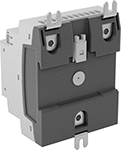 |  |
Shown Installed |
For Screw Size | Material | Mounting Fasteners Included | Pkg. Qty. | Pkg. | ||
|---|---|---|---|---|---|---|
| No. 8, M4 | Metal | No | 3 | 7244K49 | 000000 |
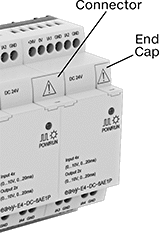 | 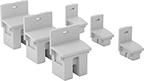 |
Includes | Material | Each | ||
|---|---|---|---|---|
| Three Connectors, Three End Caps | Plastic | 7244K48 | 000000 |
PLCs without Display
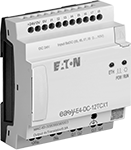 |
Instead of a display, these PLCs have LED status indicators to show they’re powered and running. Since you can’t adjust settings at the PLC, there’s less chance of accidental changes.
Screw Terminals—Screw terminals are the most common wire connection—insert your wires and tighten the screws to secure them.
Spring-Clamp Terminals—Spring-clamp terminals hold wires with a clamp instead of screws, so connections stay secure, even with vibration.
Relay Output—PLCs with relay outputs are ideal for devices that switch a few times per minute, such as compressors.
Transistor Output—PLCs with transistor outputs are ideal for devices that switch multiple times per second, such as indicator lights and stepper motor drives. They’re PNP outputs, also called sourcing outputs, so they work only with NPN devices. If you need to connect different devices, use an output converter or signal converter (both not included).
Analog Input Signal—PLCs with analog inputs receive signals from devices that monitor temperature, pressure, and other measurements that vary.
Outputs | Inputs | Screw Terminals | Spring-Clamp Terminals | ||||||||||||||||
|---|---|---|---|---|---|---|---|---|---|---|---|---|---|---|---|---|---|---|---|
Type (No. of) | Signal Type | Digital Signal | Max. Current @ Voltage | Type (No. of) | Signal Type | Digital Signal | Transistor Voltage | Analog Signal | Max. No. of Inputs/Outputs | Operating Voltage | Data Connection Type | Control Communication Protocol | Software Req. | Each | Each | ||||
Eaton Easy E4 Series | |||||||||||||||||||
| Relay (4) | Digital | — | 10 amp @ 240V AC 8 amp @ 24V DC | Transistor (4) Transistor/Analog (4) | Analog, Digital | PNP/NPN | 12V DC 24V DC | 0V DC to 10V DC | 188 | 24V AC 12V DC 24V DC | Ethernet RJ45 (1 each) microSD Card (1 each) | Modbus TCP/IP | Yes | 7244K11 | 0000000 | 7244K32 | 0000000 | ||
| Relay (4) | Digital | — | 10 amp @ 240V AC 8 amp @ 24V DC | Transistor (8) | Digital | PNP/NPN | 100V AC to 240V AC 100V DC to 240V DC | — | 188 | 100 to 240V AC 100 to 240V DC | Ethernet RJ45 (1 each) microSD Card (1 each) | Modbus TCP/IP | Yes | 7244K14 | 000000 | 7244K31 | 000000 | ||
| Transistor (4) | Digital | PNP | 0.5 amp @ 24V DC | Transistor (4) Transistor/Analog (4) | Analog, Digital | PNP/NPN | 24V DC | 0V DC to 10V DC | 188 | 24V DC | Ethernet RJ45 (1 each) microSD Card (1 each) | Modbus TCP/IP | Yes | 7244K13 | 000000 | 7244K33 | 000000 | ||
|
Shown Powered On |
Monitor status and control basic settings on these PLCs. These displays mount into a panel cutout or enclosure with the included clips. When mounted, the front is NEMA and IP rated for protection against washdowns and sprays of oil and coolant. These displays are designed to work with these PLCs right out of the box—just connect them to the PLC with an Ethernet cord (not included).
For Panel Cutout | ||||||||||
|---|---|---|---|---|---|---|---|---|---|---|
Diag. Screen Size | Screen Resolution | Data Connection Type | Operating Voltage, V DC | Lg. | Ht. | Mounting Fasteners Included | Each | |||
Front IP65, NEMA 4X | ||||||||||
| 4.3" | 480 × 272 | Ethernet RJ45 (1 each) USB-A, 2.0 (1 each) | 24 | 4.6" | 4" | Yes | 7244K47 | 0000000 | ||
| |
Shown Installed |
For Screw Size | Material | Mounting Fasteners Included | Pkg. Qty. | Pkg. | ||
|---|---|---|---|---|---|---|
| No. 8, M4 | Metal | No | 3 | 7244K49 | 000000 |
| |
Includes | Material | Each | ||
|---|---|---|---|---|
| Three Connectors, Three End Caps | Plastic | 7244K48 | 000000 |
Analog Signal Input/Output Expansion Modules
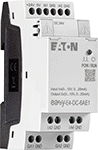 |
Add analog inputs and outputs to these PLCs. These modules receive signals from devices that monitor temperature, pressure, and other measurements that vary. They also send signals to devices that need precise control, such as dimmable LED drivers.
Add expansion modules to PLCs when your system grows or needs new functionality. All modules have an LED status indicator to show the device is powered and running.
Screw Terminals—Screw terminals are the most common wire connection—insert your wires and tighten the screws to secure them.
Spring-Clamp Terminals—Spring-clamp terminals hold wires with a clamp instead of screws, so connections stay secure, even with vibration.
Digital Signal Input/Output Expansion Modules
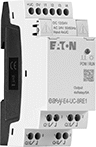 |
Increase the number of digital inputs and outputs you can control with these PLCs. These modules send and receive on-off or high-low signals, so you can integrate devices such as limit switches and lights.
Add expansion modules to PLCs when your system grows or needs new functionality. All modules have an LED status indicator to show the device is powered and running.
Screw Terminals—Screw terminals are the most common wire connection—insert your wires and tighten the screws to secure them.
Spring-Clamp Terminals—Spring-clamp terminals hold wires with a clamp instead of screws, so connections stay secure, even with vibration.
Relay Output—PLCs with relay outputs are ideal for devices that switch a few times per minute, such as compressors.
Transistor Output—PLCs with transistor outputs are ideal for devices that switch multiple times per second, such as indicator lights and stepper motor drives. They’re PNP outputs, also called sourcing outputs, so they work only with NPN devices. If you need to connect different devices, use an output converter or signal converter (both not included).
Outputs | Inputs | Screw Terminals | Spring-Clamp Terminals | |||||||||
|---|---|---|---|---|---|---|---|---|---|---|---|---|
Type (No. of) | Digital Signal | Max. Current @ Voltage | Type (No. of) | Digital Signal | Transistor Voltage | Operating Voltage | Each | Each | ||||
Eaton Easy E4 Series | ||||||||||||
| Relay (4) | — | 5 amp @ 240V AC | Transistor (4) | PNP/NPN | 12V DC 24V DC | 24V AC 12V DC 24V DC | 7244K15 | 0000000 | 7244K43 | 0000000 | ||
| Relay (4) | — | 5 amp @ 240V AC | Transistor (4) | PNP/NPN | 100V AC to 240V AC 100V DC to 240V DC | 100 to 240V AC 100 to 240V DC | 7244K17 | 000000 | 7244K41 | 000000 | ||
| Relay (8) | — | 5 amp @ 240V AC | Transistor (8) | PNP/NPN | 12V DC 24V DC | 24V AC 12V DC 24V DC | 7244K16 | 000000 | 7244K44 | 000000 | ||
| Relay (8) | — | 5 amp @ 240V AC | Transistor (8) | PNP/NPN | 100V AC to 240V AC 100V DC to 240V DC | 100 to 240V AC 100 to 240V DC | 7244K18 | 000000 | 7244K42 | 000000 | ||
| Transistor (4) | PNP | 0.5 amp @ 24V DC | Transistor (4) | PNP/NPN | 24V DC | 24V DC | 7244K19 | 000000 | 7244K45 | 000000 | ||
| Transistor (8) | PNP | 0.5 amp @ 24V DC | Transistor (8) | PNP/NPN | 24V DC | 24V DC | 7244K21 | 000000 | 7244K46 | 000000 | ||
Communication Expansion Modules
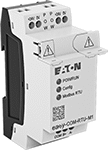 |
Integrate legacy equipment, scanners, printers, and other serial devices into your automated system. These communication modules have two power connections. The first powers the module from an external power supply. The second can be connected to another module, so you can daisy-chain multiple communication modules.
Add expansion modules to PLCs when your system grows or needs new functionality. All modules have an LED status indicator to show the device is powered and running.
Screw Terminals—Screw terminals are the most common wire connection—insert your wires and tighten the screws to secure them.
Screw Terminals | |||||||
|---|---|---|---|---|---|---|---|
Operating Voltage | Serial Port Interface (No. of) | Control Communication Protocol | Max. No. of Connections | Each | |||
Eaton Easy E4 Series | |||||||
| 24V DC | RS-485 (1) | Modbus RTU | 32 | 7244K37 | 0000000 | ||
Temperature Probe Analog Expansion Modules
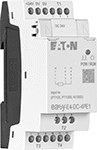 |
These modules accept signals from RTDs to trigger actions based on temperature readings, such as opening a valve when a threshold is reached.
Add expansion modules to PLCs when your system grows or needs new functionality. All modules have an LED status indicator to show the device is powered and running.
Screw Terminals—Screw terminals are the most common wire connection—insert your wires and tighten the screws to secure them.
Spring-Clamp Terminals—Spring-clamp terminals hold wires with a clamp instead of screws, so connections stay secure, even with vibration.
PLCs
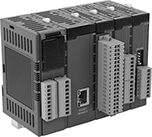 |
Our most scalable PLCs give your system room to grow. With support for up to 512 inputs and outputs, these PLCs can automate multiple processes at the same time, including those with scanners and other high-speed devices. They have serial connectivity, so you can integrate HMIs, legacy equipment, and other compatible devices. These PLCs support a variety of communication protocols, so they can control devices from many different manufacturers.
Once you download the manufacturer’s free software, start programming using an IEC standard language, such as Ladder Logic. When you’re ready, transfer your program to the PLC with a USB Mini-B cord or USB-C cord. Use the software to monitor, test, and troubleshoot issues in real time. These PLCs mount to 35 mm DIN rail in your electrical cabinet.
These PLCs have digital inputs and outputs.
For the Manufacturer User Manual, click on a part number and select Product Detail.
Digital Input/Output PLCs
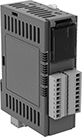 | 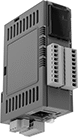 | 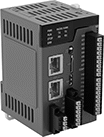 |
PLC | PLCs with 1 Ethernet RJ45 Connection | PLCs with 2 Ethernet RJ45 Connections |
Relay Output—PLCs with relay outputs are ideal for devices that switch a few times per minute, such as compressors.
Transistor Output—PLCs with transistor outputs are ideal for devices that switch multiple times per second, such as indicator lights and stepper motor drives.
PNP Output Signal—PNP outputs, also called sourcing outputs, work only with NPN devices.
NPN Output Signal—NPN outputs, also called sinking outputs, work only with PNP devices. If you need to connect different devices, use an output converter or signal converter (both not included).
microSD Card—PLCs with a microSD card slot let you back up, store, and transfer programs on a memory card. This is useful when you have multiple machines using the same program or need to frequently update your program.
Outputs | Inputs | |||||||||||||||
|---|---|---|---|---|---|---|---|---|---|---|---|---|---|---|---|---|
Type (No. of) | Digital Signal | Max. Current @ Voltage | Type (No. of) | Digital Signal | Transistor Voltage, V DC | Max. No. of Inputs/Outputs | Operating Voltage, V DC | Data Connection Type | Serial Port Interface (No. of) | Control Communication Protocol | IoT Communication Protocol | Software Req. | Each | |||
PLCs | ||||||||||||||||
| Relay (8) | — | 2 amp @ 250V AC 2 amp @ 24V DC | Transistor (8) | PNP/NPN | 12 to 24 | 384 | 12 to 24 | Mini USB-B (1 each) | RS-232 (1), RS-422/RS-485 (1) | Modbus RTU | — | Yes | 8662N11 | 0000000 | ||
PLCs with 1 Ethernet RJ45 Connection | ||||||||||||||||
| Relay (6) | — | 2 amp @ 250V AC 2 amp @ 24V DC | Transistor (8) | PNP/NPN | 12 to 24 | 384 | 12 to 24 | Mini USB-B (1 each) | RS-232 (1), RS-422/RS-485 (1) | Modbus RTU Modbus TCP/IP | — | Yes | 8662N12 | 000000 | ||
| Transistor (8) | PNP | 0.2 amp @ 24V DC | Transistor (8) | PNP/NPN | 12 to 24 | 384 | 12 to 24 | Mini USB-B (1 each) | RS-232 (1), RS-422/RS-485 (1) | Modbus RTU Modbus TCP/IP | — | Yes | 8662N13 | 000000 | ||
| Transistor (8) | NPN | 0.2 amp @ 24V DC | Transistor (8) | PNP/NPN | 12 to 24 | 384 | 12 to 24 | Mini USB-B (1 each) | RS-232 (1), RS-422/RS-485 (1) | Modbus RTU Modbus TCP/IP | — | Yes | 8662N14 | 000000 | ||
PLCs with 2 Ethernet RJ45 Connections | ||||||||||||||||
| Relay (8) | — | 2 amp @ 250V AC 2 amp @ 24V DC | Transistor (8) | PNP/NPN | 24 | 512 | 12 to 24 | USB-C (1 each) microSD Card (1 each) | RS-232 (1), RS-422/RS-485 (1) | EtherNet/IP Modbus RTU Modbus TCP/IP EtherCAT PROFINET | MQTT | Yes | 8662N15 | 000000 | ||
| Transistor (16) | PNP | 0.2 amp @ 24V DC | Transistor (16) | PNP/NPN | 24 | 512 | 12 to 24 | USB-C (1 each) microSD Card (1 each) | RS-232 (1), RS-422/RS-485 (1) | EtherNet/IP Modbus RTU Modbus TCP/IP EtherCAT PROFINET | MQTT | Yes | 8662N16 | 000000 | ||
| Transistor (16) | NPN | 0.2 amp @ 24V DC | Transistor (16) | PNP/NPN | 24 | 512 | 12 to 24 | USB-C (1 each) microSD Card (1 each) | RS-232 (1), RS-422/RS-485 (1) | EtherNet/IP Modbus RTU Modbus TCP/IP EtherCAT PROFINET | MQTT | Yes | 8662N17 | 000000 | ||
Analog Signal Input/Output Expansion Modules
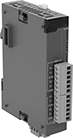 |
Add expansion modules to these PLCs when your system grows or needs new functionality. All modules have an LED status indicator to show the device is powered and running.
Add analog inputs and outputs to these PLCs. Modules with inputs receive signals from devices that monitor temperature, pressure, and other measurements that vary. Modules with outputs send signals to devices that need precise control, such as variable frequency drives.
Outputs | Inputs | |||||||
|---|---|---|---|---|---|---|---|---|
Type (No. of) | Analog Signal | Type (No. of) | Analog Signal | Operating Voltage, V DC | Each | |||
| Analog (2) | 4 mA to 20 mA | Analog (2) | 0V DC to 10V DC, 0V DC to 5V DC | 24 | 8662N28 | 0000000 | ||
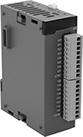
Digital Signal Input/Output Expansion Modules
 |
Outputs | Inputs | ||||||||
|---|---|---|---|---|---|---|---|---|---|
Type (No. of) | Digital Signal | Max. Current @ Voltage | Type (No. of) | Digital Signal | Transistor Voltage, V DC | Each | |||
| Relay (8) | — | 2 amp @ 250V AC 2 amp @ 24V DC | Transistor (8) | PNP/NPN | 24 | 8662N18 | 0000000 | ||
| Transistor (4) | NPN | 0.2 amp @ 24V DC | Transistor (32) | Line Driver | 5 24 | 8662N35 | 000000 | ||
| Transistor (4) | NPN | 0.2 amp @ 24V DC | Transistor (32) | PNP/NPN Open Collector | 12 5 24 | 8662N34 | 000000 | ||
| Transistor (16) | PNP | 0.2 amp @ 24V DC | Transistor (16) | PNP/NPN | 24 | 8662N25 | 000000 | ||
| Transistor (16) | NPN | 0.2 amp @ 24V DC | Transistor (16) | PNP/NPN | 24 | 8662N24 | 000000 | ||
Digital Signal Input Expansion Modules
|
Inputs | ||||||
|---|---|---|---|---|---|---|
Type (No. of) | Digital Signal | Transistor Voltage, V DC | Each | |||
| Transistor (32) | PNP/NPN | 24 | 8662N21 | 0000000 | ||
Communication Expansion Modules
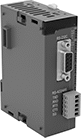 | 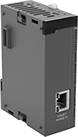 |
Modbus RTU Communication Protocol | Modbus TCP/IP Communication Protocol |
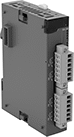
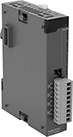
Increase these PLCs’ ability to communicate with different devices.
Add expansion modules to these PLCs when your system grows or needs new functionality. All modules have an LED status indicator to show the device is powered and running.
Fast-Processing Open-Source PLCs
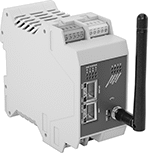 |
When milliseconds matter, these PLCs don't have to wait for your network—they process complex data and run code locally. The result is real-time performance in the field, plus cloud connectivity when you want it, for truly uninterrupted operation. These PLCs support Python, C++, Bash, and other open-source languages, so you can program them in the one you know. You can also use customizable libraries to your advantage.
Write code from anywhere—on any device and browser—using the manufacturer’s free web-based software. When you’re ready, transfer your program to the PLC with an Ethernet RJ45 cord, Bluetooth, or Wi-Fi. In addition to wireless communication, these PLCs have a range of hardwire connections, including digital inputs and outputs, Ethernet, and serial terminals. This means they can control a fully wireless system, a wired setup with legacy equipment, or a hybrid of both. Mount them to 35 mm DIN rail.
For the Manufacturer User Manual, click on a part number and select Product Detail.
Configurable Signal Input/Output Type (No. of) | Digital Input/Output Type | Max. Output Current @ Voltage | Transistor Input Voltage, V DC | Operating Voltage, V DC | Data Connection Type | Serial Port Interface (No. of) | Control Communication Protocol | IoT Communication Protocol | Each | |||
|---|---|---|---|---|---|---|---|---|---|---|---|---|
With Broadcom BCM2837B0 Microprocessor and ATmega16u4 Microcontroller | ||||||||||||
| Digital Transistor (8) | PNP/NPN | 0.85 amp @ 30V DC | 0 to 30 | 5 to 30 | Ethernet RJ45 (2 each) Micro USB-AB (1 each) Wi-Fi 802.11b/g/n Bluetooth 4.0 | RS-232/RS-422/RS-485 (1) | DCON ASCII | REST Over HTTP, WebSocket | 6482N11 | 0000000 | ||
Miniature PLCs
PLCs with Transistor Inputs
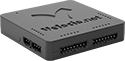 |
Outputs | Inputs | |||||||||||||
|---|---|---|---|---|---|---|---|---|---|---|---|---|---|---|
Max. No. of Inputs/Outputs | Type (No. of) | Signal Type | Digital Signal | Max. Current @ Voltage | No. of Inputs | Signal Type | Digital Signal | Transistor Voltage, V DC | Operating Voltage Range, V DC | Serial Port Interface (No. of) | Control Communication Protocol | Each | ||
| 9 | Transistor (6) | Digital | NPN | 0.3 amp @ 30V DC | 3 | Digital | PNP | 3 to 30 | 5.1 to 28 | RS-232 (1) | Modbus RTU | 1394N11 | 000000 | |
| 12 | Transistor (6) | Digital | NPN | 0.3 amp @ 30V DC | 6 | Digital | PNP | 3 to 30 | 5.1 to 28 | — | Modbus RTU | 1394N12 | 00000 | |
| 18 | Transistor (12) | Digital | NPN | 0.3 amp @ 30V DC | 6 | Digital | PNP | 3 to 30 | 5.1 to 28 | RS-232/RS-485 (1) | Modbus RTU | 1394N13 | 000000 | |
| 24 | Transistor (12) | Digital | NPN | 0.3 amp @ 30V DC | 12 | Digital | PNP | 3 to 30 | 5.1 to 28 | — | Modbus RTU | 1394N14 | 000000 | |
| 32 | Transistor (18) | Digital | NPN | 0.3 amp @ 30V DC | 14 | Digital | PNP | 3 to 30 | 5.1 to 28 | RS-232 (1) | Modbus RTU | 1394N15 | 000000 | |
| 36 | Transistor (18) | Digital | NPN | 0.3 amp @ 30V DC | 18 | Digital | PNP | 3 to 30 | 5.1 to 28 | — | Modbus RTU | 1394N16 | 000000 | |
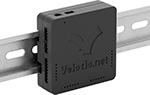
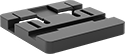
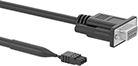
PLCs with Transistor and Analog Inputs
|
PLCs with analog inputs or outputs help you automate based on measurements that vary, such as pressure or speed readings.
Outputs | Inputs | 0V DC to 10V DC Input Signal | 4 mA to 20 mA Input Signal | |||||||||||||
|---|---|---|---|---|---|---|---|---|---|---|---|---|---|---|---|---|
Max. No. of Inputs/Outputs | Type (No. of) | Signal Type | Digital Signal | Max. Current @ Voltage | No. of Inputs | Signal Type | Digital Signal | Transistor Voltage, V DC | Operating Voltage Range, V DC | Serial Port Interface (No. of) | Control Communication Protocol | Each | Each | |||
| 9 | Transistor (3) | Digital | NPN | 0.3 amp @ 30V DC | Transistor (3) Analog (3) | Digital, Analog | PNP | 3 to 30 | 5.1 to 28 | RS-232 (1) | Modbus RTU | 1394N21 | 000000 | 1394N22 | 000000 | |
| 27 | Transistor (12) | Digital | NPN | 0.3 amp @ 30V DC | Transistor (12) Analog (3) | Digital, Analog | PNP | 3 to 30 | 5.1 to 28 | RS-232 (1) | Modbus RTU | ——— | 0 | 1394N23 | 000000 | |
| 36 | Transistor (12) | Digital | NPN | 0.3 amp @ 30V DC | Transistor (12) Analog (12) | Digital, Analog | PNP | 3 to 30 | 5.1 to 28 | — | Modbus RTU | ——— | 0 | 1394N24 | 000000 | |
PLCs with Transistor and Thermocouple Inputs
|
PLCs with analog inputs or outputs help you automate based on measurements that vary, such as pressure or speed readings.
PLCs with thermocouple inputs help you automate based on temperature readings.
Outputs | Inputs | ||||||||||||||
|---|---|---|---|---|---|---|---|---|---|---|---|---|---|---|---|
Max. No. of Inputs/Outputs | Type (No. of) | Signal Type | Digital Signal | Max. Current @ Voltage | No. of Inputs | Signal Type | Digital Signal | Transistor Voltage, V DC | Thermocouple Type | Operating Voltage Range, V DC | Serial Port Interface (No. of) | Control Communication Protocol | Each | ||
| 20 | Transistor (12) | Digital | NPN | 0.3 amp @ 30V DC | Transistor (6) Thermocouple (2) | Digital | PNP | 3 to 30 | J, K, N, T | 5.1 to 28 | RS-232/RS-485 (1) | Modbus RTU | 1394N31 | 0000000 | |
PLCs with Transistor, Analog, and Thermocouple Inputs
|
PLCs with analog inputs or outputs help you automate based on measurements that vary, such as pressure or speed readings.
PLCs with thermocouple inputs help you automate based on temperature readings.
Outputs | Inputs | 0V DC to 10V DC Input Signal | 4 mA to 20 mA Input Signal | |||||||||||||||
|---|---|---|---|---|---|---|---|---|---|---|---|---|---|---|---|---|---|---|
Max. No. of Inputs/Outputs | Type (No. of) | Signal Type | Digital Signal | Max. Current @ Voltage | Analog Signal | No. of Inputs | Signal Type | Digital Signal | Transistor Voltage, V DC | Thermocouple Type | Operating Voltage Range, V DC | Serial Port Interface (No. of) | Control Communication Protocol | Each | Each | |||
| 28 | Transistor (12) Analog (2) | Analog Digital | NPN | 0.3 amp @ 30V DC | 0V DC to 10V DC, 0V DC to 5V DC | Transistor (10) Analog (4) Thermocouple (4) | Digital, Analog | PNP | 3 to 30 | J, K, N, T | 5.1 to 28 | RS-232 (2) | Modbus RTU | ——— | 0 | 1394N41 | 0000000 | |
| 31 | Transistor (18) | Digital | NPN | 0.3 amp @ 30V DC | — | Transistor (6) Analog (3) Thermocouple (4) | Digital, Analog | PNP | 3 to 30 | J, K, N, T | 5.1 to 28 | RS-232 (1) | Modbus RTU | 1394N42 | 0000000 | 1394N43 | 000000 | |
Output Converters
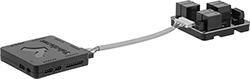 | 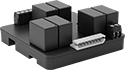 |
Converter Connected to PLC |
Outputs | Inputs | ||||||||
|---|---|---|---|---|---|---|---|---|---|
Type (No. of) | Signal Type | Max. Current @ Voltage | No. of Inputs | Signal Type | Digital Signal | Operating Voltage Range, V DC | Each | ||
| Relay (6) | Digital | 5 amp @ 250V AC 5 amp @ 30V DC | 6 | Digital | NPN | 5.1 to 28 | 1394N101 | 000000 | |
Open-Source PLCs
PLCs
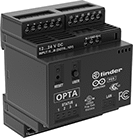 |
RS-485—PLCs with RS-485 terminals let you integrate legacy equipment and other serial devices into your system.
Wi-Fi—PLCs with Wi-Fi have cloud connectivity that lets you program, monitor, and update them from anywhere.
Bluetooth—They also have Bluetooth to make initial setup easy—you can wirelessly configure them at close range. These PLCs send alerts directly to your mobile device, so you can quickly respond to issues.
Outputs | Inputs | ||||||||||||||
|---|---|---|---|---|---|---|---|---|---|---|---|---|---|---|---|
Type (No. of) | Signal Type | Max. Current @ Voltage | Type (No. of) | Signal Type | Digital Signal | Transistor Voltage, V DC | Analog Signal | Max. No. of Inputs/Outputs | Operating Voltage, V DC | Serial Port Interface (No. of) | Control Communication Protocol | Data Connection Type | Each | ||
| Relay (4) | Digital | 10 amp @ 250V AC | Transistor/Analog (8) | Analog Digital | PNP/NPN | 24 | 0V DC to 10V DC | 88 | 12 to 24 | — | Modbus TCP/IP | — | 8647N13 | 0000000 | |
| Relay (4) | Digital | 10 amp @ 250V AC | Transistor/Analog (8) | Analog Digital | PNP/NPN | 24 | 0V DC to 10V DC | 88 | 12 to 24 | RS-485 (1) | Modbus RTU Modbus TCP/IP | — | 8647N11 | 000000 | |
| Relay (4) | Digital | 10 amp @ 250V AC | Transistor/Analog (8) | Analog Digital | PNP/NPN | 24 | 0V DC to 10V DC | 88 | 12 to 24 | RS-485 (1) | Modbus RTU Modbus TCP/IP | Wi-Fi, Bluetooth | 8647N12 | 000000 | |
Expansion Modules
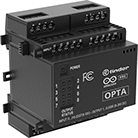 |
Add expansion modules to these PLCs when your system needs more inputs and outputs or new functionality. All modules have an LED status indicator to show the device is powered and running.
Increase the number of inputs and outputs you can control with the PLC. These modules send and receive digital signals, such as on-off, so you can integrate devices such as limit switches and lights. They also receive analog signals from devices that send variable data, such as humidity sensors.
PWM—Modules with PWM outputs are ideal for motor speed controls and other devices that require fast, precise switching because the outputs have no moving parts.
RTD Input Type—Modules with RTD inputs trigger actions based on temperature readings, such as opening a valve when a threshold is reached.
Outputs | Inputs | ||||||||||||||
|---|---|---|---|---|---|---|---|---|---|---|---|---|---|---|---|
Type (No. of) | Development Board Signal (No. of) | Signal Type | Max. Current @ Voltage | Max. Freq., kHz | Analog Signal | Type (No. of) | Signal Type | Digital Signal | Transistor Voltage, V DC | Analog Signal | RTD Type | Operating Voltage, V DC | Each | ||
| Relay (8) | — | Digital | 6 amp @ 250V AC | — | — | Analog/Transistor (16) | Analog Digital | PNP/NPN | 24 | 0V DC to 10V DC | — | 12 to 24 | 8647N14 | 0000000 | |
| Relay (8) | — | Digital | 3 amp @ 24V DC | — | — | Analog/Transistor (16) | Analog Digital | PNP/NPN | 24 | 0V DC to 10V DC | — | 12 to 24 | 8647N15 | 000000 | |
| Analog (2) | PWM (4) | Analog, Digital | 0.1 amp @ 24V DC | 10 | 0V DC to 10V DC, 4 mA to 20 mA | RTD (2) Analog (4) | — | — | — | 0V DC to 10V DC, 4 mA to 20 mA | Pt100, Pt1000 | 12 to 24 | 8647N16 | 000000 | |
