

Filter by
Output Voltage

Output Current
Input Voltage
Output Power
Input Current @ Voltage
Electrical Phase
Electrical Connection


Certification


Output Electrical Connection


Input Electrical Connection
Input Connection Type

Electrical Protection Type
U.S.–Mexico–Canada Agreement (USMCA) Qualifying
Minimum Temperature
Maximum Temperature
Export Control Classification Number (ECCN)
DFARS Specialty Metals
Power Supplies
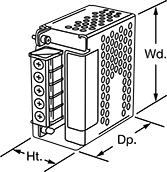 |  |
Single-Phase Input, Screw-Terminal Input and Output Connection | |
 | |
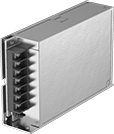
Single-Phase Input, Screw-Terminal Input and Quick-Disconnect-Terminal Output Connection |
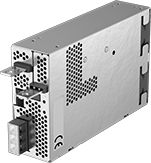
To power electronics ranging from simple prototypes to complex industrial automation and process control equipment, these general purpose power supplies convert AC to DC voltage. Mount them to a surface inside your device’s enclosure.
So you don’t accidentally touch internal components and shock yourself, these power supplies have their own housing. If you occasionally need to poke around inside your device’s enclosure, the housing also protects the power supplies themselves from damage. But compared to open-frame power supplies, these have a larger footprint, so they won’t fit in tight spaces.
For output wire connections, choose between standard screw terminals and quick-disconnect terminals. Use quick-disconnect terminals if you have wires with ring terminal ends. To connect them, slide a screw through the hole in the quick-disconnect terminal, slip the ring terminal from your wire over the screw, and tighten a nut on the end of the screw to hold everything in place. Screws, nuts, and ring terminals are not included.
All of these power supplies use switching regulation, which means they produce the stated voltage despite fluctuations in your input power and the power being drawn by your system, and they won’t become too hot. Power supplies that are SEMI F47 compliant meet standards for maintaining output voltage when input voltage dips. This is commonly known as voltage sag immunity.
If you exceed the maximum current, load, or voltage, these power supplies shut down to protect both the power supply and the connected equipment. Some also protect against excessive temperatures. All meet stringent safety standards.
Maximum Output Noise Peak-to-Peak—Maximum output noise is also known as ripple noise. The lower the value, the less interference the power supply creates. For most applications, a value over 100mVpp isn’t a problem. However, when using to power extremely sensitive electronics, such as audio equipment and high-precision measuring and testing equipment, you’ll want an output noise around 5mVpp or less.
Power Factor @ Voltage—Power factor shows how effectively a power supply draws AC power from the main electrical supply. The higher the power factor—up to a maximum score of 1—the lower your operating cost.
Efficiency @ Voltage—Efficiency describes how good a power supply is at converting the AC power it draws from your main electrical supply into DC power. High-efficiency power supplies cost less money to operate and produce less heat, meaning cooler temperatures in your electrical cabinet.
Cannot Be Sold To—Power supplies that cannot be sold to the regions listed are restricted by local energy efficiency requirements.
Output | Mounting | |||||||||||||||||||
|---|---|---|---|---|---|---|---|---|---|---|---|---|---|---|---|---|---|---|---|---|
No. of Power Connections | Voltage | Voltage Adjustment Range, V DC | Max. Current, amp | Max. Power, W | Max. Noise Peak-to-Peak | Power Factor @ Voltage | Efficiency @ Voltage | Ht. | Wd. | Dp. | Certification | Specs. Met | Electrical Protection Type | Cannot Be Sold To | Fasteners Included | Number of Holes | Each | |||
Single-Phase Input—100V AC to 240V AC Input Voltage | ||||||||||||||||||||
Screw-Terminal Input and Output Connection | ||||||||||||||||||||
| 1 | 15V DC | 13.5 to 16.5 | 1 | 15 | 150 mV DC | Not Rated | 77% @ 100V AC 78.5% @ 115V AC 79.5% @ 230V AC | 1.5" | 3.2" | 2.9" | C-UL Recognized Component CE Marked TUV Rheinland Certified UL Recognized Component | SEMI F47 | Overcurrent, Overload, Overvoltage | California, Vermont | No | 4 | 7010K112 | 000000 | ||
| 1 | 15V DC | 13.5 to 16.5 | 2 | 30 | 150 mV DC | Not Rated | 81% @ 100V AC 81.5% @ 115V AC 82% @ 230V AC | 1.5" | 3.2" | 3.5" | C-UL Recognized Component CE Marked TUV Rheinland Certified UL Recognized Component | SEMI F47 | Overcurrent, Overload, Overvoltage | California, Vermont | No | 4 | 7010K116 | 00000 | ||
| 1 | 15V DC | 13.5 to 16.5 | 3.5 | 52.5 | 150 mV DC | 0.98 @ 100V AC 0.98 @ 115V AC 0.87 @ 230V AC | 80% @ 100V AC 80.5% @ 115V AC 82% @ 230V AC | 1.5" | 3.2" | 3.9" | C-UL Recognized Component CE Marked TUV Rheinland Certified UL Recognized Component | SEMI F47 | Overcurrent, Overload, Overvoltage | California, Vermont | No | 4 | 7010K121 | 00000 | ||
| 1 | 15V DC | 13.5 to 16.5 | 6.7 | 100.5 | 150 mV DC | 0.98 @ 100V AC 0.98 @ 115V AC 0.9 @ 230V AC | 83% @ 100V AC 83% @ 115V AC 86% @ 230V AC | 1.6" | 3.8" | 4.3" | C-UL Recognized Component CE Marked D Marked UL Recognized Component | SEMI F47 | Overcurrent, Overload, Overvoltage | California, Vermont | No | 5 | 7010K133 | 00000 | ||
| 1 | 15V DC | 13.5 to 16.5 | 10 | 150 | 150 mV DC | 0.98 @ 100V AC 0.98 @ 115V AC 0.93 @ 230V AC | 84% @ 100V AC 84% @ 115V AC 87% @ 230V AC | 1.6" | 3.8" | 5.1" | C-UL Recognized Component CE Marked D Marked UL Recognized Component | SEMI F47 | Overcurrent, Overload, Overvoltage | California, Vermont | No | 5 | 7010K134 | 00000 | ||
| 2 | 15V DC | 13.5 to 16.5 | 20 | 300 | 150 mV DC | 0.99 @ 100V AC 0.98 @ 115V AC 0.95 @ 230V AC | 81% @ 100V AC 82% @ 115V AC 84% @ 230V AC | 1.6" | 4" | 7.5" | C-UL Recognized Component CE Marked D Marked UL Recognized Component | SEMI F47 | Overcurrent, Overload, Overvoltage | — | No | 8 | 7010K135 | 000000 | ||
| 2 | 15V DC | 13.5 to 16.5 | 40 | 600 | 150 mV DC | 0.99 @ 100V AC 0.98 @ 115V AC 0.95 @ 230V AC | 82% @ 100V AC 82% @ 115V AC 85% @ 130V AC | 2.4" | 4.7" | 7.5" | C-UL Recognized Component CE Marked D Marked UL Recognized Component | SEMI F47 | Overcurrent, Overload, Overvoltage | — | No | 8 | 7010K136 | 000000 | ||
Screw-Terminal Input and Quick-Disconnect-Terminal Output Connection | ||||||||||||||||||||
| 1 | 15V DC | 13.5 to 16.5 | 67 | 1,005 | 210 mV DC | 0.98 @ 100V AC 0.98 @ 115V AC 0.95 @ 230V AC | 82% @ 100V AC 82% @ 115V AC 85% @ 130V AC | 2.4" | 5.9" | 9.5" | C-UL Recognized Component CE Marked D Marked UL Recognized Component | SEMI F47 | Overcurrent, Overload, Overvoltage | — | No | 12 | 7010K137 | 000000 | ||
| 1 | 15V DC | 13.5 to 16.5 | 100 | 1,500 | 210 mV DC | 0.98 @ 100V AC 0.98 @ 115V AC 0.95 @ 230V AC | 82% @ 100V AC 82% @ 115V AC 85% @ 130V AC | 2.4" | 7" | 10.6" | C-UL Recognized Component CE Marked D Marked UL Recognized Component | SEMI F47 | Overcurrent, Overload, Overvoltage | — | No | 12 | 7010K138 | 000000 | ||
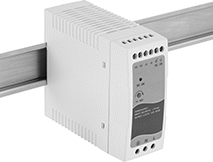
DIN-Rail-Mount Power Supplies
 |
Single-Phase Input |
Output | |||||||||||||
|---|---|---|---|---|---|---|---|---|---|---|---|---|---|
Voltage, V DC | Voltage Adjustment Range, V DC | Max. Current, amp | Max. Noise Peak-to-Peak, mV DC | Power Factor @ Voltage | Efficiency @ Voltage | Low-Voltage Output Protection | Enclosure Rating | Certification | Specs. Met | Each | |||
Single-Phase Input—100-240V AC Input Voltage | |||||||||||||
Screw-Clamp Terminal Input and Output Connection—With Output Voltage Signal | |||||||||||||
| 15 | 13.5 to 16.5 | 1.3 | 120 | Not Rated | 81% @ 230V AC | LPS, NEC Class 2 | IP20 | UL Listed C-UL Listed C-UL Recognized Component CE Marked TUV Rheinland Certified UL Recognized Component | UL 508 | 3718N956 | 000000 | ||
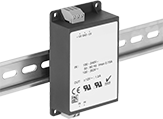
Low-Profile DIN-Rail-Mount Power Supplies
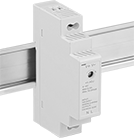 |
Power Supply on DIN Rail |
Output | |||||||||||||||||||||
|---|---|---|---|---|---|---|---|---|---|---|---|---|---|---|---|---|---|---|---|---|---|
No. of Power Connections | Voltage | Voltage Adjustment Range, V DC | Max. Current, amp | Peak Current, amp | Peak Current Duration, sec. | Max. Power, W | Max. Noise Peak-to-Peak | Power Factor @ Voltage | Efficiency @ Voltage | For Extra-Low Voltage Circuit Type | Enclosure Rating | Ht. | Wd. | Dp. | Certification | Specs. Met | Electrical Protection Type | Each | |||
Single-Phase Input—90V AC to 240V AC Input Voltage | |||||||||||||||||||||
Screw-Clamp Terminal Input and Output Connection | |||||||||||||||||||||
| 1 | 15V DC | 13.5 to 16.5 | 1 | 1.2 | 3 | 15 | 120 mV DC | Not Rated | 85% @ 130V AC | SELV | IP20 | 3.5" | 0.7" | 2.3" | UL Listed C-UL Listed C-UL Recognized Component CE Marked UL Recognized Component | UL 62368-1 | Overload, Overvoltage | 3670N51 | 000000 | ||
| 1 | 15V DC | 13.5 to 16.5 | 2 | 2.4 | 3 | 30 | 120 mV DC | Not Rated | 89% @ 230V AC | SELV | IP20 | 3.5" | 1.4" | 2.3" | UL Listed C-UL Listed C-UL Recognized Component CE Marked UL Recognized Component | UL 62368-1 | Overload, Overvoltage | 3670N52 | 00000 | ||
| 2 | 15V DC | 13.5 to 16.5 | 4 | 4.8 | 3 | 60 | 120 mV DC | Not Rated | 89% @ 230V AC | SELV | IP20 | 3.5" | 2" | 2.3" | UL Listed C-UL Listed C-UL Recognized Component CE Marked UL Recognized Component | UL 62368-1 | Overload, Overvoltage | 3670N54 | 00000 | ||
| 2 | 15V DC | 13.5 to 16.5 | 6.13 | 7.3 | 3 | 92 | 120 mV DC | Not Rated | 89% @ 230V AC | SELV | IP20 | 3.5" | 2.8" | 2.3" | UL Listed C-UL Listed C-UL Recognized Component CE Marked UL Recognized Component | UL 62368-1 | Over Temperature, Overload, Overvoltage | 3670N55 | 00000 | ||
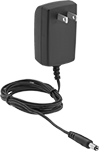
AC to DC Adapter Cords
 |
 |
Negative |
 |
Positive |
 |
NEMA 1-15 Plug |
Plug these adapter cords into a standard outlet and they change AC voltage to DC voltage. These cords use switching regulation, so they produce the stated voltage even when your outlet’s power or the power drawn by your device fluctuates. It also means they won’t get too hot. They have an LPS low-voltage output and Class II shock protection, so if something fails inside these cords, they’ll limit the risk of electrical shocks. These cords meet U.S. and Canadian safety standards as well as U.S. DOE (Department of Energy) Level VI standards for energy efficiency.
When choosing an adapter, match the output voltage and polarity of your device. Look for the polarity illustration on your device or the adapter you're replacing. The current you choose should, at a minimum, match your device. You can choose a higher current, but it will not improve performance.
Output Connection | Input Connection | Negative Polarity | Positive Polarity | |||||||||||||||||
|---|---|---|---|---|---|---|---|---|---|---|---|---|---|---|---|---|---|---|---|---|
Electrical Connection | Voltage, V DC | Max. Current, amp | End ID, mm | End OD, mm | End Shape | Electrical Connection | Voltage, V AC | Current, amp | NEMA Type | End Shape | Lg., ft. | Electrical Protection Type | Certification | External Power Supply Efficiency Std. | Color | Each | Each | |||
| Barrel | 15 | 0.56 | 2.1 | 5.5 | Straight | Straight Blade | 120, 240 | 0.4 | 1-15 | 90° Elbow | 6 | Overvoltage, Short Circuit | UL Listed, C-UL Listed | DoE Level VI | Black | 70235K671 | 00000 | 70235K664 | 00000 | |
| Barrel | 15 | 0.56 | 2.5 | 5.5 | Straight | Straight Blade | 120, 240 | 0.4 | 1-15 | 90° Elbow | 6 | Overvoltage, Short Circuit | UL Listed, C-UL Listed | DoE Level VI | Black | 70235K672 | 0000 | 70235K669 | 0000 | |
| Barrel | 15 | 0.8 | 2.1 | 5.5 | Straight | Straight Blade | 120, 240 | 0.4 | 1-15 | 90° Elbow | 6 | Overvoltage, Short Circuit | UL Listed, C-UL Listed | DoE Level VI | Black | 70235K682 | 0000 | 70235K673 | 0000 | |
| Barrel | 15 | 0.8 | 2.5 | 5.5 | Straight | Straight Blade | 120, 240 | 0.4 | 1-15 | 90° Elbow | 6 | Overvoltage, Short Circuit | UL Listed, C-UL Listed | DoE Level VI | Black | 70235K683 | 0000 | 70235K681 | 0000 | |
| Barrel | 15 | 1.2 | 2.1 | 5.5 | Straight | Straight Blade | 120, 240 | 0.5 | 1-15 | 90° Elbow | 6 | Overvoltage, Short Circuit | UL Listed, C-UL Listed | DoE Level VI | Black | 70235K694 | 00000 | 70235K686 | 00000 | |
| Barrel | 15 | 1.2 | 2.5 | 5.5 | Straight | Straight Blade | 120, 240 | 0.5 | 1-15 | 90° Elbow | 6 | Overvoltage, Short Circuit | UL Listed, C-UL Listed | DoE Level VI | Black | 70235K697 | 00000 | 70235K692 | 00000 | |
| Barrel | 15 | 1.6 | 2.1 | 5.5 | Straight | Straight Blade | 120, 240 | 0.8 | 1-15 | 90° Elbow | 6 | Overvoltage, Short Circuit | UL Listed, C-UL Listed | DoE Level VI | Black | 70235K72 | 00000 | 70235K98 | 00000 | |
| Barrel | 15 | 1.6 | 2.5 | 5.5 | Straight | Straight Blade | 120, 240 | 0.8 | 1-15 | 90° Elbow | 6 | Overvoltage, Short Circuit | UL Listed, C-UL Listed | DoE Level VI | Black | 70235K7 | 00000 | 70235K699 | 00000 | |
| Barrel | 15 | 2.4 | 2.1 | 5.5 | Straight | Straight Blade | 120, 240 | 1.3 | 1-15 | 90° Elbow | 6 | Overvoltage, Short Circuit | UL Listed, C-UL Listed | DoE Level VI | Black | 70235K711 | 00000 | 70235K705 | 00000 | |
| Barrel | 15 | 2.4 | 2.5 | 5.5 | Straight | Straight Blade | 120, 240 | 1.3 | 1-15 | 90° Elbow | 6 | Overvoltage, Short Circuit | UL Listed, C-UL Listed | DoE Level VI | Black | 70235K718 | 00000 | 70235K707 | 00000 | |
Multiple-Voltage DIN-Rail-Mount Power Supplies
 |  |
DIN 3 Rail |
Output | ||||||||||||||||||
|---|---|---|---|---|---|---|---|---|---|---|---|---|---|---|---|---|---|---|
No. of Power Connections | Voltage | Current | Max. Power, W | Max. Noise Peak-to-Peak | Power Factor @ Voltage | Efficiency @ Voltage | Enclosure Rating | Ht. | Wd. | Dp. | Certification | Flammability Rating | Electrical Protection Type | No. of Mounting Holes | Each | |||
Single-Phase Input—100 to 240V AC/100 to 353V DC Input Voltage | ||||||||||||||||||
Screw-Clamp Terminal Input and Output Connection | ||||||||||||||||||
| 2 | 15V DC -15V DC | 1 amp 1 amp | 30 | 300 mV DC 300 mV DC | 0.59 @ 120V AC 0.46 @ 240V AC | 68% @ 120V AC 68% @ 240V AC 68% @ 110V DC | IP20 | 4.7" | 2.6" | 1.3" | C-UL Recognized Component UL Recognized Component | UL 94 V-0 | Over Temperature, Overload | 6 | 3725N16 | 0000000 | ||
| 3 | 5V DC 15V DC -15V DC | 3 amp 0.5 amp 0.5 amp | 30 | 100 mV DC 300 mV DC 300 mV DC | 0.56 @ 120V AC 0.44 @ 240V AC | 68% @ 120V AC 68% @ 240V AC 68% @ 110V DC | IP20 | 4.7" | 2.6" | 1.3" | C-UL Recognized Component CE Marked UL Recognized Component | UL 94 V-0 | Over Temperature, Overload | 5 | 3725N14 | 000000 | ||
DIN-Rail DC to DC Power Converters
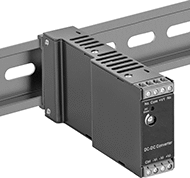 |
Mount these DC converters to DIN rails on fixtures such as industrial cabinets and electrical panels. By converting voltages, they let you connect power supplies to equipment that requires a different input voltage. They’re often used to power sensors or other components that require a lower voltage than surrounding equipment. Since they send a stable, consistent voltage to equipment, they can also be used to correct power supplies that send uneven voltages. All meet U.S. and Canadian, or European Union, safety standards.
If you exceed current limits, these converters will shut down to protect your equipment. Some converters have overvoltage or overload protection, as well.
Screw-Clamp Terminal Input and Output Connection—1 Output Power Connection
Output | ||||||||||||||
|---|---|---|---|---|---|---|---|---|---|---|---|---|---|---|
Voltage, V DC | Voltage Adjustment Range, V DC | Max. Current, amp | Max. Power, W | Max. Output Noise Peak-to-Peak | Ht. | Wd. | Dp. | Mounting Fasteners Included | Certification | Electrical Protection Type | Each | |||
9.5V DC to 36V DC Input Voltage | ||||||||||||||
| 15 | 13.5 to 16.5 | 2.6 | 40 | 75 mV DC | 2.3" | 1" | 4.9" | No | CE Marked | Overcurrent, Overvoltage | 6956N109 | 0000000 | ||
18V DC to 36V DC Input Voltage | ||||||||||||||
| 15 | 13.5 to 16.5 | 4 | 60 | 100 mV DC | 2.3" | 1" | 4.9" | No | CE Marked | Overcurrent, Overvoltage | 6956N111 | 000000 | ||
18V DC to 75V DC Input Voltage | ||||||||||||||
| 15 | 13.5 to 16.5 | 2.6 | 40 | 75 mV DC | 2.3" | 1" | 4.9" | No | CE Marked | Overcurrent, Overvoltage | 6956N101 | 000000 | ||
36V DC to 75V DC Input Voltage | ||||||||||||||
| 15 | 13.5 to 16.5 | 4 | 60 | 100 mV DC | 2.3" | 1" | 4.9" | No | CE Marked | Overcurrent, Overvoltage | 6956N112 | 000000 | ||
Screw-Clamp Terminal Input and Output Connection—2 Output Power Connections
Output | |||||||||||||
|---|---|---|---|---|---|---|---|---|---|---|---|---|---|
Voltage, V DC | Max. Current, amp | Max. Power, W | Max. Output Noise Peak-to-Peak | Ht. | Wd. | Dp. | Mounting Fasteners Included | Certification | Electrical Protection Type | Each | |||
9.5V DC to 36V DC Input Voltage | |||||||||||||
| -15, 15 | 1.3 | 40 | 150 mV DC | 2.3" | 1" | 4.9" | No | CE Marked | Overcurrent, Overvoltage | 6956N115 | 0000000 | ||
18V DC to 75V DC Input Voltage | |||||||||||||
| -15, 15 | 1.3 | 40 | 150 mV DC | 2.3" | 1" | 4.9" | No | CE Marked | Overcurrent, Overvoltage | 6956N116 | 000000 | ||
Screw-Clamp Terminal Input and Output Connection—3 Output Power Connections
Output | ||||||||||||
|---|---|---|---|---|---|---|---|---|---|---|---|---|
Voltage (Current) | Max. Power, W | Max. Output Noise Peak-to-Peak | Ht. | Wd. | Dp. | Mounting Fasteners Included | Certification | Electrical Protection Type | Each | |||
9.5V DC to 18V DC Input Voltage | ||||||||||||
| 5V DC (6 amp) 15V DC (0.3 amp) -15V DC (-0.3 amp) | 40 | 50 mV DC 75 mV DC 75 mV DC | 2.3" | 1" | 4.9" | No | CE Marked | Overcurrent, Overvoltage | 6956N12 | 0000000 | ||
18V DC to 36V DC Input Voltage | ||||||||||||
| 5V DC (6 amp) 15V DC (0.3 amp) -15V DC (-0.3 amp) | 40 | 50 mV DC 75 mV DC 75 mV DC | 2.3" | 1" | 4.9" | No | CE Marked | Overcurrent, Overvoltage | 6956N121 | 000000 | ||
36V DC to 75V DC Input Voltage | ||||||||||||
| 5V DC (6 amp) 15V DC (0.3 amp) -15V DC (-0.3 amp) | 40 | 50 mV DC 75 mV DC 75 mV DC | 2.3" | 1" | 4.9" | No | CE Marked | Overcurrent, Overvoltage | 6956N122 | 000000 | ||
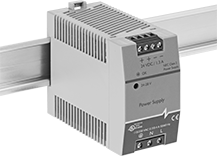
Compact Motor-Starting DIN-Rail-Mount Power Supplies
 |
Output | |||||||||||||||
|---|---|---|---|---|---|---|---|---|---|---|---|---|---|---|---|
Voltage, V DC | Voltage Adjustment Range, V DC | Max. Current, amp | Peak Current, amp | Peak Current Duration | No. of Power Connections | Max. Noise Peak-to-Peak, mV DC | Efficiency @ Voltage | Ht. | Wd. | Dp. | Cannot Be Sold To | Each | |||
Single-Phase Input—100-240V AC Input Voltage | |||||||||||||||
Screw-Clamp Terminal Input and Output Connection | |||||||||||||||
| 15 | 12 to 15 | 3.4 | 5.1 | Continuous | 2 | 50 | 86% @ 230V AC | 2.95" | 1.77" | 3.8" | California, Vermont | 7009K19 | 0000000 | ||
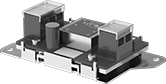
DC to DC Power Converters
Screw-Terminal Input and Output Connection—1 Output Power Connection
 |
Maximum Output Noise Peak-to-Peak—The lower a converter’s maximum output noise, also known as ripple noise, the less electronic interference it creates. These converters will work in most applications.
Output | |||||||||||||
|---|---|---|---|---|---|---|---|---|---|---|---|---|---|
Voltage, V DC | Voltage Adjustment Range, V DC | Max. Current, amp | Max. Power, W | Max. Output Noise Peak-to-Peak | Ht. | Wd. | Dp. | Mounting Fasteners Included | Electrical Protection Type | Each | |||
9V DC to 36V DC Input Voltage | |||||||||||||
| 15 | 13.5 to 16.5 | 1 | 15 | 150 mV DC | 3.7" | 2.1" | 1.1" | No | Overcurrent | 6955N112 | 000000 | ||
| 15 | 13.5 to 16.5 | 2 | 30 | 150 mV DC | 4.6" | 2.1" | 1.1" | No | Overcurrent, Overvoltage | 6955N12 | 00000 | ||
18V DC to 76V DC Input Voltage | |||||||||||||
| 15 | 13.5 to 16.5 | 1 | 15 | 150 mV DC | 3.7" | 2.1" | 1.1" | No | Overcurrent | 6955N116 | 00000 | ||
| 15 | 13.5 to 16.5 | 2 | 30 | 150 mV DC | 4.6" | 2.1" | 1.1" | No | Overcurrent, Overvoltage | 6955N124 | 00000 | ||
Screw-Terminal Input and Output Connection—2 Output Power Connections
|
Maximum Output Noise Peak-to-Peak—The lower a converter’s maximum output noise, also known as ripple noise, the less electronic interference it creates. These converters will work in most applications.
Output | ||||||||||||
|---|---|---|---|---|---|---|---|---|---|---|---|---|
Voltage, V DC | Max. Current, amp | Max. Power, W | Max. Output Noise Peak-to-Peak | Ht. | Wd. | Dp. | Mounting Fasteners Included | Electrical Protection Type | Each | |||
9V DC to 36V DC Input Voltage | ||||||||||||
| -15, 15 | 0.5 | 15 | 150 mV DC | 3.7" | 2.1" | 1.1" | No | Overcurrent | 6955N128 | 000000 | ||
| -15, 15 | 1 | 30 | 150 mV DC | 4.6" | 2.1" | 1.1" | No | Overcurrent, Overvoltage | 6955N134 | 00000 | ||
18V DC to 76V DC Input Voltage | ||||||||||||
| -15, 15 | 0.5 | 15 | 150 mV DC | 3.7" | 2.1" | 1.1" | No | Overcurrent | 6955N131 | 00000 | ||
| -15, 15 | 1 | 30 | 150 mV DC | 4.6" | 2.1" | 1.1" | No | Overcurrent, Overvoltage | 6955N137 | 00000 | ||
Detachable-Cord AC to DC Adapters
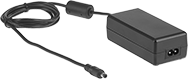 | 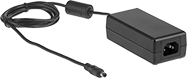 |
IEC C8 Input and Barrel Output | IEC C14 Input and Barrel Output |
 |  |
IEC C8 Input | IEC C14 Input |
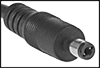 | |
Barrel Output | Positive |
Couple these adapters with a cord that matches your outlet and length requirements to run DC-powered electronics. Instead of plugging directly into an outlet, the body of these adapters sits on the floor or other surface, so it remains out of the way and won’t block multiple outlets. These adapters use switching regulation—they produce the stated voltage even when your outlet’s power or the power drawn by your device fluctuates. Most have an LPS low-voltage output, so if something fails inside these adapters, they’ll limit the risk of electrical shocks. They meet U.S., Canadian, and European safety standards. Many also meet U.S. and European standards for energy efficiency.
When choosing an adapter, match the output voltage and polarity of your device. Look for the polarity illustration on your device or the adapter you're replacing. The current you choose should, at a minimum, match your device. You can choose a higher current, but it will not improve performance.
IEC C8—Adapters with an IEC C8 input require power cords with a C7 socket. With Class II shock protection, they have two levels of insulation that prevent electrical shocks.
IEC C14—Adapters with an IEC C14 input require power cords with a C13 socket. They have Class I shock protection and prevent electrical shocks with a combination of insulation and a protective ground.
Output Connection | Input Connection | ||||||||||||||||
|---|---|---|---|---|---|---|---|---|---|---|---|---|---|---|---|---|---|
Voltage, V DC | Max. Current, amp | Polarity | End ID, mm | End OD, mm | End Shape | Electrical Connection | Voltage, V AC | Current, amp | End Shape | Lg., ft. | Shock Protection Class | Electrical Protection Type | Color | Each | |||
IEC C8 Input × Barrel Output | |||||||||||||||||
| 15 | 1.3 | Positive | 2.1 | 5.5 | Straight | Straight Blade | 120, 240 | 0.5 | Straight | 5 | II | Overcurrent, Overvoltage, Short Circuit | Black | 3824N11 | 000000 | ||
IEC C14 Input × Barrel Output | |||||||||||||||||
| 15 | 1.3 | Positive | 2.1 | 5.5 | Straight | Straight Blade | 120, 240 | 0.5 | Straight | 5 | I | Overcurrent, Overvoltage, Short Circuit | Black | 3824N104 | 00000 | ||
Remote On/Off Power Supplies
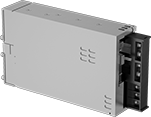 | 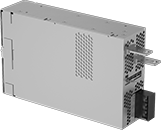 |
Single-Phase Input, Screw-Terminal Input and Output Connection | Single-Phase Input, Screw-Terminal Input and Quick-Disconnect-Terminal Output Connection |
Output | ||||||||||||||
|---|---|---|---|---|---|---|---|---|---|---|---|---|---|---|
Voltage, V DC | Voltage Adjustment Range, V DC | Max. Current, amp | Max. Power, W | Max. Noise Peak-to-Peak, mV DC | Power Factor @ Voltage | Efficiency @ Voltage | Electrical Connection | Ht. | Wd. | Dp. | Each | |||
Single-Phase Input—100-240V AC Input Voltage | ||||||||||||||
Screw-Terminal Input and Output Connection | ||||||||||||||
| 15 | 10.5 to 16.5 | 22 | 330 | 150 | 0.98 @ 100V AC 0.95 @ 200V AC | 78% @ 100V AC 81% @ 200V AC | 8-Pin JST Automotive 10-Pin JST Automotive | 1.65" | 4.02" | 6.69" | 6896N26 | 0000000 | ||
| 15 | 10.5 to 16.5 | 43 | 645 | 150 | 0.98 @ 100V AC 0.95 @ 200V AC | 79% @ 100V AC 82% @ 200V AC | 8-Pin JST Automotive 10-Pin JST Automotive | 2.4" | 4.72" | 7.48" | 6896N27 | 000000 | ||
Screw-Terminal Input and Quick-Disconnect-Terminal Output Connection | ||||||||||||||
| 15 | 10.5 to 16.5 | 70 | 1,050 | 150 | 0.98 @ 100V AC 0.95 @ 200V AC | 82% @ 100V AC 84% @ 200V AC | 8-Pin JST Automotive 10-Pin JST Automotive | 2.4" | 5.91" | 9.45" | 6896N28 | 000000 | ||
| 15 | 10.5 to 16.5 | 100 | 1,500 | 150 | 0.98 @ 100V AC 0.95 @ 200V AC | 83% @ 100V AC 86% @ 200V AC | 8-Pin JST Automotive 10-Pin JST Automotive | 2.4" | 7.01" | 10.55" | 6896N29 | 00000000 | ||
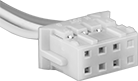 | 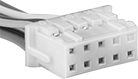 |
8-Pin JST Automotive Connection | 10-Pin JST Automotive Connection |
To use the remote features of these power supplies, you’ll need a wire connector.
8-Pin JST Automotive Connection—8-pin JST automotive connectors enable remote on/off, voltage sensing, and signaling functionality using the power supply’s auxiliary power output.
10-Pin JST Automotive Connection—10-pin JST automotive connectors only add remote on/off and voltage sensing functionality. They require an external power source, such as a battery or another power supply.
EMI Filtering IEC Connectors with Integrated Power Supply
Screw-On Male Receptacles
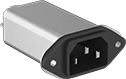 |
 |
Quick-Disconnect Terminals |
 |
IEC C14 |
Maximum Output Noise Peak-to-Peak—Maximum output noise is also known as ripple noise. When power supplies convert AC voltage to DC voltage, some noise from the AC voltage will carry into the output. While this noise won't affect most applications, it can interfere with other signals in extremely sensitive audio equipment and high-precision measuring and testing equipment. The lower the output noise, the less interference it creates.
Power Factor @ Voltage—Power factor shows how effectively a power supply draws AC power from the main electrical supply. The higher the power factor—up to a maximum score of 1—the lower your operating cost.
Efficiency @ Voltage—Efficiency describes how good a power supply is at converting the AC power it draws from your main electrical supply into DC power. High-efficiency power supplies cost less money to operate and produce less heat, meaning cooler temperatures in your electrical cabinet.
Output | For Panel Cutout | |||||||||||||
|---|---|---|---|---|---|---|---|---|---|---|---|---|---|---|
IEC Connector Type | Voltage, V DC | Max. Current, amp | Max. Power, W | Max. Noise Peak-to-Peak, mV DC | Power Factor @ Voltage | Efficiency @ Voltage | Ht. | Wd. | Temp., ° F | Electrical Protection Type | Each | |||
Single-Phase Input—100-240V AC Input Voltage | ||||||||||||||
| C14 | 15 | 0.333 | 5 | 60 | 0.6 @ 115V AC 0.45 @ 230V AC | 81% @ 230V AC | 0.9" | 1.2" | -10 to 140 | Overcurrent, Overload, Overvoltage | 6260N174 | 000000 | ||
International AC to DC Adapter Cords
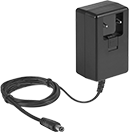 |
Adapter |
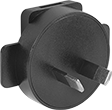 | 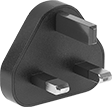 | 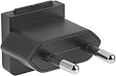 |
AS 3112 Plug (Australia and New Zealand) | BS 1363 Plug (United Kingdom ) | CEE 7/16 Plug (European Union) |
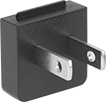 | | |
NEMA 1-15 Plug (North America) | Negative | Positive |
Output Connection | Input Connection | Negative Polarity | Positive Polarity | |||||||||||||||
|---|---|---|---|---|---|---|---|---|---|---|---|---|---|---|---|---|---|---|
Electrical Connection | Voltage, V DC | Max. Current, amp | End ID, mm | End OD, mm | End Shape | Electrical Connection | Voltage, V AC | Current, amp | End Shape | Lg., ft. | Electrical Protection Type | Color | Each | Each | ||||
AS/NZS 3112, BS 1363, CEE 7/16, × NEMA 1-15 Plugs | ||||||||||||||||||
| Barrel | 15 | 1.6 | 2.1 | 5.5 | Straight | Straight Blade | 120, 240 | 0.8 | 90° Elbow | 5 | Overvoltage, Short Circuit | Black | 3574N39 | 000000 | 3574N37 | 000000 | ||
| Barrel | 15 | 1.6 | 2.5 | 5.5 | Straight | Straight Blade | 120, 240 | 0.8 | 90° Elbow | 5 | Overvoltage, Short Circuit | Black | 3574N41 | 00000 | 3574N38 | 00000 | ||
