

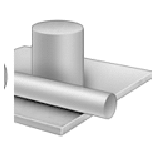
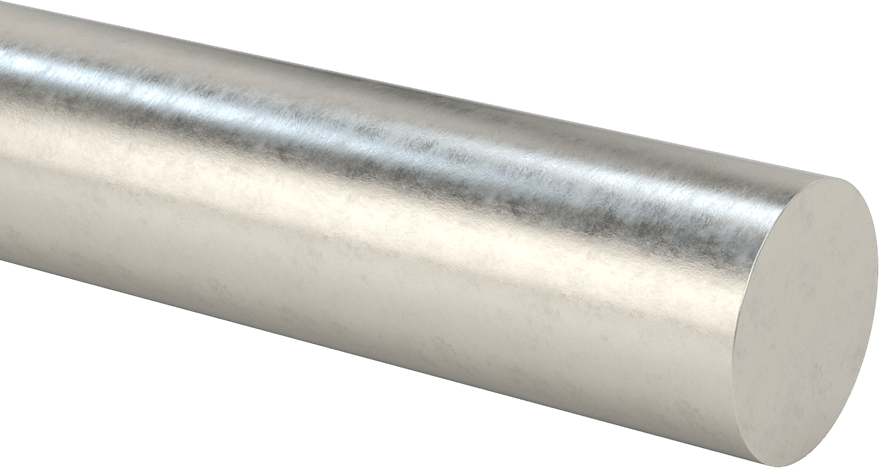
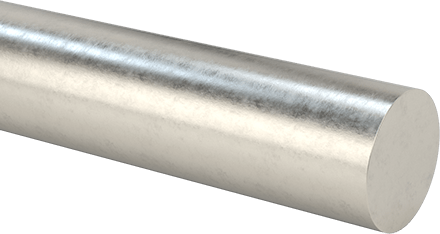
Multipurpose 304/304L Stainless Steel Rod/Disc
2-7/8" Diameter
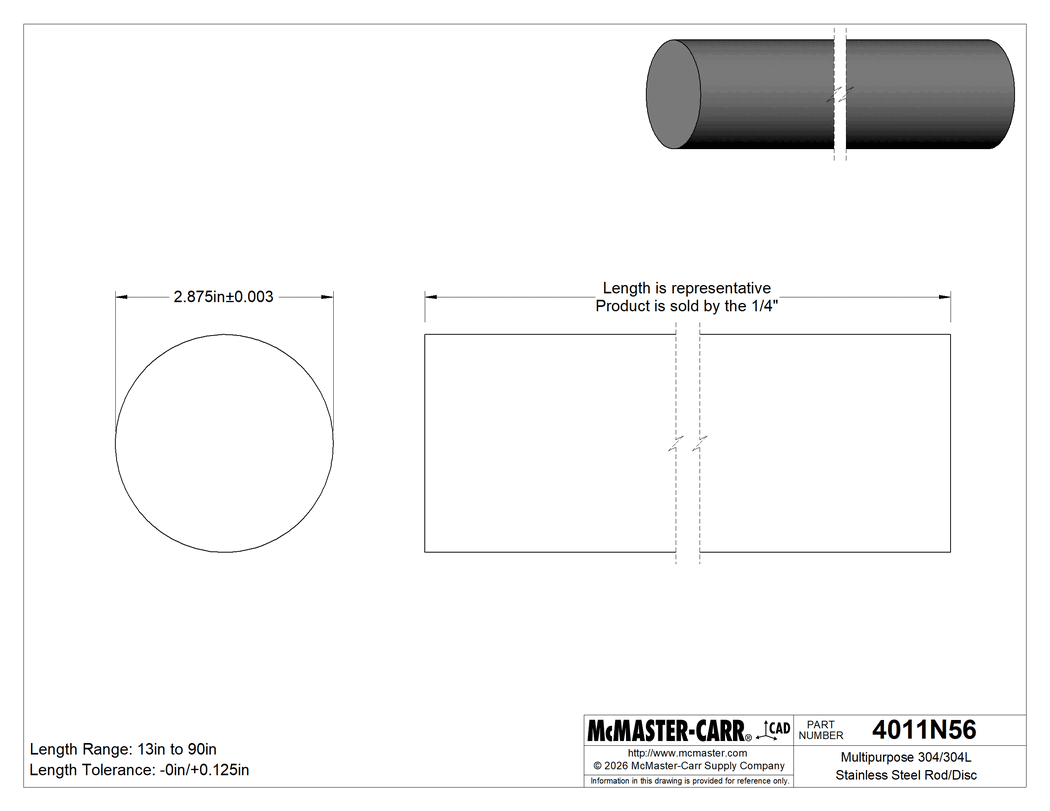



Diameter | 2 7/8" |
Diameter Tolerance | -0.003" to 0.003" |
Material | 304/304L Stainless Steel |
Fabrication | Cold Worked |
Hardness | Not Rated |
Specifications Met | ASTM A276, ASTM A484, SAE AMS5639, SAE AMS5647 |
Appearance | Plain |
Application | Multipurpose |
Certificate Form | Digital |
Certificate Type | Material Certificate with Traceable Lot Number |
Elongation | 40% |
Heat Treatable | No |
Heat Treatment | Annealed |
Material Composition | |
Carbon | 0% to 0.08% |
Chromium | 17.5% to 20% |
Iron | 64.74% to 74.5% |
Manganese | 0% to 2% |
Nickel | 8% to 12% |
Nitrogen | 0% to 0.1% |
Phosphorus | 0% to 0.045% |
Silicon | 0% to 1% |
Sulfur | 0% to 0.03% |
Shape | Rod |
Straightness Tolerance | Not Rated |
Tolerance Rating | Standard |
Length Tolerance | 0" to 1/8" |
Length Tolerance Type | Plus |
Magnetic Properties | Nonmagnetic |
Maximum Temperature | 1,500° F |
Performance | Corrosion Resistant, Chemical Resistant, High Strength, High Temperature, Ultra Formable, Ultra Weldable, Made-to-Order |
Warning Message | Physical and mechanical properties are not guaranteed. They are intended only as a basis for comparison and not for design purposes. |
Yield Strength | 30,000 psi |
Country of Origin | United Kingdom |
DFARS Compliance | Not Specialty Metals Compliant |
Export Control Classification Number (ECCN) | EAR99 |
REACH Compliance | REACH (EC 1907/2006) (02/04/2026, 253 SVHC) Compliant |
Schedule B Number | 722220.0000 |
U.S.–Mexico–Canada Agreement (USMCA) Qualifying | No |
If you need 304 stainless steel rods in a specific length, we’ll get them for you. Made from the most common stainless steel, these rods are used to create corrosion-resistant parts for a wide range of applications. Machine them into anything from shafts on chemical mixers to flanges on beverage lines. They maintain their corrosion resistance in temperatures up to 1500° F.
304/304L Stainless Steel—Dual certified, choose 304/304L whether you need 304, 304L, or an alloy that captures the benefits of both. Low carbon content improves weldability while maintaining corrosion resistance and strength.
The information in this 3-D model is provided for reference only.