

Filter by
Product Family
System of Measurement


ID


Cage Material
Inner Ring Type

For Load Direction


Maximum Rotation Speed
Ball Material


Length
Bearing Construction

Dynamic Radial Load Capacity
DFARS Specialty Metals

About Ball Bearings
%20--%3e%3csvg%20version='1.1'%20id='Layer_1'%20xmlns='http://www.w3.org/2000/svg'%20xmlns:xlink='http://www.w3.org/1999/xlink'%20x='0px'%20y='0px'%20viewBox='0%200%20400%20400'%20style='enable-background:new%200%200%20400%20400;'%20xml:space='preserve'%3e%3cstyle%20type='text/css'%3e%20.st0{fill:%231A70A0;}%20.st1{opacity:0.5;}%20%3c/style%3e%3cg%3e%3cg%3e%3cpath%20class='st0'%20d='M200,56.9c38.35,0,74.4,14.93,101.51,42.05c27.11,27.11,42.05,63.17,42.05,101.51s-14.93,74.4-42.05,101.51%20S238.35,344.02,200,344.02s-74.4-14.93-101.51-42.05c-27.11-27.11-42.05-63.17-42.05-101.51s14.93-74.4,42.05-101.51%20S161.65,56.9,200,56.9%20M200,12.9C96.41,12.9,12.44,96.88,12.44,200.46c0,103.59,83.97,187.56,187.56,187.56%20c103.59,0,187.56-83.97,187.56-187.56C387.56,96.88,303.59,12.9,200,12.9L200,12.9z'/%3e%3c/g%3e%3cg%3e%3cg%20class='st1'%3e%3cpath%20class='st0'%20d='M235.49,152.24h16.15l-27.46,111.87c-1.94,7.8-2.91,12.5-2.91,14.1c0,1.82,0.58,3.29,1.73,4.41%20c1.16,1.12,2.69,1.68,4.61,1.68c5.23,0,11.78-3.85,19.63-11.55l17.22,21.34c-16.95,17.33-34.87,26-53.78,26%20c-8.37,0-15.45-1.47-21.23-4.41c-5.79-2.94-10.44-7.25-13.95-12.92c-3.51-5.67-5.27-11.18-5.27-16.53c0-1.93,0.35-5.24,1.05-9.94%20c1-6.94,2.05-12.54,3.15-16.82l15.22-62.15h-32.69l7.65-30.97C190.89,163.58,214.53,158.88,235.49,152.24z%20M230.44,80.84%20c8.24,0,14.66,2.62,19.26,7.86c4.6,5.24,6.9,11.55,6.9,18.94c0,5.46-1.42,10.7-4.25,15.73c-2.83,5.03-6.88,9.07-12.12,12.12%20c-5.24,3.05-10.33,4.57-15.24,4.57c-4.6,0-9.17-1.23-13.72-3.69c-4.55-2.46-8.02-5.78-10.43-9.95%20c-2.41-4.17-3.61-8.67-3.61-13.48c0-5.35,1.52-10.64,4.57-15.89c3.05-5.24,7.03-9.25,11.96-12.04%20C218.68,82.23,224.24,80.84,230.44,80.84z'/%3e%3c/g%3e%3cg%3e%3cpath%20class='st0'%20d='M214.08,152.24h16.15l-27.46,111.87c-1.94,7.8-2.91,12.5-2.91,14.1c0,1.82,0.58,3.29,1.73,4.41%20c1.16,1.12,2.69,1.68,4.61,1.68c5.23,0,11.78-3.85,19.63-11.55l17.22,21.34c-16.95,17.33-34.87,26-53.78,26%20c-8.37,0-15.45-1.47-21.23-4.41c-5.79-2.94-10.44-7.25-13.95-12.92c-3.51-5.67-5.27-11.18-5.27-16.53c0-1.93,0.35-5.24,1.05-9.94%20c1-6.94,2.05-12.54,3.15-16.82l15.22-62.15h-32.69l7.65-30.97C169.48,163.58,193.11,158.88,214.08,152.24z%20M209.03,80.84%20c8.24,0,14.66,2.62,19.26,7.86c4.6,5.24,6.9,11.55,6.9,18.94c0,5.46-1.42,10.7-4.25,15.73c-2.83,5.03-6.88,9.07-12.12,12.12%20c-5.24,3.05-10.33,4.57-15.24,4.57c-4.6,0-9.17-1.23-13.72-3.69c-4.55-2.46-8.02-5.78-10.43-9.95%20c-2.41-4.17-3.61-8.67-3.61-13.48c0-5.35,1.52-10.64,4.57-15.89c3.05-5.24,7.03-9.25,11.96-12.04%20C197.26,82.23,202.83,80.84,209.03,80.84z'/%3e%3c/g%3e%3c/g%3e%3c/g%3e%3c/svg%3e)
Select bearings by load direction, seal type, capacity, and speed ratings to limit wear and keep your equipment running.
Ball Bearings
 |
Shielded |
 |
Sealed |
Smoother than smooth—the balls inside these bearings roll nearly friction-free. You’ll often find them on rapidly rotating parts, from the whirring chuck on a power drill to the spinning shaft on an electric motor.
Shielded—The balls are covered just enough to keep out large particles while allowing air to pass through and dissipate heat.
Sealed—The best choice for dirty environments. A barrier seals out dust so it won't gunk up or wear down the balls. However, these bearings retain the most heat since air can't flow through.
Steel—Strong and wear resistant. However, these bearings are best for dry environments since moisture will cause them to rust.
Corrosion-Resistant 440C Stainless Steel—Combine the strength of steel with the corrosion resistance of stainless steel. These bearings won't degrade from water or mild chemicals, such as the ammonia in cleaning solutions. However, they'll weaken when exposed to salt water and harsh chemicals, such as bleach.
ABEC Rating—Bearings with an ABEC rating meet industry tolerance standards established by the Annular Bearing Engineers Committee (ABEC). They're rated on a scale from 1 to 9. The higher the rating, the tighter the tolerance. Bearings rated ABEC 1 or 3 are precise enough for most applications. If your application consistently runs at high speeds or requires high accuracy, consider bearings rated ABEC 5 or higher, since they generate less friction and heat.
Temp. Range, ° F | |||||||||||||
|---|---|---|---|---|---|---|---|---|---|---|---|---|---|
For Shaft Dia., mm | For Housing ID, mm | Wd., mm | ABEC Rating | Dynamic Radial Load Cap., lb. | Max. Rotation Speed, rpm | Min. | Max. | Inner Ring Type | Bearing Trade No. | Each | |||
Shielded | |||||||||||||
Steel | |||||||||||||
| 3 | 10 | 4 | 3 | 120 | 60,000 | -20 | 230 | Standard | 623-2Z | 4481N31 | 000000 | ||
Corrosion-Resistant 440C Stainless Steel | |||||||||||||
| 3 | 6 | 2.5 | 5 | 45 | 80,000 | -40 | 240 | Standard | 63-2Z | 7804K124 | 0000 | ||
| 3 | 7 | 3 | 5 | 70 | 75,000 | -40 | 240 | Standard | 683-2Z | 7804K125 | 0000 | ||
| 3 | 8 | 4 | 5 | 120 | 67,000 | -40 | 240 | Standard | 693-2Z | 7804K126 | 0000 | ||
| 3 | 10 | 4 | 5 | 140 | 56,000 | -40 | 240 | Standard | 623-2Z | 7804K128 | 0000 | ||
Sealed | |||||||||||||
Steel | |||||||||||||
| 3 | 10 | 4 | 3 | 120 | 40,000 | -30 | 210 | Standard | 623-2RS | 4481N77 | 00000 | ||
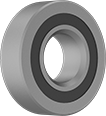
Permanently Lubricated Ball Bearings
 |
Temp. Range, ° F | |||||||||||||
|---|---|---|---|---|---|---|---|---|---|---|---|---|---|
For Shaft Dia., mm | For Housing ID, mm | Wd., mm | ABEC Rating | Dynamic Radial Load Cap., lb. | Max. Rotation Speed, rpm | Min. | Max. | Inner Ring Type | Bearing Trade No. | Each | |||
Open | |||||||||||||
Corrosion-Resistant 440C Stainless Steel | |||||||||||||
| 3 | 7 | 2 | 1 | 35 | 60,000 | -10 | 200 | Standard | 683 | 4668K105 | 000000 | ||
| 3 | 8 | 3 | 1 | 65 | 54,000 | -10 | 200 | Standard | 693 | 4668K106 | 00000 | ||
| 3 | 9 | 3 | 1 | 65 | 50,000 | -10 | 200 | Standard | 603 | 4668K107 | 00000 | ||
| 3 | 10 | 4 | 1 | 110 | 46,000 | -10 | 200 | Standard | 623 | 4668K103 | 00000 | ||
| 3 | 13 | 5 | 1 | 220 | 37,000 | -10 | 200 | Standard | 633 | 4668K104 | 00000 | ||
Sealed | |||||||||||||
Corrosion-Resistant 440C Stainless Steel | |||||||||||||
| 3 | 7 | 3 | 1 | 35 | 60,000 | -10 | 200 | Standard | 683-2RS | 4668K216 | 00000 | ||
| 3 | 8 | 4 | 1 | 65 | 54,000 | -10 | 200 | Standard | 693-2RS | 4668K217 | 00000 | ||
| 3 | 10 | 4 | 1 | 110 | 46,000 | -10 | 200 | Standard | 623-2RS | 4668K214 | 00000 | ||
| 3 | 13 | 5 | 1 | 220 | 37,000 | -10 | 200 | Standard | 633-2RS | 4668K215 | 00000 | ||
Flanged Ball Bearings
Flange, mm | Temp. Range, ° F | ||||||||||||||
|---|---|---|---|---|---|---|---|---|---|---|---|---|---|---|---|
For Shaft Dia., mm | For Housing ID, mm | Wd., mm | OD | Thk. | ABEC Rating | Dynamic Radial Load Cap., lb. | Max. Rotation Speed, rpm | Min. | Max. | Inner Ring Type | Bearing Trade No. | Each | |||
Open | |||||||||||||||
 | |||||||||||||||
Steel | |||||||||||||||
| 3 | 6 | 2 | 7.2 | 0.6 | 3 | 40 | 96,000 | -50 | 300 | Standard | 63 | 57155K424 | 00000 | ||
| 3 | 10 | 4 | 11.5 | 1 | 3 | 140 | 78,000 | -50 | 300 | Standard | 623 | 57155K435 | 00000 | ||
Corrosion-Resistant 440C Stainless Steel | |||||||||||||||
| 3 | 6 | 2 | 7.2 | 0.6 | 3 | 30 | 96,000 | -50 | 300 | Standard | 63 | 57155K425 | 00000 | ||
| 3 | 7 | 2 | 8.1 | 0.5 | 3 | 50 | 88,000 | -50 | 300 | Standard | 683 | 57155K427 | 00000 | ||
| 3 | 8 | 3 | 9.5 | 0.7 | 3 | 100 | 82,000 | -50 | 300 | Standard | 693 | 57155K429 | 00000 | ||
| 3 | 10 | 4 | 11.5 | 1 | 3 | 110 | 78,000 | -50 | 300 | Standard | 623 | 57155K436 | 00000 | ||
Shielded | |||||||||||||||
 | |||||||||||||||
Steel | |||||||||||||||
| 3 | 6 | 2.5 | 7.2 | 0.6 | 3 | 40 | 81,000 | -50 | 300 | Standard | 63-2Z | 57155K537 | 00000 | ||
| 3 | 8 | 4 | 9.5 | 0.9 | 3 | 120 | 70,000 | -50 | 300 | Standard | 693-2Z | 57155K542 | 00000 | ||
| 3 | 9 | 5 | 10.5 | 1 | 3 | 120 | 66,000 | -50 | 300 | Standard | 603-2Z | 57155K546 | 00000 | ||
Corrosion-Resistant 440C Stainless Steel | |||||||||||||||
| 3 | 6 | 2.5 | 7.2 | 0.6 | 3 | 30 | 81,000 | -50 | 300 | Standard | 63-2Z | 57155K538 | 00000 | ||
| 3 | 7 | 3 | 8.1 | 0.8 | 3 | 50 | 74,000 | -50 | 300 | Standard | 683-2Z | 57155K541 | 00000 | ||
| 3 | 8 | 4 | 9.5 | 0.9 | 3 | 100 | 70,000 | -50 | 300 | Standard | 693-2Z | 57155K543 | 00000 | ||
| 3 | 10 | 4 | 11.5 | 1 | 3 | 120 | 66,000 | -50 | 300 | Standard | 623-2Z | 57155K549 | 00000 | ||
High-Precision Ball Bearings
 |
Open |
 |
Shielded |
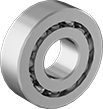
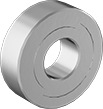
The most precise bearings we offer, with tolerances tighter than a speck of dust. Rated ABEC 7 out of 9, they meet strict tolerance standards established by the Annular Bearing Engineers Committee (ABEC). You'll find them in equipment that requires both high speed and pinpoint accuracy, such as gyroscopes.
Open—With no rubber seal to block airflow, these bearings dissipate heat quickly, extending the life of the lubricant and reducing friction over time.
Shielded—The balls are covered just enough to keep out large particles while allowing air to pass through and dissipate heat.
Corrosion-Resistant 440C Stainless Steel—Combine the strength of steel with the corrosion resistance of stainless steel. These bearings won't degrade from water or mild chemicals, such as the ammonia in cleaning solutions. However, they'll weaken when exposed to salt water and harsh chemicals, such as bleach.
Temp. Range, ° F | ||||||||||||
|---|---|---|---|---|---|---|---|---|---|---|---|---|
For Shaft Dia., mm | For Housing ID, mm | Wd., mm | ABEC Rating | Dynamic Radial Load Cap., lb. | Max. Rotation Speed, rpm | Min. | Max. | Inner Ring Type | Each | |||
Open | ||||||||||||
Corrosion-Resistant 440C Stainless Steel | ||||||||||||
| 3 | 8 | 3 | 7 | 75 | 73,000 | -30 | 280 | Standard | 7487N16 | 000000 | ||
| 3 | 10 | 4 | 7 | 90 | 62,000 | -30 | 280 | Standard | 7487N17 | 00000 | ||
Shielded | ||||||||||||
Corrosion-Resistant 440C Stainless Steel | ||||||||||||
| 3 | 6 | 2 | 7 | 41 | 89,000 | -30 | 280 | Standard | 7487N46 | 00000 | ||
| 3 | 6 | 2.5 | 7 | 41 | 89,000 | -30 | 280 | Standard | 7487N45 | 00000 | ||
| 3 | 7 | 3 | 7 | 55 | 80,000 | -30 | 280 | Standard | 7487N47 | 00000 | ||
| 3 | 8 | 3 | 7 | 75 | 73,000 | -30 | 280 | Standard | 7487N48 | 00000 | ||
Needle-Roller Bearings
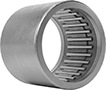 |
Also known as drawn-cup roller bearings, these are our thinnest roller bearings. The outer ring is drawn out to form a lip that holds the bearing together. Bearings take on the shape of their housing and may be oblong prior to installation.
Open Bearing—Open bearings dissipate heat more efficiently than sealed bearings.
Radial Load Cap., lb. | |||||||||||||
|---|---|---|---|---|---|---|---|---|---|---|---|---|---|
For Shaft Dia., mm | For Housing ID, mm | Wd., mm | Dynamic | Static | Max. Rotation Speed, rpm | Lubrication | For Shaft Surface Smoothness, Ra, μin | Temp. Range, ° F | Specs. Met | Each | |||
For Radial Load—Open with Steel Ring | |||||||||||||
| 3 | 6.5 | 6 | 270 | 180 | 48,000 | Required | 8 | 0 to 240 | DIN 618, ISO 3245 | 5905K347 | 00000 | ||
Dry-Running Flanged Sleeve Bearings
 |
For Shaft Dia., mm | For Housing ID, mm | Lg., mm | Flange OD, mm | Flange Thk., mm | Dynamic Radial Load Cap. @ Speed | Dynamic Thrust Load Cap. @ Speed | Color | Temp. Range, ° F | Food Industry Std. | Each | |||
|---|---|---|---|---|---|---|---|---|---|---|---|---|---|
Ultra-Chemical-Resistant PTFE | |||||||||||||
| 3 | 6 | 4 | 9 | 1.5 | 5 lb. @ 120 rpm | 7.5 lb. @ 120 rpm | White | -200 to 450 | FDA Compliant 21 CFR 177.1550 | 2706T511 | 000000 | ||
High-Load PEEK | |||||||||||||
| 3 | 6 | 4 | 9 | 1.5 | 70 lb. @ 120 rpm | 110 lb. @ 120 rpm | Beige | -20 to 450 | — | 6627K501 | 00000 | ||
Moisture-Resistant Ultra-Low-Friction Plastic Blend | |||||||||||||
| 3 | 4.5 | 3 | 7.5 | 0.75 | 36 lb. @ 120 rpm | 60 lb. @ 120 rpm | Yellow | -50 to 190 | — | 2705T111 | 0000 | ||
| 3 | 4.5 | 5 | 7.5 | 0.75 | 60 lb. @ 120 rpm | 60 lb. @ 120 rpm | Yellow | -50 to 190 | — | 2705T112 | 0000 | ||
High-Load Ultra-Low-Friction Plastic Blend | |||||||||||||
| 3 | 4.5 | 5 | 7.5 | 0.75 | 85 lb. @ 120 rpm | 85 lb. @ 120 rpm | Yellow | -55 to 190 | — | 2706T72 | 0000 | ||
Ball Bearings for Food and Beverage
 |
Sealed |
Temp. Range, ° F | ||||||||||||||
|---|---|---|---|---|---|---|---|---|---|---|---|---|---|---|
For Shaft Dia., mm | For Housing ID, mm | Wd., mm | ABEC Rating | Dynamic Radial Load Cap., lb. | Max. Rotation Speed, rpm | Min. | Max. | Inner Ring Type | Food Industry Std. | Bearing Trade No. | Each | |||
Sealed | ||||||||||||||
Corrosion-Resistant 440C Stainless Steel | ||||||||||||||
| 3 | 8 | 4 | 1 | 125 | 54,500 | -40 | 200 | Standard | FDA Compliant 21 CFR 178.3570 | 693-2RS | 4648K317 | 000000 | ||
| 3 | 10 | 4 | 1 | 140 | 40,000 | -40 | 200 | Standard | FDA Compliant 21 CFR 178.3570 | 623-2RS | 4648K305 | 00000 | ||
Oil-Embedded Flanged Sleeve Bearings
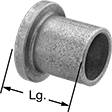 |
For Shaft Dia., mm | For Housing ID, mm | Lg., mm | Flange OD, mm | Flange Thk., mm | Dynamic Radial Load Cap. @ Speed | Dynamic Thrust Load Cap. @ Speed | Base Oil | Temp. Range, ° F | Each | |||
|---|---|---|---|---|---|---|---|---|---|---|---|---|
841 Bearing Bronze | ||||||||||||
| 3 | 4.5 | 3 | 7.5 | 0.75 | 27 lb. @ 120 rpm | 115 lb. @ 120 rpm | Synthetic Oil | -35 to 300 | 6659K201 | 000000 | ||
| 3 | 4.5 | 5 | 7.5 | 0.75 | 46 lb. @ 120 rpm | 115 lb. @ 120 rpm | Synthetic Oil | -35 to 300 | 6659K202 | 00000 | ||
| 3 | 6 | 4 | 9 | 1.5 | 37 lb. @ 120 rpm | 175 lb. @ 120 rpm | Synthetic Oil | -35 to 300 | 6659K64 | 0000 | ||
| 3 | 6 | 5 | 9 | 1.5 | 46 lb. @ 120 rpm | 175 lb. @ 120 rpm | Synthetic Oil | -35 to 300 | 6659K203 | 00000 | ||
| 3 | 6 | 6 | 9 | 1.5 | 55 lb. @ 120 rpm | 175 lb. @ 120 rpm | Mineral Oil | 10 to 220 | 6659K111 | 0000 | ||
High-Load 863 Iron Copper | ||||||||||||
| 3 | 6 | 4 | 9 | 1.5 | 70 lb. @ 120 rpm | 270 lb. @ 120 rpm | Synthetic Oil | -15 to 300 | 2938T75 | 0000 | ||
Ball Screw/Splines and Bearings
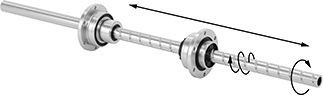 |
From one compact system, transmit linear or rotary motion or both at once (sometimes called spiral motion). Because of these different motions, these ball screw/splines and bearings create efficient, fluid movements in complex automated applications, such as pick-and-place robots.
The ball bearings move smoothly and precisely, even at high speeds. They're powered independently, so you can drive one bearing at a time or both together to coordinate movements.
The ball screw/splines are hardened on the surface, so they stand up to repeated motion. They’re also hollow, so you can run electrical wiring, compressed air tubing, coolants, or lubricant through their center.
Spline | Thread | Ball Screw Bearing | Ball Spline Bearing | |||||||||||||||||
|---|---|---|---|---|---|---|---|---|---|---|---|---|---|---|---|---|---|---|---|---|
Lg., mm | No. of | Lg., mm | Direction, ° F | Thread Direction | ID, mm | Lg., mm | Root Dia., mm | OD, mm | Overall Lg., mm | Dynamic Load Cap., lb. | Static Load Cap., lb. | OD, mm | Overall Lg., mm | Dynamic Load Cap., lb. | Static Load Cap., lb. | Max. Dynamic Torque, in·lbf | Each | |||
1055 Carbon Steel | ||||||||||||||||||||
8 mm Dia. (Tolerance: -0.015 mm to 0 mm) | ||||||||||||||||||||
| 200 | 4 | 180 | 5 to 176 | Right Hand | 3 | 200 | 7.44 | 19 | 28.5 | 240 | 400 | 16 | 25 | 330 | 580 | 17 | 4049N11 | 000000000 | ||
Thrust Ball Bearings
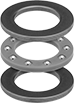 |  |
For silky-smooth motion, the balls inside these bearings roll nearly friction-free. You'll often find them at the end of a shaft or between a stationary and rotating surface, such as on a propeller or rotary table.
These bearings come as three separate pieces—one cage and two washers. The cage holds the balls in place, while the washers create a surface for the balls to roll on. This design is easy to lubricate, but the oil will attract dust and grime since it's exposed.
Steel—Strong and wear resistant. However, these bearings are best for dry environments since moisture will cause them to rust.
For Shaft Dia., mm | OD, mm | Thk., mm | Cage Material | Dynamic Thrust Load Cap., lb. | Max. Rotation Speed, rpm | Temp. Range, ° F | Includes | Each | |||
|---|---|---|---|---|---|---|---|---|---|---|---|
Steel | |||||||||||
| 3 | 8 | 3.5 | Bronze | 130 | 12,000 | -60 to 250 | Two Washers | 7806K53 | 00000 | ||
Flanged Sleeve Bearings
 |
These bearings don’t come with a lubricant, so you can select the oil that meets the needs of your application. You’ll need to refill the oil, so make sure the bearing is located where you can access it. All are fabricated and inspected in the U.S.
Flanged sleeve bearings combine a sleeve and thrust bearing in one. The flange supports thrust loads and prevents the bearing from being pushed out of place. The sleeve is the simplest way to support the load of a rotating shaft while reducing friction. Also known as plain bearings.
High-Load 932 Bearing Bronze—These bearings are strong enough for sudden starts and stops, plus they resist wear and tear. They are cast from an alloy of leaded tin bronze for uniform rigidity and strength. Also known as 660 leaded bronze bearings.
For Shaft Dia., mm | For Housing ID, mm | Lg., mm | Flange OD, mm | Flange Thk., mm | Dynamic Radial Load Cap. @ Speed | Dynamic Thrust Load Cap. @ Speed | Temp. Range, ° F | Each | |||
|---|---|---|---|---|---|---|---|---|---|---|---|
High-Load 932 Bearing Bronze | |||||||||||
| 3 | 6 | 4 | 9 | 1.5 | 70 lb. @ 120 rpm | 350 lb. @ 120 rpm | -350 to 450 | 5448T411 | 000000 | ||
Oil-Embedded Sleeve Bearings
 |
For Shaft Dia., mm | For Housing ID, mm | Lg., mm | Dynamic Radial Load Cap. @ Speed | Base Oil | Temp. Range, ° F | Each | |||
|---|---|---|---|---|---|---|---|---|---|
841 Bearing Bronze | |||||||||
| 3 | 6 | 4 | 37 lb. @ 120 rpm | Synthetic Oil | -35 to 300 | 6658K64 | 00000 | ||
| 3 | 6 | 6 | 55 lb. @ 120 rpm | Synthetic Oil | -35 to 300 | 6658K111 | 0000 | ||
| 3 | 6 | 10 | 90 lb. @ 120 rpm | Synthetic Oil | -35 to 300 | 6658K721 | 0000 | ||
High-Load 863 Iron Copper | |||||||||
| 3 | 6 | 4 | 70 lb. @ 120 rpm | Synthetic Oil | -15 to 300 | 2868T304 | 0000 | ||
| 3 | 6 | 10 | 185 lb. @ 120 rpm | Synthetic Oil | -15 to 300 | 2868T305 | 0000 | ||
Mounted Linear Ball Bearings
Fixed Alignment
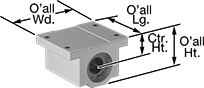 |
Fixed-alignment bearings are for use where shaft misalignment is unlikely.
Overall, mm | Load Capacity, lb. | Temp., ° F | Mounting Holes | ||||||||||||||
|---|---|---|---|---|---|---|---|---|---|---|---|---|---|---|---|---|---|
For Shaft Dia., mm | Lg. | Wd. | Ht. | Ctr. Ht., mm | With End Seals | Dynamic | Static | Min. | Max. | For Shaft Material | No. of | Dia., mm | Thread Size | Each | |||
Steel Bearings with 6061 Aluminum Housing | |||||||||||||||||
| 3 | 13 | 16 | 10 | 5 | Yes | 15 | 23 | -4 | 176 | Stainless Steel, Steel | 4 | 2 | M2 × 0.4 mm | 9338T61 | 000000 | ||
Mounted Ball Bearings
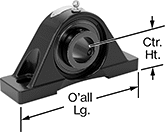 |
Smoother than smooth—the balls inside these bearings roll nearly friction-free. The sturdy housing bolts down to support shafts as they turn.
Lubricate regularly to keep your bearing in tip-top shape. Bearings with seals and shields keep lubricants in and contaminants out, and come packed with grease. Open bearings require initial lubrication and offer less protection against dust and debris.
Aluminum Housing—One-third the weight of cast iron but not as strong. Aluminum also resists corrosion.
Press Fit—For a tight connection to the shaft, install with a press or by heating and then cooling the bearing. Also known as an interference fit.
Overall | ||||||||||||
|---|---|---|---|---|---|---|---|---|---|---|---|---|
For Shaft Dia., mm | Ctr. Ht. | Lg. | Wd. | Dynamic Radial Load Cap., lb. | Max. Rotation Speed, rpm | Bearing Material | Bearing Seal Type | Manufacturer | Each | |||
Aluminum Housing | ||||||||||||
Press Fit | ||||||||||||
| 3 | 3/8" | 1 29/64" | 13/64" | 110 | 25,000 | 440C Stainless Steel | Sealed | McMaster-Carr Approved | 4491N27 | 000000 | ||
| 3 | 3/8" | 1 29/64" | 13/64" | 110 | 50,000 | 440C Stainless Steel | Shielded | McMaster-Carr Approved | 8600N113 | 00000 | ||
Linear Ball Bearings
Fixed Alignment
 |
Without Retaining Ring Grooves |
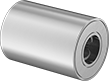
Fixed-alignment bearings are for use where shaft misalignment is unlikely.
Stainless Steel Ball—Bearings with stainless steel balls are more corrosion resistant than bearings with steel balls.
Load Capacity, lb. | Temp., ° F | |||||||||||||
|---|---|---|---|---|---|---|---|---|---|---|---|---|---|---|
For Shaft Dia., mm | Overall Lg., mm | OD, mm | For Housing ID | With Retaining Ring Grooves | With End Seals | Dynamic | Static | Min. | Max. | For Shaft Material | Each | |||
440C Stainless Steel Bearings with Stainless Steel Balls | ||||||||||||||
| 3 | 10 | 7 | 7.000 mm to 7.015 mm | No | No | 15 | 20 | -4 | 176 | Stainless Steel, Steel | 61205K97 | 000000 | ||
Steel Bearings with Steel Balls | ||||||||||||||
| 3 | 10 | 7 | 7.000 mm to 7.015 mm | No | No | 15 | 20 | -4 | 176 | Stainless Steel, Steel | 61205K71 | 00000 | ||
Sleeve Bearings
 |
For Shaft Dia., mm | For Housing ID, mm | Lg., mm | Dynamic Radial Load Cap. @ Speed | Temp. Range, ° F | Each | |||
|---|---|---|---|---|---|---|---|---|
High-Load 932 Bearing Bronze | ||||||||
| 3 | 6 | 3 | 55 lb. @ 120 rpm | -350 to 450 | 7811K111 | 00000 | ||
Ultra-Low-Friction Oil-Embedded Sleeve Bearings
 |
For Shaft Dia., mm | For Housing ID, mm | Lg., mm | Dynamic Radial Load Cap. @ Speed | Base Oil | Lubricant Additive | Temp. Range, ° F | Specs. Met | Each | |||
|---|---|---|---|---|---|---|---|---|---|---|---|
841 Bearing Bronze | |||||||||||
| 3 | 6 | 4 | 37 lb. @ 120 rpm | Synthetic Oil | PTFE | -60 to 300 | ASTM B438 | 1688K114 | 00000 | ||
| 3 | 6 | 10 | 90 lb. @ 120 rpm | Synthetic Oil | PTFE | -60 to 300 | ASTM B438 | 1688K115 | 0000 | ||
High-Load 863 Iron Copper | |||||||||||
| 3 | 6 | 4 | 70 lb. @ 120 rpm | Synthetic Oil | PTFE | -60 to 300 | — | 7460N114 | 0000 | ||
| 3 | 6 | 10 | 185 lb. @ 120 rpm | Synthetic Oil | PTFE | -60 to 300 | — | 7460N115 | 0000 | ||
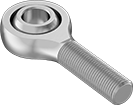
Ball Joint Rod Ends
 |  |
Shank | |||||||||||||
|---|---|---|---|---|---|---|---|---|---|---|---|---|---|
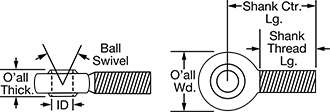
Thread Size | Ctr. Lg., mm | Thread Lg., mm | ID, mm | Max. Ball Swivel | Overall Wd., mm | Overall Thk., mm | Static Radial Load Cap. | Material | Shank Thread Direction | Each | |||
Ball Joints | |||||||||||||
| M3 × 0.5 mm | 25 | 14 | 3 | 30° | 9.8 | 6.4 | Not Rated | Carbon Steel | Right Hand | 59935K11 | 00000 | ||
Tight-Tolerance Drive Rollers
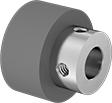 | 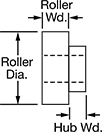 |
The surface of these rollers is molded to a tolerance of either ±0.003 in. or ±0.08 mm to provide more consistent surface contact. Also known as contact wheels and feed rollers, they have tapped hubs that allow you to mount them onto a shaft or stud to transmit power. The urethane rubber surface is nonmarring and wear resistant.
Roller, mm | Set Screws | |||||||||||
|---|---|---|---|---|---|---|---|---|---|---|---|---|
Dia. | Wd. | For Shaft Dia., mm | Hub Wd., mm | Shaft Mount Type | No. Required | Included | Temp. Range, ° F | Choose a Hardness (Hardness Rating) | Each | |||
Urethane Rubber Rollers with Aluminum Hub | ||||||||||||
| 12 | 6 | 3 | 6 | Set Screw | 1 | Yes | -40 to 180 | Durometer 55A (Medium) Blue, Durometer 70A (Hard) Orange | 2481K111 | 000000 | ||
Clear Ultra-Impact-Resistant Polycarbonate Round Tubes

Ultra-Low-Friction Oil-Embedded Flanged Sleeve Bearings
 |
For Shaft Dia., mm | For Housing ID, mm | Lg., mm | Flange OD, mm | Flange Thk., mm | Dynamic Radial Load Cap. @ Speed | Dynamic Thrust Load Cap. @ Speed | Base Oil | Lubricant Additive | Temp. Range, ° F | Specs. Met | Each | |||
|---|---|---|---|---|---|---|---|---|---|---|---|---|---|---|
841 Bearing Bronze | ||||||||||||||
| 3 | 6 | 4 | 9 | 1.5 | 37 lb. @ 120 rpm | 175 lb. @ 120 rpm | Synthetic Oil | PTFE | -60 to 300 | ASTM B438 | 1677K214 | 00000 | ||
High-Load 863 Iron Copper | ||||||||||||||
| 3 | 6 | 4 | 9 | 1.5 | 70 lb. @ 120 rpm | 270 lb. @ 120 rpm | Synthetic Oil | PTFE | -60 to 300 | — | 7119N113 | 0000 | ||
Oil-Embedded Thrust Bearings
 |
For Shaft Dia., mm | OD, mm | Thk., mm | Dynamic Thrust Load Cap. @ Speed | Base Oil | Temp. Range, ° F | Each | |||
|---|---|---|---|---|---|---|---|---|---|
841 Bearing Bronze | |||||||||
| 3 | 6 | 1.5 | 210 lb. @ 120 rpm | Synthetic Oil | -35 to 300 | 2011N36 | 00000 | ||
Ultra-Low-Friction Oil-Embedded Thrust Bearings
 |
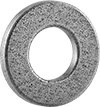
Our slipperiest metal thrust bearings glide on machines with frequent starts and stops, such as conveyors. Their oil contains nonstick PTFE particles that reduce wear and heat, extending the life of your equipment. All are fabricated, lubricated, and inspected in the U.S.
High-Load 863 Iron Copper—Iron makes these bearings harder, stronger, and more resistant to sudden starts and stops than 841 bearing bronze. However, they run at slower speeds. The increased iron content also makes them appear silver.
Synthetic Oil Base—A high-quality lubricant makes all the difference. Synthetic oil is less sensitive to temperature changes than mineral oil, so it won't get runny and leak away if the bearing heats up.
For Shaft Dia., mm | OD, mm | Thk., mm | Dynamic Thrust Load Cap. @ Speed | Base Oil | Lubricant Additive | Temp. Range, ° F | Each | |||
|---|---|---|---|---|---|---|---|---|---|---|
High-Load 863 Iron Copper | ||||||||||
| 3 | 6 | 1.5 | 125 lb. @ 120 rpm | Synthetic Oil | PTFE | -60 to 300 | 7380N173 | 000000 | ||
Corrosion-Resistant Ball Joint Rod Ends
 | |
Shank | |||||||||||||
|---|---|---|---|---|---|---|---|---|---|---|---|---|---|
Thread Size | Ctr. Lg., mm | Thread Lg., mm | ID, mm | Max. Ball Swivel | Overall Wd., mm | Overall Thk., mm | Static Radial Load Cap. | Material | Shank Thread Direction | Each | |||
Ball Joints | |||||||||||||
| M3 × 0.5 mm | 23 | 15 | 3 | 25° | 10 | 5.2 | Not Rated | 303 Stainless Steel | Right Hand | 2988K511 | 000000 | ||
High-Temperature Linear Ball Bearings
Fixed Alignment
 |
Without Retaining Ring Grooves |
Load Capacity, lb. | Temp., ° F | ||||||||||||||
|---|---|---|---|---|---|---|---|---|---|---|---|---|---|---|---|
For Shaft Dia., mm | Overall Lg., mm | OD, mm | For Housing ID | With Retaining Ring Grooves | With End Seals | Dynamic | Static | Dynamic Load Cap. @ Temp. | Min. | Max. | For Shaft Material | Each | |||
Steel Bearings with Steel Balls | |||||||||||||||
| 3 | 10 | 7 | 7.000 mm to 7.015 mm | No | No | 15 | 20 | 15 lb. @ 230° F | -4 | 230 | Stainless Steel, Steel | 63255K41 | 000000 | ||
Internally Threaded Ball Joint Rod Ends
 |  |
Shank | |||||||||||||
|---|---|---|---|---|---|---|---|---|---|---|---|---|---|
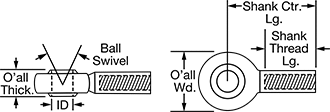
Thread Size | Ctr. Lg., mm | Thread Lg., mm | ID, mm | Max. Ball Swivel | Overall Wd., mm | Overall Thk., mm | Static Radial Load Cap. | Material | Shank Thread Direction | Each | |||
Ball Joints | |||||||||||||
| M3 × 0.5 mm | 22.5 | 10 | 3 | 30° | 11 | 4.9 | Not Rated | Carbon Steel | Right Hand | 59935K13 | 00000 | ||
Oil-Embedded Sleeve Bearings for Food and Beverage
 |
For Shaft Dia., mm | For Housing ID, mm | Lg., mm | Dynamic Radial Load Cap. @ Speed | Base Oil | Temp. Range, ° F | Specs. Met | Each | |||
|---|---|---|---|---|---|---|---|---|---|---|
841 Bearing Bronze | ||||||||||
| 3 | 6 | 10 | 90 lb. @ 120 rpm | Synthetic Oil | -75 to 300 | FDA Compliant 21 CFR 178.3570 | 7095K115 | 00000 | ||
High-Load 863 Iron Copper | ||||||||||
| 3 | 6 | 4 | 70 lb. @ 120 rpm | Synthetic Oil | -75 to 300 | FDA Compliant 21 CFR 178.3570, ASTM B439 | 7407N114 | 0000 | ||
Shaft Grommets
 |  |
Made of slippery plastic, these grommets allow shafts and bearings to spin freely in metal panels. The split construction lets you snap them around shafts you’ve already installed.
MDS-Filled Nylon—These slippery grommets absorb friction from spinning shafts over long periods. However, they can’t withstand the same high temperatures as our other nylon grommets.
Metric Press-Fit Drill Bushings with Head
 |  |
 |  |
Shown in Countersunk Hole | Shown in Standard Hole |
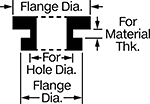
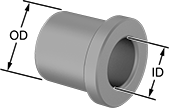
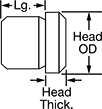
Even under extreme drilling pressure, these metric bushings won't press through your jig plate. They’re ANSI Type H bushings, also known as headed bushings. A flanged head acts as a stop, so these bushings won’t move as you push down your drill bit, reamer, or other cutting bit. Use them even in jigs made of thin or soft materials—the head adds support to protect your jig from damage caused by heavy use. Drill bushings ensure accurate, consistent cuts and drilled holes from one part to the next. They’re also used as spacers, shims, and machinery bushings. Made of hardened, ground steel, these bushings hold their shape and resist wear, so they last for many cycles without needing to be replaced.
These bushings meet DIN 172 dimensional standards. This standard is no longer active, but it’s often used as a reference point for making sure parts are compatible with other parts and tools.
To install, fit the bushing into a hole in your jig. In a standard hole, the head will sit above the jig plate; to mount flush, install in a countersunk hole. A chamfered edge on the bottom of the bushing helps center the bushing in the hole. Once it’s centered, press the bushing into the hole with a hydraulic or lever press.
Head, mm | Tolerance, mm | Each | ||||||||||||||||
|---|---|---|---|---|---|---|---|---|---|---|---|---|---|---|---|---|---|---|
OD, mm | Lg., mm | For Drill Bit Size, mm | For Drill Bit Size Decimal Equiv. | OD | Thk. | ID | OD | Lg. | Drill Bushing Type | Material | Hardness | Specs. Met | 1-5 | 6-11 | 12-Up | |||
3 mm ID | ||||||||||||||||||
| 6 | 5.5 | 3 | 0.1181" | 9 | 2.5 | 0.006 to 0.016 | 0.008 to 0.016 | -0.2 to 0.2 | H | Steel | Rockwell C61 | DIN 172 | 96977A150 | 00000 | 00000 | 00000 | ||
| 6 | 9.5 | 3 | 0.1181" | 9 | 2.5 | 0.006 to 0.016 | 0.008 to 0.016 | -0.2 to 0.2 | H | Steel | Rockwell C61 | DIN 172 | 96977A151 | 0000 | 0000 | 0000 | ||
| 6 | 13.5 | 3 | 0.1181" | 9 | 2.5 | 0.006 to 0.016 | 0.008 to 0.016 | -0.2 to 0.2 | H | Steel | Rockwell C61 | DIN 172 | 96977A152 | 00000 | 00000 | 00000 | ||
Metric Press-Fit Drill Bushings
 |
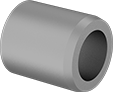 |
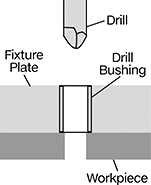
Also known as jig bushings, these metric drill bushings fit inside fixture plate holes to precisely guide drill bits, counterbores, reamers, and other cutting tools. They improve accuracy so that your drilled holes and cuts are consistent from part to part. Known for their versatility, drill bushings are also used as spacers, shims, and machinery bushings. These bushings are made of hardened, ground steel that holds its shape and resists wear, so they last for many cycles without needing to be replaced.
All bushings have a chamfer on the outside that centers the bushing as you place it into the hole. Press into place with a manual or hydraulic press. Since the bushing is sized slightly larger than the hole for an extremely tight fit, it’ll stay put permanently. These are ANSI Type PM bushings—also known as headless bushings—which means you don’t need to counterbore the hole to mount them flush.
They also have an internal chamfer that makes it easy to insert bits, pins, and punches without damaging the bushing or misaligning tools.
Don't see the size you need? Additional sizes are available.
Both Ends—Bushings with an internal chamfer on both ends allow you to insert tools no matter which end of the bushing is inserted into the jig. However, having an internal chamfer on the bottom of your bushing may cause shavings to get caught and bind as you remove the bit.
DIN 179—DIN 179 bushings meet dimensional and material standards that make sure they're compatible with other parts and tools. Although DIN 179 is no longer an active standard, it's still a common reference point for designers.
Tolerance, mm | Each | ||||||||||||||||
|---|---|---|---|---|---|---|---|---|---|---|---|---|---|---|---|---|---|
OD, mm | Lg., mm | Internal Chamfer | For Drill Bit Size, mm | For Drill Bit Size Decimal Equiv. | ID | OD | Lg. | Drill Bushing Type | Material | Hardness | Specs. Met | 1-5 | 6-11 | 12-Up | |||
3 mm ID | |||||||||||||||||
| 6 | 8 | One End | 3 | 0.1181" | 0.01 to 0.022 | 0.01 to 0.019 | -0.25 to 0.25 | PM | Steel | Rockwell C61 | DIN 179 | 8486A516 | 000000 | 000000 | 000000 | ||
| 6 | 8 | Both Ends | 3 | 0.1181" | 0.006 to 0.016 | 0.008 to 0.016 | -0.2 to 0.2 | PM | Steel | Rockwell C61 | — | 96990A757 | 0000 | 0000 | 0000 | ||
| 6 | 12 | One End | 3 | 0.1181" | 0.006 to 0.016 | 0.008 to 0.016 | -0.2 to 0.2 | PM | Steel | Rockwell C61 | DIN 179 | 8486A25 | 0000 | 0000 | 0000 | ||
| 6 | 12 | Both Ends | 3 | 0.1181" | 0.006 to 0.016 | 0.008 to 0.016 | -0.2 to 0.2 | PM | Steel | Rockwell C61 | — | 96990A758 | 0000 | 0000 | 0000 | ||
| 6 | 16 | One End | 3 | 0.1181" | 0.006 to 0.016 | 0.008 to 0.016 | -0.2 to 0.2 | PM | Steel | Rockwell C61 | DIN 179 | 96990A161 | 00000 | 00000 | 00000 | ||
| 6 | 16 | Both Ends | 3 | 0.1181" | 0.006 to 0.016 | 0.008 to 0.016 | -0.2 to 0.2 | PM | Steel | Rockwell C61 | — | 96990A759 | 00000 | 00000 | 00000 | ||
| 10 | 20 | One End | 3 | 0.1181" | 0.006 to 0.016 | 0.01 to 0.019 | -0.2 to 0.2 | PM | Steel | Rockwell C61 | DIN 179 | 96990A180 | 00000 | 00000 | 00000 | ||
