


Filter by
System of Measurement
OD


Bearing Seal Type

For Load Direction


Lubrication
Width


Bearing Construction

Dynamic Combined Load Capacity

Maximum Rotation Speed
DFARS Specialty Metals
Maximum Temperature
Minimum Temperature
High-Load Crossed-Roller Bearings
 |
The thicker inner and outer raceways on these bearings can handle heavier loads than the thin-profile crossed-roller bearings. The rollers face in alternating directions to allow for rigid, accurate motion under any combination of radial, thrust, and moment (twisting) loads. Use in applications where highly accurate motion is necessary, such as machine tools and industrial robots.
Sealed Bearing—Sealed bearings block out dust and other contaminants better than open bearings, but retain more heat.
Combined Load Cap., lbf | ||||||||||||
|---|---|---|---|---|---|---|---|---|---|---|---|---|
For Shaft Dia., mm | For Housing ID, mm | Wd., mm | Dynamic | Static | Max. Rotation Speed, rpm | Lubrication | Temp. Range, ° F | Features | Each | |||
For Combined Radial, Thrust, and Moment Load—Sealed with Steel Ring | ||||||||||||
| 20 | 36 | 8 | 650 | 540 | 2,100 | Lubricated | 0 to 245 | Lubrication Groove, Two Lubrication Holes | 4489N17 | 0000000 | ||
Dry-Running Sleeve Bearings
 |
Made of naturally slippery plastic so you’ll never have to add lubricant. They’re ideal for clean environments where you need to prevent oil drips or graphite flakes. Compared to metal bearings, they are lighter and will never rust.
With no moving parts, sleeve bearings are the simplest way to support the load of a rotating shaft while reducing friction. Also known as plain bearings.
Nylon—The most popular choice, nylon is wear resistant yet economical. Keep in mind, though, that it will swell and weaken when exposed to moisture.
Each | |||||||||||
|---|---|---|---|---|---|---|---|---|---|---|---|
For Shaft Dia., mm | For Housing ID, mm | Lg., mm | Dynamic Radial Load Cap. @ Speed | Color | Temp. Range, ° F | 1-24 | 25-99 | 100-Up | |||
Nylon | |||||||||||
| 28 | 36 | 30 | 370 lb. @ 30 rpm | Off-White | -10 to 220 | 6389K896 | 000000 | 000000 | 000000 | ||
Dry-Running Metal-Reinforced Plastic Thrust Bearings
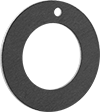 |
For Shaft Dia., mm | OD, mm | Thk., mm | Dynamic Thrust Load Cap. @ Speed | Temp. Range, ° F | Each | |||
|---|---|---|---|---|---|---|---|---|
Steel-Backed PTFE | ||||||||
| 20 | 36 | 1.5 | 2,400 lb. @ 60 rpm | -320 to 530 | 1262N14 | 00000 | ||
Dry-Running Thrust Bearings
 |
For Shaft Dia., mm | OD, mm | Thk., mm | Dynamic Thrust Load Cap. @ Speed | Color | Temp. Range, ° F | Each | |||
|---|---|---|---|---|---|---|---|---|---|
Moisture-Resistant Plastic Blend | |||||||||
| 20 | 36 | 1.5 | 115 lb. @ 60 rpm | Gray | -40 to 260 | 8920N65 | 00000 | ||
Oil-Embedded Thrust Bearings
Shims
 |
Thk., mm | Thk. Tolerance, mm | ID Tolerance, mm | OD Tolerance, mm | Min. Hardness | Color | Specs. Met | Pkg. Qty. | Pkg. | |||
|---|---|---|---|---|---|---|---|---|---|---|---|
18-8 Stainless Steel | |||||||||||
25 mm ID × 36 mm OD | |||||||||||
| 0.1 | -0.013 to 0.013 | -0.31 to 0.29 | -0.06 to 0.04 | Rockwell B70 | — | — | 10 | 98089A236 | 000000 | ||
| 0.2 | -0.023 to 0.023 | -0.31 to 0.29 | -0.06 to 0.04 | Rockwell B70 | — | — | 25 | 98089A276 | 00000 | ||
| 0.3 | -0.055 to 0.055 | -0.31 to 0.29 | -0.06 to 0.04 | Rockwell B70 | — | — | 10 | 98089A317 | 00000 | ||
| 0.5 | -0.064 to 0.064 | -0.3 to 0.3 | -0.05 to 0.05 | Rockwell B70 | — | — | 25 | 98089A360 | 00000 | ||
| 1 | -0.105 to 0.105 | -0.3 to 0.3 | -0.05 to 0.05 | Rockwell B70 | — | — | 10 | 98089A404 | 00000 | ||
| 1.5 | -0.14 to 0.14 | -0.3 to 0.3 | -0.05 to 0.05 | Rockwell B70 | — | — | 10 | 98089A148 | 00000 | ||
| 2 | -0.21 to 0.21 | -0.3 to 0.3 | -0.05 to 0.05 | Rockwell B70 | — | — | 10 | 98089A472 | 00000 | ||
Highly Corrosion-Resistant 316 Stainless Steel | |||||||||||
25 mm ID × 36 mm OD | |||||||||||
| 0.1 | -0.013 to 0.013 | -0.3 to 0.3 | -0.05 to 0.05 | Rockwell B70 | — | — | 1 | 90214A140 | 0000 | ||
| 0.2 | -0.023 to 0.023 | -0.3 to 0.3 | -0.05 to 0.05 | Rockwell B70 | — | — | 5 | 90214A239 | 00000 | ||
| 0.5 | -0.064 to 0.064 | -0.3 to 0.3 | -0.05 to 0.05 | Rockwell B70 | — | — | 5 | 90214A445 | 0000 | ||
| 1 | -0.105 to 0.105 | -0.3 to 0.3 | -0.05 to 0.05 | Rockwell B70 | — | — | 5 | 90214A543 | 00000 | ||
Carbon Steel | |||||||||||
25 mm ID × 36 mm OD | |||||||||||
| 0.1 | -0.013 to 0.013 | -0.3 to 0.3 | -0.5 to 0.5 | Rockwell B40 | — | — | 5 | 3088A994 | 0000 | ||
| 0.2 | -0.045 to 0.045 | -0.3 to 0.3 | -0.5 to 0.5 | Rockwell B40 | — | — | 5 | 3088A032 | 0000 | ||
| 0.5 | -0.064 to 0.064 | -0.3 to 0.3 | -0.5 to 0.5 | Rockwell B40 | — | — | 25 | 3088A607 | 0000 | ||
| 1 | -0.105 to 0.105 | -0.3 to 0.3 | -0.5 to 0.5 | Rockwell B40 | — | — | 25 | 3088A092 | 0000 | ||
| 1.5 | -0.14 to 0.14 | -0.3 to 0.3 | -0.5 to 0.5 | Rockwell B40 | — | — | 25 | 3088A112 | 00000 | ||
| 2 | -0.21 to 0.21 | -0.3 to 0.3 | -0.5 to 0.5 | Rockwell B40 | — | — | 25 | 3088A304 | 00000 | ||
Stress-Resistant Spring Steel | |||||||||||
25 mm ID × 36 mm OD | |||||||||||
| 0.1 | -0.03 to 0 | 0.03 to 0.4 | -0.47 to -0.04 | Rockwell B85 | — | DIN 988 | 25 | 98055A251 | 0000 | ||
| 0.2 | -0.04 to 0 | 0.03 to 0.4 | -0.47 to -0.04 | Rockwell B85 | — | DIN 988 | 25 | 98055A252 | 0000 | ||
| 0.3 | -0.05 to 0 | 0.03 to 0.4 | -0.47 to -0.04 | Rockwell B85 | — | DIN 988 | 25 | 98055A253 | 0000 | ||
| 0.5 | -0.05 to 0 | 0.03 to 0.4 | -0.47 to -0.04 | Rockwell B85 | — | DIN 988 | 25 | 98055A254 | 00000 | ||
| 1 | -0.05 to 0 | 0.03 to 0.4 | -0.47 to -0.04 | Rockwell B85 | — | DIN 988 | 10 | 98055A255 | 0000 | ||
| 1.5 | -0.05 to 0 | 0.03 to 0.4 | -0.47 to -0.04 | Rockwell B85 | — | DIN 988 | 10 | 98055A531 | 0000 | ||
Aluminum | |||||||||||
25 mm ID × 36 mm OD | |||||||||||
| 0.1 | -0.013 to 0.013 | -0.3 to 0.3 | -0.5 to 0.5 | Brinell 60 | — | — | 5 | 92661A906 | 00000 | ||
| 0.2 | -0.045 to 0.045 | -0.3 to 0.3 | -0.5 to 0.5 | Brinell 60 | — | — | 5 | 92661A913 | 00000 | ||
| 0.3 | -0.072 to 0.072 | -0.3 to 0.3 | -0.5 to 0.5 | Brinell 60 | — | — | 5 | 92661A919 | 00000 | ||
| 0.5 | -0.064 to 0.064 | -0.3 to 0.3 | -0.5 to 0.5 | Brinell 60 | — | — | 25 | 92661A926 | 0000 | ||
| 1.5 | -0.14 to 0.14 | -0.3 to 0.3 | -0.5 to 0.5 | Brinell 60 | — | — | 10 | 92661A939 | 0000 | ||
| 2 | -0.21 to 0.21 | -0.3 to 0.3 | -0.5 to 0.5 | Brinell 60 | — | — | 10 | 92661A946 | 0000 | ||
Brass | |||||||||||
25 mm ID × 36 mm OD | |||||||||||
| 1 | -0.105 to 0.105 | -0.3 to 0.3 | -0.5 to 0.5 | Rockwell B14 | — | ASTM B36 | 5 | 92678A647 | 00000 | ||
Copper | |||||||||||
25 mm ID × 36 mm OD | |||||||||||
| 0.5 | -0.064 to 0.064 | -0.3 to 0.3 | -0.5 to 0.5 | Rockwell F40 | — | ASTM B152 | 10 | 94397A781 | 00000 | ||
Ultra-Chemical-Resistant PTFE | |||||||||||
25 mm ID × 36 mm OD | |||||||||||
| 0.1 | -0.013 to 0.013 | -0.3 to 0.3 | -0.5 to 0.5 | — | White | — | 1 | 90334A204 | 0000 | ||
| 0.2 | -0.045 to 0.045 | -0.3 to 0.3 | -0.5 to 0.5 | — | White | — | 1 | 90334A208 | 0000 | ||
| 0.3 | -0.072 to 0.072 | -0.3 to 0.3 | -0.5 to 0.5 | — | White | — | 1 | 90334A213 | 0000 | ||
| 0.5 | -0.064 to 0.064 | -0.3 to 0.3 | -0.5 to 0.5 | — | White | — | 10 | 90334A217 | 00000 | ||
| 1 | -0.105 to 0.105 | -0.3 to 0.3 | -0.5 to 0.5 | — | White | — | 5 | 90334A222 | 00000 | ||
| 1.5 | -0.14 to 0.14 | -0.3 to 0.3 | -0.5 to 0.5 | — | White | — | 5 | 90334A226 | 00000 | ||
| 2 | -0.21 to 0.21 | -0.3 to 0.3 | -0.5 to 0.5 | — | White | — | 1 | 90334A231 | 0000 | ||
Oil-Embedded Thrust Bearings for Food and Beverage
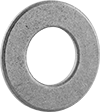 |
Infused with food-grade oil, these bearings are safe for incidental contact with food. The oil is odorless, colorless, and tasteless, so they're common on food production and packaging lines. You can install and forget them since their porous surface releases oil over time. All are fabricated, lubricated, and inspected in the U.S.
If you need a bearing rated for direct contact with food, consider dry-running thrust bearings for food and beverage.
841 Bearing Bronze—A balance of strength and speed makes these bearings a good choice for most applications. Also known as SAE 841 bearing bronze.
High-Load 863 Iron Copper—Iron makes these bearings harder, stronger, and more resistant to sudden starts and stops than 841 bearing bronze. However, they run at slower speeds. The increased iron content also makes them appear silver.
Synthetic Oil Base—A high-quality lubricant makes all the difference. Synthetic oil is less sensitive to temperature changes than mineral oil, so it won't get runny and leak away if the bearing heats up.
For Shaft Dia., mm | OD, mm | Thk., mm | Dynamic Thrust Load Cap. @ Speed | Base Oil | Temp. Range, ° F | Specs. Met | Each | |||
|---|---|---|---|---|---|---|---|---|---|---|
841 Bearing Bronze | ||||||||||
| 18 | 36 | 2 | 2,350 lb. @ 60 rpm | Synthetic Oil | -75 to 300 | FDA Compliant 21 CFR 178.3570, NSF Registered H1 | 5429T223 | 00000 | ||
High-Load 863 Iron Copper | ||||||||||
| 18 | 36 | 3 | 1,850 lb. @ 60 rpm | Synthetic Oil | -75 to 300 | FDA Compliant 21 CFR 178.3570, NSF Registered H1 | 5371N124 | 0000 | ||
Thin-Profile Bearing Nuts
 |
 |
Thread | ||||||||
|---|---|---|---|---|---|---|---|---|
Size | Spacing | OD, mm | Wd., mm | Specs. Met | Each | |||
Carbon Steel | ||||||||
Stepped Face | ||||||||
| M20 × 1.5 mm | Extra Fine | 36 | 8 | DIN 1816 | 3549N16 | 000000 | ||
Metric Press-Fit Drill Bushings
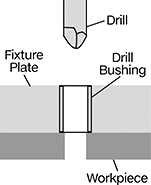 | 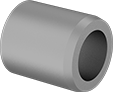 |
Also known as jig bushings, these metric drill bushings fit inside fixture plate holes to precisely guide drill bits, counterbores, reamers, and other cutting tools. They improve accuracy so that your drilled holes and cuts are consistent from part to part. Known for their versatility, drill bushings are also used as spacers, shims, and machinery bushings. These bushings are made of hardened, ground steel that holds its shape and resists wear, so they last for many cycles without needing to be replaced.
All bushings have a chamfer on the outside that centers the bushing as you place it into the hole. Press into place with a manual or hydraulic press. Since the bushing is sized slightly larger than the hole for an extremely tight fit, it’ll stay put permanently. These are ANSI Type PM bushings—also known as headless bushings—which means you don’t need to counterbore the hole to mount them flush.
They also have an internal chamfer that makes it easy to insert bits, pins, and punches without damaging the bushing or misaligning tools.
Don't see the size you need? Additional sizes are available.
DIN 179—DIN 179 bushings meet dimensional and material standards that make sure they're compatible with other parts and tools. Although DIN 179 is no longer an active standard, it's still a common reference point for designers.
Tolerance, mm | Each | ||||||||||||||||
|---|---|---|---|---|---|---|---|---|---|---|---|---|---|---|---|---|---|
OD, mm | Lg., mm | Internal Chamfer | For Drill Bit Size, mm | For Drill Bit Size Decimal Equiv. | ID | OD | Lg. | Drill Bushing Type | Material | Hardness | Specs. Met | 1-5 | 6-11 | 12-Up | |||
30 mm ID | |||||||||||||||||
| 36 | 30 | One End | 30 | 1.1811" | 0.02 to 0.041 | 0.017 to 0.033 | -0.2 to 0.2 | PM | Steel | Rockwell C61 | DIN 179 | 96990A420 | 000000 | 000000 | 000000 | ||
| 36 | 50 | One End | 30 | 1.1811" | 0.02 to 0.041 | 0.017 to 0.033 | -0.3 to 0.3 | PM | Steel | Rockwell C61 | DIN 179 | 96990A430 | 00000 | 00000 | 00000 | ||
Ultra-Low-Friction Oil-Embedded Thrust Bearings
 |
Our slipperiest metal thrust bearings glide on machines with frequent starts and stops, such as conveyors. Their oil contains nonstick PTFE particles that reduce wear and heat, extending the life of your equipment. All are fabricated, lubricated, and inspected in the U.S.
841 Bearing Bronze—A balance of strength and speed makes these bearings a good choice for most applications. Also known as SAE 841 bearing bronze.
Synthetic Oil Base—A high-quality lubricant makes all the difference. Synthetic oil is less sensitive to temperature changes than mineral oil, so it won't get runny and leak away if the bearing heats up.
Bearing Nuts
 |
Carbon Steel Stepped Face |
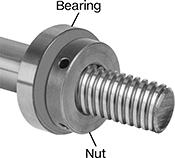
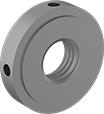
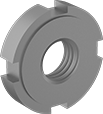
Often paired with spring lock washers to strengthen their hold, these bearing nuts—also known as shaft nuts—keep vibration from shifting bearings, bushings, pulleys, and gears on your threaded shaft or spindle. They have slotted sides, so you can tighten and loosen them with a spanner wrench or spanner socket.
Carbon Steel—Carbon steel bearing nuts are strong and resist wear.
Stepped Face—Use stepped-face bearing nuts with DIN 462 spring lock washers. You can also use them in pairs or with other bearing nuts. For the nut closer to the bearing, position the stepped face towards the bearing. All meet DIN standards for bearing lockout dimensions.
Thread Spacing—When choosing your thread spacing, consider the precision of your application. The finer the threads, the more control you have when making adjustments.
Slotted Bushings
 |  |
Slotted Bushings with Spring Pin |
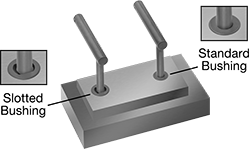
When locating a workpiece using through-hole alignment pins (sold separately), use one of these bushings and one standard bushing to prevent the pins from binding in your fixture. One pin sits in the standard drill bushing for tight-tolerance locating in all directions, and the other pin sits in the slotted bushing for tight-tolerance locating in only one direction. This functionality is similar to the combination of round and diamond-head locating pins. Press these bushings into a drilled hole for permanent installation. They’re also known as slotted locator bushings.
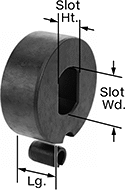
Slotted Bushings with Spring Pin—A spring pin helps you align bushings and keep them from rotating. To mount in your fixture, drill one hole for the spring pin, then another for the bushing.
Slot, mm | Tolerance, mm | ||||||||||||
|---|---|---|---|---|---|---|---|---|---|---|---|---|---|
For Pin Dia., mm | Ht. | Wd. | Lg., mm | OD, mm | Slot Ht. | OD | Hardness | Material | Includes | Each | |||
Slotted Bushings with Spring Pin | |||||||||||||
| 20 | 20 | 22 | 19 | 36 | 0.00 to 0.03 | 0.0025 to 0.0102 | Rockwell C58 | Black-Oxide Steel | 5 mm Slotted Spring Pin | 3322N48 | 000000 | ||
