


Filter by
System of Measurement
Length
Rod Diameter
Construction

Rod Type
Material
Component


Rod Shape

REACH

RoHS
DFARS Specialty Metals
Export Control Classification Number (ECCN)
Gender

Thread Length
Graduations
Numeric Graduations
Number of Mounting Holes
Maximum Pull @ Distance
Bracket Material
Mounting Hole Diameter
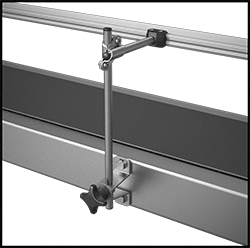
Conveyor Guide Mounting Rods
 | 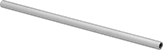 |
Round—Threaded on One End Style A |
Round—Threaded on One End
|
Style A |
Round rods are the most common. However, these rods might cause connectors to slip over time as vibration loosens their hold on the rod.
Solid—Solid rods are sturdier than hollow rods, so they’re less likely to be knocked out of place by heavy objects on your conveyor.
Stainless Steel—Stainless steel mounting rods are the most corrosion resistant.
Thread | ||||||||||
|---|---|---|---|---|---|---|---|---|---|---|
Style | Lg. | Rod Dia. | Size | Lg. | Gender | Material | Each | |||
Solid | ||||||||||
| A | 24" | 1/2" | 5/16"-18 | 0.89" | Female | Stainless Steel | 9268K571 | 000000 | ||
Graduated Conveyor Guide Mounting Rods
|
Graduated in 1/8" or 1 mm increments, these rods make it easy to align multiple brackets during installation.
Round—Threaded on One End
 |
Round rods are the most common. However, these rods might cause connectors to slip over time as vibration loosens their hold on the rod.
Solid—Solid rods are sturdier than hollow rods, so they’re less likely to be knocked out of place by heavy objects on your conveyor.
Thread | 1/2" Dia. Rod | ||||||||
|---|---|---|---|---|---|---|---|---|---|
Lg. | Graduations (Numeric Graduations) | Size | Lg. | Gender | Material | Each | |||
Solid | |||||||||
| 24" | 1/8" (1") | 5/16"-18 | 0.89" | Female | Stainless Steel | 9268K568 | 000000 | ||
Magnetic Conveyor Belt Plates
Conveyor Plates—Ferrite Ceramic with Stainless Steel Casing
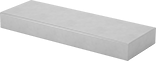 |  |  | 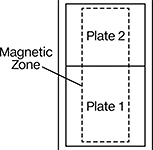 |
Plate | Plate with Stainless Steel Bracket | Full Magnetic Coverage | Partial Magnetic Coverage |
24" Long | |||||||
|---|---|---|---|---|---|---|---|
Wd. | Thk. | Max. Pull @ Distance | Bracket Material | Each | |||
Full Magnetic Coverage | |||||||
| 4 1/8" | 1 5/16" | 7 1/2 lbf @ 1/8" | — | 6497N112 | 000000000 | ||
| 4 1/8" | 2 5/16" | 9 1/2 lbf @ 1/8" | — | 6497N132 | 00000000 | ||
Partial Magnetic Coverage | |||||||
| 1 5/8" | 1 5/32" | 2 1/2 lbf @ 1/8" | Stainless Steel | 6497N152 | 000000 | ||
| 3" | 1 5/32" | 5 lbf @ 1/8" | Stainless Steel | 6497N172 | 000000 | ||
| 3 5/8" | 1 29/32" | 5 3/4 lbf @ 1/8" | Stainless Steel | 6497N192 | 00000000 | ||
