


%20--%3e%3csvg%20version='1.1'%20id='Layer_1'%20xmlns='http://www.w3.org/2000/svg'%20xmlns:xlink='http://www.w3.org/1999/xlink'%20x='0px'%20y='0px'%20viewBox='0%200%20400%20400'%20style='enable-background:new%200%200%20400%20400;'%20xml:space='preserve'%3e%3cstyle%20type='text/css'%3e%20.st0{fill:%231A70A0;}%20.st1{opacity:0.5;}%20%3c/style%3e%3cg%3e%3cg%3e%3cpath%20class='st0'%20d='M200,56.9c38.35,0,74.4,14.93,101.51,42.05c27.11,27.11,42.05,63.17,42.05,101.51s-14.93,74.4-42.05,101.51%20S238.35,344.02,200,344.02s-74.4-14.93-101.51-42.05c-27.11-27.11-42.05-63.17-42.05-101.51s14.93-74.4,42.05-101.51%20S161.65,56.9,200,56.9%20M200,12.9C96.41,12.9,12.44,96.88,12.44,200.46c0,103.59,83.97,187.56,187.56,187.56%20c103.59,0,187.56-83.97,187.56-187.56C387.56,96.88,303.59,12.9,200,12.9L200,12.9z'/%3e%3c/g%3e%3cg%3e%3cg%20class='st1'%3e%3cpath%20class='st0'%20d='M235.49,152.24h16.15l-27.46,111.87c-1.94,7.8-2.91,12.5-2.91,14.1c0,1.82,0.58,3.29,1.73,4.41%20c1.16,1.12,2.69,1.68,4.61,1.68c5.23,0,11.78-3.85,19.63-11.55l17.22,21.34c-16.95,17.33-34.87,26-53.78,26%20c-8.37,0-15.45-1.47-21.23-4.41c-5.79-2.94-10.44-7.25-13.95-12.92c-3.51-5.67-5.27-11.18-5.27-16.53c0-1.93,0.35-5.24,1.05-9.94%20c1-6.94,2.05-12.54,3.15-16.82l15.22-62.15h-32.69l7.65-30.97C190.89,163.58,214.53,158.88,235.49,152.24z%20M230.44,80.84%20c8.24,0,14.66,2.62,19.26,7.86c4.6,5.24,6.9,11.55,6.9,18.94c0,5.46-1.42,10.7-4.25,15.73c-2.83,5.03-6.88,9.07-12.12,12.12%20c-5.24,3.05-10.33,4.57-15.24,4.57c-4.6,0-9.17-1.23-13.72-3.69c-4.55-2.46-8.02-5.78-10.43-9.95%20c-2.41-4.17-3.61-8.67-3.61-13.48c0-5.35,1.52-10.64,4.57-15.89c3.05-5.24,7.03-9.25,11.96-12.04%20C218.68,82.23,224.24,80.84,230.44,80.84z'/%3e%3c/g%3e%3cg%3e%3cpath%20class='st0'%20d='M214.08,152.24h16.15l-27.46,111.87c-1.94,7.8-2.91,12.5-2.91,14.1c0,1.82,0.58,3.29,1.73,4.41%20c1.16,1.12,2.69,1.68,4.61,1.68c5.23,0,11.78-3.85,19.63-11.55l17.22,21.34c-16.95,17.33-34.87,26-53.78,26%20c-8.37,0-15.45-1.47-21.23-4.41c-5.79-2.94-10.44-7.25-13.95-12.92c-3.51-5.67-5.27-11.18-5.27-16.53c0-1.93,0.35-5.24,1.05-9.94%20c1-6.94,2.05-12.54,3.15-16.82l15.22-62.15h-32.69l7.65-30.97C169.48,163.58,193.11,158.88,214.08,152.24z%20M209.03,80.84%20c8.24,0,14.66,2.62,19.26,7.86c4.6,5.24,6.9,11.55,6.9,18.94c0,5.46-1.42,10.7-4.25,15.73c-2.83,5.03-6.88,9.07-12.12,12.12%20c-5.24,3.05-10.33,4.57-15.24,4.57c-4.6,0-9.17-1.23-13.72-3.69c-4.55-2.46-8.02-5.78-10.43-9.95%20c-2.41-4.17-3.61-8.67-3.61-13.48c0-5.35,1.52-10.64,4.57-15.89c3.05-5.24,7.03-9.25,11.96-12.04%20C197.26,82.23,202.83,80.84,209.03,80.84z'/%3e%3c/g%3e%3c/g%3e%3c/g%3e%3c/svg%3e)
Select the sensors, switches, and actuators in your setup and we'll guide you to compatible PLCs.
Fast-Processing Open-Source PLCs
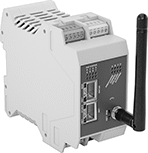
When milliseconds matter, these PLCs don't have to wait for your network—they process complex data and run code locally. The result is real-time performance in the field, plus cloud connectivity when you want it, for truly uninterrupted operation. These PLCs support Python, C++, Bash, and other open-source languages, so you can program them in the one you know. You can also use customizable libraries to your advantage.
Write code from anywhere—on any device and browser—using the manufacturer’s free web-based software. When you’re ready, transfer your program to the PLC with an Ethernet RJ45 cord, Bluetooth, or Wi-Fi. In addition to wireless communication, these PLCs have a range of hardwire connections, including digital inputs and outputs, Ethernet, and serial terminals. This means they can control a fully wireless system, a wired setup with legacy equipment, or a hybrid of both. Mount them to 35 mm DIN rail.
| Configurable Signal Input/Output Type (No. of) | Transistor Input/Output Type | Maximum Output Current @ Voltage | Transistor Input Voltage | Operating Voltage | Data Connection Type | Serial Industry Designation (No. of) | Communication Protocol  | Each | |
With Broadcom BCM2837B0 Microprocessor and ATmega16u4 Microcontroller | |||||||||
|---|---|---|---|---|---|---|---|---|---|
| Digital Transistor (8) | PNP/NPN | 0.85 A @ 30 V DC | 0-30V DC | 5-30V DC | Ethernet RJ45 (2 each) Micro AB USB (1 each) Wi-Fi 802.11b/g/n Bluetooth 4.0 | RS-232/RS-422/RS-485 (1) | DCON ASCII, REST, WebSocket | 6482N11 | 0000000 |
Open-Source PLCs
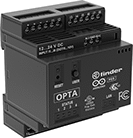
Kick-start your automation with example code and customizable libraries from the Arduino ecosystem. Use the manufacturer’s free software to program these PLCs with Arduino or a standard PLC language you’re comfortable with. When you’re ready, transfer your program to the PLC with a USB-C cord. Use the software to monitor, test, and troubleshoot issues in real time.
These PLCs support up to 88 inputs and outputs—enough to automate lighting or HVAC controls. They’re also known as smart relays. They have digital relay outputs that are ideal for loads that switch a few times per minute, such as compressors. However, they’re not designed for devices that switch multiple times per second, such as stepper motor drivers. Connect these PLCs to your Ethernet network to control devices anywhere in your facility. They use an open communication protocol, so you can mix and match devices from different manufacturers. Mount them to 35 mm DIN rail in your electrical cabinet.
PLCs with Wi-Fi have cloud connectivity that lets you program, monitor, and update them from anywhere. They also have Bluetooth to make initial setup easy—you can wirelessly configure them at close range. These PLCs send alerts directly to your mobile device, so you can quickly respond to issues.
PLCs with RS-485 terminals let you integrate legacy equipment and other serial devices into your system.
Add expansion modules to these PLCs when your system needs more inputs and outputs or new functionality. All modules have an LED status indicator to show the device is powered and running.
Outputs | Inputs | ||||||||||||
|---|---|---|---|---|---|---|---|---|---|---|---|---|---|
| Type (No. of) | Signal Type | Max. Current @ Voltage | Type (no. of) | Signal Type | Transistor Type | Transistor Voltage | Analog Signal | Max. No. of Inputs/Outputs | Operating Voltage | Serial Industry Designation (No. of) | Communication Protocol | Each | |
| Relay (4) | Digital | 10 A @ 250 V AC | Transistor/Analog (8) | Analog, Digital | PNP/NPN | 24V DC | 0-10V DC | 88 | 12-24V DC | __ | Modbus TCP/IP | 8647N13 | 0000000 |
| Relay (4) | Digital | 10 A @ 250 V AC | Transistor/Analog (8) | Analog, Digital | PNP/NPN | 24V DC | 0-10V DC | 88 | 12-24V DC | RS-485 (1) | Modbus TCP/IP, Modbus RTU | 8647N12 | 000000 |
| Relay (4) | Digital | 10 A @ 250 V AC | Transistor/Analog (8) | Analog, Digital | PNP/NPN | 24V DC | 0-10V DC | 88 | 12-24V DC | RS-485 (1) | Modbus TCP/IP, Modbus RTU | 8647N11 | 000000 |
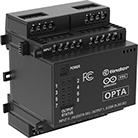
Increase the number of inputs and outputs you can control with the PLC. These modules send and receive digital signals, such as on-off, so you can integrate devices such as limit switches and lights. They also receive analog signals from devices that send variable data, such as humidity sensors.
Modules with PWM outputs are ideal for motor speed controls and other devices that require fast, precise switching because the outputs have no moving parts.
Modules with RTD inputs trigger actions based on temperature readings, such as opening a valve when a threshold is reached.
Outputs | Inputs | ||||||||||||
|---|---|---|---|---|---|---|---|---|---|---|---|---|---|
| Type (No. of) | Signal Type | Max. Current @ Voltage | Max. Frequency, kHz | Analog Signal | Type (No. of) | Signal Input Type | Transistor Type | Transistor Voltage | Analog Signal | RTD Type | Operating Voltage | Each | |
| Relay (8) | Digital | 6 A @ 250 V AC | __ | __ | Analog/Transistor (16) | Analog; Digital | PNP/NPN | 24V DC | 0-10V DC | __ | 12-24V DC | 8647N14 | 0000000 |
| Relay (8) | Digital | 3 A @ 24 V DC | __ | __ | Analog/Transistor (16) | Analog; Digital | PNP/NPN | 24V DC | 0-10V DC | __ | 12-24V DC | 8647N15 | 000000 |
| Analog (2) PWM(4) | Analog, Digital | 0.1 A @ 24 V DC | 10 | 0-10V DC, 4-20 mA | RTD (2) Analog (4) | Analog | __ | __ | 0-10V DC, 4-20 mA | Pt100, Pt1000 | 12-24V DC | 8647N16 | 000000 |