


Filter by
System of Measurement
Width
Length
Material


Tolerance Rating
Hardness
Minimum Hardness
DFARS Specialty Metals

REACH
Export Control Classification Number (ECCN)

Performance
Rounded Machine Keys
 |
Tolerance, mm | ||||||||||
|---|---|---|---|---|---|---|---|---|---|---|
Lg., mm | Tolerance Rating | Ht. | Wd. | Min. Hardness | Specs. Met | Pkg. Qty. | Pkg. | |||
1008-1045 Carbon Steel | ||||||||||
4 mm × 4 mm | ||||||||||
| 18 | Undersized | -0.030 to 0.000 | -0.030 to 0.000 | Not Rated | DIN 6885 | 5 | 96717A141 | 00000 | ||
| 22 | Undersized | -0.030 to 0.000 | -0.030 to 0.000 | Not Rated | DIN 6885 | 5 | 96717A152 | 0000 | ||
| 40 | Undersized | -0.030 to 0.000 | -0.030 to 0.000 | Not Rated | DIN 6885 | 5 | 96717A156 | 0000 | ||
| 56 | Undersized | -0.030 to 0.000 | -0.030 to 0.000 | Not Rated | DIN 6885 | 5 | 96717A165 | 0000 | ||
1045 Carbon Steel | ||||||||||
4 mm × 4 mm | ||||||||||
| 8 | Undersized | -0.030 to 0.000 | -0.030 to 0.000 | Rockwell B87 | DIN 6885 | 10 | 96717A100 | 0000 | ||
| 10 | Undersized | -0.030 to 0.000 | -0.030 to 0.000 | Rockwell B87 | DIN 6885 | 10 | 96717A110 | 00000 | ||
| 12 | Undersized | -0.030 to 0.000 | -0.030 to 0.000 | Rockwell B87 | DIN 6885 | 10 | 96717A120 | 00000 | ||
| 14 | Undersized | -0.030 to 0.000 | -0.030 to 0.000 | Rockwell B87 | DIN 6885 | 10 | 96717A130 | 00000 | ||
| 16 | Oversized | 0.000 to 0.076 | 0.000 to 0.076 | Rockwell B87 | — | 5 | 96717A108 | 0000 | ||
| 16 | Undersized | -0.030 to 0.000 | -0.030 to 0.000 | Rockwell B87 | DIN 6885 | 10 | 96717A140 | 0000 | ||
| 20 | Oversized | 0.000 to 0.076 | 0.000 to 0.076 | Rockwell B87 | — | 5 | 96717A131 | 0000 | ||
| 20 | Undersized | -0.030 to 0.000 | -0.030 to 0.000 | Rockwell B87 | DIN 6885 | 10 | 96717A145 | 0000 | ||
| 25 | Undersized | -0.030 to 0.000 | -0.030 to 0.000 | Rockwell B87 | DIN 6885 | 10 | 96717A147 | 00000 | ||
316 Stainless Steel | ||||||||||
4 mm × 4 mm | ||||||||||
| 8 | Undersized | -0.030 to 0.000 | -0.030 to 0.000 | Not Rated | DIN 6885 | 5 | 2977N14 | 0000 | ||
| 10 | Undersized | -0.030 to 0.000 | -0.030 to 0.000 | Not Rated | DIN 6885 | 5 | 2977N15 | 0000 | ||
| 12 | Undersized | -0.030 to 0.000 | -0.030 to 0.000 | Not Rated | DIN 6885 | 5 | 2977N16 | 00000 | ||
| 14 | Undersized | -0.030 to 0.000 | -0.030 to 0.000 | Not Rated | DIN 6885 | 5 | 2977N17 | 00000 | ||
| 15 | Undersized | -0.030 to 0.000 | -0.030 to 0.000 | Not Rated | DIN 6885 | 5 | 2977N57 | 00000 | ||
| 16 | Undersized | -0.030 to 0.000 | -0.030 to 0.000 | Not Rated | DIN 6885 | 5 | 2977N18 | 00000 | ||
| 18 | Undersized | -0.030 to 0.000 | -0.030 to 0.000 | Not Rated | DIN 6885 | 5 | 2977N58 | 00000 | ||
| 20 | Undersized | -0.030 to 0.000 | -0.030 to 0.000 | Not Rated | DIN 6885 | 5 | 2977N19 | 00000 | ||
| 22 | Undersized | -0.030 to 0.000 | -0.030 to 0.000 | Not Rated | DIN 6885 | 5 | 2977N59 | 00000 | ||
| 25 | Undersized | -0.030 to 0.000 | -0.030 to 0.000 | Not Rated | DIN 6885 | 5 | 2977N21 | 00000 | ||
| 28 | Undersized | -0.030 to 0.000 | -0.030 to 0.000 | Not Rated | DIN 6885 | 5 | 2977N61 | 00000 | ||
| 32 | Undersized | -0.030 to 0.000 | -0.030 to 0.000 | Not Rated | DIN 6885 | 5 | 2977N63 | 00000 | ||
| 35 | Undersized | -0.030 to 0.000 | -0.030 to 0.000 | Not Rated | DIN 6885 | 5 | 2977N64 | 00000 | ||
| 36 | Undersized | -0.030 to 0.000 | -0.030 to 0.000 | Not Rated | DIN 6885 | 5 | 2977N65 | 00000 | ||
| 40 | Undersized | -0.030 to 0.000 | -0.030 to 0.000 | Not Rated | DIN 6885 | 5 | 2977N66 | 00000 | ||
| 45 | Undersized | -0.030 to 0.000 | -0.030 to 0.000 | Not Rated | DIN 6885 | 5 | 2977N67 | 00000 | ||
| 50 | Undersized | -0.030 to 0.000 | -0.030 to 0.000 | Not Rated | DIN 6885 | 5 | 2977N68 | 00000 | ||
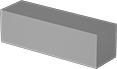
Machine Keys
 |
Tolerance, mm | ||||||||||
|---|---|---|---|---|---|---|---|---|---|---|
Lg., mm | Tolerance Rating | Ht. | Wd. | Min. Hardness | Specs. Met | Pkg. Qty. | Pkg. | |||
1008-1045 Carbon Steel | ||||||||||
4 mm × 4 mm | ||||||||||
| 8 | Undersized | -0.030 to 0.000 | -0.030 to 0.000 | Not Rated | DIN 6885 | 5 | 98870A712 | 00000 | ||
| 10 | Undersized | -0.030 to 0.000 | -0.030 to 0.000 | Not Rated | DIN 6885 | 5 | 98870A713 | 0000 | ||
| 12 | Undersized | -0.030 to 0.000 | -0.030 to 0.000 | Not Rated | DIN 6885 | 5 | 98870A714 | 0000 | ||
| 14 | Undersized | -0.030 to 0.000 | -0.030 to 0.000 | Not Rated | DIN 6885 | 5 | 98870A715 | 0000 | ||
| 16 | Undersized | -0.030 to 0.000 | -0.030 to 0.000 | Not Rated | DIN 6885 | 5 | 98870A716 | 0000 | ||
| 18 | Undersized | -0.030 to 0.000 | -0.030 to 0.000 | Not Rated | DIN 6885 | 5 | 98870A717 | 0000 | ||
| 20 | Undersized | -0.030 to 0.000 | -0.030 to 0.000 | Not Rated | DIN 6885 | 5 | 98870A718 | 0000 | ||
| 22 | Undersized | -0.030 to 0.000 | -0.030 to 0.000 | Not Rated | DIN 6885 | 5 | 98870A719 | 0000 | ||
| 25 | Undersized | -0.030 to 0.000 | -0.030 to 0.000 | Not Rated | DIN 6885 | 5 | 98870A721 | 0000 | ||
| 40 | Undersized | -0.030 to 0.000 | -0.030 to 0.000 | Not Rated | DIN 6885 | 5 | 98870A722 | 0000 | ||
| 56 | Undersized | -0.030 to 0.000 | -0.030 to 0.000 | Not Rated | DIN 6885 | 5 | 98870A723 | 0000 | ||
1045 Carbon Steel | ||||||||||
4 mm × 4 mm | ||||||||||
| 16 | Oversized | 0.000 to 0.076 | 0.000 to 0.076 | Rockwell B87 | — | 5 | 98870A343 | 0000 | ||
| 20 | Oversized | 0.000 to 0.076 | 0.000 to 0.076 | Rockwell B87 | — | 5 | 98870A344 | 0000 | ||
316 Stainless Steel | ||||||||||
4 mm × 4 mm | ||||||||||
| 12 | Undersized | -0.030 to 0.000 | -0.030 to 0.000 | Not Rated | DIN 6885 | 5 | 98870A159 | 0000 | ||
| 14 | Undersized | -0.030 to 0.000 | -0.030 to 0.000 | Not Rated | DIN 6885 | 5 | 98870A163 | 0000 | ||
| 15 | Undersized | -0.030 to 0.000 | -0.030 to 0.000 | Not Rated | DIN 6885 | 5 | 98870A164 | 0000 | ||
| 20 | Undersized | -0.030 to 0.000 | -0.030 to 0.000 | Not Rated | DIN 6885 | 5 | 98870A172 | 0000 | ||
| 25 | Undersized | -0.030 to 0.000 | -0.030 to 0.000 | Not Rated | DIN 6885 | 5 | 98870A175 | 0000 | ||
| 28 | Undersized | -0.030 to 0.000 | -0.030 to 0.000 | Not Rated | DIN 6885 | 5 | 98870A177 | 0000 | ||
| 30 | Undersized | -0.030 to 0.000 | -0.030 to 0.000 | Not Rated | DIN 6885 | 5 | 98870A181 | 0000 | ||
| 32 | Undersized | -0.030 to 0.000 | -0.030 to 0.000 | Not Rated | DIN 6885 | 5 | 98870A185 | 0000 | ||
| 35 | Undersized | -0.030 to 0.000 | -0.030 to 0.000 | Not Rated | DIN 6885 | 5 | 98870A202 | 0000 | ||
| 40 | Undersized | -0.030 to 0.000 | -0.030 to 0.000 | Not Rated | DIN 6885 | 5 | 98870A207 | 00000 | ||
| 50 | Undersized | -0.030 to 0.000 | -0.030 to 0.000 | Not Rated | DIN 6885 | 5 | 98870A210 | 00000 | ||
Woodruff Keys
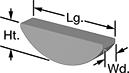 |  |
Side View |
Woodruff keys work well near shaft shoulders, where a standard open keyway would create too much stress. They are also often used on tapered shafts. These keys have a rounded shape that makes them easy to remove when parts need to be taken apart frequently, such as for maintenance or prototyping. Because they're usually shorter than standard machine keys, they work best in light duty applications. Use them to connect gears and other components to shafts. Also known as half moon keys.
1018-1045 Carbon Steel—Steel keys offer good strength.
316 Stainless Steel—316 stainless steel keys have excellent corrosion resistance, but aren't as strong as steel keys. They may be mildly magnetic.
Metric—Metric keys conform to DIN 6888 standards.
Tolerance, mm | ||||||||||||
|---|---|---|---|---|---|---|---|---|---|---|---|---|
Wd., mm | For Keyway Dia., mm | Ht., mm | Lg., mm | Wd. | Ht. | Specs. Met | System of Measurement | Pkg. Qty. | Pkg. | |||
1018-1045 Carbon Steel | ||||||||||||
| 4 | 13 | 5 | 12.7 | -0.030 to 0.000 | — | DIN 6888 | Metric | 25 | 98490A190 | 000000 | ||
| 4 | 16 | 6.5 | 15.7 | -0.030 to 0.000 | — | DIN 6888 | Metric | 25 | 98490A200 | 00000 | ||
| 4 | 19 | 7.5 | 18.6 | -0.030 to 0.000 | — | DIN 6888 | Metric | 25 | 98490A210 | 00000 | ||
316 Stainless Steel | ||||||||||||
| 4 | 16 | 6.5 | 15.7 | -0.030 to 0.000 | -0.150 to 0.000 | DIN 6888 | Metric | 1 | 97940A135 | 00000 | ||
Machine Key Stock
1008-1045 Carbon Steel
 |
1008-1045 carbon steel key stock is an economical choice with good strength.
Oversized Tolerance—Slightly larger than the size listed in the table, oversized stock fits tightly in a keyway. Press it into place for use in high-torque applications or to replace a key in a worn keyway.
Undersized Tolerance—Slightly smaller than the size listed in the table, undersized stock is the choice when you need a slightly looser fit or when you have an inconsistent keyway. Use it when parts need to be taken apart frequently, such as for maintenance or prototyping.
DIN 6880—Key stock that meets DIN 6880 conforms to DIN standards for undersized keys.
Tolerance, mm | |||||||||
|---|---|---|---|---|---|---|---|---|---|
Ht. × Wd. | Tolerance Rating | Ht. | Wd. | Min. Hardness | Specs. Met | Each | |||
305 mm Long | |||||||||
| 4 mm × 4 mm | Oversized | 0.000 to 0.076 | 0.000 to 0.076 | Rockwell B87 | — | 92288A490 | 00000 | ||
| 4 mm × 4 mm | Undersized | -0.030 to 0.000 | -0.030 to 0.000 | Rockwell B87 | DIN 6880 | 92288A720 | 0000 | ||
1,000 mm Long | |||||||||
| 4 mm × 4 mm | Undersized | -0.030 to 0.000 | -0.030 to 0.000 | Rockwell B87 | DIN 6880 | 92288A565 | 0000 | ||
Zinc-Plated 1008-1045 Carbon Steel
|
Tolerance, mm | ||||||||
|---|---|---|---|---|---|---|---|---|
Ht. × Wd. | Tolerance Rating | Ht. | Wd. | Min. Hardness | Each | |||
305 mm Long | ||||||||
| 4 mm × 4 mm | Oversized | 0.000 to 0.076 | 0.000 to 0.076 | Rockwell B87 | 92288A110 | 00000 | ||
Zinc-Yellow-Chromate-Plated 1045 Carbon Steel
|
Zinc-yellow-chromate-plated 1045 carbon steel key stock is an economical choice with good strength and resists corrosion in wet environments.
Undersized Tolerance—Slightly smaller than the size listed in the table, undersized stock is the choice when you need a slightly looser fit or when you have an inconsistent keyway. Use it when parts need to be taken apart frequently, such as for maintenance or prototyping.
DIN 6880—Key stock that meets DIN 6880 conforms to DIN standards for undersized keys.
Tolerance, mm | |||||||||
|---|---|---|---|---|---|---|---|---|---|
Ht. × Wd. | Tolerance Rating | Ht. | Wd. | Min. Hardness | Specs. Met | Each | |||
305 mm Long | |||||||||
| 4 mm × 4 mm | Undersized | -0.030 to 0.000 | -0.030 to 0.000 | Rockwell B87 | DIN 6880 | 92288A761 | 00000 | ||
4140 Alloy Steel
|
4140 alloy steel key stock is an economical choice with good strength. 4140 alloy steel key stock has greater strength and toughness after hardening than carbon steel, making it useful for high-stress applications.
Undersized Tolerance—Slightly smaller than the size listed in the table, undersized stock is the choice when you need a slightly looser fit or when you have an inconsistent keyway. Use it when parts need to be taken apart frequently, such as for maintenance or prototyping.
DIN 6880—Key stock that meets DIN 6880 conforms to DIN standards for undersized keys.
18-8 Stainless Steel
|
18-8 stainless steel key stock offers a balance of strength and corrosion resistance. It may be mildly magnetic. 18-8 stainless steel key stock is more corrosion resistant than steel key stock.
Oversized Tolerance—Slightly larger than the size listed in the table, oversized stock fits tightly in a keyway. Press it into place for use in high-torque applications or to replace a key in a worn keyway.
Undersized Tolerance—Slightly smaller than the size listed in the table, undersized stock is the choice when you need a slightly looser fit or when you have an inconsistent keyway. Use it when parts need to be taken apart frequently, such as for maintenance or prototyping.
DIN 6880—Key stock that meets DIN 6880 conforms to DIN standards for undersized keys.
304 Stainless Steel
|
304 stainless steel key stock offers a good balance of strength, corrosion resistance, and machinability. 304 stainless steel key stock is more corrosion resistant than steel key stock.
Undersized Tolerance—Slightly smaller than the size listed in the table, undersized stock is the choice when you need a slightly looser fit or when you have an inconsistent keyway. Use it when parts need to be taken apart frequently, such as for maintenance or prototyping.
DIN 6880—Key stock that meets DIN 6880 conforms to DIN standards for undersized keys.
%20--%3e%3cg%3e%3cg%20id='Layer_1'%3e%3cpath%20class='cls-1'%20d='M68,27.2c-14.6,0-26.4,11.7-26.4,26.3,0,7,2.8,13.7,7.7,18.7v44.8l18.8-16.1,18.7,16.1v-44.9c10.3-10.3,10.3-27,0-37.3-5-4.9-11.7-7.7-18.7-7.7h0ZM81.3,105l-13.2-11.4-13.2,11.4v-28.7c8.2,4.8,18.3,4.8,26.5,0v28.7ZM76.2,70.8c-5.2,2.5-11.2,2.5-16.4,0-9.5-4.5-13.5-15.9-9-25.4,4.5-9.5,15.9-13.5,25.4-9,9.5,4.5,13.5,15.9,9,25.4-1.9,4-5.1,7.1-9,9Z'/%3e%3cpath%20class='cls-2'%20d='M5.8,95.5c-1.2,0-2.1-1-2.1-2.1,0,0,0,0,0,0V29.4h20.9c2.1,0,3.8-1.7,3.8-3.8V3.7c.2,0,.4,0,.5,0h37.5c1.2,0,2.1,1,2.1,2.1v18.6c1.2,0,2.5.1,3.7.3V5.8C72.2,2.6,69.6,0,66.4,0H28.9c-1.5,0-3,.6-4.1,1.7h-.1c0,.1-23,23.2-23,23.2-1.1,1.1-1.7,2.6-1.7,4.1v64.3c0,3.2,2.6,5.8,5.8,5.8h41.7v-3.7H5.8ZM24.7,7.1v18.7H6L24.7,7.1Z'/%3e%3c/g%3e%3c/g%3e%3c/svg%3e)
Certificates with a traceable lot number are available for these products. Download certificates from ORDER HISTORY after your order ships.
Tolerance, mm | |||||||||
|---|---|---|---|---|---|---|---|---|---|
Ht. × Wd. | Tolerance Rating | Ht. | Wd. | Min. Hardness | Specs. Met | Each | |||
1,000 mm Long | |||||||||
| 4 mm × 4 mm | Undersized | -0.030 to 0.000 | -0.030 to 0.000 | Rockwell B80 | DIN 6880 | 92288A615 | 000000 | ||
316 Stainless Steel
|
316 stainless steel key stock has the best corrosion resistance of our stainless steel key stock and may be mildly magnetic. 316 stainless steel key stock is more corrosion resistant than steel key stock.
Undersized Tolerance—Slightly smaller than the size listed in the table, undersized stock is the choice when you need a slightly looser fit or when you have an inconsistent keyway. Use it when parts need to be taken apart frequently, such as for maintenance or prototyping.
DIN 6880—Key stock that meets DIN 6880 conforms to DIN standards for undersized keys.
Tolerance, mm | |||||||||
|---|---|---|---|---|---|---|---|---|---|
Ht. × Wd. | Tolerance Rating | Ht. | Wd. | Min. Hardness | Specs. Met | Each | |||
1,000 mm Long | |||||||||
| 4 mm × 4 mm | Undersized | -0.030 to 0.000 | -0.030 to 0.000 | Rockwell B85 | DIN 6880 | 92288A638 | 000000 | ||
316/316L Stainless Steel
|
316/316L stainless steel key stock has the best corrosion resistance of our stainless steel key stock and may be mildly magnetic. 316/316L stainless steel key stock is more corrosion resistant than steel key stock.
Oversized Tolerance—Slightly larger than the size listed in the table, oversized stock fits tightly in a keyway. Press it into place for use in high-torque applications or to replace a key in a worn keyway.
Undersized Tolerance—Slightly smaller than the size listed in the table, undersized stock is the choice when you need a slightly looser fit or when you have an inconsistent keyway. Use it when parts need to be taken apart frequently, such as for maintenance or prototyping.
DIN 6880—Key stock that meets DIN 6880 conforms to DIN standards for undersized keys.
360 Brass
|
360 brass key stock is corrosion resistant and nonmagnetic. 360 brass is softer than other metals, so it's often used for shear keys.
Undersized Tolerance—Slightly smaller than the size listed in the table, undersized stock is the choice when you need a slightly looser fit or when you have an inconsistent keyway. Use it when parts need to be taken apart frequently, such as for maintenance or prototyping.
DIN 6880—Key stock that meets DIN 6880 conforms to DIN standards for undersized keys.
Tolerance, mm | |||||||||
|---|---|---|---|---|---|---|---|---|---|
Ht. × Wd. | Tolerance Rating | Ht. | Wd. | Min. Hardness | Specs. Met | Each | |||
305 mm Long | |||||||||
| 4 mm × 4 mm | Undersized | -0.030 to 0.000 | -0.030 to 0.000 | Rockwell B35 | DIN 6880 | 90457A720 | 000000 | ||
