We will reply to your message within an hour.
Widely used as bearings and in valves, 2017 aluminum is a durable, lightweight material.
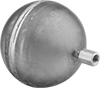
Hollow construction reduces weight and allows these balls to float.
Also known as mild steel, use these low-carbon steel balls in parts that don't require high strength.
Also known as chrome steel, 52100 is an extremely hard and wear-resistant material. These balls are often used in bearings.
The diameter on these balls is held to a precise tolerance.
This material has tighter tolerances than standard 304 stainless steel.
The addition of molybdenum gives 316 stainless steel excellent corrosion resistance. Use it in a variety of marine and chemical-processing applications.
With a diameter that’s held to a close tolerance, this material is hardened for increased wear and abrasion resistance.
These balls are hardened for increased wear and abrasion resistance.
440A stainless steel resists damage from impact and abrasion. It's often used for cutlery and valve components.
The most formable brass we offer, 260 offers better weldability than 300 series brass but it’s not as machinable. Sometimes called cartridge brass, it's commonly used for ammunition casings, radiator components, and decorative door hardware.
With 99.95% copper content, 102 copper has higher purity than 110 copper, resulting in superior electrical conductivity. It's commonly called OFE and OFHC copper. Use it in electrical applications, such as for coaxial cables and terminal lug.
This S2 tool steel has been hardened for excellent strength and impact resistance. It has a tough core that resists breaking under shock loads.
Grade 5 is the strongest of all the titanium alloys thanks to its higher aluminum and vanadium content. It offers a versatile mix of good corrosion resistance, weldability, and formability.
Fill forming bags for shaping metal or use as a counterweight.