


Filter by
Collet Size
Grip Range
Face Type

Maximum Rotation Speed
Overall Length
For Holding
Direction of Operation


Collet Sizes Included
DFARS Specialty Metals
U.S.–Mexico–Canada Agreement (USMCA) Qualifying

Export Control Classification Number (ECCN)
Specifications Met

Shank Diameter
Spindle Motors
 |
 | 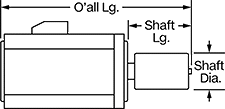 |
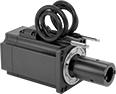
Designed to run at high speeds with very little vibration, these motors often drive smooth, steady cuts in CNC machines. They’re brushless, so they run faster, last longer, and are more efficient than brushed DC motors. They also have a higher torque-to-weight ratio. You’ll need a brushless DC motor driver (not included) to power and control these spindle motors. They’re not compatible with automatic tool changers.
They come with an ER-11 collet for holding round-shank tools, such as router bits, drill bits, and end mills. Collets for larger shank sizes are sold separately.
Total Indicated Runout (TIR) Accuracy—Total Indicated Runout (TIR) is a measure of rotational smoothness—the lower the value, the less wobble a rotating tool will have and the more accurate it will be. When choosing a replacement spindle motor, you want one that has an equal or better TIR.
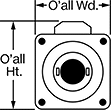
Torque, in·lbf | Overall | Shaft | Insulation | ||||||||||||||||||
|---|---|---|---|---|---|---|---|---|---|---|---|---|---|---|---|---|---|---|---|---|---|
Max. Rotation Speed, rpm | Full Load Current | Wattage, kW | Max. | Continuous | Lg. | Wd. | Ht. | Dia., mm | Lg., mm | Ctr. to Base | Type | Component | Class | Max. Temp., ° F | Total Indicated Runout (TIR) Accuracy | Collet Type | Collet Sizes Included | Each | |||
48V DC | |||||||||||||||||||||
NEMA 24 | |||||||||||||||||||||
| 14,400 | 24.9 amp | 0.211 | 0.31 | 0.1 | 6.1" | 2.4" | 2.8" | 30 | 52 | 1.19" | Solid | Motor | F | 311 | 0.0005" | ER-11 | 1/8" | 4856N11 | 0000000 | ||
ER Collets
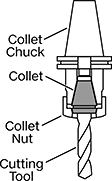 | 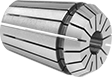 |
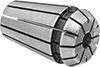
The most widely used type of collet, these collets hold cutting tools in ER collet chucks for milling, drilling, and routing. Spring slots clamp evenly around the shank to minimize runout for clean, accurate cuts and long tool life. The slots flex to grip slightly undersized shanks too, so you don't need an exact match for each cutting tool in your lineup. You can also use these collets in ER collet fixtures and custom setups to keep small round parts centered.
52100 Alloy Steel—Hardened 52100 alloy steel collets are made from the same tough material used to make bearings. They’re more wear-resistant than basic spring steel collets but will wear faster than hardened chrome-moly steel collets if you change bits frequently.
Chrome-Moly Steel—Hardened chrome-moly steel collets are more wear-resistant than hardened 52100 alloy steel collets. They hold their shape better over time and have lower runout, even with frequent bit changes. Often used for high-volume production runs, they stand up to high-speed, high-force machining in any material.
Collet Size | Grip Range | Total Indicated Runout (TIR) Accuracy | ID Tolerance | Max. Body Dia. | Overall Lg. | Specs. Met | Each | |||
|---|---|---|---|---|---|---|---|---|---|---|
ER-11 | ||||||||||
Hardened 52100 Alloy Steel | ||||||||||
| 1/16" | 0.043" to 0.062" | 0.0002" | -0.0004" to 0" | 0.45" | 0.71" | DIN 6499-B, ISO 15488 Form B | 4560N201 | 000000 | ||
| 3/32" | 0.054" to 0.093" | 0.0002" | -0.0004" to 0" | 0.45" | 0.71" | DIN 6499-B, ISO 15488 Form B | 4560N202 | 00000 | ||
| 1/8" | 0.086" to 0.125" | 0.0002" | -0.0004" to 0" | 0.45" | 0.71" | DIN 6499-B, ISO 15488 Form B | 4560N203 | 00000 | ||
| 5/32" | 0.117" to 0.156" | 0.0002" | -0.0004" to 0" | 0.45" | 0.71" | DIN 6499-B, ISO 15488 Form B | 4560N204 | 00000 | ||
| 3/16" | 0.148" to 0.187" | 0.0002" | -0.0004" to 0" | 0.45" | 0.71" | DIN 6499-B, ISO 15488 Form B | 4560N205 | 00000 | ||
| 7/32" | 0.179" to 0.218" | 0.0002" | -0.0004" to 0" | 0.45" | 0.71" | DIN 6499-B, ISO 15488 Form B | 4560N206 | 00000 | ||
| 1/4" | 0.211" to 0.250" | 0.0002" | -0.0004" to 0" | 0.45" | 0.71" | DIN 6499-B, ISO 15488 Form B | 4560N207 | 00000 | ||
| 9/32" | 0.242" to 0.281" | 0.0002" | -0.0004" to 0" | 0.45" | 0.71" | DIN 6499-B, ISO 15488 Form B | 4560N208 | 00000 | ||
| 1 mm | 0.5 mm to 1 mm | 0.0002" | -0.0004" to 0" | 0.45" | 0.71" | DIN 6499-B, ISO 15488 Form B | 4560N209 | 00000 | ||
| 1.5 mm | 1 mm to 1.5 mm | 0.0002" | -0.0004" to 0" | 0.45" | 0.71" | DIN 6499-B, ISO 15488 Form B | 4560N211 | 00000 | ||
| 2 mm | 1.5 mm to 2 mm | 0.0002" | -0.0004" to 0" | 0.45" | 0.71" | DIN 6499-B, ISO 15488 Form B | 4560N212 | 00000 | ||
| 3 mm | 2.5 mm to 3 mm | 0.0002" | -0.0004" to 0" | 0.45" | 0.71" | DIN 6499-B, ISO 15488 Form B | 4560N213 | 00000 | ||
| 4 mm | 3.5 mm to 4 mm | 0.0002" | -0.0004" to 0" | 0.45" | 0.71" | DIN 6499-B, ISO 15488 Form B | 4560N214 | 00000 | ||
| 5 mm | 4.5 mm to 5 mm | 0.0002" | -0.0004" to 0" | 0.45" | 0.71" | DIN 6499-B, ISO 15488 Form B | 4560N215 | 00000 | ||
Hardened Chrome-Moly Steel | ||||||||||
| 1/32" | 0.024" to 0.031" | 0.0002" | -0.0001" to 0.0001" | 0.46" | 0.71" | DIN 6499-B, ISO 15488 Form B | 4560N101 | 00000 | ||
| 1/16" | 0.043" to 0.063" | 0.0002" | -0.0001" to 0.0001" | 0.46" | 0.71" | DIN 6499-B, ISO 15488 Form B | 4560N102 | 00000 | ||
| 3/32" | 0.074" to 0.094" | 0.0002" | -0.0001" to 0.0001" | 0.46" | 0.71" | DIN 6499-B, ISO 15488 Form B | 4560N103 | 00000 | ||
| 1/8" | 0.105" to 0.125" | 0.0002" | -0.0001" to 0.0001" | 0.46" | 0.71" | DIN 6499-B, ISO 15488 Form B | 4560N12 | 00000 | ||
| 5/32" | 0.137" to 0.156" | 0.0002" | -0.0001" to 0.0001" | 0.46" | 0.71" | DIN 6499-B, ISO 15488 Form B | 4560N104 | 00000 | ||
| 3/16" | 0.168" to 0.188" | 0.0002" | -0.0001" to 0.0001" | 0.46" | 0.71" | DIN 6499-B, ISO 15488 Form B | 4560N13 | 00000 | ||
| 7/32" | 0.199" to 0.219" | 0.0002" | -0.0001" to 0.0001" | 0.46" | 0.71" | DIN 6499-B, ISO 15488 Form B | 4560N105 | 00000 | ||
| 1/4" | 0.230" to 0.250" | 0.0002" | -0.0001" to 0.0001" | 0.46" | 0.71" | DIN 6499-B, ISO 15488 Form B | 4560N11 | 00000 | ||
| 1 mm | 0.5 mm to 1 mm | 0.0002" | -0.0001" to 0.0001" | 0.46" | 0.71" | DIN 6499-B, ISO 15488 Form B | 4560N106 | 00000 | ||
| 1.5 mm | 1 mm to 1.5 mm | 0.0002" | -0.0001" to 0.0001" | 0.46" | 0.71" | DIN 6499-B, ISO 15488 Form B | 4560N107 | 00000 | ||
| 2 mm | 1.5 mm to 2 mm | 0.0002" | -0.0001" to 0.0001" | 0.46" | 0.71" | DIN 6499-B, ISO 15488 Form B | 4560N108 | 00000 | ||
| 3 mm | 2.5 mm to 3 mm | 0.0002" | -0.0001" to 0.0001" | 0.46" | 0.71" | DIN 6499-B, ISO 15488 Form B | 4560N109 | 00000 | ||
| 4 mm | 3.5 mm to 4 mm | 0.0002" | -0.0001" to 0.0001" | 0.46" | 0.71" | DIN 6499-B, ISO 15488 Form B | 4560N111 | 00000 | ||
| 5 mm | 4.5 mm to 5 mm | 0.0002" | -0.0001" to 0.0001" | 0.46" | 0.71" | DIN 6499-B, ISO 15488 Form B | 4560N112 | 00000 | ||
ER Collet Sets
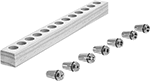 | 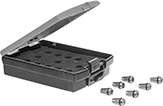 |
Collet Set with Wood Stand | Collet Set with Plastic Case |
 | |
Collet Set |
Keep a set of ER collets on hand to hold cutting tools for milling, drilling, and routing. They’re the most versatile and widely used type of collet. Spring slots clamp evenly around the shank to minimize runout for clean, accurate cuts and long tool life. The slots flex to grip slightly undersized shanks too, so you don't need an exact match for each cutting tool in your lineup. You can also use these collets in ER collet fixtures and custom setups to keep small round parts centered.
52100 Alloy Steel—Hardened 52100 alloy steel collets are made from the same tough material used to make bearings. They’re more wear-resistant than basic spring steel collets but will wear faster than hardened chrome-moly steel collets if you change bits frequently.
Chrome-Moly Steel—Hardened chrome-moly steel collets are more wear-resistant than hardened 52100 alloy steel collets. They hold their shape better over time and have lower runout, even with frequent bit changes. Often used for high-volume production runs, they stand up to high-speed, high-force machining in any material.
No. of Pieces | Collet Sizes Included | Total Indicated Runout (TIR) Accuracy | ID Tolerance | Approx. Dia. Compression (Collet Size) | Max. Body Dia. | Overall Lg. | Container Type | Specs. Met | Each | |||
|---|---|---|---|---|---|---|---|---|---|---|---|---|
ER-11 Collet | ||||||||||||
Hardened 52100 Alloy Steel | ||||||||||||
| 7 | 1/16"-1/4" (increments of 1/32") | 0.0002" | -0.0004" to 0" | 1/64" (1/16") 1/32" (3/32" to 1/4") | 0.45" | 0.71" | Wood Stand | DIN 6499-B, ISO 15488 Form B | 9411N23 | 0000000 | ||
| 13 | 1 mm-7 mm (increments of 0.5 mm) | 0.0002" | -0.0004" to 0" | 1/64" (1 mm to 5 mm) 1/32" (5.5 mm to 7 mm) | 0.45" | 0.71" | Wood Stand | DIN 6499-B, ISO 15488 Form B | 9411N24 | 000000 | ||
Hardened Chrome-Moly Steel | ||||||||||||
| 7 | 1/16"-1/4" (increments of 1/32") | 0.0002" | 0" to 0.0006" | 1/64" (1/16" to 1/4") | 0.45" | 0.71" | Plastic Case | DIN 6499-B, ISO 15488 Form B | 9411N11 | 000000 | ||
| 12 | 1.5 mm-7 mm (increments of 0.5 mm) | 0.0002" | -0.0001" to 0.0001" | 1/64" (1.5 mm to 7 mm) | 0.46" | 0.71" | — | DIN 6499-B, ISO 15488 Form B | 9411N12 | 000000 | ||
ER Coolant Control Collets
| 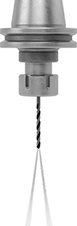 | 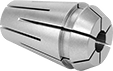 |
Sealed Shown in Use | Sealed |
Collet Size | Grip Range | Total Indicated Runout (TIR) Accuracy | ID Tolerance | Max. Coolant Pressure, psi | Max. Body Dia. | Overall Lg. | Specs. Met | Each | |||
|---|---|---|---|---|---|---|---|---|---|---|---|
ER-11—Sealed | |||||||||||
Hardened 52100 Alloy Steel | |||||||||||
| 1/8" | Not Rated | 0.0002" | -0.0004" to 0" | 2,000 | 0.45" | 0.71" | DIN 6499-B, ISO 15488 Form B | 4560N301 | 000000 | ||
| 3/16" | Not Rated | 0.0002" | -0.0004" to 0" | 2,000 | 0.45" | 0.71" | DIN 6499-B, ISO 15488 Form B | 4560N302 | 00000 | ||
| 1/4" | Not Rated | 0.0002" | -0.0004" to 0" | 2,000 | 0.45" | 0.71" | DIN 6499-B, ISO 15488 Form B | 4560N303 | 00000 | ||
Deburring Tool Holders
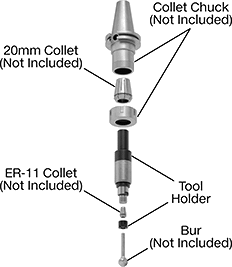 | 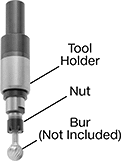 | 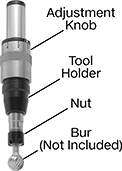 |
Fixed Spring Load | Adjustable Spring Load |
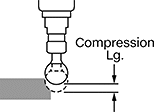 | 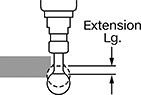 | 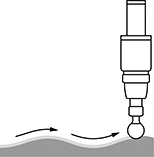 |
For Front Side | For Back Side | Tool Holder Shown Compressing |
Holders | Spanner Wrenches | ||||||||||||||||||||
|---|---|---|---|---|---|---|---|---|---|---|---|---|---|---|---|---|---|---|---|---|---|
Spring Load | Shank | Bur | Nut, mm | ||||||||||||||||||
Force, N | Rating | Overall Lg., mm | For Collet Type | For Collet Size, mm | Dia., mm | Lg., mm | For Collet Type | For Collet Size | For Shape | For Max. Shank Dia. | Dia. | Lg. | Compression Lg., mm | Extension Lg., mm | Material | Each | Each | ||||
Fixed Spring Load—For Front and Back Side | |||||||||||||||||||||
| 3 | Light | 130 to 150 | ER-32, ER-40, ER-50, TG-100 | 20 | 20 | 40 | ER-11 | 1/4" | Ball | 1/4" | 16 | 12 | 10 | 10 | Steel | 8238N11 | 0000000 | 8238N15 | 000000 | ||
| 5 | Medium | 130 to 150 | ER-32, ER-40, ER-50, TG-100 | 20 | 20 | 40 | ER-11 | 1/4" | Ball | 1/4" | 16 | 12 | 10 | 10 | Steel | 8238N12 | 000000 | 8238N15 | 00000 | ||
| 7 | Heavy | 130 to 150 | ER-32, ER-40, ER-50, TG-100 | 20 | 20 | 40 | ER-11 | 1/4" | Ball | 1/4" | 16 | 12 | 10 | 10 | Steel | 8238N13 | 000000 | 8238N15 | 00000 | ||
Adjustable Spring Load—For Front Side | |||||||||||||||||||||
| 2.5, 4, 6.5, 8 | Light, Medium, Heavy | 145 to 155 | ER-32, ER-40, ER-50, TG-100 | 20 | 20 | 45 | ER-11 | 1/4" | Ball | 1/4" | 16 | 12 | 10 | — | Steel | 8238N14 | 000000 | 8238N15 | 00000 | ||
ER Collet Nuts
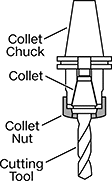 |
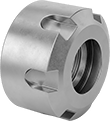 | 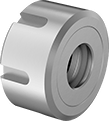 |  | 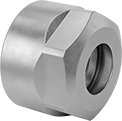 | 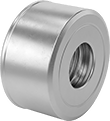 |
Collet Nut with Slotted Drive | Ultra-Low-Friction Bearing Collet Nut with Slotted Drive | Miniature Collet Nut | Collet Nut with Hex Drive | Ultra-Low-Friction Bearing Collet Nut with External Round Drive |
Nuts | Wrenches | Spanner Wrenches | |||||||||||||||
|---|---|---|---|---|---|---|---|---|---|---|---|---|---|---|---|---|---|
Drive | |||||||||||||||||
For Collet Type | Thread Size | Style | Size, mm | Max. Rotation Speed, rpm | Dia., mm | Ht., mm | Recommended Tightening Torque, ft·lbf | Material | Specs. Met | Each | Each | Each | |||||
Collet Nuts | |||||||||||||||||
| ER-11 | M14 × 0.75 mm | Hex | 17 | 25,000 | 19 | 12 | 15 | Hardened Steel | ISO 15488 Form B | 9615N22 | 000000 | 5699N127 | 000000 | ——— | 0 | ||
Low-Friction Coated Collet Nuts | |||||||||||||||||
| ER-11 | M14 × 0.75 mm | Hex | 17 | 25,000 | 19 | 12 | 17 | Hardened Steel | ISO 15488 Form B | 9615N29 | 00000 | 5699N127 | 00000 | ——— | 0 | ||
Miniature Collet Nuts | |||||||||||||||||
| ER-11 | M13 × 0.75 mm | Slotted | 13 | 25,000 | 16 | 11 | 12 | Hardened Steel | — | 9615N12 | 00000 | ——— | 0 | 8238N15 | 000000 | ||
Miniature Low-Friction Coated Collet Nuts | |||||||||||||||||
| ER-11 | M13 × 0.75 mm | Slotted | 12 | 25,000 | 16 | 12 | 12 | Hardened Steel | ISO 15488 Form B | 9615N26 | 00000 | ——— | 0 | 8238N15 | 00000 | ||
