


Filter by
System of Measurement
Thread Size


Material


Fastener Strength Grade/Class


Finish
Thread Spacing


Thread Direction


Specifications Met

Locking Type


Export Control Classification Number (ECCN)
Drive Style

DFARS Specialty Metals


Performance


About Hex Nuts
%20--%3e%3csvg%20version='1.1'%20id='Layer_1'%20xmlns='http://www.w3.org/2000/svg'%20xmlns:xlink='http://www.w3.org/1999/xlink'%20x='0px'%20y='0px'%20viewBox='0%200%20400%20400'%20style='enable-background:new%200%200%20400%20400;'%20xml:space='preserve'%3e%3cstyle%20type='text/css'%3e%20.st0{fill:%231A70A0;}%20.st1{opacity:0.5;}%20%3c/style%3e%3cg%3e%3cg%3e%3cpath%20class='st0'%20d='M200,56.9c38.35,0,74.4,14.93,101.51,42.05c27.11,27.11,42.05,63.17,42.05,101.51s-14.93,74.4-42.05,101.51%20S238.35,344.02,200,344.02s-74.4-14.93-101.51-42.05c-27.11-27.11-42.05-63.17-42.05-101.51s14.93-74.4,42.05-101.51%20S161.65,56.9,200,56.9%20M200,12.9C96.41,12.9,12.44,96.88,12.44,200.46c0,103.59,83.97,187.56,187.56,187.56%20c103.59,0,187.56-83.97,187.56-187.56C387.56,96.88,303.59,12.9,200,12.9L200,12.9z'/%3e%3c/g%3e%3cg%3e%3cg%20class='st1'%3e%3cpath%20class='st0'%20d='M235.49,152.24h16.15l-27.46,111.87c-1.94,7.8-2.91,12.5-2.91,14.1c0,1.82,0.58,3.29,1.73,4.41%20c1.16,1.12,2.69,1.68,4.61,1.68c5.23,0,11.78-3.85,19.63-11.55l17.22,21.34c-16.95,17.33-34.87,26-53.78,26%20c-8.37,0-15.45-1.47-21.23-4.41c-5.79-2.94-10.44-7.25-13.95-12.92c-3.51-5.67-5.27-11.18-5.27-16.53c0-1.93,0.35-5.24,1.05-9.94%20c1-6.94,2.05-12.54,3.15-16.82l15.22-62.15h-32.69l7.65-30.97C190.89,163.58,214.53,158.88,235.49,152.24z%20M230.44,80.84%20c8.24,0,14.66,2.62,19.26,7.86c4.6,5.24,6.9,11.55,6.9,18.94c0,5.46-1.42,10.7-4.25,15.73c-2.83,5.03-6.88,9.07-12.12,12.12%20c-5.24,3.05-10.33,4.57-15.24,4.57c-4.6,0-9.17-1.23-13.72-3.69c-4.55-2.46-8.02-5.78-10.43-9.95%20c-2.41-4.17-3.61-8.67-3.61-13.48c0-5.35,1.52-10.64,4.57-15.89c3.05-5.24,7.03-9.25,11.96-12.04%20C218.68,82.23,224.24,80.84,230.44,80.84z'/%3e%3c/g%3e%3cg%3e%3cpath%20class='st0'%20d='M214.08,152.24h16.15l-27.46,111.87c-1.94,7.8-2.91,12.5-2.91,14.1c0,1.82,0.58,3.29,1.73,4.41%20c1.16,1.12,2.69,1.68,4.61,1.68c5.23,0,11.78-3.85,19.63-11.55l17.22,21.34c-16.95,17.33-34.87,26-53.78,26%20c-8.37,0-15.45-1.47-21.23-4.41c-5.79-2.94-10.44-7.25-13.95-12.92c-3.51-5.67-5.27-11.18-5.27-16.53c0-1.93,0.35-5.24,1.05-9.94%20c1-6.94,2.05-12.54,3.15-16.82l15.22-62.15h-32.69l7.65-30.97C169.48,163.58,193.11,158.88,214.08,152.24z%20M209.03,80.84%20c8.24,0,14.66,2.62,19.26,7.86c4.6,5.24,6.9,11.55,6.9,18.94c0,5.46-1.42,10.7-4.25,15.73c-2.83,5.03-6.88,9.07-12.12,12.12%20c-5.24,3.05-10.33,4.57-15.24,4.57c-4.6,0-9.17-1.23-13.72-3.69c-4.55-2.46-8.02-5.78-10.43-9.95%20c-2.41-4.17-3.61-8.67-3.61-13.48c0-5.35,1.52-10.64,4.57-15.89c3.05-5.24,7.03-9.25,11.96-12.04%20C197.26,82.23,202.83,80.84,209.03,80.84z'/%3e%3c/g%3e%3c/g%3e%3c/g%3e%3c/svg%3e)
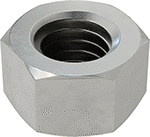
Choose a hex nut with the right profile, material, and strength for your application.
Hex Nuts
Medium-Strength Steel
 |
 |
These Grade 5 or Class 8 nuts are your go-to for fastening most machinery and equipment. To avoid stripped threads during installation, make sure your screw has a comparable strength rating.
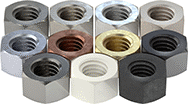
Zinc-Plated Steel—A step up from plain steel, the zinc plating withstands occasional exposure to moisture.
Zinc-Yellow-Chromate-Plated Steel—With a more durable finish than clear zinc plating, these nuts are suitable for most wet and outdoor environments. However, they won't hold up to the harsh chemicals that stainless steel can.
Black-Oxide Steel—Typically chosen for their appearance, these nuts have a dark, matte coating to create a finished look. They offer minimal corrosion resistance, so they're best for dry environments.
Steel—Best for dry environments since moisture will cause these nuts to rust.
Thread Size | Wd., mm | Ht., mm | Fastener Strength Grade/Class | Specs. Met | Pkg. Qty. | Pkg. | |||
|---|---|---|---|---|---|---|---|---|---|
Zinc-Plated Steel | |||||||||
| M22 × 1.5 mm | 32 | 18 | Class 8 | DIN 934 | 1 | 91415A280 | 00000 | ||
| M22 × 2 mm | 32 | 18 | Class 8 | DIN 934 | 1 | 91415A230 | 0000 | ||
| M22 × 2.5 mm | 32 | 18 | Class 8 | DIN 934 | 10 | 90591A127 | 00000 | ||
Zinc-Yellow-Chromate-Plated Steel | |||||||||
| M22 × 1.5 mm | 32 | 18 | Class 8 | DIN 934 | 1 | 94409A127 | 0000 | ||
| M22 × 2.5 mm | 32 | 18 | Class 8 | DIN 934 | 5 | 97700A240 | 0000 | ||
Black-Oxide Steel | |||||||||
| M22 × 1.5 mm | 32 | 18 | Class 8 | DIN 934 | 1 | 91423A521 | 0000 | ||
| M22 × 2.5 mm | 32 | 18 | Class 8 | DIN 934 | 1 | 90593A014 | 0000 | ||
Steel | |||||||||
| M22 × 1.5 mm | 32 | 18 | Class 8 | DIN 934 | 1 | 91423A260 | 0000 | ||
| M22 × 2 mm | 32 | 18 | Class 8 | DIN 934 | 1 | 91423A250 | 0000 | ||
| M22 × 2.5 mm | 32 | 18 | Class 8 | DIN 934 | 10 | 90592A109 | 00000 | ||
High-Strength Steel
| |
Thread Size | Wd., mm | Ht., mm | Fastener Strength Grade/Class | Specs. Met | Pkg. Qty. | Pkg. | |||
|---|---|---|---|---|---|---|---|---|---|
Zinc-Plated Steel | |||||||||
| M22 × 1.5 mm | 32 | 18 | Class 10 | DIN 934 | 1 | 4391N122 | 00000 | ||
| M22 × 2.5 mm | 32 | 18 | Class 10 | DIN 934 | 1 | 90870A110 | 0000 | ||
Zinc-Yellow-Chromate-Plated Steel | |||||||||
| M22 × 1.5 mm | 32 | 18 | Class 10 | DIN 934 | 1 | 94482A121 | 0000 | ||
| M22 × 2.5 mm | 32 | 18 | Class 10 | DIN 934 | 1 | 92497A750 | 0000 | ||
Black-Oxide Steel | |||||||||
| M22 × 2.5 mm | 32 | 18 | Class 10 | DIN 934 | 1 | 94166A210 | 0000 | ||
Steel | |||||||||
| M22 × 1.5 mm | 32 | 18 | Class 10 | DIN 934 | 1 | 4379N122 | 0000 | ||
| M22 × 2.5 mm | 32 | 18 | Class 10 | DIN 934 | 5 | 90685A101 | 00000 | ||
Corrosion-Resistant Stainless Steel
|
|
18-8 Stainless Steel—The choice for wet and outdoor environments, these nuts resist rust. However, they won't hold up to the harsh chemicals that 316 stainless steel can.
Black-Oxide 18-8 Stainless Steel—Typically chosen for their appearance, these nuts have a dark, matte coating to create a finished look. They resist rust in wet and outdoor environments, but won't hold up to the harsh chemicals that 316 stainless steel can.
Highly Corrosion-Resistant 316 Stainless Steel—Superior to 18-8 stainless steel, these nuts won't degrade when exposed to harsh weather, salt water, and most chemicals.
Thread Size | Wd., mm | Ht., mm | Specs. Met | Certificate Type | Pkg. Qty. | Pkg. | |||
|---|---|---|---|---|---|---|---|---|---|
18-8 Stainless Steel | |||||||||
| M22 × 1.5 mm | 32 | 18 | DIN 934 | — | 1 | 93850A375 | 00000 | ||
| M22 × 2.5 mm | 32 | 18 | DIN 934 | Material Certificate | 1 | 91828A442 | 0000 | ||
Black-Oxide 18-8 Stainless Steel | |||||||||
| M22 × 2.5 mm | 32 | 18 | DIN 934 | — | 5 | 98676A350 | 00000 | ||
Highly Corrosion-Resistant 316 Stainless Steel | |||||||||
| M22 × 2.5 mm | 32 | 18 | DIN 934 | — | 1 | 94150A372 | 0000 | ||
Brass
| |
Thread Size | Wd., mm | Ht., mm | Specs. Met | Pkg. Qty. | Pkg. | |||
|---|---|---|---|---|---|---|---|---|
Brass | ||||||||
| M22 × 1.5 mm | 32 | 18 | DIN 934 | 1 | 96815A220 | 000000 | ||
Thin-Profile Hex Nuts
 |
Medium-Strength Steel
Thread Size | Wd., mm | Ht., mm | Fastener Strength Grade/Class | Specs. Met | Pkg. Qty. | Pkg. | |||
|---|---|---|---|---|---|---|---|---|---|
Zinc-Plated Steel | |||||||||
| M22 × 1.5 mm | 32 | 11 | Class 04 | DIN 439B, ISO 8675 | 10 | 90326A150 | 000000 | ||
| M22 × 2.5 mm | 32 | 11 | Class 04 | DIN 439B, ISO 4035 | 1 | 90695A154 | 0000 | ||
Zinc-Yellow-Chromate-Plated Steel | |||||||||
| M22 × 1.5 mm | 32 | 11 | Class 04 | DIN 439B, ISO 8675 | 5 | 93737A118 | 0000 | ||
Steel | |||||||||
| M22 × 1.5 mm | 32 | 10 | — | DIN 936 | 10 | 90364A111 | 00000 | ||
| M22 × 1.5 mm | 32 | 11 | Class 04 | DIN 439B, ISO 8675 | 10 | 90326A216 | 00000 | ||
| M22 × 2.5 mm | 32 | 10 | — | DIN 936 | 5 | 90370A109 | 0000 | ||
| M22 × 2.5 mm | 32 | 11 | — | DIN 439B, ISO 4035 | 1 | 90370A214 | 0000 | ||
Corrosion-Resistant Stainless Steel
Nylon-Insert Locknuts
High-Strength Steel
 |
Rated Grade 8, Grade C, or Class 10, these locknuts are about 25% stronger than medium-strength steel nuts. To avoid stripped threads during installation, make sure your screw has a comparable strength rating.
Zinc-Plated Steel—A step up from plain steel, the zinc plating withstands occasional exposure to moisture.
Medium-Strength Steel
|
These Grade 5 or Class 8 nuts are your go-to for fastening most machinery and equipment. To avoid stripped threads during installation, make sure your screw has a comparable strength rating.
Zinc-Yellow-Chromate-Plated Steel—With a more durable finish than clear zinc plating, these nuts are suitable for most wet and outdoor environments. However, they won't hold up to the harsh chemicals that stainless steel can.
Zinc-Plated Steel—A step up from plain steel, the zinc plating withstands occasional exposure to moisture.
Thread Size | Wd., mm | Ht., mm | Fastener Strength Grade/Class | Insert Max. Temp., ° F | Specs. Met | Pkg. Qty. | Pkg. | |||
|---|---|---|---|---|---|---|---|---|---|---|
Zinc-Yellow-Chromate-Plated Steel | ||||||||||
| M22 × 2.5 mm | 32 | 22 | Class 8 | 185 | DIN 985, ISO 10511 | 5 | 90576A823 | 000000 | ||
Zinc-Plated Steel | ||||||||||
| M22 × 1.5 mm | 32 | 22 | Class 8 | 185 | DIN 985, ISO 10511 | 5 | 90576A299 | 00000 | ||
| M22 × 2.5 mm | 32 | 22 | Class 8 | 185 | DIN 985, ISO 10511 | 5 | 90576A162 | 00000 | ||
Low-Strength Steel
|
Thread Size | Wd., mm | Ht., mm | Insert Max. Temp., ° F | Pkg. Qty. | Pkg. | |||
|---|---|---|---|---|---|---|---|---|
Zinc-Plated Steel | ||||||||
| M22 × 2.5 mm | 32 | 22 | 185 | 10 | 90631A123 | 000000 | ||
Bearing Locknuts
 |
 |
Carbon Steel |
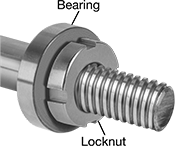
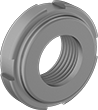
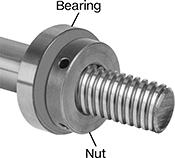
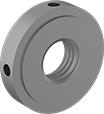
With a nylon insert that grips your threaded shaft or spindle without damaging its threads, these locknuts—also called shaft nuts—hold bearings, bushings, gears, and pulleys prone to vibration tightly in place. They come as one piece, so you can easily clamp them onto your shaft or spindle. But, since they aren’t made entirely of metal, they don’t stand up to heat as well as all-metal locknuts. Slots in their sides mean you can tighten and loosen them with a spanner wrench or spanner socket. Their face is also chamfered to help keep the size and weight of your assembly at a minimum. All meet international standards for bearing locknut dimensions.
Zinc-Plated Carbon Steel—Zinc-plated carbon steel locknuts resist rusting from some moisture, but you shouldn’t use them with salt water or chemicals. They are strong and resist wear, though they don’t stand up to corrosion as well as 303 stainless steel locknuts.
Carbon Steel—All carbon steel locknuts are strong and resist wear, though they don’t stand up to corrosion as well as 303 stainless steel locknuts.
303 Stainless Steel—303 stainless steel locknuts resist corrosion better than carbon steel locknuts but aren’t as strong. They withstand washdowns and chemicals.
Thread Spacing—When choosing your thread spacing, consider the precision of your application. The finer the threads, the more control you have when making adjustments.
Thread | Carbon Steel | Zinc-Plated Carbon Steel | 303 Stainless Steel | ||||||||||
|---|---|---|---|---|---|---|---|---|---|---|---|---|---|
Size | Spacing | OD, mm | Wd., mm | Insert Max. Temp., ° F | Specs. Met | Each | Each | Each | |||||
Chamfered Face | |||||||||||||
| M22 × 1 mm | Extra Fine | 34 | 10.5 | 160 | ISO 2982-2 | 6343K36 | 000000 | ——— | 0 | 6343K98 | 000000 | ||
| M22 × 1 mm | Extra Fine | 38 | 10 | 210 | — | ——— | 0 | 3552N28 | 000000 | ——— | 0 | ||
| M22 × 1.5 mm | Fine | 38 | 12.5 | 210 | — | ——— | 0 | 3552N29 | 00000 | ——— | 0 | ||
Heavy-Profile Hex Nuts
 |
High-Strength Steel
Thread Size | Wd., mm | Ht., mm | Fastener Strength Grade/Class | Specs. Met | Pkg. Qty. | Pkg. | |||
|---|---|---|---|---|---|---|---|---|---|
Hot-Dipped Galvanized Steel | |||||||||
| M22 × 2.5 mm | 36 | 18 | Class 10 | DIN 6915, ISO 7414 | 1 | 94158A140 | 00000 | ||
Extreme-Strength Steel
Thread Size | Wd., mm | Ht., mm | Fastener Strength Grade/Class | Specs. Met | Pkg. Qty. | Pkg. | |||
|---|---|---|---|---|---|---|---|---|---|
Steel | |||||||||
| M22 × 2.5 mm | 36 | 23 | ASTM Grade 2H | ASTM A194, DIN 6915 | 1 | 98498A114 | 00000 | ||
Thin-Profile Bearing Nuts
 |
 |
Thread | ||||||||
|---|---|---|---|---|---|---|---|---|
Size | Spacing | OD, mm | Wd., mm | Specs. Met | Each | |||
Carbon Steel | ||||||||
Stepped Face | ||||||||
| M22 × 1.5 mm | Fine | 40 | 9 | DIN 1816 | 3549N17 | 000000 | ||
Left-Hand-Thread Thin-Profile Hex Nuts
Medium-Strength Steel
 |
These Grade 5 or Class 04 nuts are your go-to for fastening most machinery and equipment. To avoid stripped threads during installation, make sure your screw has a comparable strength rating.
Black-Oxide Steel—Typically chosen for their appearance, these nuts have a dark, matte coating to create a finished look. They offer minimal corrosion resistance, so they're best for dry environments.
Corrosion-Resistant Stainless Steel
|
18-8 Stainless Steel—The choice for wet and outdoor environments, these nuts resist rust. However, they won't hold up to the harsh chemicals that 316 stainless steel can.
Highly Corrosion-Resistant 316 Stainless Steel—Superior to 18-8 stainless steel, these nuts won't degrade when exposed to harsh weather, salt water, and most chemicals.
JIS Hex Nuts
 |
Corrosion-Resistant Stainless Steel
Thread Size | Wd., mm | Ht., mm | JIS Specification | Pkg. Qty. | Pkg. | |||
|---|---|---|---|---|---|---|---|---|
18-8 Stainless Steel | ||||||||
| M22 × 2.5 mm | 30 | 13 | JIS B 1181 | 1 | 91028A716 | 000000 | ||
Top-Lock Distorted-Thread Locknuts
Coupling Nuts
Medium-Strength Steel
 |
These Grade 5 or Class 8 nuts are about twice as strong as low-strength steel coupling nuts. Use them with threaded rods that have a comparable strength rating to avoid stripping threads during installation.
Zinc-Plated Steel—A step up from plain steel, the zinc plating withstands occasional exposure to moisture.
%20--%3e%3cg%3e%3cg%20id='Layer_1'%3e%3cpath%20class='cls-1'%20d='M68,27.2c-14.6,0-26.4,11.7-26.4,26.3,0,7,2.8,13.7,7.7,18.7v44.8l18.8-16.1,18.7,16.1v-44.9c10.3-10.3,10.3-27,0-37.3-5-4.9-11.7-7.7-18.7-7.7h0ZM81.3,105l-13.2-11.4-13.2,11.4v-28.7c8.2,4.8,18.3,4.8,26.5,0v28.7ZM76.2,70.8c-5.2,2.5-11.2,2.5-16.4,0-9.5-4.5-13.5-15.9-9-25.4,4.5-9.5,15.9-13.5,25.4-9,9.5,4.5,13.5,15.9,9,25.4-1.9,4-5.1,7.1-9,9Z'/%3e%3cpath%20class='cls-2'%20d='M5.8,95.5c-1.2,0-2.1-1-2.1-2.1,0,0,0,0,0,0V29.4h20.9c2.1,0,3.8-1.7,3.8-3.8V3.7c.2,0,.4,0,.5,0h37.5c1.2,0,2.1,1,2.1,2.1v18.6c1.2,0,2.5.1,3.7.3V5.8C72.2,2.6,69.6,0,66.4,0H28.9c-1.5,0-3,.6-4.1,1.7h-.1c0,.1-23,23.2-23,23.2-1.1,1.1-1.7,2.6-1.7,4.1v64.3c0,3.2,2.6,5.8,5.8,5.8h41.7v-3.7H5.8ZM24.7,7.1v18.7H6L24.7,7.1Z'/%3e%3c/g%3e%3c/g%3e%3c/svg%3e)
Certificates with a traceable lot number are available for these products. Download certificates from ORDER HISTORY after your order ships.
Each | |||||||||||
|---|---|---|---|---|---|---|---|---|---|---|---|
Thread Size | Lg., mm | Wd., mm | Fastener Strength Grade/Class | Threading | Specs. Met | 1-9 | 10-49 | 50-Up | |||
Zinc-Plated Steel | |||||||||||
| M22 × 2.5 mm | 66 | 32 | Class 8 | Fully Threaded | ASME B18.2.2, DIN 6334 | 90009A234 | 000000 | 000000 | 000000 | ||
Corrosion-Resistant Stainless Steel
|
18-8 Stainless Steel—The choice for wet and outdoor environments, these nuts resist rust. However, they won't hold up to the harsh chemicals that 316 stainless steel can.
Steel-Insert Locknuts for Extreme Vibration
 |
Medium-Strength Steel
Thread Size | Wd., mm | Ht., mm | Fastener Strength Grade/Class | Each | |||
|---|---|---|---|---|---|---|---|
Steel | |||||||
| M22 × 2.5 mm | 32 | 22 | Class 8 | 93520A217 | 000000 | ||
Cap Nuts
 |
Conceal and protect protruding screw threads while fastening parts together. These nuts help prevent damage to surrounding materials and reduce injuries. Also known as acorn nuts, they have a smooth, rounded head that creates a finished look.
Certificates with a traceable lot number are available for these products. Download certificates from ORDER HISTORY after your order ships.
High-Profile Nylon-Insert Locknuts
Medium-Strength Steel
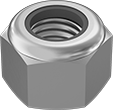 |
These Grade 5 or Class 8 nuts are your go-to for fastening most machinery and equipment. To avoid stripped threads during installation, make sure your screw has a comparable strength rating.
Zinc-Plated Steel—A step up from plain steel, the zinc plating withstands occasional exposure to moisture.
Thread Size | Wd., mm | Ht., mm | Fastener Strength Grade/Class | Insert Max. Temp., ° F | Specs. Met | Pkg. Qty. | Pkg. | |||
|---|---|---|---|---|---|---|---|---|---|---|
Zinc-Plated Steel | ||||||||||
| M22 × 2.5 mm | 32 | 25 | Class 8 | 220 | DIN 982, ISO 7040 | 1 | 97131A220 | 00000 | ||
Flex-Top Locknuts for Heavy Vibration
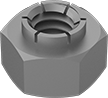 |
The top section of these nuts expands to grip the screw on all sides for a stronger hold than both nylon-insert and distorted-thread locknuts. They’re often used in equipment with constant, vigorous vibration, such as engines. These locknuts are reusable a handful of times, but the holding power decreases with each use.
Certificates with a traceable lot number are available for these products. Download certificates from ORDER HISTORY after your order ships.
Corrosion-Resistant Stainless Steel
Thread Size | Wd., mm | Ht., mm | Each | |||
|---|---|---|---|---|---|---|
18-8 Stainless Steel | ||||||
| M22 × 2.5 mm | 32 | 28.6 | 94560A118 | 000000 | ||
Center-Lock Distorted-Thread Locknuts
 |
Medium-Strength Steel
Thread Size | Wd., mm | Ht., mm | Fastener Strength Grade/Class | Pkg. Qty. | Pkg. | |||
|---|---|---|---|---|---|---|---|---|
Zinc-Plated Steel | ||||||||
| M22 × 1.5 mm | 32 | 18 | Class 8 | 1 | 92048A330 | 000000 | ||
T-Slot Nuts
 |
Metric
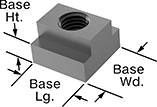
Base, mm | Fully Threaded | ||||||||
|---|---|---|---|---|---|---|---|---|---|
For Slot Wd., mm | Thread Size | Lg. | Wd. | Ht. | Overall Ht., mm | Each | |||
Black-Oxide Steel | |||||||||
| 24 | M22 × 2.5 mm | 40 | 40 | 16 | 32 | 90510A235 | 000000 | ||
Key-Locking Threaded Inserts for Soft Metal
 |
Add strong threads in soft metal, such as aluminum. The keys on these inserts drive into holes to hold more securely than thread-locking or helical inserts. They prevent slipping and rotating, so they’re stable enough for use in vehicle or aerospace parts that experience heavy vibration. These inserts are comparable to Keensert inserts.
To install, drill and tap a hole in your material. Then, thread the insert onto the installation tool and screw it into the hole. Place the tool over the keys and hit it with a hammer to drive them in.
Standard Wall—Stronger than thin-wall inserts, these are your go-to choice for threading most holes.
Black Phosphate-Coated Steel—These inserts resist occasional moisture.
18-8 Stainless Steel—The choice for wet and outdoor environments, these inserts resist rust and mild chemicals.
Inserts | Installation Tools | Inserts with Installation Tools | |||||||||||||
|---|---|---|---|---|---|---|---|---|---|---|---|---|---|---|---|
Each | |||||||||||||||
Thread Size | For Tap Thread Size | Installed Lg., mm | Drill Bit Size, mm | For Max. Hole Dia., mm | No. of Locking Keys | 1-9 | 10-Up | Each | No. of Inserts Included | Each | |||||
Standard Wall | |||||||||||||||
Black Phosphate-Coated Steel | |||||||||||||||
| M16 x 1.5 mm | M22 x 1.5 mm | 22 | 20.5 | 20.5 | 4 | 90245A193 | 000000 | 000000 | 94010A345 | 000000 | 3 | 90245A316 | 000000 | ||
| M16 x 2 mm | M22 x 1.5 mm | 22 | 20.5 | 20.5 | 4 | 90245A189 | 00000 | 00000 | 94010A345 | 00000 | 3 | 90245A311 | 00000 | ||
| M22 x 1.5 mm | M32 x 2 mm | 32 | 30 | 30 | 4 | 90245A209 | 00000 | 00000 | 94010A360 | 00000 | 3 | 90245A336 | 000000 | ||
18-8 Stainless Steel | |||||||||||||||
| M16 x 1.5 mm | M22 x 1.5 mm | 22 | 20.5 | 20.5 | 4 | 93715A660 | 00000 | 00000 | 94010A345 | 00000 | 3 | 93715A470 | 000000 | ||
| M16 x 2 mm | M22 x 1.5 mm | 22 | 20.5 | 20.5 | 4 | 93715A655 | 00000 | 00000 | 94010A345 | 00000 | 3 | 93715A465 | 000000 | ||
| M22 x 1.5 mm | M32 x 2 mm | 32 | 30 | 30 | 4 | 93715A680 | 00000 | 00000 | 94010A360 | 00000 | — | ——— | 0 | ||
Key-Locking Threaded Inserts with Installation Tools
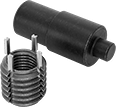 |
Paired with the right tool for installation, these inserts create strong threads in soft metal, such as aluminum. They have keys that drive into material to prevent inserts from slipping and rotating in the hole.
Standard Wall—Stronger than thin-wall inserts, these are your go-to choice for threading most holes.
Black Phosphate-Coated Steel—These inserts resist occasional moisture.
18-8 Stainless Steel—The choice for wet and outdoor environments, these inserts resist rust and mild chemicals.
Thread Size | For Tap Thread Size | Installed Lg., mm | Drill Bit Size, mm | For Max. Hole Dia., mm | No. of Locking Keys | No. of Inserts Included | Each | |||
|---|---|---|---|---|---|---|---|---|---|---|
Standard Wall | ||||||||||
Black Phosphate-Coated Steel | ||||||||||
| M16 x 1.5 mm | M22 x 1.5 mm | 22 | 20.5 | 20.5 | 4 | 3 | 90245A316 | 000000 | ||
| M16 x 2 mm | M22 x 1.5 mm | 22 | 20.5 | 20.5 | 4 | 3 | 90245A311 | 00000 | ||
| M22 x 1.5 mm | M32 x 2 mm | 32 | 30 | 30 | 4 | 3 | 90245A336 | 000000 | ||
18-8 Stainless Steel | ||||||||||
| M16 x 1.5 mm | M22 x 1.5 mm | 22 | 20.5 | 20.5 | 4 | 3 | 93715A470 | 000000 | ||
| M16 x 2 mm | M22 x 1.5 mm | 22 | 20.5 | 20.5 | 4 | 3 | 93715A465 | 000000 | ||
Mil.-Spec. Key-Locking Threaded Inserts For Soft Metal
 |
These inserts are manufactured and tested to meet or compare to strict standards adopted by the U.S. military. The keys drive into aluminum and other soft metal for a secure hold that won't slip or rotate, even in vibrating vehicle or aerospace parts. These inserts are comparable to Keensert inserts.
To install, drill and tap a hole in your material. Then, thread the insert onto the installation tool and screw it into the hole. Place the tool over the keys and hit it with a hammer to drive them in.
Standard Wall—Stronger than thin-wall inserts, these are your go-to choice for threading most holes.
High-Strength Cadmium-Plated Alloy Steel—These inserts have the strength to stand up to high-pressure applications and a plating that helps screws thread in smoothly.
Screw-Locking Seize-Resistant Key-Locking Threaded Inserts for Soft Metal
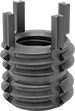 |
Create the tightest hold in aluminum and other soft metal without screws sticking. The lubricant on these inserts eases installation, and the irregularly shaped threads won’t let screws back out from vibration. Inserts have keys that drive into material to prevent them from slipping or rotating in the hole.
To install, drill and tap a hole in your material. Then, thread the insert onto the installation tool and screw it into the hole. Place the tool over the keys and hit it with a hammer to drive them in.
Standard Wall—Stronger than thin-wall inserts, these are your go-to choice for threading most holes.
Dry-Film-Lubricated Cadmium-Plated Steel—The plating creates a barrier against rust.
Dry-Film-Lubricated 18-8 Stainless Steel—The choice for wet and outdoor environments, these inserts resist rust and mild chemicals.
Inserts | Installation Tools | |||||||||||
|---|---|---|---|---|---|---|---|---|---|---|---|---|
Thread Size | For Tap Thread Size | Installed Lg., mm | Drill Bit Size, mm | For Max. Hole Dia., mm | No. of Locking Keys | Specs. Met | Each | Each | ||||
Standard Wall | ||||||||||||
Dry-Film-Lubricated Cadmium-Plated Steel | ||||||||||||
| M16 x 1.5 mm | M22 x 1.5 mm | 22 | 20.5 | 20.5 | 4 | NA0150E160 | 97255A333 | 000000 | 93904A794 | 000000 | ||
| M16 x 2 mm | M22 x 1.5 mm | 22 | 20.5 | 20.5 | 4 | — | 97255A332 | 00000 | 93904A794 | 00000 | ||
Dry-Film-Lubricated 18-8 Stainless Steel | ||||||||||||
| M16 x 2 mm | M22 x 1.5 mm | 22 | 20.5 | 20.5 | 4 | — | 97255A213 | 00000 | 93904A794 | 00000 | ||
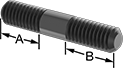
Threaded on Both Ends Setup Studs
Finish-Your-Own Key-Locking Threaded Inserts for Soft Metal
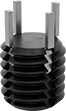 | 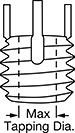 |
Tap the thread size you need into the solid body of these inserts. They’re a great choice when you need a custom combination of internal thread size and external diameter. Use them to repair or add new threads in soft metal, such as aluminum. They can also plug threaded holes without the hassle of welding. Keys on the inserts drive into material to prevent slipping and rotating in the hole.
To install, drill and tap a hole in your material. Then, thread the insert onto the installation tool and screw it into the hole. Place the tool over the keys and hit it with a hammer to drive them in.
Black Phosphate-Coated Steel—These inserts resist occasional moisture.
18-8 Stainless Steel—The choice for wet and outdoor environments, these inserts resist rust and mild chemicals.
Certificates with a traceable lot number are available for these products. Download certificates from ORDER HISTORY after your order ships.
Inserts | Installation Tools | ||||||||||
|---|---|---|---|---|---|---|---|---|---|---|---|
For Tap Thread Size | Installed Lg., mm | Max. Tapping Dia., mm | Drill Bit Size, mm | For Max. Hole Dia., mm | No. of Locking Keys | Each | Each | ||||
Standard Profile | |||||||||||
Black Phosphate-Coated Steel | |||||||||||
| M22 x 1.5 mm | 22 | 16 | 20.5 | 20.5 | 4 | 93774A310 | 000000 | 93741A310 | 0000000 | ||
18-8 Stainless Steel | |||||||||||
| M22 x 1.5 mm | 22 | 16 | 20.5 | 20.5 | 4 | 93543A230 | 00000 | 93741A310 | 000000 | ||
