


Filter by

Mount Type
Material


Maximum Rotation Speed
U.S.–Mexico–Canada Agreement (USMCA) Qualifying

Export Control Classification Number (ECCN)
DFARS Specialty Metals
Rotation Speed
Bonnet Securing Type
For Holding


Polishing Bonnets
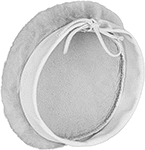 |
Drawstring |
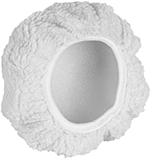 |
Elastic |
Smooth and shine the surface of your workpiece. These bonnets are gentler than buffing and polishing pads, so they’re used for the final finishing steps. They fit over the backup pad on your polishing tool. Order a bonnet that’s one size larger than your pad.
Lambswool and Polyester Fabric—Lambswool and polyester bonnets are slightly more abrasive than terry cloth bonnets. They’re often used for buffing out light scratches and swirl marks from compounding. Use a bonnet cleaner to remove buildup on lambswool bonnets to extend their life.
Terrycloth—Terry cloth bonnets are extra soft, so they’re often used to apply protectants to polished surfaces. They’re not as good at removing imperfections as lambswool or polyester bonnets, but they won’t leave swirl marks.
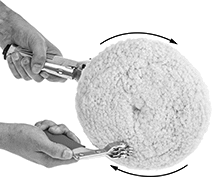
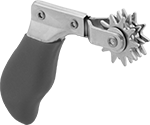
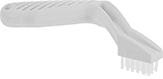
Bonnet Cleaners—Use a bonnet cleaner to remove buildup on lambswool bonnets to extend their life.
Bonnets | Bonnet Cleaners | |||||||||
|---|---|---|---|---|---|---|---|---|---|---|
Dia. | Pile Ht. | Max. Rotation Speed, rpm | For Surface Type | Pkg. Qty. | Pkg. | Each | ||||
Drawstring | ||||||||||
Lambswool—For Finishing/Polishing | ||||||||||
| 4 1/2" | 1" | 1,800 | Flat | 1 | 4831A1 | 00000 | 4922A11 | 000000 | ||
| 5 1/2" | 1" | 1,800 | Flat | 1 | 4831A2 | 00000 | 4922A11 | 00000 | ||
| 7 1/2" | 1 1/4" | 1,800 | Flat | 1 | 4831A4 | 00000 | 4922A11 | 00000 | ||
| 9" | 1" | 1,800 | Flat | 1 | 4831A5 | 00000 | 4922A11 | 00000 | ||
Elastic | ||||||||||
Polyester Fabric—For Finishing/Polishing | ||||||||||
| 10" | 1/2" | 3,200 | Flat | 2 | 4843A53 | 00000 | ——— | 0 | ||
Terrycloth—For Finishing | ||||||||||
| 10" | — | 3,200 | Flat | 2 | 4843A54 | 0000 | ——— | 0 | ||
Arbor-Mount Buffing and Polishing Pads
Arbor Mount
 | 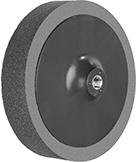 | 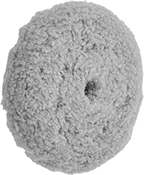 |
Pad with 1 Polishing Side (Front) | Pad with 1 Polishing Side (Back) | Pad with 2 Polishing Sides |
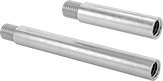 | 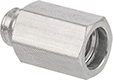 | |
Polisher Arbor Extensions | Shank Adapters |
Buffing and Polishing Pads | Polisher Arbor Extensions | Shank Adapters | ||||||||||||||
|---|---|---|---|---|---|---|---|---|---|---|---|---|---|---|---|---|
For Polishing Step | Dia. | Thk. | Arbor Hole Thread Size | Pad Profile | Material | Max. Rotation Speed, rpm | Color | For Use With | Each | Each | Each | |||||
1 Polishing Side | ||||||||||||||||
| Polishing | 8" | 2" | 5/8"-11 | Flat | Foam | 2,000 | Gray | Rotary Polishers | 47855A21 | 000000 | 8290N101 | 000000 | ——— | 0 | ||
2 Polishing Sides | ||||||||||||||||
| Cutting | 8" | 1 1/4" | 5/8"-11 | Flat | Wool | 3,000 | White | Rotary Polishers | 47855A101 | 00000 | 8290N101 | 00000 | 47855A104 | 000000 | ||
| Finishing | 8" | 1 1/2" | 5/8"-11 | Flat | Acrylic/Wool Fabric | 3,500 | Yellow | Rotary Polishers | 47855A102 | 00000 | 8290N101 | 00000 | 47855A104 | 00000 | ||
Quick-Change-Connector Mount
 | |
Polisher Arbor Extensions | |
 | |
Shank Adapters |
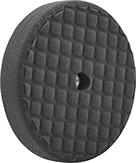
Quick-change connector-mount pads are easier to swap out than arbor-mount pads. Thread the required adapter (sold separately) onto your tool’s arbor just once. Then you can snap the pads on and off the adapter. These pads have a waffle pattern on their face that distributes polish more evenly than flat faces, which helps prevent swirl marks. Polish sits inside the square grooves, so it’s less likely to sling or splatter while you buff.
2 Polishing Sides—Pads with 2 polishing sides can be flipped for a fresh polishing side. They require an adapter (sold separately).
For Cutting—Use pads for cutting at the beginning of your process to remove heavy oxidation and deep scratches.
For Polishing—For smoothing and light repairs, use pads for polishing.
For Finishing— Pads for finishing are for the final touches on your workpiece, since they leave the fewest swirl marks.
Foam—Foam pads are more delicate than wool pads. They leave fewer swirl marks, but they’re not as good at smoothing burrs or scratches.
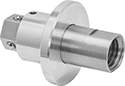
Polisher Arbor Extensions—Use arbor extensions (sold separately) to add up to 9" between your polisher and pad.
Buffing and Polishing Pads | Polisher Arbor Extensions | Shank Adapters | ||||||||||||||
|---|---|---|---|---|---|---|---|---|---|---|---|---|---|---|---|---|
For Polishing Step | Dia. | Thk. | Arbor Hole Thread Size | Pad Profile | Material | Max. Rotation Speed, rpm | Color | For Use With | Each | Each | Each | |||||
2 Polishing Sides | ||||||||||||||||
| Cutting, Polishing | 8" | 1 1/2" | 5/8"-11 | Waffle | Foam | 3,500 | Black/White | Rotary Polishers | 47855A105 | 000000 | 8290N101 | 000000 | 47855A103 | 000000 | ||
| Cutting | 8" | 3 1/2" | 5/8"-11 | Waffle | Foam | 3,500 | White | Rotary Polishers | 47855A106 | 00000 | 8290N101 | 00000 | 47855A103 | 00000 | ||
| Polishing | 8" | 3 1/2" | 5/8"-11 | Waffle | Foam | 3,500 | Black | Rotary Polishers | 47855A107 | 00000 | 8290N101 | 00000 | 47855A103 | 00000 | ||
| Finishing | 8" | 3 1/2" | 5/8"-11 | Waffle | Foam | 3,500 | Blue | Rotary Polishers | 47855A108 | 00000 | 8290N101 | 00000 | 47855A103 | 00000 | ||
Cleaners for Buffing and Polishing Bonnets and Pads
Backup Pads for Buffing and Polishing Pads
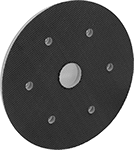 |  | 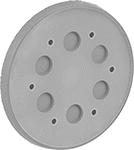 |
Front | Hard | Back |
For Pad Dia. | Max. Rotation Speed, rpm | Arbor Hole Thread Size | Mounting Hole Dia. | No. of Mounting Holes | For Use With | Each | |||
|---|---|---|---|---|---|---|---|---|---|
Hard | |||||||||
| 3" | 4,800 | 5/8"-11 | — | — | Rotary Polishers | 8273N11 | 000000 | ||
| 4" | 4,800 | 5/8"-11 | — | — | Rotary Polishers | 8273N12 | 00000 | ||
| 5" | 12,000 | — | 1/4" | 6 | Random Orbital Polishers | 8273N13 | 00000 | ||
| 6" | 12,000 | — | 1/4" | 6 | Random Orbital Polishers | 8273N14 | 00000 | ||
| 7" | 4,800 | 5/8"-11 | — | — | Rotary Polishers | 8273N15 | 00000 | ||
| 8" | 4,800 | 5/8"-11 | — | — | Rotary Polishers | 8273N16 | 00000 | ||
Buffing and Polishing Pads
For Cutting
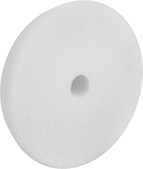 |  |
Foam | Wool |
 |  |  |  |
Flat Pad | Waffle Pad | Flat Back | Recessed Back |
Dia. | ID | Thk. | Pile Ht. | Color | Pad Profile | Back Type | No. of Polishing Sides | Max. Rotation Speed, rpm | For Use With | Each | |||
|---|---|---|---|---|---|---|---|---|---|---|---|---|---|
Foam | |||||||||||||
| 3 1/2" | 2 7/8" | 3 1/2" | — | Orange | Waffle | Recessed | 1 | 3,500 | Rotary Polishers | 8322N26 | 000000 | ||
| 4" | 3" | 1" | — | White | Flat | Recessed | 1 | 4,500 | Rotary Polishers | 8322N15 | 00000 | ||
| 5" | — | 1" | — | White | Flat | Flat | 1 | 5,200 | Random Orbital Polishers | 8322N13 | 00000 | ||
| 6" | — | 1" | — | White | Flat | Flat | 1 | 5,200 | Random Orbital Polishers | 8322N11 | 00000 | ||
| 8" | 6 7/8" | 1 1/2" | — | White | Waffle | Recessed | 1 | 3,700 | Rotary Polishers | 8322N22 | 00000 | ||
Wool | |||||||||||||
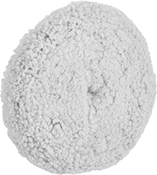
| 8" | 7" | 1 1/4" | 1 1/4" | White | Flat | Recessed | 1 | 3,000 | Rotary Polishers | 8322N18 | 00000 | ||
For Polishing
|
Foam |
| | | |
Flat Pad | Waffle Pad | Flat Back | Recessed Back |
Dia. | ID | Thk. | Pile Ht. | Color | Pad Profile | Back Type | No. of Polishing Sides | Max. Rotation Speed, rpm | For Use With | Each | |||
|---|---|---|---|---|---|---|---|---|---|---|---|---|---|
Foam | |||||||||||||
| 4" | 3" | 1" | — | Black | Flat | Recessed | 1 | 4,500 | Rotary Polishers | 8322N16 | 000000 | ||
| 5" | — | 1" | — | Purple | Flat | Flat | 1 | 5,200 | Random Orbital Polishers | 8322N14 | 00000 | ||
| 6" | — | 1" | — | Purple | Flat | Flat | 1 | 5,200 | Random Orbital Polishers | 8322N12 | 00000 | ||
| 8" | 6 7/8" | 1 1/2" | — | Black | Waffle | Recessed | 1 | 3,700 | Rotary Polishers | 8322N23 | 00000 | ||
Acrylic/Wool Fabric | |||||||||||||
| 8" | 6 7/8" | 1 1/2" | 1 1/2" | Yellow | Flat | Recessed | 1 | 3,500 | Rotary Polishers | 8322N19 | 00000 | ||
For Finishing
|
Foam |
| | |
Flat Pad | Waffle Pad | Recessed Back |
Pads for finishing are for the final touches on your workpiece, since they leave the fewest swirl marks.
Foam—Foam pads are more delicate than wool pads. They leave fewer swirl marks, but they’re not as good at smoothing burrs or scratches.
Lambswool—Wool, acrylic/wool, and lambswool pads are more aggressive than foam pads, so they’re better at removing imperfections. However, they create more microscopic marks on surfaces.
Waffle Pad—Pads with a waffle pattern distribute polish more evenly than pads with a flat face, which further helps prevent swirl marks. The polish sits inside the square grooves, so it’s less likely to splatter as you buff.
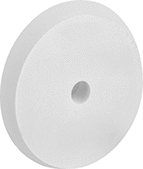
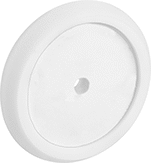
Recessed Back—Pads with a recessed back are used with standard rotary polishers. The pad material covers the edge of your backup pad to prevent it from scratching your workpiece.
Dia. | ID | Thk. | Pile Ht. | Color | Pad Profile | Back Type | No. of Polishing Sides | Max. Rotation Speed, rpm | For Use With | Each | |||
|---|---|---|---|---|---|---|---|---|---|---|---|---|---|
Foam | |||||||||||||
| 3 1/2" | 2 7/8" | 3 1/2" | — | Blue | Waffle | Recessed | 1 | 3,500 | Rotary Polishers | 8322N25 | 000000 | ||
| 4" | 3" | 1" | — | Blue | Flat | Recessed | 1 | 4,500 | Rotary Polishers | 8322N17 | 00000 | ||
| 8" | 6 7/8" | 1 1/2" | — | Blue | Waffle | Recessed | 1 | 3,700 | Rotary Polishers | 8322N24 | 00000 | ||
Lambswool | |||||||||||||
| 8" | 6 7/8" | 1 1/2" | 1 1/2" | White | Flat | Recessed | 1 | 3,500 | Rotary Polishers | 8322N21 | 00000 | ||
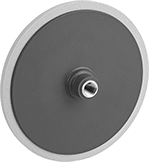
Backup Pads for Polishing Bonnets
 |  |
Front | Back |
Dia. | For Bonnet Dia. | Max. Rotation Speed, rpm | Arbor Hole Thread Size | For Use With | Each | |||
|---|---|---|---|---|---|---|---|---|
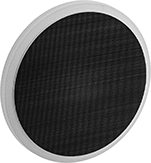
| 7" | 7 1/2" | 2,000 | 5/8"-11 | Handheld Buffers and Polishers | 7861N111 | 000000 | ||
Buffing and Polishing Applicator Bonnets
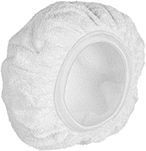 |
Dia. | Max. Rotation Speed, rpm | For Surface Type | Pkg. Qty. | Pkg. | |||
|---|---|---|---|---|---|---|---|
Terrycloth with Elastic | |||||||
| 10" | 3,200 | Flat | 2 | 4843A55 | 00000 | ||
Buffing and Polishing Pad Assortments
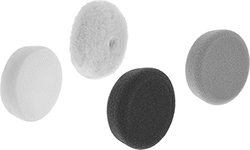 |
Keep a set of pads on hand to cover every step of the buffing and polishing process. Use pads for cutting at the beginning of your process to remove heavy oxidation and deep scratches. For smoothing and light repairs, use pads for polishing. Pads for finishing are for the final touches on your workpiece, since they leave the fewest swirl marks.
These assortments include both foam and wool pads. Foam pads are more delicate and leave fewer swirl marks than wool pads. Wool pads are better at removing deeper defects than foam pads, but they will create more microscopic marks.
Swap out one pad for another in seconds—they mount to your backup pad using hook and loop. Their back is recessed to cover the edge of your backup pad, preventing it from scratching your workpiece.
No. of Pieces | Includes | Dia. | Pile Ht. | Pad Profile | Back Type | No. of Polishing Sides | Max. Rotation Speed, rpm | For Use With | Each | ||
|---|---|---|---|---|---|---|---|---|---|---|---|
| 4 | One White Foam Cutting Pad One White Wool Cutting Pad One Black Foam Polishing Pad One Blue Foam Finishing Pad | 4" | 1/2" | Flat | Recessed | 1 | 4,500 | Rotary Polishers | 8260N11 | 000000 |
