

Filter by


Solder Alloy
Solder Type
Melting Temperature
For Use On

DFARS Specialty Metals
U.S.–Mexico–Canada Agreement (USMCA) Qualifying

Export Control Classification Number (ECCN)
Bar Solder for Electronics and Electrical Applications
Lead-Free, Flux Required
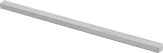 | 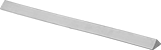 |
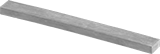
Bar | Triangular Bar |
Lead-free solder is safer to use than leaded solder and helps meet industry regulations.
Material Composition | |||||||||||||||
|---|---|---|---|---|---|---|---|---|---|---|---|---|---|---|---|
Solder Alloy | Tin | Silver | Antimony | Copper | Lead | Melting Temp., ° F | Shape | Lg. | Wd. | Ht. | Wt., lb. | Each | |||
For Joining Brass, Bronze, and Copper | |||||||||||||||
| Sn97Cu2Sb0.8Ag0.2 | 97% | 0.2% | 0.8% | 2% | 0% | 465 | Bar | 14" | 1/2" | 1/2" | 1 | 76805A73 | 0000000 | ||
For Joining Brass, Bronze, Copper, Nickel, Stainless Steel, and Steel | |||||||||||||||
| Sn96.5Ag3Cu0.5 | 96.5% | 3% | — | 0.5% | 0% | 425 | Triangular Bar | 12" | 1" | 1/2" | 1 | 76805A81 | 00000 | ||
| Sn96Ag4 | 96% | 4% | — | — | 0% | 430 | Triangular Bar | 12" | 1" | 1/2" | 1 | 76805A82 | 000000 | ||
| Sn97Cu3 | 97% | — | — | 3% | 0% | 445 | Triangular Bar | 12" | 1" | 1/2" | 1 | 76805A83 | 00000 | ||
| Sn99.3Cu0.7 | 99.3% | — | — | 0.7% | 0% | 445 | Triangular Bar | 12" | 1" | 1/2" | 1 | 76805A84 | 00000 | ||
Bar Solder
 |
Leaded, Flux Required
Material Composition | 1 lb. | |||||||||
|---|---|---|---|---|---|---|---|---|---|---|
Solder Alloy | Tin | Lead | Melting Temp., ° F | Lg. | Wd. | Ht. | Each | |||
For Joining Brass, Bronze, Copper, Nickel, Stainless Steel, and Steel | ||||||||||
| Sn50Pb50 | 50% | 50% | 420 | 6" | 1" | 1/2" | 7663A12 | 000000 | ||
Bar Solder for High-Temperature Applications
Lead-Free, Flux Required
 |
Lead-free solder is safer to use than leaded solder and helps meet industry regulations.
Material Composition | 1 lb. | ||||||||||
|---|---|---|---|---|---|---|---|---|---|---|---|
Solder Alloy | Tin | Antimony | Lead | Melting Temp., ° F | Lg. | Wd. | Ht. | Each | |||
For Joining Brass, Bronze, Copper, Nickel, Stainless Steel, and Steel | |||||||||||
| Sn95Sb5 | 95% | 5% | 0% | 460 | 12" | 1" | 1/2" | 7668A16 | 000000 | ||
Bar Solder for Torch Soldering
|
Leaded, Flux Required
Material Composition | 1 lb. | |||||||||
|---|---|---|---|---|---|---|---|---|---|---|
Solder Alloy | Tin | Lead | Melting Temp., ° F | Lg. | Wd. | Ht. | Each | |||
For Joining Brass, Bronze, Copper, Nickel, Stainless Steel, and Steel | ||||||||||
| Pb60Sn40 | 40% | 60% | 460 | 6" | 1" | 1/2" | 7663A14 | 000000 | ||
High-Melting-Point Bar Solder for Electronics and Electrical Applications
Leaded, Flux Required
|
Material Composition | 1 lb. | ||||||||||
|---|---|---|---|---|---|---|---|---|---|---|---|
Solder Alloy | Tin | Silver | Lead | Melting Temp., ° F | Lg. | Wd. | Ht. | Each | |||
For Joining Brass, Bronze, Copper, Nickel, Stainless Steel, and Steel | |||||||||||
| Pb97.5Ag1.5Sn1 | 1% | 1.5% | 97.5% | 580 | 7" | 3/4" | 1/2" | 7663A15 | 000000 | ||
Bar Solder for Food Service Equipment
|
This solder is commonly used in solder melting pots. It's composed of pure tin, so it is safe for use with food service equipment. This solder does not have a flux core, so you can choose the flux that works best for your application.
Lead-Free—Lead-free solder is safer to use than leaded solder and helps meet industry regulations.
Material Composition | ||||||||||||
|---|---|---|---|---|---|---|---|---|---|---|---|---|
Solder Alloy | Tin | Lead | Melting Temp., ° F | Solder Type | Lg. | Wd. | Ht. | Wt., lb. | Each | |||
For Joining Brass, Bronze, Copper, Stainless Steel, and Steel | ||||||||||||
| Sn100 | 100% | 0% | 450 | Lead-Free, Flux Required | 11 1/2" | 1" | 1/2" | 1 | 8886K11 | 000000 | ||
Bar Solder for Machine Soldering
|
Leaded, Flux Required
Material Composition | 1 lb. | |||||||||
|---|---|---|---|---|---|---|---|---|---|---|
Solder Alloy | Tin | Lead | Melting Temp., ° F | Lg. | Wd. | Ht. | Each | |||
For Joining Brass, Bronze, Copper, Nickel, Stainless Steel, and Steel | ||||||||||
| Pb70Sn30 | 30% | 70% | 480 | 9" | 3/4" | 1/2" | 7663A17 | 000000 | ||
No-Flux Solder for Aluminum
Lead-Free, No Flux Required
 |
Material Composition | 2 lb. | |||||||||
|---|---|---|---|---|---|---|---|---|---|---|
Solder Alloy | Zinc | Aluminum | Lead | Dia. | Melting Temp., ° F | Lg. | Pkg. | |||
For Joining Aluminum | ||||||||||
| Zn98Al2 | 98% | 2% | 0% | 0.125" | 760 | 18" | 7664A4 | 000000 | ||
Solder for Aluminum
 |
Rod |
Without a flux core, this solder allows you to choose the flux that works best for your application. It is lead-free, so it is safer to use than leaded solder and helps meet industry regulations.
High-Density Low-Melting-Point Solder
Lead-Free, No Flux Required
 |
Lead-free solder is safer to use than leaded solder and helps meet industry regulations.
1% Silver—Solder with 1% silver forms stronger bonds than solder without silver. It’s also more malleable and ductile. However, it has a higher melting point, so it takes longer to solder.
