

Filter by


Performance
System of Measurement
Solder Type
Solder Alloy

Container Type


Thermal Conductivity
Formulation
Form

Export Control Classification Number (ECCN)


DFARS Specialty Metals
Low-Melting-Point Solder for Low-Temperature Applications
Leaded, Flux Required
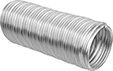 |
Leaded solder has greater tensile strength and density than other indium-based solders, giving it a stronger hold.
Material Composition | 0.16 oz. | ||||||||||
|---|---|---|---|---|---|---|---|---|---|---|---|
Solder Alloy | Indium | Silver | Lead | Dia. | Melting Temp., ° F | Thermal Conductivity, W/(m⋅°C) | Tensile Strength, psi | Each | |||
For Joining Aluminum, Brass, Bronze, Ceramic, Glass, Gold, Nickel, Quartz, Stainless Steel, Steel, and Zinc Alloy | |||||||||||
| In80Pb15Ag5 | 80% | 5% | 15% | 0.030" | 310 | 43 | 2,550 | 6976N11 | 0000000 | ||
Lead-Free, Flux Required
|
Lead-free solder is safer to use than leaded solder and helps meet industry regulations.
100% Indium—Solder that is 100% indium has better thermal conductivity than solder that contains tin, and will cold weld more easily. However, it has lower tensile and shear strength than solder with tin.
48% Tin—Solder with 48% tin has greater tensile and shear strength than 100% indium solder, but lower thermal and electrical conductivity.
Material Composition | 0.11 oz. | ||||||||||
|---|---|---|---|---|---|---|---|---|---|---|---|
Solder Alloy | Indium | Tin | Lead | Dia. | Melting Temp., ° F | Thermal Conductivity, W/(m⋅°C) | Tensile Strength, psi | Each | |||
For Joining Aluminum, Brass, Bronze, Ceramic, Glass, Nickel, Quartz, Stainless Steel, Steel, and Zinc Alloy | |||||||||||
| In52Sn48 | 52% | 48% | 0% | 0.030" | 245 | 34 | 1,720 | 8514N13 | 0000000 | ||
| In100 | 100% | — | 0% | 0.030" | 315 | 86 | 270 | 8514N11 | 000000 | ||
Low-Melting-Point Solder Ribbon for Low-Temperature Applications
Leaded, Flux Required
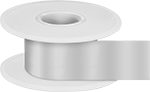 |
Leaded solder has greater tensile strength and density than other indium-based solders, giving it a stronger hold.
Material Composition | 0.1 oz. | ||||||||||||
|---|---|---|---|---|---|---|---|---|---|---|---|---|---|
Solder Alloy | Indium | Silver | Lead | Melting Temp., ° F | Thermal Conductivity, W/(m⋅°C) | Tensile Strength, psi | Lg. | Wd. | Thk. | Each | |||
For Joining Aluminum, Brass, Bronze, Ceramic, Glass, Gold, Nickel, Quartz, Stainless Steel, Steel, and Zinc Alloy | |||||||||||||
| In80Pb15Ag5 | 80% | 5% | 15% | 310 | 43 | 2,550 | 12" | 1" | 0.002" | 5940N11 | 0000000 | ||
Lead-Free, Flux Required
|
Lead-free solder is safer to use than leaded solder and helps meet industry regulations.
Material Composition | 0.1 oz. | ||||||||||||
|---|---|---|---|---|---|---|---|---|---|---|---|---|---|
Solder Alloy | Indium | Tin | Lead | Melting Temp., ° F | Thermal Conductivity, W/(m⋅°C) | Tensile Strength, psi | Lg. | Wd. | Thk. | Each | |||
For Joining Aluminum, Brass, Bronze, Ceramic, Glass, Gold, Nickel, Quartz, Stainless Steel, Steel, and Zinc Alloy | |||||||||||||
| In52Sn48 | 52% | 48% | 0% | 245 | 34 | 1,720 | 12" | 1" | 0.002" | 7906N12 | 0000000 | ||
| In100 | 100% | — | 0% | 315 | 86 | 270 | 12" | 1" | 0.002" | 7906N11 | 000000 | ||
Conductive Adhesives for Electronics
Epoxy
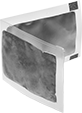 | 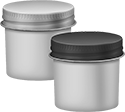 |
Single-Use Packet | Can |
Epoxy adhesives are two-part adhesives that need to be mixed together. The size listed is the combined total of the two parts.
ASTM E595—Adhesives that meet ASTM E595, a standard used by NASA, produce almost no volatile emissions that could damage sensitive electronics, even in a vacuum.
Container | ||||||||||||||||
|---|---|---|---|---|---|---|---|---|---|---|---|---|---|---|---|---|
Mfr. Model No. | Size, fl. oz. | Net Wt., oz. | Type | Surface Resistivity | Begins to Harden | Reaches Full Strength | Thermal Conductivity, W/(m⋅°C) | Mix Ratio | Consistency | Max. Temp., ° F | Specs. Met | For Joining | Each | |||
Loctite® | ||||||||||||||||
| 2902 | — | 0.09 | Single-Use Packet | 1× 10^-3Ω⋅cm | 60 min. | 24 hr. | 2.99 | 100:6 | Paste | 230 | ASTM E595 | Ceramic, Glass, Metal | 7595A113 | 000000 | ||
| 2902 | — | 0.35 | Single-Use Packet | 1× 10^-3Ω⋅cm | 60 min. | 24 hr. | 2.99 | 100:6 | Paste | 230 | ASTM E595 | Ceramic, Glass, Metal | 7595A114 | 000000 | ||
Other Conductive Adhesives | ||||||||||||||||
| — | — | 0.09 | Single-Use Packet | 5× 10^-2Ω⋅cm | 3 hr. | 24 hr. | 1.55 | 1:1.15 | Paste | 230 | — | Ceramic, Glass, Metal | 7661A13 | 00000 | ||
| — | 0.5 | — | Can | 4× 10^-4Ω⋅cm | 4 hr. | 5 day | 7.93 | 1:1 | Paste | 265 | — | Metal | 7595A33 | 000000 | ||
| — | 0.5 | — | Can | 9× 10^-5Ω⋅cm | 4 hr. | 5 day | 7.9 | 1:1 | Paste | 175 | ASTM E595 | Ceramic, Glass, Metal | 7595A111 | 000000 | ||
| — | 1 | — | Can | 4× 10^-4Ω⋅cm | 4 hr. | 5 day | 7.93 | 1:1 | Paste | 265 | — | Metal | 7595A34 | 000000 | ||
| — | 1 | — | Can | 9× 10^-5Ω⋅cm | 4 hr. | 5 day | 7.9 | 1:1 | Paste | 175 | ASTM E595 | Ceramic, Glass, Metal | 7595A112 | 000000 | ||
Copper Foil Conductive Tape
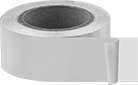 |
Use this tape to modify printed circuit boards, shield components from EMI/RFI (electromagnetic interference/radio-frequency interference), and prototype wiring-board layout and design. Made of copper, it resists chemicals better than aluminum foil electrical tape. Plus, you can solder it.
Conductive Adhesive—Conductive adhesive makes easy electrical connections—charge travels both along and through the tape. Since it’s more conductive, it’s better at shielding against EMI than tape with electrical insulating adhesive.
Electrical Insulating Adhesive—Tape with electrical insulating adhesive is only conductive on the surface, so electrical charge won’t travel through the tape. Choose it for shielding cables without creating unwanted electrical connections.
Temp., ° F | Short Roll | Long Roll | |||||||||||||
|---|---|---|---|---|---|---|---|---|---|---|---|---|---|---|---|
Wd. | Overall Thk. | Adhesive Material | Min. | Max. | Voltage Rating | Specs. Met | Mil. Spec. | Lg., ft. | Each | Lg., ft. | Each | ||||
Electrical Insulating Adhesive | |||||||||||||||
| 1/4" | 0.0029" | Acrylic Plastic | -40 | 325 | Not Rated | UL 510 | — | 18 | 76555A721 | 000000 | 108 | 76555A651 | 000000 | ||
| 1/2" | 0.0029" | Acrylic Plastic | -40 | 325 | Not Rated | UL 510 | — | 18 | 76555A722 | 00000 | 108 | 76555A648 | 00000 | ||
| 3/4" | 0.0029" | Acrylic Plastic | -40 | 325 | Not Rated | UL 510 | — | 18 | 76555A723 | 00000 | 108 | 76555A649 | 00000 | ||
| 1" | 0.0029" | Acrylic Plastic | -40 | 325 | Not Rated | UL 510 | — | 18 | 76555A724 | 00000 | 108 | 76555A652 | 00000 | ||
| 2" | 0.0029" | Acrylic Plastic | -40 | 325 | Not Rated | UL 510 | — | 18 | 76555A725 | 00000 | 108 | 76555A654 | 000000 | ||
| 3" | 0.0029" | Acrylic Plastic | -40 | 325 | Not Rated | UL 510 | — | 18 | 76555A726 | 00000 | 108 | 76555A655 | 000000 | ||
| 6" | 0.0029" | Acrylic Plastic | -40 | 325 | Not Rated | UL 510 | — | 18 | 76555A73 | 000000 | — | ——— | 0 | ||
Conductive Adhesive | |||||||||||||||
| 1/4" | 0.0035" | Acrylic Plastic | -40 | 325 | Not Rated | UL 510 | MIL-T-47012 | 18 | 76555A711 | 00000 | 54 | 76555A641 | 00000 | ||
| 1/2" | 0.0035" | Acrylic Plastic | -40 | 325 | Not Rated | UL 510 | MIL-T-47012 | 18 | 76555A712 | 00000 | 54 | 76555A642 | 00000 | ||
| 3/4" | 0.0035" | Acrylic Plastic | -40 | 325 | Not Rated | UL 510 | MIL-T-47012 | 18 | 76555A713 | 00000 | 54 | 76555A643 | 00000 | ||
| 1" | 0.0035" | Acrylic Plastic | -40 | 325 | Not Rated | UL 510 | MIL-T-47012 | 18 | 76555A714 | 00000 | 54 | 76555A644 | 00000 | ||
| 2" | 0.0035" | Acrylic Plastic | -40 | 325 | Not Rated | UL 510 | MIL-T-47012 | 18 | 76555A715 | 00000 | 54 | 76555A646 | 000000 | ||
| 3" | 0.0035" | Acrylic Plastic | -40 | 325 | Not Rated | UL 510 | MIL-T-47012 | 18 | 76555A716 | 000000 | 54 | 76555A647 | 000000 | ||
| 6" | 0.0035" | Acrylic Plastic | -40 | 325 | Not Rated | UL 510 | MIL-T-47012 | 18 | 76555A719 | 000000 | 54 | 76555A731 | 000000 | ||
Conductive Surface Fillers for Electronics
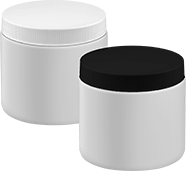 | 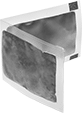 |
Epoxy Jar | Single-Use Packet |
A high silver content allows these surface fillers to conduct electricity and heat. Use them to fill gaps and rebuild missing material on electrical connections or to assemble new components. They come as two parts. The size listed is the combined total of the two parts.
Thermal Conductivity—Thermal conductivity measures a material’s ability to transfer heat. The higher the rating, the more heat it transfers.
Electrical Volume Resistivity—Electrical volume resistivity measures how well a material opposes the flow of electricity. The lower the rating, the more electricity it conducts.
Container | Temp. Range | |||||||||||||||||||
|---|---|---|---|---|---|---|---|---|---|---|---|---|---|---|---|---|---|---|---|---|
Mfr. Model No. | Size, fl. oz. | Net Wt., oz. | Type | Begins to Harden | Reaches Full Strength | Consistency | Mixing Req. | Thermal Conductivity, W/(m⋅°C) | Electrical Volume Resistivity | Mix Ratio | Max. Thk. | For Use Outdoors | Min. | Max., ° F | Color | For Use On | Each | |||
Loctite® Surface Fillers | ||||||||||||||||||||
| 3888 | — | 0.09 | Single-Use Packet | 90 min. | 24 hr. | Paste | Yes | 1.44 | 0.001Ω⋅cm | 100:6 | 1/4" | Yes | -40° F | 170 | Silver | Aluminum, Brass, Bronze, Copper, Steel, Stainless Steel, Titanium, Polycarbonate | 7366A55 | 000000 | ||
Surface Fillers | ||||||||||||||||||||
| — | — | 0.09 | Single-Use Packet | 90 min. | 24 hr. | Paste | Yes | 6.05 | 0.009Ω⋅cm | 100:6 | 1/4" | Yes | -75° F | 250 | Silver | Aluminum, Brass, Bronze, Copper, Steel, Stainless Steel, Titanium, Ceramic, Glass | 7661A11 | 00000 | ||
| — | — | 0.35 | Single-Use Packet | 90 min. | 24 hr. | Paste | Yes | 6.05 | 0.009Ω⋅cm | 100:6 | 1/4" | Yes | -75° F | 250 | Silver | Aluminum, Brass, Bronze, Copper, Steel, Stainless Steel, Titanium, Ceramic, Glass | 7661A12 | 000000 | ||
| — | 0.5 | — | Jar | 4 hr. | 5 day | Paste | Yes | 5.77 | 0.0004Ω⋅cm | 1:1 | Not Rated | No | Not Rated | 300 | Silver | Aluminum, Brass, Copper, Steel, Stainless Steel | 7595A31 | 000000 | ||
| — | 1 | — | Jar | 4 hr. | 5 day | Paste | Yes | 5.77 | 0.0004Ω⋅cm | 1:1 | Not Rated | No | Not Rated | 300 | Silver | Aluminum, Brass, Copper, Steel, Stainless Steel | 7595A32 | 000000 | ||
Aluminum Foil Conductive Tape
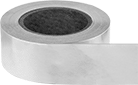 |
More conformable than copper foil electrical tape, this tape bonds to textured electronic housings, round cables, and other curved and irregular surfaces. Since it doesn’t leave gaps, it’s a great shield against electromagnetic interference (EMI). Its conductive backing and adhesive convert EMI into heat and reflect it away from your electronics. Use this tape on surfaces that can’t be soldered.
Temp., ° F | 15 ft. Long | 108 ft. Long | ||||||||||
|---|---|---|---|---|---|---|---|---|---|---|---|---|
Wd. | Overall Thk. | Adhesive Material | Min. | Max. | Voltage Rating | Specs. Met | Color | Each | Each | |||
| 1/4" | 0.0036" | Acrylic Plastic | -40 | 325 | Not Rated | UL 510 | Silver | 76925A101 | 00000 | 76925A102 | 000000 | |
| 1/2" | 0.0036" | Acrylic Plastic | -40 | 325 | Not Rated | UL 510 | Silver | 76925A103 | 0000 | 76925A104 | 00000 | |
| 3/4" | 0.0036" | Acrylic Plastic | -40 | 325 | Not Rated | UL 510 | Silver | 76925A105 | 00000 | 76925A106 | 00000 | |
| 1" | 0.0036" | Acrylic Plastic | -40 | 325 | Not Rated | UL 510 | Silver | 76925A107 | 00000 | 76925A108 | 00000 | |
| 2" | 0.0036" | Acrylic Plastic | -40 | 325 | Not Rated | UL 510 | Silver | 76925A5 | 00000 | 76925A1 | 000000 | |
| 3" | 0.0036" | Acrylic Plastic | -40 | 325 | Not Rated | UL 510 | Silver | 76925A109 | 00000 | 76925A111 | 000000 | |
| 4" | 0.0036" | Acrylic Plastic | -40 | 325 | Not Rated | UL 510 | Silver | 76925A114 | 00000 | 76925A115 | 000000 | |
| 5" | 0.0036" | Acrylic Plastic | -40 | 325 | Not Rated | UL 510 | Silver | 76925A116 | 00000 | 76925A117 | 000000 | |
| 6" | 0.0036" | Acrylic Plastic | -40 | 325 | Not Rated | UL 510 | Silver | 76925A112 | 00000 | 76925A113 | 000000 | |
Conductive Surface Filler Pens for Electronics
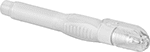 |
Acrylic Plastic |
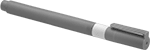 |
Epoxy |
Dispense ready-to-use conductive liquid to fill pits and small gaps on circuit board components. These pens are also used to sketch and repair conductive pathways.
Carbon Filled—Carbon acrylic plastic pens should be used where only a small amount of conductivity is needed, such as circuit boards in keyboards. Their high surface resistivity only allows a small current to pass.
Nickel Filled—Nickel acrylic plastic pens are best for general purpose repairs, such as bridges and traces in printed circuit boards. They have a medium surface resistivity, so they're a good balance between carbon acrylic and silver epoxy pens.
Silver Filled—Silver epoxy pens are the most versatile—use them for any type of repair as well as for repairs that require excellent conductivity, such as connecting through holes on circuit boards without adding jumpers, wiring, or solder. Since they have the lowest surface resistivity, they allow the most current to pass.
Cannot Be Sold To—Product labeling requirements restrict sales to the listed areas.
Container | Tip | Temp. Range, ° F | ||||||||||||||||||
|---|---|---|---|---|---|---|---|---|---|---|---|---|---|---|---|---|---|---|---|---|
Size, fl. oz. | Type | Dia. | Shape | Begins to Harden, min. | Reaches Full Strength | Surface Resistivity, ohm/sq. | Consistency | Mixing Req. | Thermal Conductivity | Max. Thk. | For Use Outdoors | Min. | Max. | Color | For Use On | Cannot Be Sold To | Each | |||
Carbon Acrylic Plastic | ||||||||||||||||||||
| 0.2 | Pen | 0.06" | Point | 2 | 24 hr. | 100 | Thin Liquid | No | Not Rated | 0.003" | Yes | -40 | 245 | Black | Plastic | Canada | 7502N11 | 000000 | ||
Nickel Acrylic Plastic | ||||||||||||||||||||
| 0.2 | Pen | 0.06" | Point | 2 | 24 hr. | 0.49 | Thin Liquid | No | Not Rated | 0.004" | Yes | -40 | 245 | Gray | Plastic | Canada | 7502N12 | 00000 | ||
Silver Epoxy | ||||||||||||||||||||
| 0.2 | Pen | 0.03" | Point | 3 | 60 min. | 0.050 | Thin Liquid | No | Not Rated | Not Rated | No | -65 | 300 | Silver | Aluminum, Brass, Bronze, Copper, Steel, Stainless Steel, Titanium | Outside United States and Canada | 7365A44 | 00000 | ||
Fabric Conductive Tape
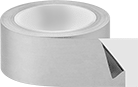 |
Made of polyester fabric with a copper/nickel filler, this tape is highly conductive throughout, including the adhesive. Use it to shield cables and electronic components from EMI (electromagnetic interference).
Temp., ° F | 1" Wide | 2" Wide | |||||||||||
|---|---|---|---|---|---|---|---|---|---|---|---|---|---|
Lg., ft. | Overall Thk. | Material | Adhesive Material | Min. | Max. | Voltage Rating | Shielding Effectiveness @ Volume | Color | Each | Each | |||
| 3 | 0.0048" | Copper, Nickel, Polyester Fabric | Acrylic Plastic | -40 | 155 | Not Rated | 10 MHz @ 95 dB | Gray | 3413A41 | 000000 | 3413A42 | 000000 | |
| 12 | 0.0048" | Copper, Nickel, Polyester Fabric | Acrylic Plastic | -40 | 155 | Not Rated | 10 MHz @ 95 dB | Gray | 3413A31 | 00000 | 3413A32 | 00000 | |
| 25 | 0.0048" | Copper, Nickel, Polyester Fabric | Acrylic Plastic | -40 | 155 | Not Rated | 10 MHz @ 95 dB | Gray | 3413A21 | 00000 | 3413A22 | 000000 | |
| 50 | 0.0048" | Copper, Nickel, Polyester Fabric | Acrylic Plastic | -40 | 155 | Not Rated | 10 MHz @ 95 dB | Gray | 3413A11 | 000000 | 3413A12 | 000000 | |
Mesh Conductive Tape
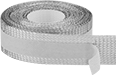 |
This polyester tape has a woven mesh edge that conducts electricity. Use it to shield cables and electronic components from EMI (electromagnetic interference). When wrapping objects, tape should overlap half of its width to achieve a highly effective four-ply shielding.
Temp., ° F | 1" Wide | |||||||||||
|---|---|---|---|---|---|---|---|---|---|---|---|---|
Lg., ft. | Overall Thk. | Material | Edge Material | Adhesive Material | Min. | Max. | Voltage Rating | Shielding Effectiveness @ Volume | Color | Each | ||
| 16 | 0.025" | Aluminum, Polyester Plastic | Tin-Coated Copper | Acrylic Plastic | -40 | 345 | Not Rated | 1 MHz @ 65 dB | Silver | 9270K11 | 000000 | |
| 16 | 0.025" | Copper, Polyester Plastic | Tin-Coated Copper | Acrylic Plastic | -40 | 345 | Not Rated | 1 MHz @ 70 dB | Silver | 9270K21 | 00000 | |
Low-Outgassing Aluminum Foil Conductive Tape
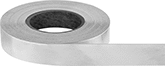 |
Tested to meet ASTM E595, a standard used by NASA, this tape gives off almost no volatile emissions that could damage sensitive electronics, even in a vacuum. It’s more conformable than copper tape, so you can cover textured housings and round cables without leaving gaps for electromagnetic interference (EMI) to get in. When EMI makes contact, the conductive backing and adhesive convert it into heat and actively reflect it away. The conductivity of this tape also makes it great for electrical connections. Use it on surfaces that can’t be soldered.
Low-Outgassing Copper Foil Conductive Tape
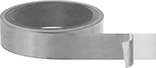 |
Tested to meet ASTM E595, a standard used by NASA, this tape releases almost no volatile emissions that could damage sensitive electronics, even in a vacuum. Use it to repair and prototype circuit boards and shield components from EMI/RFI. With a copper backing and conductive adhesive, it’s useful for making electrical connections—current travels both along and through the tape. Unlike aluminum tape, it can be soldered. It’s also better at resisting chemicals.
Heat-Transfer Mounting Tape
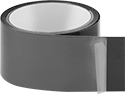 |
Use this tape to attach components to heat sinks and metal chassis walls in place of screws and other mechanical fasteners. It conducts heat away from sensitive electronics.
Aluminum Foil—Aluminum foil tape conducts electricity. It also meets ASTM E595, a standard used by NASA, which means it produces almost no volatile emissions that could damage sensitive electronics, even in a high vacuum.
Wd. | Lg., ft. | Overall Thk. | Adhesive Location | Adhesive Material | Min. Temp., ° F | Max. Temp., ° F | Voltage Rating | Thermal Conductivity, W/(m⋅°C) | Specs. Met | Color | Each | |||
|---|---|---|---|---|---|---|---|---|---|---|---|---|---|---|
Aluminum Foil | ||||||||||||||
| 1/2" | 3 | 0.009" | Both Sides | Acrylic Plastic | -20 | 255 | Not Rated | 1.4 | ASTM E595 | Gray | 6838A101 | 000000 | ||
| 1/2" | 12 | 0.009" | Both Sides | Acrylic Plastic | -20 | 255 | Not Rated | 1.4 | ASTM E595 | Gray | 6838A102 | 000000 | ||
| 1" | 3 | 0.009" | Both Sides | Acrylic Plastic | -20 | 255 | Not Rated | 1.4 | ASTM E595 | Gray | 6838A31 | 00000 | ||
| 1" | 12 | 0.009" | Both Sides | Acrylic Plastic | -20 | 255 | Not Rated | 1.4 | ASTM E595 | Gray | 6838A11 | 000000 | ||
| 2" | 3 | 0.009" | Both Sides | Acrylic Plastic | -20 | 255 | Not Rated | 1.4 | ASTM E595 | Gray | 6838A32 | 000000 | ||
| 2" | 12 | 0.009" | Both Sides | Acrylic Plastic | -20 | 255 | Not Rated | 1.4 | ASTM E595 | Gray | 6838A12 | 000000 | ||
