McMaster-Carr logo
    Filter by
    Data Connection
    U.S.–Mexico–Canada Agreement (USMCA) Qualifying
    Electrical Connection
    Light Appearance
    DFARS Specialty Metals
    Export Control Classification Number (ECCN)
    Industrial Info Snippet
    Field of View
    Aperture Diameter
    Relative Aperture Size
    Certification
    Industrial Info Compare
    Signal Output
    Environment
    Enter e-mail addresses in the fields below
    Message
    Cancel
    Comments
    E-mail address (if you would like a response)
    5 Products

    Light Spectrum Meters

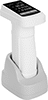
    Image of Product. Front orientation. Light Meters. Light Spectrum Meters.
    Image of Specification. Digital Touch Screen Display. Front orientation. Light Meters. Light Spectrum Meters.

    Digital

    Touch

    Screen

    Display

    Evaluate how dyes, pharmaceuticals, food products, and raw materials respond to light to determine their purity and quality. Also known as spectrophotometers, these are often used to measure how a sample’s concentration changes when exposed to light. They measure absorbance and transmittance to check how much light is absorbed or passes through a sample. They also take reflectance measurements to help you test paint and coatings by checking how much light bounces off them. To use these meters, point the light toward your sample.
    Fields of view represent how the human eye sees color. The 2° field of view mimics viewing color up close. The 10° field of view mimics viewing color as you’d see it from a few feet away.
    Aperture sizes control the amount of light you expose your sample to. Use the 11 mm aperture to measure textured samples and average color over a larger area. The 6 mm aperture is best for general purpose measurements. The 3 mm × 1 mm aperture measures small samples.
    Diffuse illumination distribution means these meters scatter light around your sample for even coverage. This gives you accurate readings on rough and uneven surfaces. The 8° illumination angle reduces light reflections when measuring glossy materials.
    Color spaces give numbered color values for standard colors in different industries. These meters support standard color spaces for printing, textiles, digital displays, food and pharmaceuticals, and lighting design.
    Color distance formulas measure how different two colors are from each other. ΔE76 is used for comparison in general purpose, non-critical applications. ΔECMC is often used to measure textiles, ceramics, and uneven or glossy surfaces. ΔE94 is often used to measure paints and coatings for vehicles. ΔE2000 is the most accurate and precise measurement formula. It is the standard adopted by ISO. You’ll see it used in applications where color measurements are more critical, such as laboratories or pharmaceutical manufacturing facilities.
    Illumination
    For Wavelength
    Range, nm
    Measuring Increments,
    nm
    Accuracy
    Repeatability
    Field of
    View
    Aperture Size
    Distribution
    Angle
    Color Space
    Color Distance Formula
    Each
    LED with Visible Light Spectrum
     
    Bluetooth Connection, USB-C Connection
    400 to 70010ΔE*ab Less Than or Equal to 0.25ΔE*ab Less Than or Equal to 0.025, 10°11 mm Dia. (Medium)
    6 mm Dia. (Small)
    3 mm Lg. × 1 mm Wd. (Extra Small)
    DiffuseCIELAB, CIELCH, CIELUV, CMYK, HunterLab, Rgb, YxyΔE*ab, ΔE*94, ΔE*cmc, ΔE*007758N11000000000
     

    Color Meters

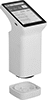
    Image of Product. Front orientation. Color Meters.
    Image of Specification. Digital Touch Screen Display. Front orientation. ZoomedIn view. Color Meters.

    Digital Touch

    Screen Display

    Ensure consistent coloring on products such as labels and packaging. The sensor on these colorimeters translates the light an object reflects to an exact color reading. Use them for quality control to prevent slight variation that you might miss with your eyes alone. Calibrate your colorimeter using the included white calibration block. The machine measures all other colors according to their variance from true white.
    Color Calibrators—Color calibration plates (sold separately) test and calibrate your colorimeter. They include five colors across the color spectrum to give the device a reference point for exact color readings. Precisely manufactured to ISO/IEC 17025, these plates meet standards for testing and calibration equipment.
    Color Meters
    Color
    Calibrators
    Illumination
    Repeatability
    Field of
    View
    Ht.
    Wd.
    Dp.
    Distribution
    Angle
    Color Space
    Color Distance Formula
    Batteries
    Included
    Features
    Includes
    Each
    Each
    LED with Visible Light Spectrum
     
    USB-C Connection
    ΔE*ab Less Than or Equal to 0.0310°6 1/2"2 1/2"3 1/2"DiffuseCIELAB, CIELCH, CIELUV, CMYK, Hex, Rgb, YxyΔE*00, ΔE*94, ΔE*ab, ΔE*cmc (1:1), ΔE*cmc (2:1), ΔE*uvYesStorage for up to 1000 Colors, Storage for up to 1000 Comparisons3 ft. Long USB Cord, AC Adapter, Microfiber Cloth, White Calibration Block7599N1100000007565N11000000000
     

    Photoelectric Color-Measuring Sensor Switch Transmitters

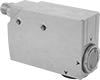
    Image of Product. Front orientation. Sensor Switch Transmitters. Photoelectric Color-Measuring Sensor Switch Transmitters.
    Monitor the color of products as they pass by on your line. These transmitters don’t just detect if color is in mint condition—they also turn equipment on or off, all with a single device. They’re often used for quality control in printing and packaging lines. For instance, if ink runs low and causes a color’s hue to fade, they can send a signal to pause production. The photoelectric sensor uses a highly accurate LED beam that combines red, green, and blue (RGB), which detects the slightest shifts in color at high speeds. It can even sense gradual color changes on glossy and mirrored surfaces. Rated IP67, these transmitters are protected against dust and temporary submersion.
    IO Link Communication Protocol—Transmitters with IO Link translate and send readings to control systems, such as computers, programmable logic controllers (PLCs), and human-machine interfaces (HMIs). This also lets you send commands from your control system to these transmitters. Since they have a PNP/NPN signal output, they automatically produce the type of signal output needed based on the device they’re connected to.
    Cords—Cords with a socket (sold separately) connect transmitters to your control system or directly to compatible machinery.
    Transmitters
    Cords
    Sensing Distance,
    mm
    Input Voltage,
    V DC
    Current
    Output, mA
    Signal
    Output
    Communication
    Protocol
    Lg.
    Wd.
    Ht.
    Housing
    Material
    Temp. Range,
    ° F
    Certification
    Each
    Each
    4-Pole M12 Connection
     
    Direct Sensing Transmitter with Visible LED Light Beam (IP67)
    1010 to 30100NPN, PNPIO Link3 13/16"1 3/16"2 1/8"Zinc Alloy15 to 130UL Listed, CE Marked
    6460N1200000003214K48000000
     
    back to top