


Filter by
Shaft Diameter


Torque
Maximum Torque
Drive Type
Shaft Mount Type


For Shaft Misalignment Type


Maximum Rotation Speed
Construction
Engagement Type
Drive Direction


DFARS Specialty Metals
RoHS
Export Control Classification Number (ECCN)
Performance
Noncontact Magnetic Torque Limiters
Through Shaft
 |
Torque, in·lbf | Max. Rotation Speed, rpm | OD | Overall Lg. | Drive Direction | Shaft Mount Type | Mounting Hole Thread Size | For Shaft Dia. | Each | |||
|---|---|---|---|---|---|---|---|---|---|---|---|
For Round Shafts | |||||||||||
| 0.18 to 5 | 300 | 2 3/4" | 2 7/16" | Clockwise and Counterclockwise | Set Screw | M4 × 0.7 mm | 3/8" | 7220K4 | 0000000 | ||
| 0.5 to 10.6 | 220 | 3 5/16" | 2 1/2" | Clockwise and Counterclockwise | Set Screw | M5 × 0.8 mm | 3/8" | 7220K5 | 000000 | ||
| 1 to 25 | 250 | 4 11/16" | 3 1/8" | Clockwise and Counterclockwise | Set Screw | M5 × 0.8 mm | 3/8" | 7220K6 | 000000 | ||
| 2 to 50 | 200 | 5 1/4" | 3 1/8" | Clockwise and Counterclockwise | Set Screw | M5 × 0.8 mm | 3/8" | 7220K7 | 000000 | ||
Friction Torque Limiters
Shaft-to-Shaft
 |
Shaft-to-shaft torque limiters also act as a shaft coupling, allowing you to regulate torque transmission between two shafts.
Keyway | ||||||||||||
|---|---|---|---|---|---|---|---|---|---|---|---|---|
For Shaft Dia. | Torque, in·lbf | Max. Rotation Speed, rpm | OD | Overall Lg. | Wd. | Dp. | Drive Direction | Shaft Mount Type | Each | |||
For Round Shafts | ||||||||||||
| 3/8" | 1.6 to 16 | 50 | 1" | 1 1/2" | — | — | Clockwise and Counterclockwise | Set Screw | 9132K13 | 0000000 | ||
| 3/8" | 2.5 to 25 | 50 | 1 3/8" | 2 1/2" | — | — | Clockwise and Counterclockwise | Set Screw | 9132K15 | 000000 | ||
For Keyed Shafts | ||||||||||||
| 3/8" | 2.5 to 25 | 50 | 1 3/8" | 2 1/2" | 3/32" | 3/64" | Clockwise and Counterclockwise | Set Screw | 9132K52 | 000000 | ||
Through Shaft
|
Through-shaft torque limiters regulate torque transmission between an input shaft and a mounted component, such as a pulley, sprocket, or gear.
Precision Overload-Protection Spring-Loaded Torque Limiters
Shaft-to-Shaft
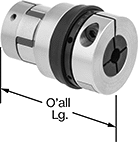 |
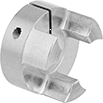
Shaft-to-Shaft Torque Limiter, Spider, and Hub Shown Assembled |
 |  |
Hubs | |
 | |
Hubs |
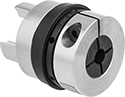
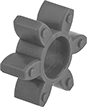
Shaft-to-shaft torque limiters also act as a flexible shaft coupling, so they compensate for angular and parallel misalignment as they regulate torque transmission between shafts. This reduces vibration and protects components from wear. For a complete unit, you’ll need a torque limiter, a hub, and a spider (all sold separately).
Torque Limiters | Hubs | Spiders | |||||||||||||||||||
|---|---|---|---|---|---|---|---|---|---|---|---|---|---|---|---|---|---|---|---|---|---|
Misalignment Capability | |||||||||||||||||||||
For Shaft Dia. | Torque, in·lbf | OD | Overall Lg. | Material | Drive Direction | Shaft Mount Type | Re-Engagement Position | Features | Each | Choose a Shaft Diameter | Each | Max. Rotation Speed, rpm | Parallel | Angular | Temp. Range, ° F | Each | |||||
For Round Shafts | |||||||||||||||||||||
| 3/8" | 9 to 25 | 1 3/8" | 2" | Steel | Clockwise and Counterclockwise | Clamp On | Single | Sensor Ring, Zero Backlash | 4404N12 | 0000000 | 1/4", 3/8", 1/2" | 4404N25 | 000000 | 15,000 | 0.003" | 1° | 0 to 180 | 4404N24 | 000000 | ||
| 3/8" | 18 to 50 | 1 3/4" | 2 3/8" | Steel | Clockwise and Counterclockwise | Clamp On | Single | Sensor Ring, Zero Backlash | 4404N13 | 000000 | 1/4", 3/8", 1/2", 5/8" | 4404N26 | 00000 | 10,000 | 0.011" | 1° | 0 to 180 | 9939T11 | 00000 | ||
Through Shaft
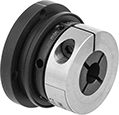 |
Through-shaft torque limiters regulate torque transmission between an input shaft and a mounted component, such as a pulley, sprocket, or gear.
For Shaft Dia. | Torque, in·lbf | Max. Rotation Speed, rpm | OD | Overall Lg. | Material | Drive Direction | Shaft Mount Type | Re-Engagement Position | Features | Each | |||
|---|---|---|---|---|---|---|---|---|---|---|---|---|---|
For Round Shafts | |||||||||||||
| 3/8" | 18 to 39 | 9,000 | 1 9/16" | 1 1/4" | Steel | Clockwise and Counterclockwise | Clamp On | Single | Sensor Ring, Zero Backlash | 4404N33 | 0000000 | ||
| 3/8" | 45 to 130 | 8,000 | 2 3/16" | 1 9/16" | Steel | Clockwise and Counterclockwise | Clamp On | Single | Sensor Ring, Zero Backlash | 4404N35 | 000000 | ||
Chain and Belt Torque Limiters
 |  |  |
Torque Limiter Shown with Sprocket | Replacement Friction Lining |
Prevent damage from overloading. When overloaded, these limiters cause your sprocket or pulley to slip. Once the overload is removed, the limiters automatically reset. Set the torque within the range listed. Friction lining is between the hub and pressure plate.
Double Spring—Double-spring limiters have a second spring for handling nearly twice the torque of single-spring limiters.
Sprockets—Sprockets are designed specifically to fit their corresponding limiters. These hubless sprockets are not interchangeable.
Torque Limiters | Sprockets | Replacement Friction Lining | ||||||||||||||||
|---|---|---|---|---|---|---|---|---|---|---|---|---|---|---|---|---|---|---|
Keyway | Torque, ft·lbf | |||||||||||||||||
For Shaft Dia. | OD | Overall Wd. | Wd. | Dp. | For Max. Sprocket or Pulley Wd. | Friction Lining Thk. | Min. | Max. | Hub Material | Each | Choose a Roller Chain Trade Number | Each | Each | |||||
Single Spring | ||||||||||||||||||
| 3/8" | 1 5/16" | 1 3/8" | 3/32" | 3/64" | 11/32" | 1/8" | 1 | 6 | Steel | 6524K173 | 000000 | 25, 35, 40, 41, 50 | 6525K27 | 000000 | 6525K68 | 000000 | ||
| 3/8" | 2 1/4" | 2" | 3/32" | 3/64" | 1/2" | 1/8" | 5 | 35 | Steel | 6524K111 | 000000 | 35, 40, 41, 50 | 6525K11 | 00000 | 6525K62 | 00000 | ||
Double Spring | ||||||||||||||||||
| 3/8" | 1 5/16" | 1 3/8" | 3/32" | 3/64" | 5/16" | 1/8" | 2 | 12 | Steel | 6524K333 | 000000 | 25, 35, 40, 41, 50 | 6525K27 | 00000 | 6525K68 | 00000 | ||
| 3/8" | 2 1/4" | 2" | 3/32" | 3/64" | 15/32" | 1/8" | 7 | 50 | Steel | 6524K411 | 000000 | 35, 40, 41, 50 | 6525K11 | 00000 | 6525K62 | 00000 | ||
Remote-Adjust Air-Powered Friction Torque Limiters
Shaft-to-Shaft
 |
Shaft-to-shaft torque limiters also act as a shaft coupling, allowing you to regulate torque transmission between two shafts.
Air Inlet | ||||||||||||||
|---|---|---|---|---|---|---|---|---|---|---|---|---|---|---|
For Shaft Dia. | Torque, in·lbf | Max. Pressure, psi | Max. Rotation Speed | OD | Overall Lg. | Drive Direction | Shaft Mount Type | Thread Size | Thread Type | Gender | Each | |||
For Round Shafts | ||||||||||||||
| 3/8" | 5 to 50 | 100 | Not Rated | 1 1/2" | 3 3/8" | Clockwise and Counterclockwise | Set Screw | 10-32 | UNF | Female | 9133K12 | 0000000 | ||
Through Shaft
|
Through-shaft torque limiters regulate torque transmission between an input shaft and a mounted component, such as a pulley, sprocket, or gear.
Air Inlet | |||||||||||||||
|---|---|---|---|---|---|---|---|---|---|---|---|---|---|---|---|
For Shaft Dia. | Torque, in·lbf | Max. Pressure, psi | Max. Rotation Speed | OD | Overall Lg. | Drive Direction | Shaft Mount Type | Mounting Hole Thread Size | Thread Size | Thread Type | Gender | Each | |||
For Round Shafts | |||||||||||||||
| 3/8" | 5 to 50 | 100 | Not Rated | 1 1/2" | 3 3/8" | Clockwise and Counterclockwise | Set Screw | 6-32 | 10-32 | UNF | Female | 9133K32 | 0000000 | ||
Torque-Limiting Shear Couplings
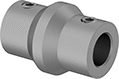 |
Prevent damage to high-torque power transmission systems. These couplings will shear or tear when torqued too hard (at around 10 to 20 times the maximum-rated torque) to sever connections between shafts. A flexible center compensates for misalignment and absorbs vibration and shock loads. With no metal-to-metal contact, these couplings don't require lubrication.
Steel with Neoprene Center—Reduce vibration with a rubber center, but best suited for dry environments since moisture will cause the steel to rust.
Set-Screw Shaft Mount—Screws dig into your shaft for a secure hold.
Misalignment Capability | |||||||||||||
|---|---|---|---|---|---|---|---|---|---|---|---|---|---|
Choose a Shaft Dia. | OD | Overall Lg. | Max. Rotation Speed, rpm | Max. Torque, in·lbf | Parallel | Angular | For Shaft Type | Shaft Mount Type | Torque-Limiting Direction | Each | |||
Steel with Neoprene Center | |||||||||||||
| 5/16" × 3/8" | 1" | 1 3/4" | 10,000 | 5 | 0.031" | 2° | Round | Set Screw | Clockwise and Counterclockwise | 6410K55 | 000000 | ||
| 3/8" × 3/8" | 1" | 1 3/4" | 10,000 | 5 | 0.031" | 2° | Round | Set Screw | Clockwise and Counterclockwise | 6410K2 | 00000 | ||
| 3/8" × 3/8" | 1 3/8" | 2 1/4" | 10,000 | 13 | 0.031" | 2° | Round | Set Screw | Clockwise and Counterclockwise | 6410K41 | 000000 | ||
| 3/8" × 1/2" | 1 1/4" | 2 1/8" | 10,000 | 10 | 0.031" | 2° | Round | Set Screw | Clockwise and Counterclockwise | 6410K57 | 00000 | ||
| 3/8" × 1/2" | 1 3/8" | 2 1/4" | 10,000 | 13 | 0.031" | 2° | Round | Set Screw | Clockwise and Counterclockwise | 6410K58 | 00000 | ||
| 3/8" × 5/8" | 1 3/8" | 2 1/4" | 10,000 | 13 | 0.031" | 2° | Round | Set Screw | Clockwise and Counterclockwise | 6410K59 | 000000 | ||
Corrosion-Resistant Overload-Protection Spring-Loaded Torque Limiters
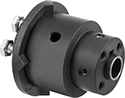 |
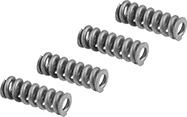
Prevent corrosion from interfering with these torque limiters’ ability to protect your machinery if there’s a jam, emergency stop, or other overload. Made of nylon, they won’t rust or corrode from moisture, salt, and oil. They cut off torque when they reach the set maximum torque and automatically resume transmitting torque once it drops below the set maximum. They should not be used in applications that frequently exceed the set torque. You can adjust the set torque by tightening the hex head screw on the housing.
To help you detect an overload, these torque limiters have a sensor ring that moves out of place when these limiters cut off torque. Use a sensor (not included) to trigger an alarm or a shutdown when the ring moves.
Fasten them to your shaft by tightening the set screws, which bite into the shaft to hold it.
Shaft-to-Shaft
Misalignment Capability | ||||||||||||||||
|---|---|---|---|---|---|---|---|---|---|---|---|---|---|---|---|---|
For Shaft Dia. | Torque, in·lbf | Max. Rotation Speed, rpm | Parallel | Angular | OD | Overall Lg. | No. of Springs | Material | Drive Direction | Shaft Mount Type | Re-Engagement Position | Features | Each | |||
For Round Shafts | ||||||||||||||||
| 3/8" | 4 to 60 | 1,800 | 0.01" | 1° | 2 1/2" | 2 1/2" | 4 | Nylon | Clockwise and Counterclockwise | Set Screw | Multiple | Sensor Ring | 4410N102 | 0000000 | ||
Through Shaft
For Shaft Dia. | Torque, in·lbf | Max. Rotation Speed, rpm | OD | Overall Lg. | No. of Springs | Material | Drive Direction | Shaft Mount Type | Re-Engagement Position | Features | Each | |||
|---|---|---|---|---|---|---|---|---|---|---|---|---|---|---|
For Round Shafts | ||||||||||||||
| 3/8" | 4 to 60 | 1,800 | 2 1/2" | 2 1/2" | 4 | Nylon | Clockwise and Counterclockwise | Set Screw | Multiple | Sensor Ring | 4410N109 | 0000000 | ||
Electric One-Way Clutches
Friction Engagement
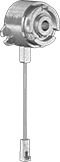 |
Through Shaft—Through-shaft clutches regulate torque transmission between an input shaft and a mounted component.
Clockwise Drive | Counterclockwise Drive | |||||||||||||||||
|---|---|---|---|---|---|---|---|---|---|---|---|---|---|---|---|---|---|---|
For Shaft Dia. | For Shaft Type | Max. Torque, in·lbf | Max. Rotation Speed, rpm | OD | Overall Lg. | Electric Clutch Type | Electrical Connection Type | Shaft Mount Type | Wire Lead Lg. | Voltage, V DC | Current, amp | Each | Current, amp | Each | ||||
Through Shaft | ||||||||||||||||||
| 3/8" | Round | 75 | 1,400 | 1 3/4" | 1 1/2" | Power On | Hardwire | Spring Pin | 18" | 24 | 0.14 | 5156T43 | 0000000 | 0.24 | 5156T23 | 0000000 | ||
One-Way Clutches
Roller Engagement—Knurled Hub
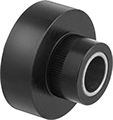 |
Roller clutches are best for low- to medium-torque transfer in overrunning and indexing applications.
Clutches with a knurled hub can be press fit into the bore of your component.
Through Shaft—Through-shaft clutches regulate torque transmission between an input shaft and a mounted component.
Set-Screw Shaft Mount—Clutches that mount to shafts with set screws bite into your shaft when tightened to hold it.
Roller Engagement—Keyed Hub
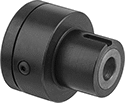 |
Roller clutches are best for low- to medium-torque transfer in overrunning and indexing applications.
Clutches with a keyed hub let you slip on your component.
Through Shaft—Through-shaft clutches regulate torque transmission between an input shaft and a mounted component.
Slip-Fit Shaft Mount—Clutches that mount to shafts with a slip fit must be secured with a shaft collar or in some other way that prevents them from moving along the length of your shaft.
Shaft | Hub | Clockwise Drive | |||||||||||||
|---|---|---|---|---|---|---|---|---|---|---|---|---|---|---|---|
For Shaft Dia. | For Shaft Type | Max. Torque, ft·lbf | Max. Rotation Speed, rpm | OD | Overall Lg. | Material | Keyway Wd. × Keyway Dp. | Mount Type | Dia. | Lg. | Keyway Wd. × Keyway Dp. | Each | |||
Through Shaft | |||||||||||||||
| 3/8" | Keyed | 14 | 1,800 | 2" | 2 1/8" | Steel | 3/32" × 3/64" | Slip Fit | 1 1/4" | 1" | 3/16" × 3/32" | 4550N12 | 0000000 | ||
