We will reply to your message within an hour.
Tubing meets NSF/ANSI Standard 61 for drinking water.
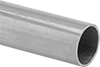
This tubing has hard walls like copper tubing, but is lighter in weight and easier to install. It connects to fittings with no heat or soldering required. Tubing meets NSF/ANSI Standard 61 for drinking water.
This Type L tubing has thicker walls than Type M tubing. It withstands pressures up to 1,500 psi.
This Type K tubing has the thickest walls of all our copper tubing for drinking water. It withstands pressures up to 1,900 psi.
This Type M tubing has the thinnest walls of all our copper tubing for drinking water. It withstands pressures up to 980 psi.
Often used in heating and cooling systems, this tubing insulates refrigerant to efficiently transfer heat between components.
These fittings keep their strength in moist environments and meet NSF/ANSI 61 for drinking water. Also known as instant fittings.
Tube supports slip inside tubing to prevent the walls from collapsing.
Fittings can withstand temperatures up to 200° F.
Create a push-to-connect junction in equipment with these fittings. To install, drill a stepped hole in your surface, push the fitting components into place, then insert your tubing.
Connect these fittings to tubing with a ring and a crimping tool (both sold separately). Safe to use with drinking water, these fittings meet the strict standards of NSF/ANSI 61.
Use these nuts with brass compression fittings to create a seal on plastic tubing. They meet NSF/ANSI 61 for use with drinking water.
Connect drinking water lines with ease—these one-piece fittings have a built-in sleeve that crimps onto tubing for a leak-tight connection that doesn’t require heat or soldering. These fittings meet NSF/ANSI 61 for drinking water systems and are compatible with Viega PEX tubing.
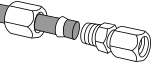
Connect stainless steel tubing on one end and plastic tubing on the other end.
Solder these fittings to tubing for a permanent, leak-tight connection. They are also known as sweat fittings.
When cleanliness is crucial to your application, choose these fittings that are individually cleaned and bagged to prevent contamination.
Crimp these fittings to copper tubing with a crimping tool for a leak-tight connection that doesn’t require heat or soldering. They are comparable to Viega ProPress fittings.
Choose these metal fittings when you need better durability than our plastic push-to-connect fittings.
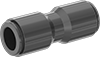
Made of plastic, these fittings are lightweight compared to our brass push-to-connect fittings.
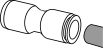
Add a push-to-connect junction to unthreaded ports for easy connections with tubing. To install, drill a stepped hole in your surface, push the fitting components into place, and insert your tubing.
Certified to meet NSF/ANSI 61, this hose is safe for use in drinking water systems.
Safely transfer drinking water from a garden hose connection.
Keep your water running in temperatures down to -20° F.
Safely suction, transfer, and dispense drinking water.
With flanged ends that join with quick-clamp fittings, it’s easy to disconnect this hose for cleaning. It meets NSF/ANSI 61, a strict standard for drinking water systems, and is 3-A certified for its sanitary design.
Pull water out of wells, tanks, and other drinking water sources through lines connected by cam-and-groove fittings.
Certified to meet NSF/ANSI 61, this discharge hose is safe for use with drinking water. It lays flat when not in use, so you can roll it up for easy transport and storage.
Transport milk, syrup, meat, and other wet food and beverages through your line.
Fittings meet NSF/ANSI Standard 61 for drinking water. Attach them to garden hose for a variety of water supply applications. They are metal for better durability than plastic garden hose fittings.
These fittings are FDA compliant, so they’re suitable for food and beverage applications and won’t impart tastes or odors to the product. Secure barbed ends into plastic or rubber hose with a clamp.
To stand up to the harsh chemicals used to clean food-processing lines, these fittings are made of PVDF, also known as Kynar.
Couplings are made of FDA listed materials, so they’re suitable for food and beverage applications and won’t impart tastes or odors to the product. They consist of a plug and a socket that connect and disconnect quickly. Use them if you need frequent access to a line. To connect, insert the plug into the socket and push the levers down.
Fittings meet NSF/ANSI Standard 61 for drinking (potable) water.
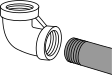
Typically used with high-pressure brass and bronze threaded pipe fittings.
Use these heavy-duty brass fittings for high-pressure drinking water applications.
Typically used with low-pressure brass and bronze threaded pipe fittings.
Keep various lengths of brass pipe on hand for applications requiring good corrosion resistance.
Use these fittings in low-pressure flow applications. They have good corrosion resistance.
Also known as Pressure Class 150 flanges, these brass flanges are designed for low-pressure applications.
The male threads on these brass fittings have a sealant applied for extra protection against leaks. Also known as Pressure Class 125 fittings, they are built for use in low-pressure applications.
Connect this pipe to standard-wall plastic pipe fittings for a variety of residential and commercial low-pressure plumbing and water supply applications.
See inside your line with this clear pipe, which works in a variety of residential and commercial low-pressure plumbing and water supply applications.
Connect these fittings to Schedule 40 plastic pipe—they are the industry standard for residential and commercial low-pressure plumbing and water supply applications. They are plastic for good corrosion resistance.
Watch water flow through your line. These fittings are compatible with Schedule 40 pipe, the industry standard for residential and commercial low-pressure plumbing and water supply.
Connect to thick-wall plastic pipe fittings for use in heavy duty industrial plumbing and water supply applications, such as water processing, waste water treatment, and irrigation. Pipe can handle pressures up to 900 psi.
See what’s flowing through your line with this clear pipe. Since it’s Schedule 80, this pipe has thicker, stronger walls than standard-wall pipe, so you can use it for heavy duty industrial plumbing and water supply applications, such as water processing, waste water treatment, and irrigation.
Connect these fittings to Schedule 80 pipe. With thicker, stronger walls than standard-wall fittings, they can handle heavy duty supply applications, such as water processing, wastewater treatment, and irrigation.
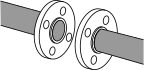
Bolt two same-size flanges together with a gasket to create an access point within a line. They are also known as Pressure Class 150 flanges. They have thick, strong walls to handle heavy duty industrial plumbing and water supply applications, such as water processing, waste water treatment, and irrigation.
Connect to barbed plastic pipe fittings with a clamp. Pipe isn't as bendable as soft tubing, but can still bend around objects, resulting in fewer connection points in your line. Fewer connection points not only shortens installation time, but also allows for smoother flow through the line.
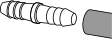
Use for pressures up to 200 psi. Also known as insert fittings, these slide into semi-flexible plastic pipe and secure with a clamp.
Connect to CPVC pipe fittings for use in high-temperature plumbing and water supply applications up to 170° or 200° F.
Connect to CPVC pipe for use in high-temperature plumbing and water supply applications.
Bolt two same-size flanges together with a gasket to create an access point within a line. They are also known as Pressure Class 150 flanges. Use in high-temperature plumbing and water supply applications up to 200° F.
Connect these fittings to UV-resistant PVC pipe. Designed for outdoor use, they contain an additive that protects against the damaging effects of ultraviolet light. Fittings are typically used in low-pressure residential and commercial plumbing and water supply applications up to 300 psi.
The inside of this pipe won’t leach contaminants into your line or accumulate particles—it’s polished to an ultra-smooth 12 Ra finish, which also makes it easy to clean. Made of polypropylene, it resists organic solvents, acids, and alkalis better than CPVC pipe.
The inside of these fittings won’t leach contaminants into your line or accumulate particles—they’re polished to an ultra-smooth 12 Ra finish, which also makes it easy to clean. Made of polypropylene, they resist organic solvents, acids, and alkalis better than CPVC fittings.
The inside of these flanges won’t leach contaminants into your line or accumulate particles—they’re polished to an ultra-smooth 12 Ra finish, which also makes them easy to clean. Made of polypropylene, they resist organic solvents, acids, and alkalis better than CPVC pipe flanges.
Use in high-pressure applications up to 500 psi.