


Filter by

Number of Teeth
Component


Speed Ratio





RoHS

Export Control Classification Number (ECCN)
REACH
DFARS Specialty Metals

Tooth Heat Treatment

About Gears
%20--%3e%3csvg%20version='1.1'%20id='Layer_1'%20xmlns='http://www.w3.org/2000/svg'%20xmlns:xlink='http://www.w3.org/1999/xlink'%20x='0px'%20y='0px'%20viewBox='0%200%20400%20400'%20style='enable-background:new%200%200%20400%20400;'%20xml:space='preserve'%3e%3cstyle%20type='text/css'%3e%20.st0{fill:%231A70A0;}%20.st1{opacity:0.5;}%20%3c/style%3e%3cg%3e%3cg%3e%3cpath%20class='st0'%20d='M200,56.9c38.35,0,74.4,14.93,101.51,42.05c27.11,27.11,42.05,63.17,42.05,101.51s-14.93,74.4-42.05,101.51%20S238.35,344.02,200,344.02s-74.4-14.93-101.51-42.05c-27.11-27.11-42.05-63.17-42.05-101.51s14.93-74.4,42.05-101.51%20S161.65,56.9,200,56.9%20M200,12.9C96.41,12.9,12.44,96.88,12.44,200.46c0,103.59,83.97,187.56,187.56,187.56%20c103.59,0,187.56-83.97,187.56-187.56C387.56,96.88,303.59,12.9,200,12.9L200,12.9z'/%3e%3c/g%3e%3cg%3e%3cg%20class='st1'%3e%3cpath%20class='st0'%20d='M235.49,152.24h16.15l-27.46,111.87c-1.94,7.8-2.91,12.5-2.91,14.1c0,1.82,0.58,3.29,1.73,4.41%20c1.16,1.12,2.69,1.68,4.61,1.68c5.23,0,11.78-3.85,19.63-11.55l17.22,21.34c-16.95,17.33-34.87,26-53.78,26%20c-8.37,0-15.45-1.47-21.23-4.41c-5.79-2.94-10.44-7.25-13.95-12.92c-3.51-5.67-5.27-11.18-5.27-16.53c0-1.93,0.35-5.24,1.05-9.94%20c1-6.94,2.05-12.54,3.15-16.82l15.22-62.15h-32.69l7.65-30.97C190.89,163.58,214.53,158.88,235.49,152.24z%20M230.44,80.84%20c8.24,0,14.66,2.62,19.26,7.86c4.6,5.24,6.9,11.55,6.9,18.94c0,5.46-1.42,10.7-4.25,15.73c-2.83,5.03-6.88,9.07-12.12,12.12%20c-5.24,3.05-10.33,4.57-15.24,4.57c-4.6,0-9.17-1.23-13.72-3.69c-4.55-2.46-8.02-5.78-10.43-9.95%20c-2.41-4.17-3.61-8.67-3.61-13.48c0-5.35,1.52-10.64,4.57-15.89c3.05-5.24,7.03-9.25,11.96-12.04%20C218.68,82.23,224.24,80.84,230.44,80.84z'/%3e%3c/g%3e%3cg%3e%3cpath%20class='st0'%20d='M214.08,152.24h16.15l-27.46,111.87c-1.94,7.8-2.91,12.5-2.91,14.1c0,1.82,0.58,3.29,1.73,4.41%20c1.16,1.12,2.69,1.68,4.61,1.68c5.23,0,11.78-3.85,19.63-11.55l17.22,21.34c-16.95,17.33-34.87,26-53.78,26%20c-8.37,0-15.45-1.47-21.23-4.41c-5.79-2.94-10.44-7.25-13.95-12.92c-3.51-5.67-5.27-11.18-5.27-16.53c0-1.93,0.35-5.24,1.05-9.94%20c1-6.94,2.05-12.54,3.15-16.82l15.22-62.15h-32.69l7.65-30.97C169.48,163.58,193.11,158.88,214.08,152.24z%20M209.03,80.84%20c8.24,0,14.66,2.62,19.26,7.86c4.6,5.24,6.9,11.55,6.9,18.94c0,5.46-1.42,10.7-4.25,15.73c-2.83,5.03-6.88,9.07-12.12,12.12%20c-5.24,3.05-10.33,4.57-15.24,4.57c-4.6,0-9.17-1.23-13.72-3.69c-4.55-2.46-8.02-5.78-10.43-9.95%20c-2.41-4.17-3.61-8.67-3.61-13.48c0-5.35,1.52-10.64,4.57-15.89c3.05-5.24,7.03-9.25,11.96-12.04%20C197.26,82.23,202.83,80.84,209.03,80.84z'/%3e%3c/g%3e%3c/g%3e%3c/g%3e%3c/svg%3e)
Compare gear types, measure pitch and module, calculate mounting distance, increase speed or torque, and more.
Metal Ratchet Gears and Pawls
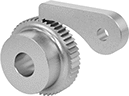 |
Gears and Pawls (Sold Separately) |
Gears
 |
Compared to nylon gears, these metal ratchet gears are better for high-load, high-speed, and heavy duty applications. Used to prevent unwanted motion in jacks, tie downs, clutches, and winches, ratchet gears have sloped teeth that allow motion in one direction and prevent it in the other.
Not Hardened— Gears with teeth that are not hardened can be hardened to fit your application. Hardening a gear’s teeth increases its wear resistance.
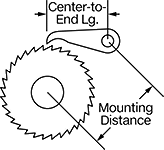
Face Wd. | No. of Teeth | OD | For Shaft Dia. | Mounting Distance | Material | Tooth Heat Treatment | Each | |||
|---|---|---|---|---|---|---|---|---|---|---|
Round Bore | ||||||||||
| 3/8" | 64 | 4" | 11/16" | 2.5" | 303 Stainless Steel | Not Hardened | 6283K11 | 0000000 | ||
Metal Bevel Gears
 |
Gears Sold Separately |
 |
Large Gears |
Large Gears | ||||||||
|---|---|---|---|---|---|---|---|---|
Face Wd. | Gear Pitch | Pressure Angle | Speed Ratio | Material | For Shaft Dia. | Each | ||
| 0.48" | 16 | 20° | 4:1 | 1144 Carbon Steel | 5/8" | 2515N17 | 0000000 | |
Metal Internal Spur Gears
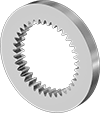 |
Gear Pitch | No. of Teeth | Gear Pitch Dia. | OD | ID | Face Wd. | Material | Each | |||
|---|---|---|---|---|---|---|---|---|---|---|
20° Pressure Angle | ||||||||||
Brass | ||||||||||
| 32 | 64 | 2" | 2.75" | 1.961" | 3/16" | Brass | 2696N5 | 0000000 | ||
Metal Spur Gears
Gears
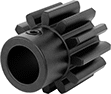 | 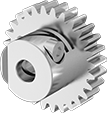 |
20° Pressure Angle, Round Bore with Set Screw | 20° Pressure Angle, Clamping Bore with Clamping Screw |
20° Pressure Angle—The current industry standard, these 20° pressure angle spur gears have thicker, stronger teeth than 14½° pressure angle gears.
Stainless Steel—Stainless steel gears resist rust in damp and wet environments, so they're commonly used in food-processing plants and other areas with frequent cleaning.
Clamping Bore—Gears with a clamping bore have a built-in clamp that securely grips shafts without marring them. Use the included clamping screw to tighten or loosen the grip.
Hub | |||||||||||||||
|---|---|---|---|---|---|---|---|---|---|---|---|---|---|---|---|
Gear Pitch | Gear Module | No. of Teeth | Gear Pitch Dia. | OD | Face Wd. | Dia. | Wd. | Bore Type | For Shaft Dia. | Tooth Heat Treatment | Material | Each | |||
20° Pressure Angle | |||||||||||||||
Stainless Steel | |||||||||||||||
| 32 | — | 64 | 2" | 2.06" | 3/16" | 0.5" | 0.25" | Round Bore with Set Screw | 1/4" | Not Hardened | 303 Stainless Steel | 6832K57 | 000000 | ||
| — | 1 | 64 | 64 mm | 66 mm | 6 mm | 24 mm | 14 mm | Clamping Bore with Clamping Screw | 10 mm | Not Hardened | 303 Stainless Steel | 3757N54 | 000000 | ||
Gear Racks
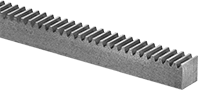 |
20° Pressure Angle—Rectangular |
These racks match with spur gears to convert rotary motion to linear motion. For components to mesh correctly, they must have the same pressure angle and pitch/module.
Stainless Steel—Stainless steel gear racks resist rust in damp and wet environments, so they're commonly used in food-processing plants and other areas with frequent cleaning.
Hardened—Gear racks with hardened teeth have better wear resistance than racks with teeth that are not hardened.
Plastic Spur Gears
Gears
 | |
20° Pressure Angle | 14 1/2° Pressure Angle, Round Bore |
20° Pressure Angle—The current industry standard, these 20° pressure angle spur gears have thicker, stronger teeth than 14½° pressure angle gears.
14 1/2° Pressure Angle—A former industry standard, 14½° pressure angle gears are often found in older machinery.
Acetal—Acetal gears absorb less water than nylon gears, so they’re less likely to swell.
Nylon—Nylon gears are wear resistant, but will swell and weaken over time when wet.
Gear Racks
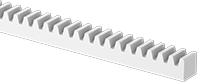 |
20° Pressure Angle—Rectangular |
|
14 1/2° Pressure Angle—Rectangular |
These racks match with spur gears to convert rotary motion to linear motion. For components to mesh correctly, they must have the same pressure angle and pitch/module.
Acetal—Acetal gear racks absorb less water than nylon racks, so they’re less likely to swell.
Nylon—Nylon gear racks are wear resistant, but will swell and weaken over time when wet.
Machined—Machined gear racks may be slightly bowed but will straighten out when installed.
