We will reply to your message within two hours.
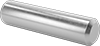
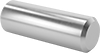
Use these metal dowel pins as pivots, hinges, shafts, jigs, and fixtures to locate or hold parts.
Slip these pins in and out during maintenance or prototyping—they’re undersized to make alignment easier.
Oversized to fit worn and enlarged holes, these pins work well as repair and replacement parts.
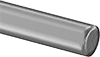
Cut this 12" stock to the length you need.
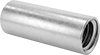
To remove these pins, thread a screw or tool into the tapped hole, then pull them out.
The flat side of these pins relieves trapped air, making them easier to insert in and remove from blind holes. To remove, thread a screw or tool into the tapped hole, then pull the pin out.
A spiral groove cut into these pins relieves trapped air but stays in 360° contact with the hole for a secure fit that's easy to insert in and remove from blind holes. To remove, thread a screw or tool into the tapped hole, then pull the pin out.
Grooves run the full length of these pins for a firm hold that won't spin. Use them in place of standard dowel, spring, and taper pins to fasten parts. Also known as type A pins.
Choose a material, head type, end type, and size to create a custom pin.
Create a custom headed pin with your choice of material, dimensions, and end type.
Position, pivot, and align components. Also known as pilot pins and PEM® TP4, TPS, and MPP pins.
Also known as roll, tension, split, and expansion pins, these pins have a slot along one side that you squeeze closed to install them into unthreaded holes.
These spiral pins remain flexible after installation, so they absorb shock and vibration better than slotted spring pins. They work well in holes that are out of round.
For tough jobs, these spiral pins are 30% stronger than our standard coiled spring pins. They remain flexible after installation to absorb shock and vibration, and work well in holes that are out of round.
To remove these pins, hit the small end with a punch to drive the pin out.
Threads on these pins stick out for easy removal from blind holes. Tighten the hex nut to draw the pin out.
Screw these studs into a tapped hole and use them as a pivot point, hinge, shaft, or locator pin.
Dowel pins are commonly used as pivots, hinges, shafts, jigs, and fixtures to locate or hold parts. They're slightly oversized for a tight fit.
Coiled spring pins are flexible after installation, so they absorb shock and vibration better than slotted spring pins. They also have higher dynamic load capacities and accommodate wider hole tolerances.
Slotted spring pins are also known as roll, tension, split, and expansion pins. Because the slot is pressed closed when the pins are inserted, they don't flex after installation.
Support and position workpieces and fixtures from the bottom or side. These buttons press into a drilled hole for permanent installation.
Mount through the counterbored hole with a socket head cap screw to support and position workpieces and fixtures from the bottom or side.
Support rounded or irregularly shaped workpieces from the bottom or side with minimal contact.
Sealed at the top to prevent debris from getting inside and making them seize up, these guide pins are a good choice for machining fixtures.