McMaster-Carr logo
    Filter by
    Fitting Type
    System of Measurement
    ID
    Attribute Image
    Conduit Trade Size
    Industrial Info Snippet
    Pipe Size
    Industrial Info Snippet
    DFARS Specialty Metals
    Export Control Classification Number (ECCN)
    Industrial Info Snippet
    Maximum Temperature
    Minimum Temperature
    U.S.–Mexico–Canada Agreement (USMCA) Qualifying
    Industrial Info Compare
    Conduit Type
    Industrial Info Snippet
    Gender
    Threading
    Flange Material
    Fitting Connection
    Enter e-mail addresses in the fields below
    Message
    Cancel
    Comments
    E-mail address (if you would like a response)
    5 Products

    Liquid-Tight Flexible Plastic (LFNC-A) Conduit and Fittings
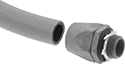
    Image of System. Front orientation. Conduit and Fittings. Liquid-Tight Flexible Plastic (LFNC-A) Conduit and Fittings.
    Keep out moisture and protect wiring against strain from constant stretching and vibration. Made of reinforced PVC that resists chemicals, this conduit is often used in robotics and other continuous-motion applications. Pair with compatible fittings for a liquid-tight seal indoors, outdoors, or underground.
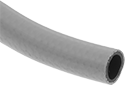
    Conduit
    Image of Product. Front orientation. Conduit and Fittings. Liquid-Tight Flexible Plastic (LFNC-A) Conduit and Fittings, Conduit .
    Run wiring through conduit to route and protect it.
    Per Ft.
    Conduit
    Trade Size
    Bend
    Radius
    Color
    Temp.,
    ° F
    Specs. Met
    Choose a Length, ft.
    1-99
    100-Up
    PVC
    2
    9"Orange0 to 140CSA Certified, UL Listed2, 5, 10, 25, 508465K28000000000000
     

    Fiberglass Pipe Nipples and Pipe for Chemicals

    With excellent corrosion resistance, this pipe can handle a wide range of acids and other highly-corrosive chemicals. Use in metal surface treating applications, plating solution lines, and other chemical process applications. Layers of fiberglass give this pipe better strength and durability than any of our other pipe for chemicals. Pipe meets ASTM D2310 and ASTM D3567 specifications and testing requirements for product dimensions, performance, and material quality.
    To connect fittings to pipe, first sand the inside of the fitting and the end of the pipe to remove the surface finish. Next, mix the adhesive (sold separately) until the color is uniform with no streaks. Apply a thin layer of mixed adhesive to the sanded area of the pipe, approximately 1/8" thick. Repeat this process with the inside of the fitting, applying a layer approximately 1/16" thick. After sealant has been applied, push the fitting onto the pipe until it is fully engaged. Finally, use the adhesive-curing heat cable (sold separately) to cure the adhesive. Wrap the tape around the pipe and fitting at the joint, taking care to not overlap the tape. Once you have waited the full cure time, the pipe and fitting will be ready to use.
    Pipe—Unthreaded
    Image of Product. Front orientation. Pipe and Fittings. Fiberglass Pipe Nipples and Pipe for Chemicals, Pipe—Unthreaded, Cement Socket Male.

    Cement Socket

    Male

    Lg.,
    ft.
    Material
    Color
    Max. Pressure
    @ Temp.
    Each
    Cement Socket Male
     
    2 Pipe Size
    5FiberglassGreen250 psi @ 72° F2823N450000000
    10FiberglassGreen250 psi @ 72° F2823N46000000
     
    Pipe Cement
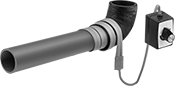
    Adhesive-Curing Heat Cable
    Image of Product. Front orientation. Heating Tape.
    Voltage,
    V AC
    Current,
    amp
    Max. Heat
    Output, ° F
    Lg.,
    ft.
    Wd.
    Thk.
    Cord Lg.,
    ft.
    Each
    1201527061"1/8"62905N520000000
    back to top